
The complete guide
How To Choose A Baby Alpaca Throw Blanket That You Will Actually Use
The problem with most throws
Most throws fail in one of two ways. They are either too heavy to move, so they live permanently folded on one chair, or they are too thin to do anything, so they look nice and keep nobody warm. The useful middle ground is a blanket that is light enough to carry around the house, into a car, or onto a plane, and still warm enough to make a difference when you put it over your knees.
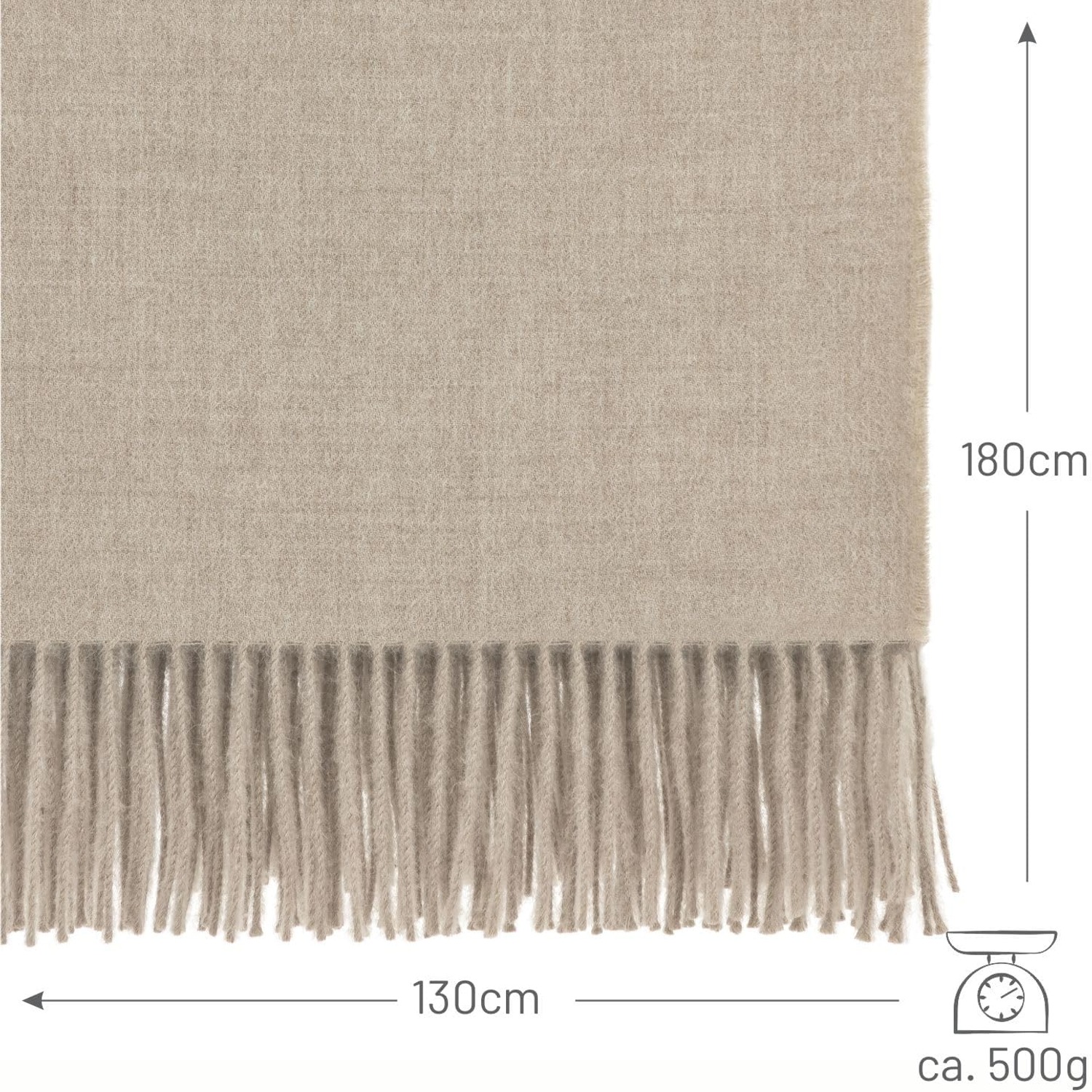
That is the gap a baby alpaca throw blanket fills. This one measures 130 x 180 cm and weighs roughly 500 to 550 g. Those two numbers together tell you most of what you need to know. It is a full adult-length cover, and it weighs about as much as a paperback and a half.
If you live somewhere warm and humid, a wool throw can sound like the last thing you need. In practice the opposite is true. The cold places in a tropical city are indoors. Meeting rooms set to 18 degrees, cinemas, long-haul flights, hotel rooms in colder countries. A thin natural fibre layer handles all of those.
What baby alpaca actually means
"Baby alpaca" is a fibre grade, not an animal's age. When a fleece is sorted, the finer fibres are separated from the coarser ones, and the finer sort takes the baby alpaca name. It is the same idea as grading wool by micron. The maker states 100% baby alpaca wool, with no blend mentioned.
Finer fibre matters for one practical reason. The thinner each individual fibre is, the more it bends when it touches your skin rather than pushing back against it. That bending is the difference between fabric that feels smooth and fabric that feels prickly. The maker describes this throw as very soft and scratch-free.
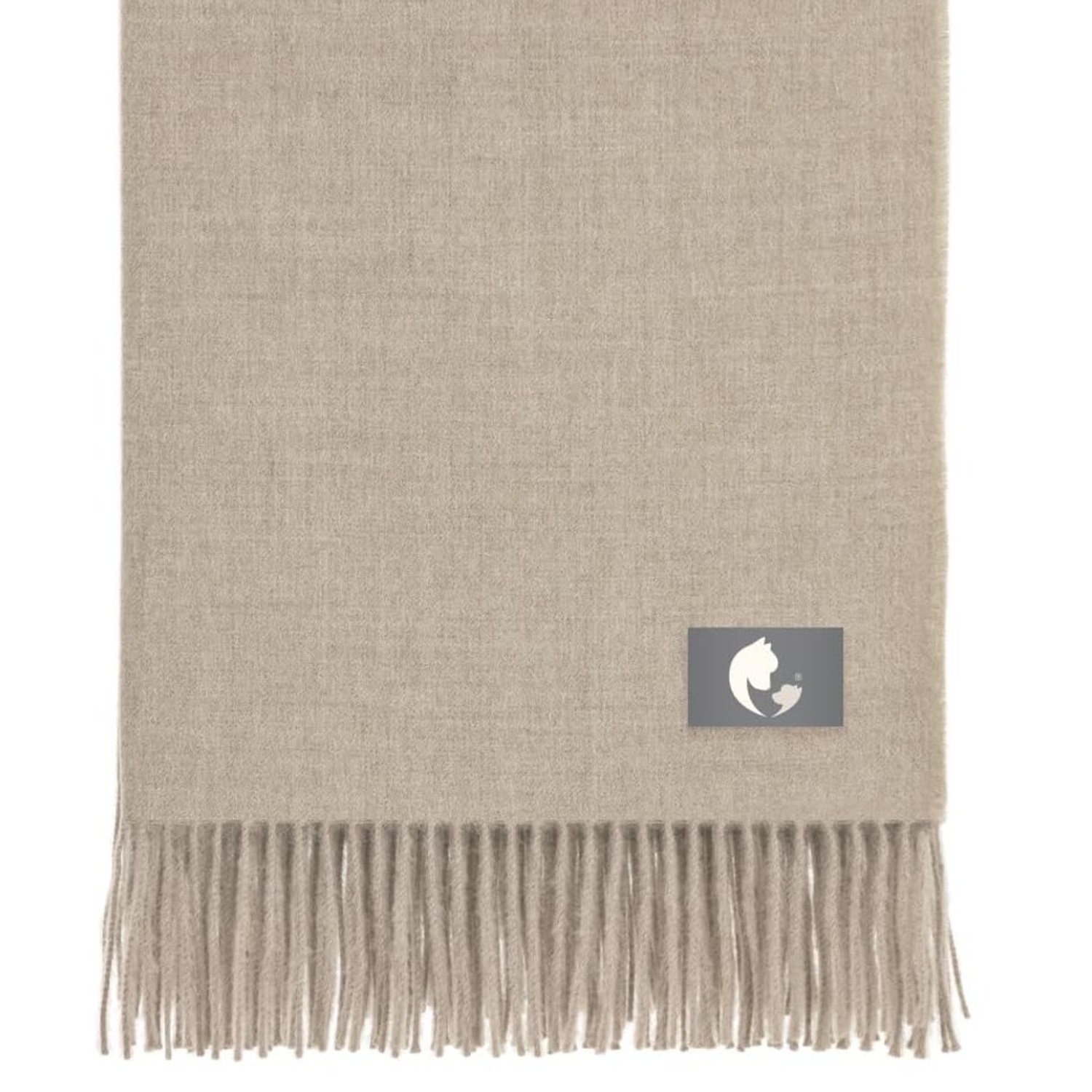
The yarn here is undyed. The beige you see is the natural colour of the fleece rather than a shade applied in a dye bath. Two things follow from that. The colour tends to look softer and less flat than a dyed beige, and small variations between production runs are normal. If you are matching to an exact paint chip, allow for that.
Reading the two different sizes
The specification gives 130 x 180 cm. The maker's own product title gives 200 x 130 cm. Both describe the same throw. The larger number counts the fringe at the ends; the smaller one measures the woven body of the cloth.
Use 130 x 180 cm for planning. That is the fabric you will actually be sitting under. For reference, it covers an average adult from shoulders to below the feet when seated, and works as a single top layer on a single bed. On a two-seat sofa it drapes across both seats with room to spare. On a king bed it is a foot-of-bed throw, not a cover.
How to judge weight
A good rule for travel blankets is simple. If you would not carry it in your hand luggage, you will not carry it anywhere. At around half a kilo, this one passes that test easily. Folded, it compresses to about the size of a thick jumper, which fits in the top of a cabin bag or a large tote.
Weight also tells you something about use at home. A heavy throw is a commitment; you put it on and you stay put. A light one gets picked up, moved to the other room, taken to the desk, carried out to the car. That is why a lightweight wool throw for air conditioning should be one you barely notice carrying.
Do not read low weight as low warmth. The maker lists the fabric warmth of this throw as high.
Who this suits
It suits people who get cold indoors in warm climates. If you keep a cardigan at your desk, a throw does the same job better for your legs.
It suits regular flyers. An alpaca blanket for flights is one of the few luxuries that pays off every single trip, because the blanket on board is thin and the cabin is cold.
It suits anyone decorating in neutrals. Plain beige with a fringe is quiet. It sits next to linen, timber, rattan and grey without arguing with any of them.
It is less suitable if you want a heavy, weighted feel, or if you need a full bedspread for a larger bed. It is also listed for adults, so treat it as an adult throw rather than a children's item.
How to choose between materials
Cotton throws are cooler to sit under and better suited to a warm bedroom than to a cold room. Synthetic fleece costs less. Baby alpaca sits at the other end: a fine natural fibre that the maker describes as very soft and lightweight, with a fabric warmth it lists as high.
Price is the honest trade-off. Pure alpaca costs considerably more than a polyester throw of the same size. What you are buying is the fibre: 100% undyed baby alpaca wool, as stated by the maker.
Looking after it
The rule with fine animal fibres is to wash less and air more. Hanging the throw somewhere with moving air for a few hours freshens it between washes.
For marks, spot clean with cool water and a small amount of gentle wool detergent. Press, do not rub. Rubbing is what makes wool felt and go stiff.
For a full clean, the maker gives machine wash as the care instruction. Follow the care label on the throw for the cycle and temperature, and if in doubt use a cool, gentle wool programme with wool detergent. Do not wring it. Press the water out between towels, lay it flat in the shade, and reshape it while it is still damp.
Store it folded in a breathable cotton bag. Sealed plastic traps moisture, which is a particular problem in humid air. Keep it clean when stored, use it regularly, and add a cedar block if it is going to sit untouched for months.
For pills, a flat fabric comb takes them off in a couple of minutes. This is normal maintenance for any fine fibre, not a fault.
The short version
This is a 130 x 180 cm throw in 100% undyed baby alpaca wool, plain beige, weighing about 500 to 550 g. The maker's larger 200 x 130 cm figure includes the fringe.
Buy it if you want a soft alpaca wool blanket that is light enough to travel with and warm enough to be worth the bag space. Buy it if cold offices, cinemas and aircraft cabins are your actual problem rather than cold weather at home.
Look elsewhere if you want something heavy and weighted, a full bedspread for a large bed, or a low-cost throw you can throw in the washing machine every week without a thought.
Care is simple once you accept the main rule. Air it often, wash it gently, and dry it flat.