
The complete guide
How to Choose an Oval Tablecloth That Actually Fits
The problem with oval tables
Oval tables look generous. They seat more people than a round table of similar width, they are easier to walk around than a rectangle, and they soften a room that is full of straight lines. Then you try to buy a cloth for one.
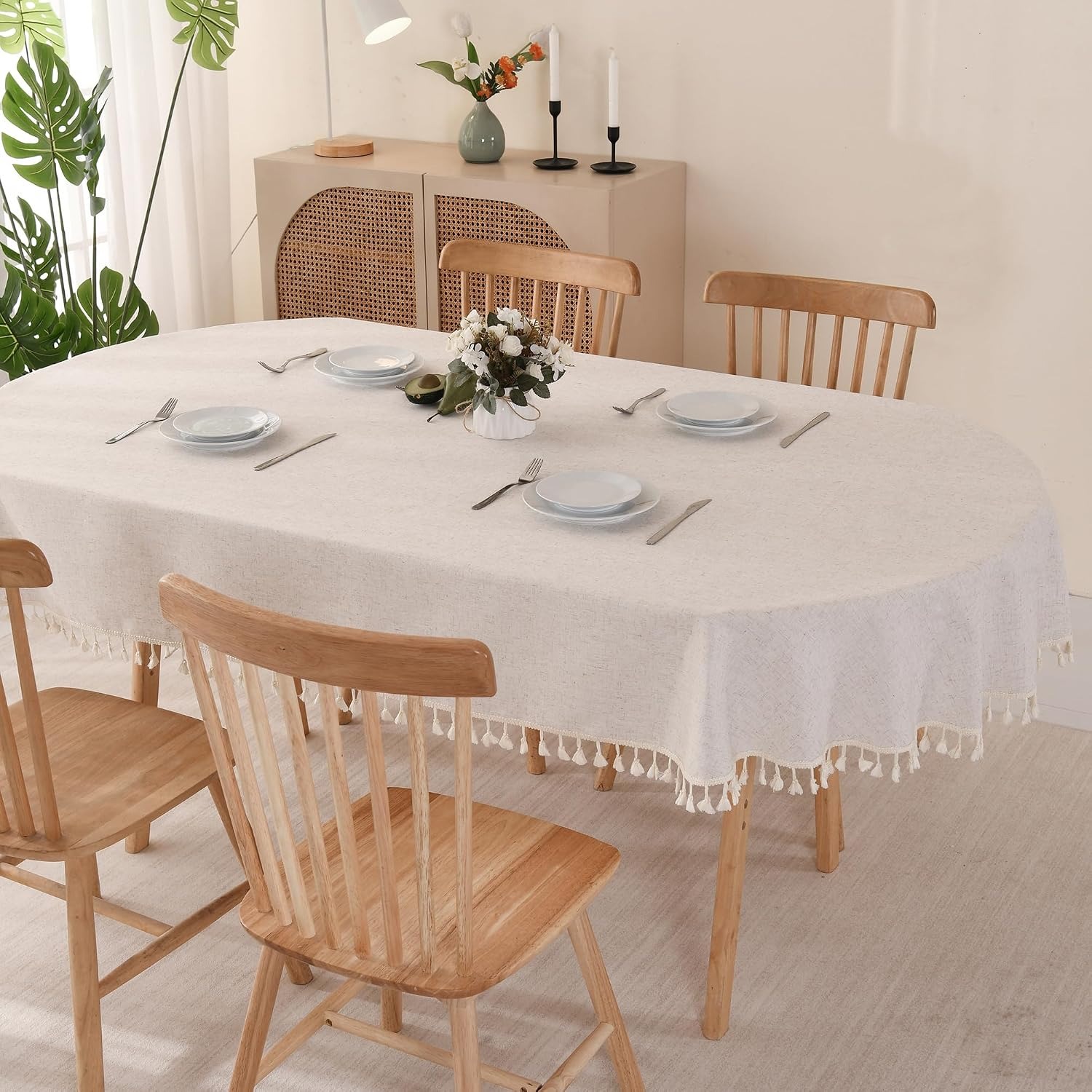
Most table linen comes in two shapes: rectangular and round. Put a rectangular cloth on an oval table and the corners hang off the curve like flags. Put a round one on and it covers the middle while leaving both ends bare. Neither looks bad enough to throw out, and neither looks right. People live with it for years.
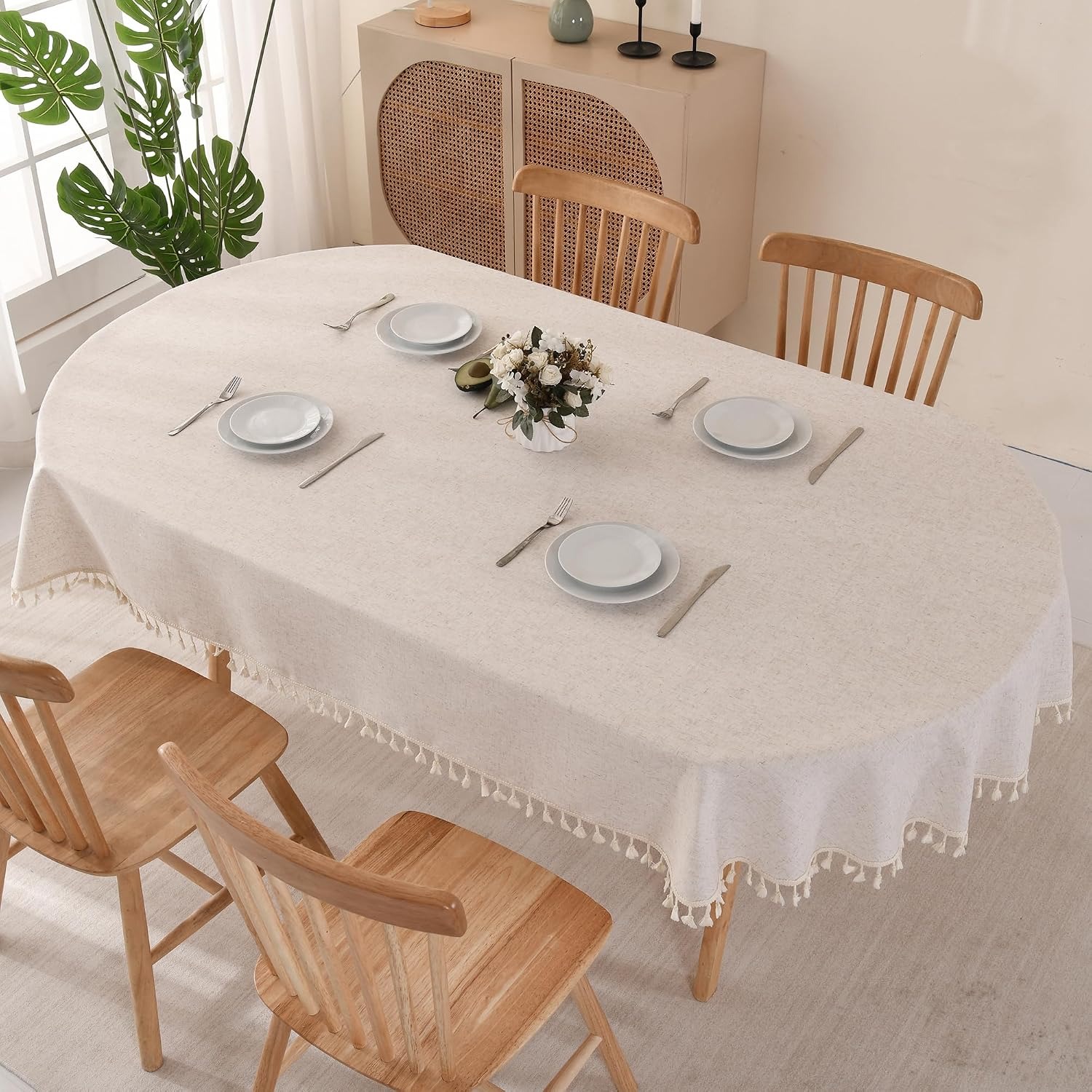
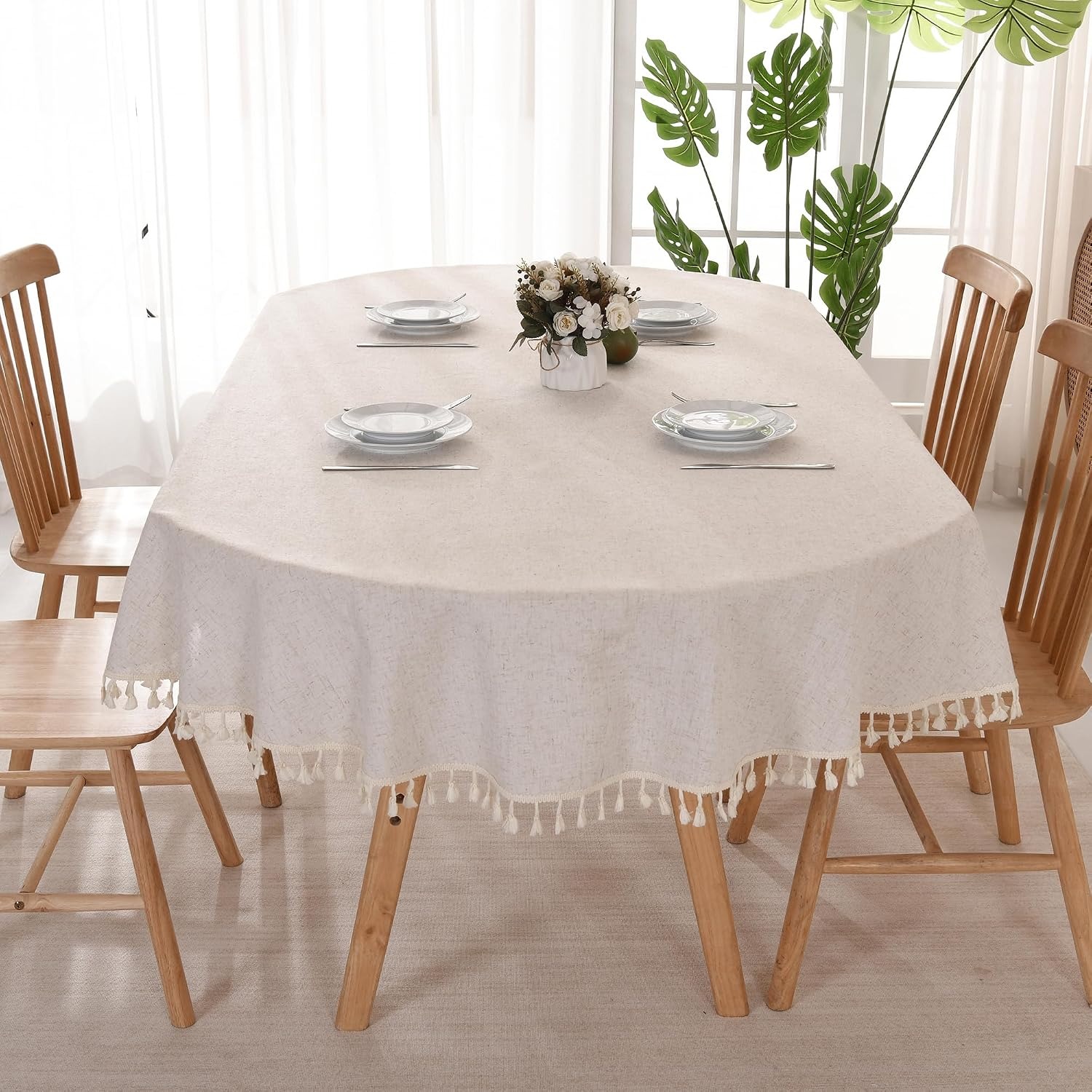
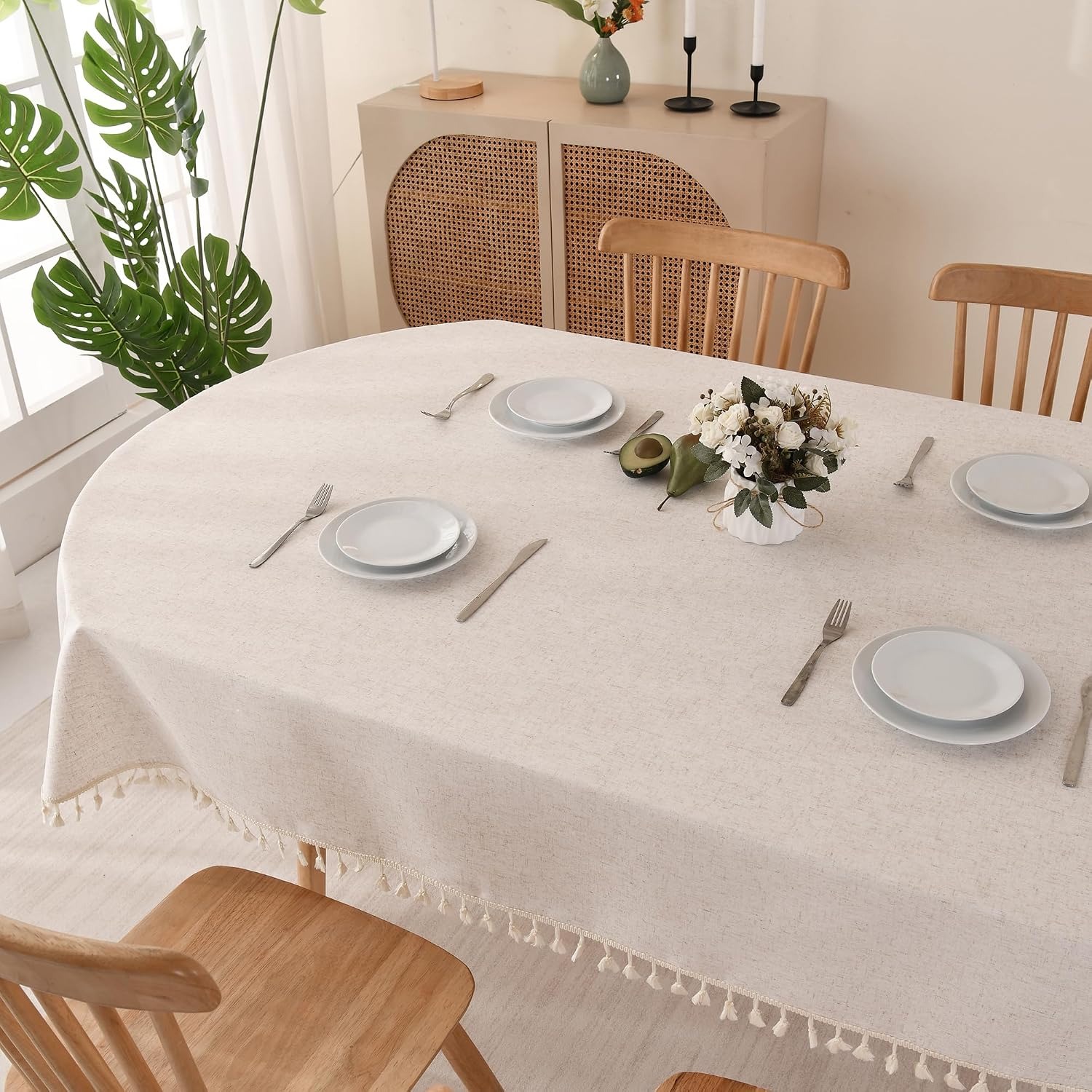
A true oval cloth fixes it in one move. The hem follows the same curve as the table, so the drop is even all the way around and nothing bunches or dangles. That is the whole reason this piece exists, and it is why the shape matters more than almost any other feature on the label.
What the fabric actually is
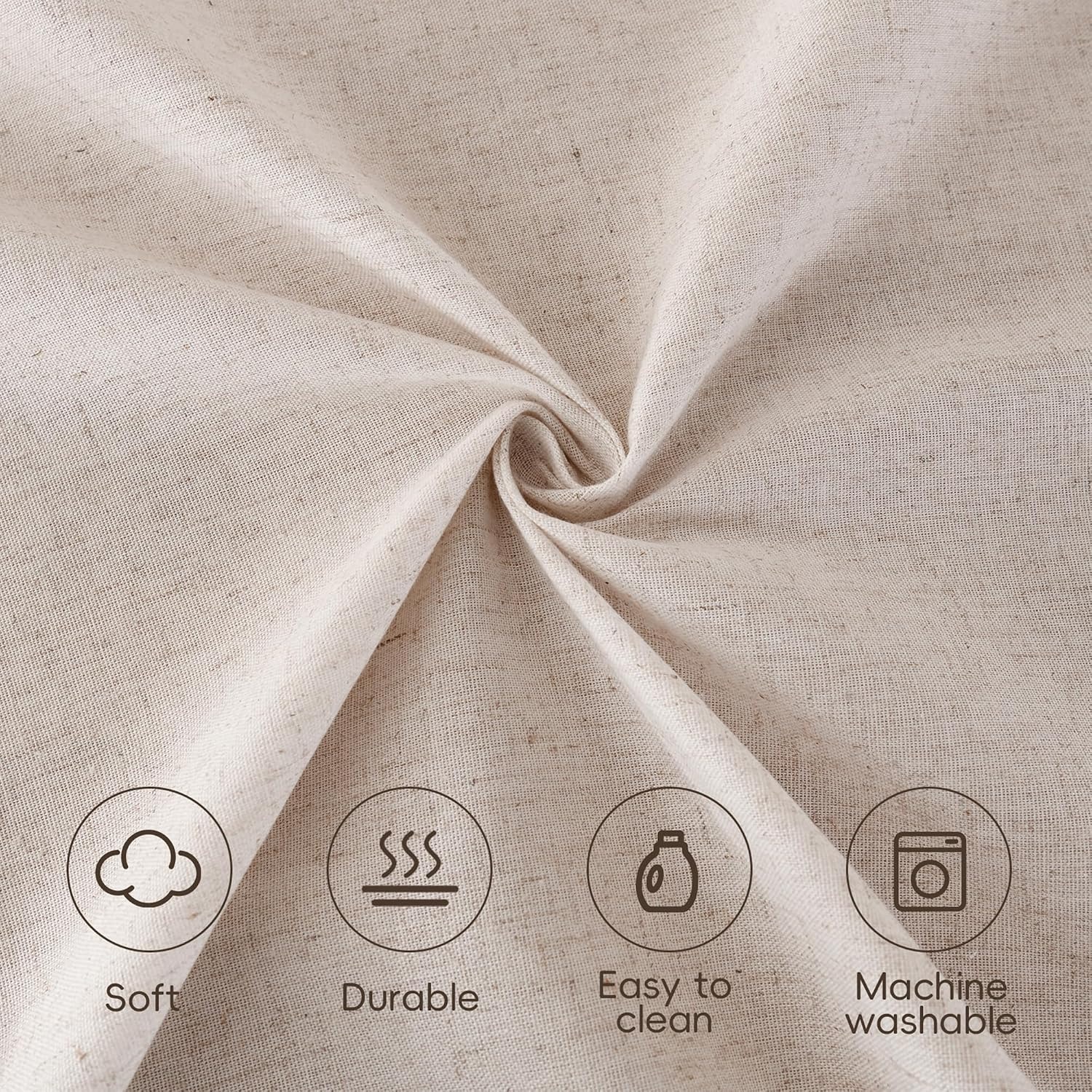
This cloth is a cotton and linen blend. The maker states the blend without giving percentages, so the honest description is a blend, not pure linen. It helps to be clear about that, because linen carries a premium and some listings blur the line.
The maker describes the fabric as soft, with a comfortable, natural feel, and lists the weave as canvas. The photos show a pale beige cloth with a fine fleck through the weave.
It is not pure linen, and it is machine washable, so it is a cloth for a normal weeknight as much as for guests.
Getting the size right
The cloth measures 220 cm long by 140 cm wide. To know whether that suits your table, you need two numbers from a tape measure: the length of your table top at its longest point, and the width at its widest.
The formula is simple. Take your table length, add double the overhang you want, and that is the cloth length you need. Do the same with the width. A drop of 20 to 30 cm on each side is the standard range for dining. Less than that and the cloth looks skimpy. More than that and it starts landing in people's laps.
So a 180 x 100 cm oval table with this cloth gives you 20 cm of overhang at each end and 20 cm on each side. Neat and comfortable. A 170 x 90 cm table gets 25 cm all round, which reads slightly more formal. Go much smaller than that and the cloth starts to swamp the table.
If your table sits at the upper end, say 190 cm long, you will have around 15 cm of drop. That is still perfectly usable, it just looks a bit more tailored and less draped. The one thing to avoid is a table longer than the cloth, because no amount of arranging hides that.
Who this suits
Households that eat at the table more than once in a while. The appeal of a machine washable tablecloth is that you stop treating it as a special occasion item. Breakfast, homework, a laptop, dinner with friends on Saturday, all of it.
It also suits anyone building a neutral base. If your plates and glassware do the talking, or you like changing the table for an occasion with flowers and candles, a plain beige ground gives you room to work. Patterned cloths lock you into one look. A neutral one does not.
It suits smaller homes too. At 0.6 kg it folds down to something that fits in a drawer, and there is no need for a dedicated linen cupboard. For flats and apartments where storage is the real constraint, that matters more than people expect.
It is less suitable if you have a rectangular or square table, if you need certified pure linen with documented fibre content, or if you want a cloth that is already the centrepiece. This one is designed to stay in the background.
Why beige is the practical choice
White looks beautiful for about ten minutes. Then someone puts down a glass of red, or a child arrives with sticky fingers, and you spend the rest of the meal watching the cloth instead of the people.
Beige is far more forgiving. It is warm enough to stop a dining room feeling cold, and it hides crumbs, shadows and the general evidence of a meal far better than a bright white. It also sits well with almost every furniture finish, from pale oak and rattan through to dark timber, marble and painted legs.
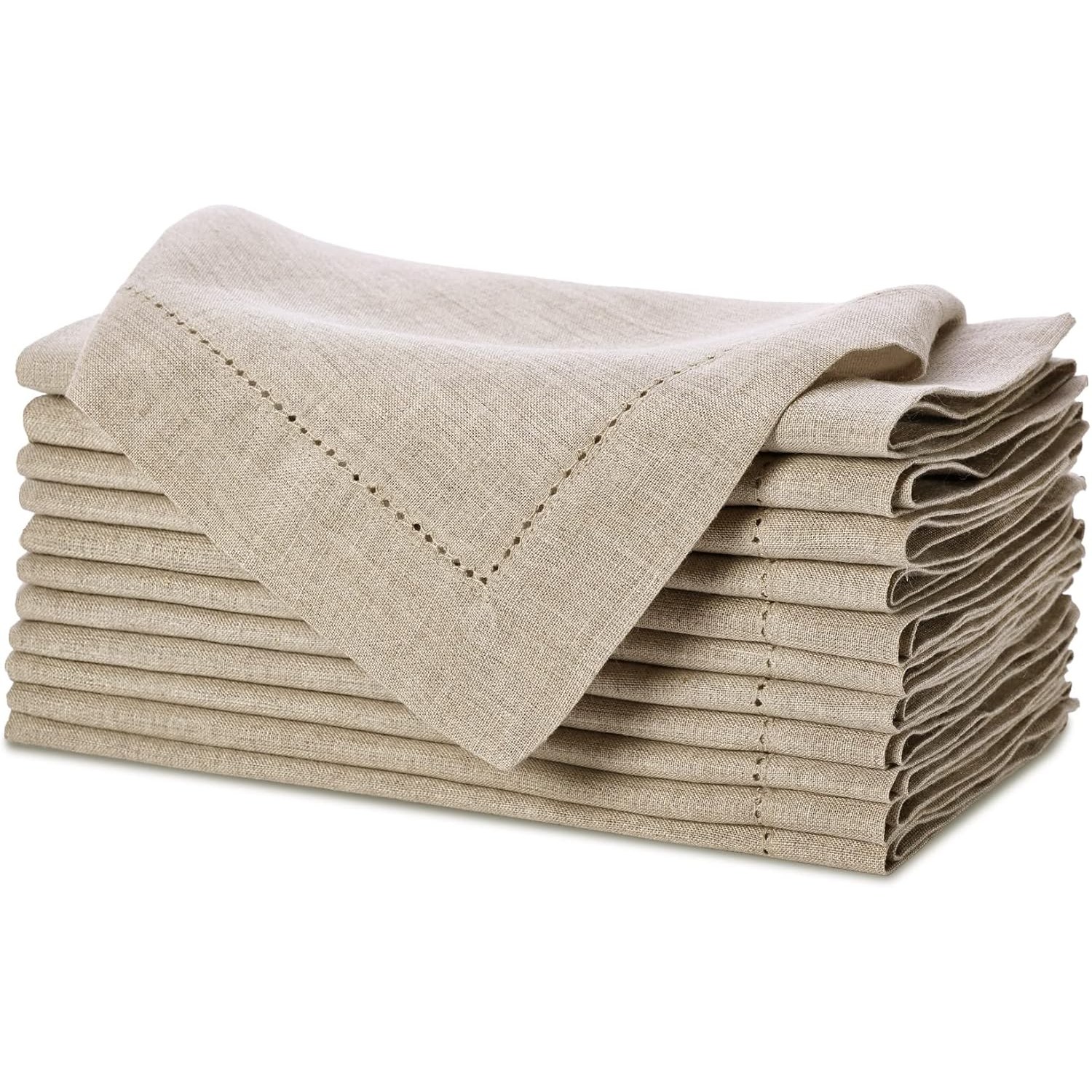
If you want contrast, add it with napkins. Deep green, rust, charcoal or plain white napkins all look sharp against beige, and swapping them is a cheap way to change the mood of the table without buying another cloth.
The tassel edge
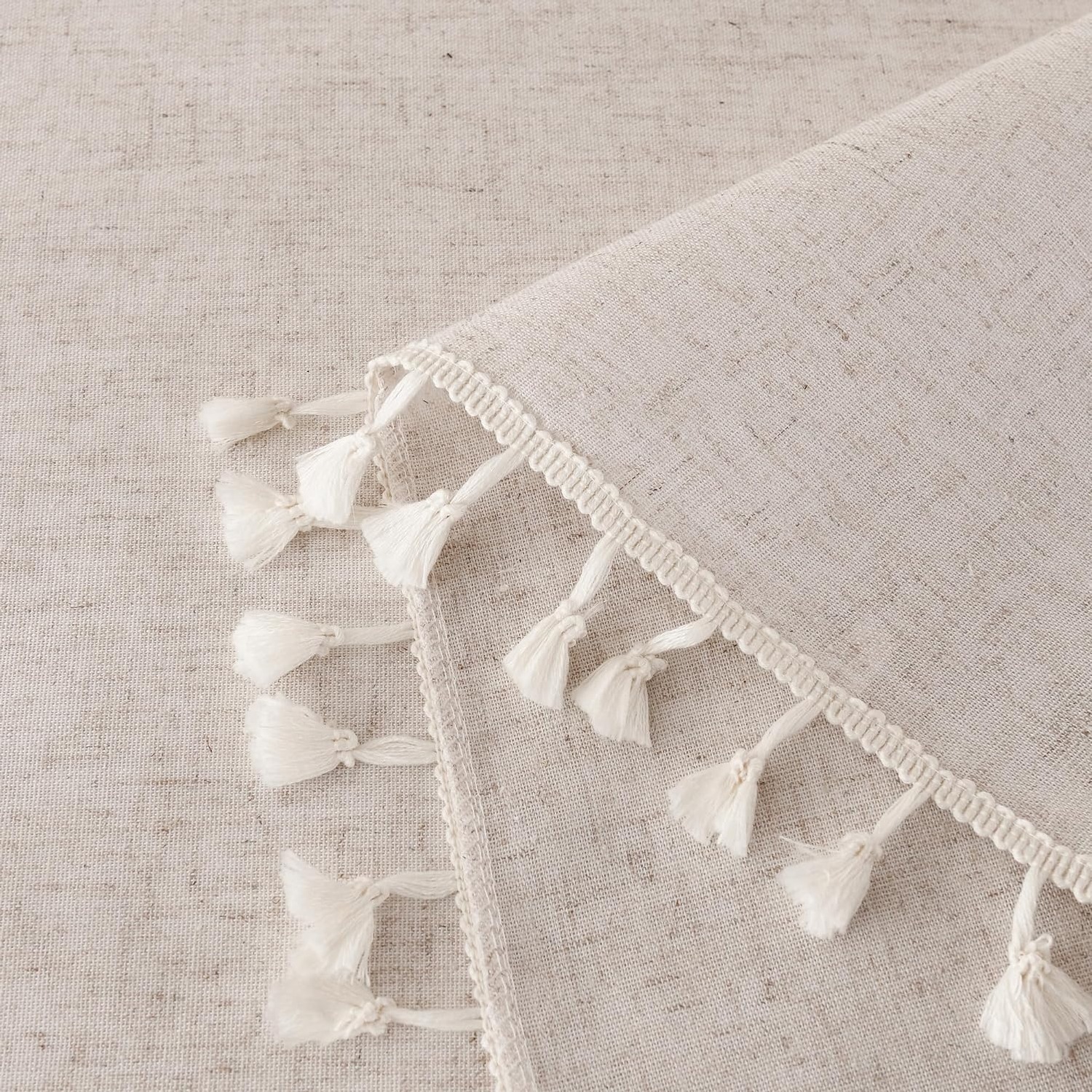
The border is finished with a tassel trim that hangs over the table edge. It is a small detail that does a lot. A plain hemmed cloth in a solid colour can look a bit flat. The fringe gives the eye something to land on and adds a relaxed, informal quality.
Tassels do need a small amount of attention. Wash the cloth in a laundry bag so the strands do not wrap themselves around zips and buttons in the machine. When it comes out, run your fingers through the fringe to straighten it, and press lightly along the hem if you want the strands hanging dead straight. Two minutes of care and it looks sharp every time.
Resist the urge to trim stray threads with scissors. Cutting into a fringe tends to loosen more than it tidies. Comb, press, done.
Looking after it
The maker says the cloth is machine washable. A gentle cycle in cool or warm water with similar colours is a careful choice. Skip bleach, which can yellow natural fibres.
Dry in the shade, since the maker's care instruction does not cover tumble drying. Strong sun fades most dyed fabrics, so shade drying is worth the extra hour. If you want a crisp finish, take the cloth out while it is still slightly damp and press on a medium iron, working from the centre toward the edges.
Treat spills quickly. Blot rather than rub, lift as much as you can with a clean cloth, then wash as soon as practical. The maker lists stain resistance as a feature, but no fabric is immune to a glass of wine left sitting for an hour.
For storage, make sure the cloth is completely dry before you fold it away. In a humid climate, a damp cloth in a closed drawer develops a musty smell quickly. A loose fold is better than a tight one, since hard creases take longer to drop out.
The short version
If you own an oval table, buy an oval cloth. The shape is the thing. This one measures 220 x 140 cm, which covers tables seating roughly six to eight with a comfortable 20 to 30 cm drop, so measure your top before you order.
The fabric is a cotton and linen blend, not pure linen, and the maker describes it as soft. The beige hides daily life better than white, the tassel trim adds character without pattern, and the whole thing goes in the washing machine. That combination is what turns a tablecloth from something you store into something you actually use.