
The complete guide
Merino Wool Socks for Women, A Practical Buyer's Guide
The cold you actually deal with
Most writing about wool socks assumes a cold climate. That is not the problem here. The cold most of us meet is indoor cold, the kind that comes out of a ceiling vent set to 18 degrees and stays there for nine hours. You walk out of humid air into a lobby and within twenty minutes your feet are cold while the rest of you is fine.
Feet tend to feel it first when you sit still for hours, and floors are usually the coolest surface in a room. Thin cotton socks do little about it.
Wool is the traditional answer to cold feet. That is the whole case for owning a few pairs.
How merino works
Merino fibres are crimped, meaning they have a natural wave rather than lying flat. When you knit them together, those waves create thousands of tiny air pockets. Still air is a poor conductor of heat, so the warmth from your skin stays near your skin instead of escaping into the room.
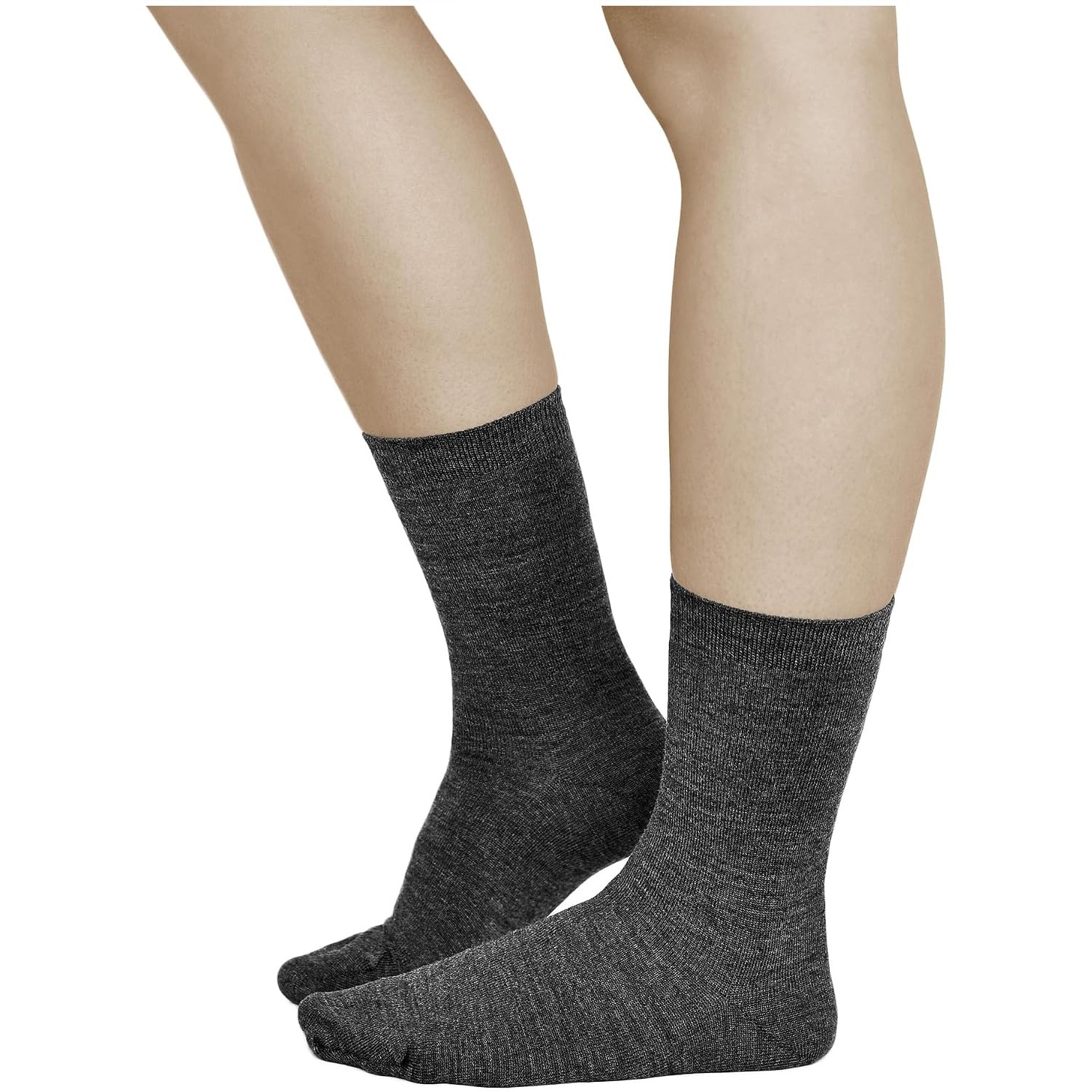
The maker also describes these socks as breathable, and says the merino holds warm air without causing overheating. They are medium thickness rather than heavy, which is what you want when the cold is only indoors.
With three pairs in the pack, you can rotate them, which is useful when you are travelling and packing light.
Why a blend rather than pure wool
This set is 80% merino wool, 17% polyamide and 3% elastane. Some people see anything less than 100% wool as a compromise. In socks, it usually is not.
Pure wool socks tend to stretch out. Polyamide is commonly added to sock yarn for durability, and elastane gives the knit its stretch, which helps a sock stay up.
So you get the comfort properties from the merino, which is the large majority of the fibre, and the durability from the rest. For everyday wear in normal shoes, that trade is worth making. If you want a pure wool piece for a different reason, this is not that product, and it is only fair to say so plainly.
The itch question
A lot of people decided they hate wool as children, based on one jumper. That reaction is real, but it is about fibre diameter rather than wool as a material.
Thick, coarse wool fibres are stiff. When the cut ends press against skin, they do not bend, so you feel each one as a small poke. Multiply that by thousands and you get itch. Merino fibres are far finer. They flex when they touch you, so the sensation is soft pressure rather than pricking. The maker says these socks do not cause itching, as coarser wool often does.
If you are still unsure, socks are a low-risk way to test it. Your feet will tell you within an hour.
Who these suit
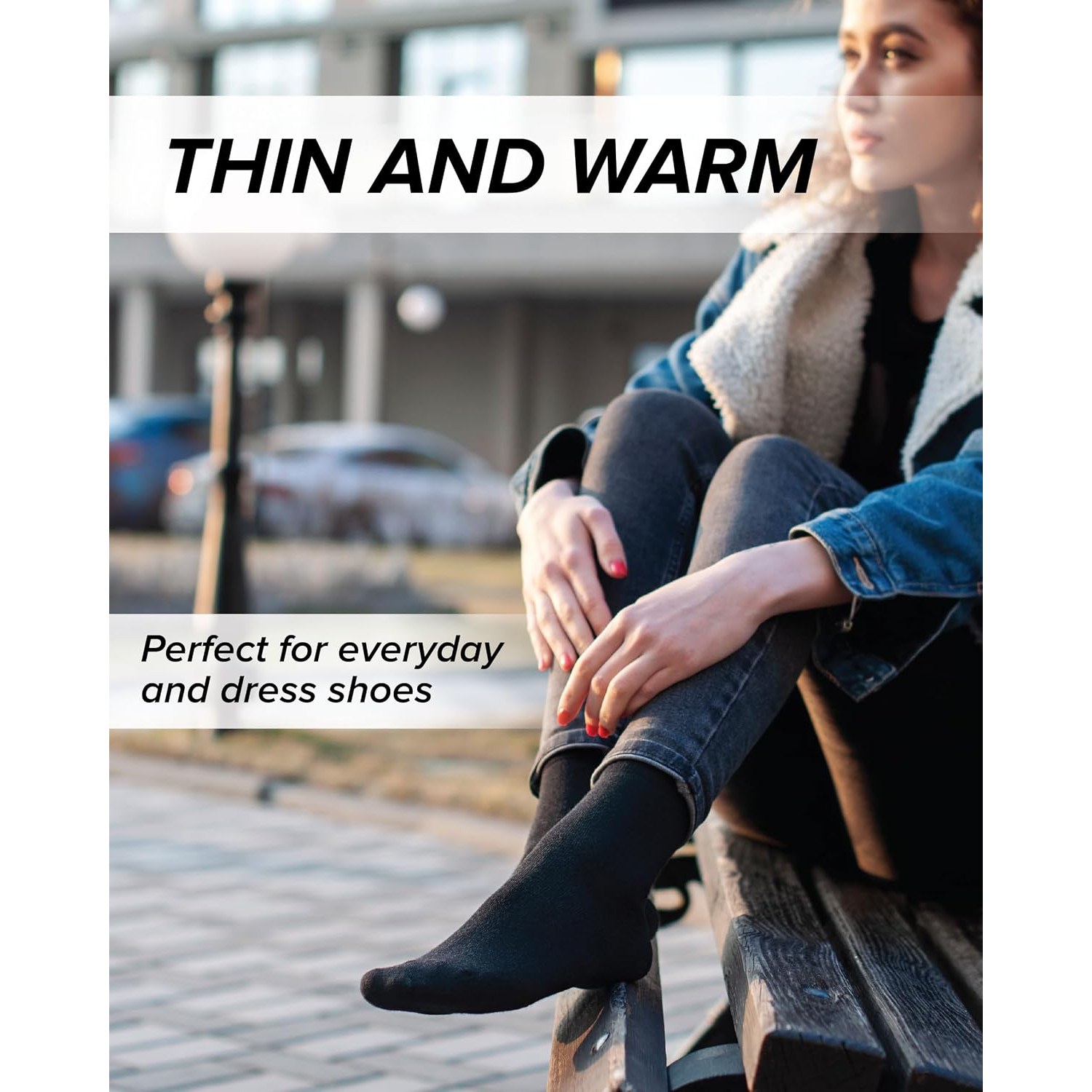
The clearest fit is someone who works in a strongly air-conditioned office and keeps a cardigan at their desk. Cold feet under a desk are a daily annoyance, and a mid-weight merino sock fixes it without you having to change shoes.
The second group is travellers. Long-haul cabins run cool and you cannot move much. The same pairs then work when you land somewhere genuinely cool, which is why people who fly a few times a year often treat merino as their default travel sock.
The third group is anyone who wants a plain everyday sock that is warmer than cotton. The maker describes these as breathable and made for normal shoes.
Who they do not suit is worth stating too. The maker is explicit that these are not for hiking, stiff leather boots or very cold frosty weather. If you are heading for a trek or a very cold country, buy a heavyweight technical sock designed for it.
Choosing height and thickness
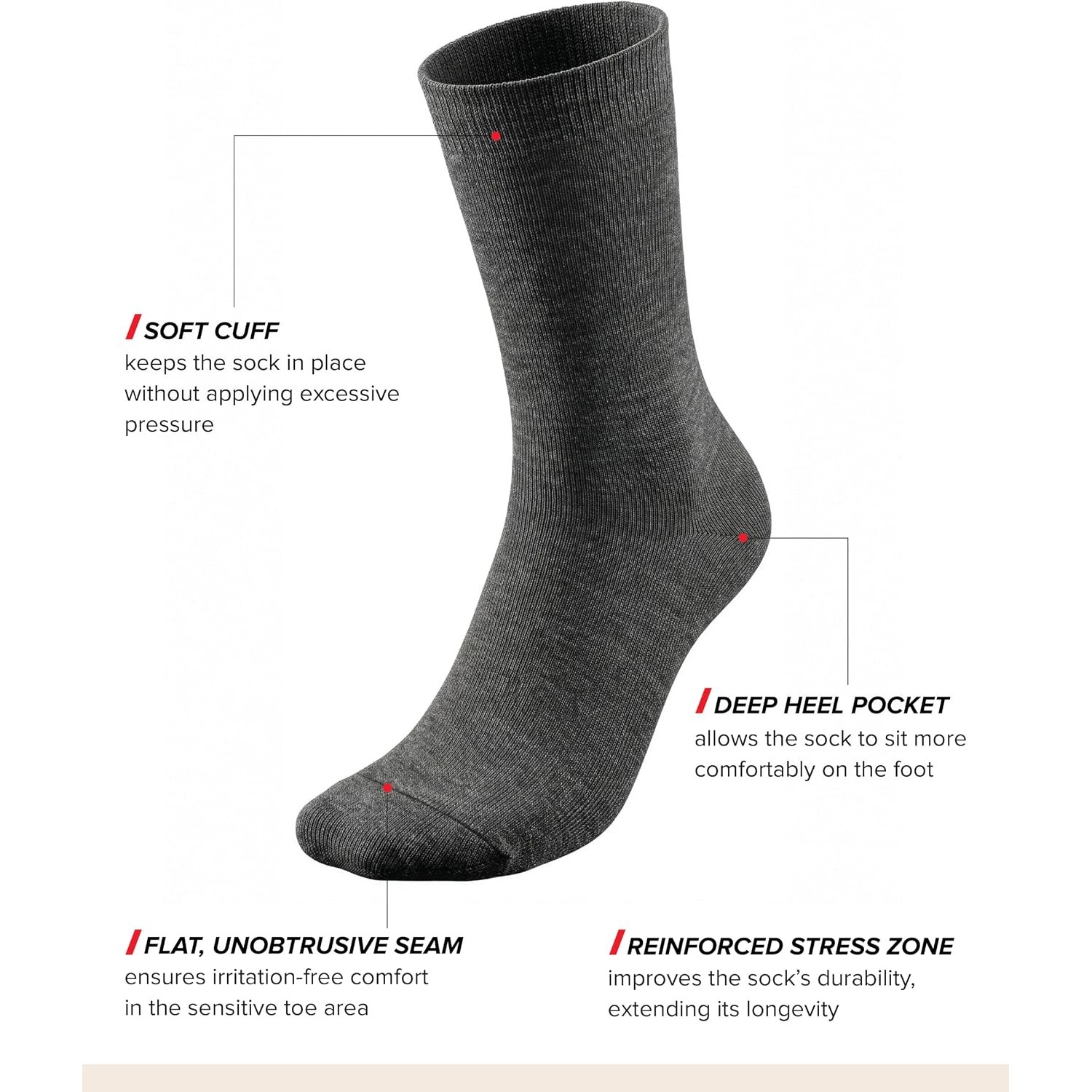
Sock height is mostly about what you wear over them. These are mid-height, which the maker also calls calf length, so they stay covered under full-length trousers.
Thickness matters more than people expect. A thick sock in a fitted shoe feels tight. These are medium thickness, which is the useful middle ground. They add warmth but are made for ordinary shoes.
If your shoes are already snug, allow for a little extra bulk.
Sizing and the three-pair set
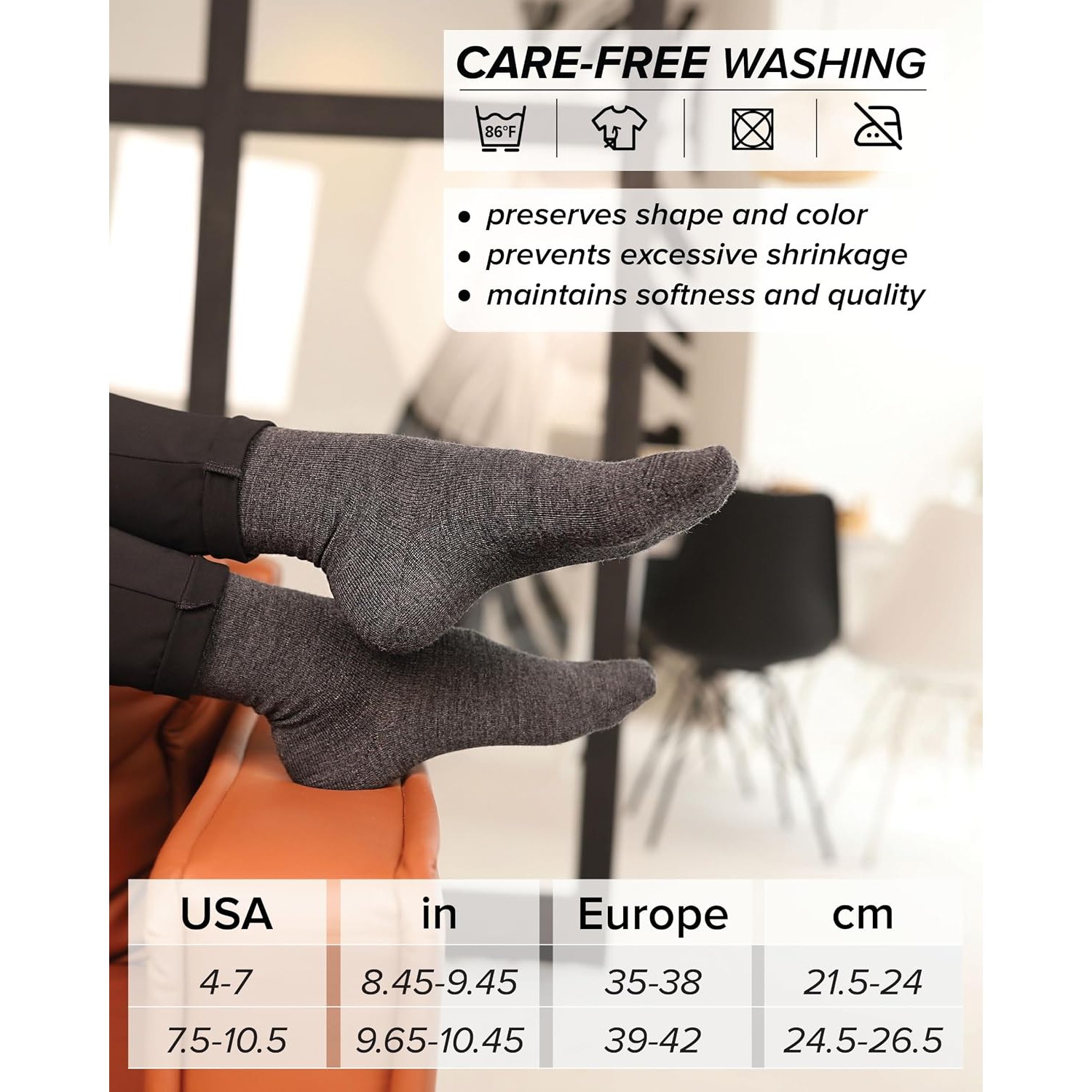
These come in EU 39 to 42, a single size band. The maker gives the fit as regular, and the elastane gives stretch across the range. Check your usual EU shoe size and you will know straight away whether these work for you.
Three pairs is a practical quantity rather than a marketing one. One pair on your feet, one in the drawer, one drying. That rhythm spreads the wear across the set. Wearing the same pair day after day is the fastest way to wear out any sock.
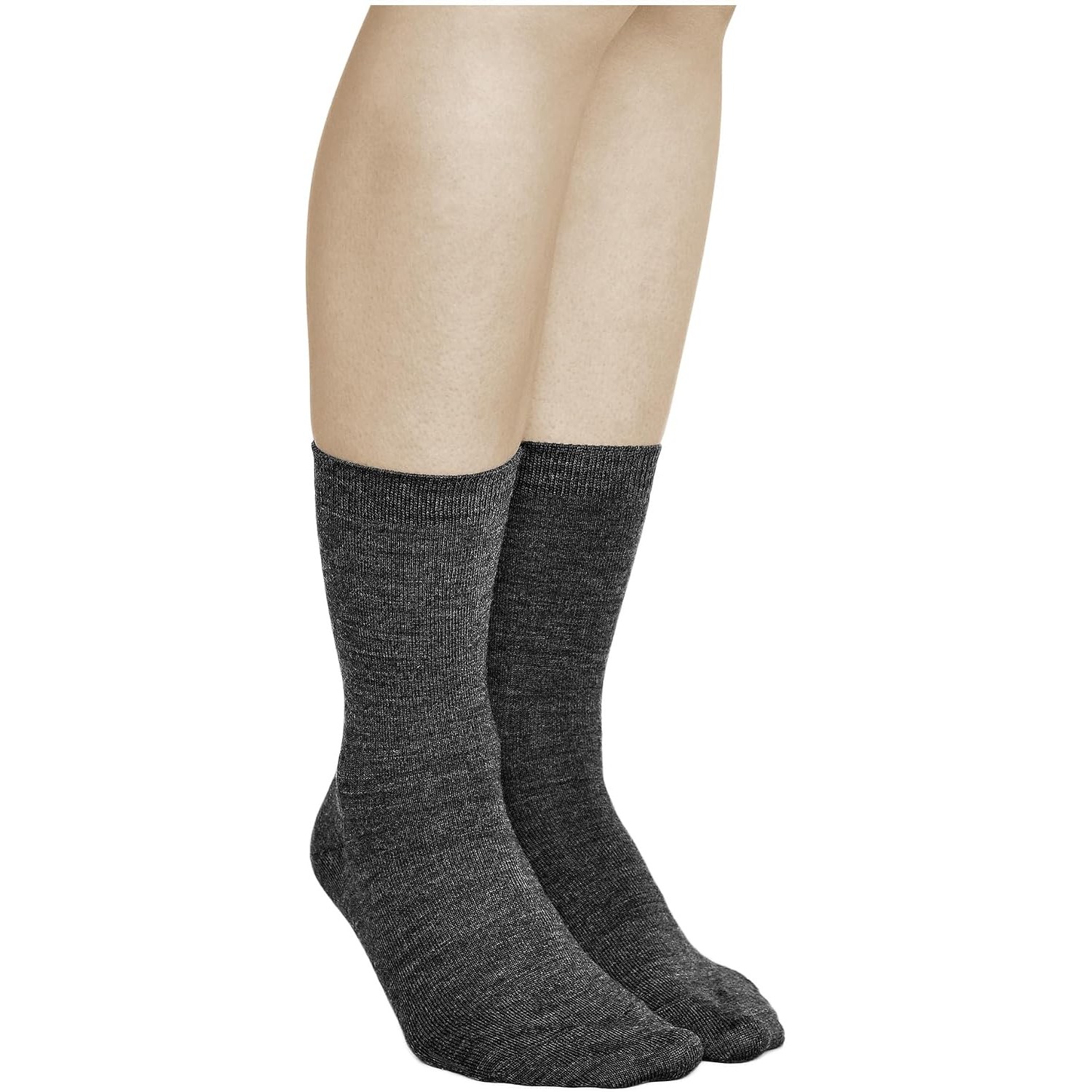
All three are grey, plain and solid. It is a quiet colour that works under navy, charcoal, black and brown, which is most of a work wardrobe.
Keeping them good
Wool care is simple once you know the two things that damage it, which are heat and agitation.
Machine wash at a maximum of 30 degrees, turned inside out, on a gentle cycle. Inside out protects the outer face of the knit from rubbing, which helps the outside stay tidier. Skip fabric softener, which the maker's instructions do not call for.
Do not tumble dry. Heat plus tumbling makes wool fibres lock together and shrink, and there is no undoing it. Reshape the socks while damp and lay them flat to dry away from direct heat. Do not iron them and do not bleach them.
With three pairs, one can always be drying flat while another is in use.
The short version
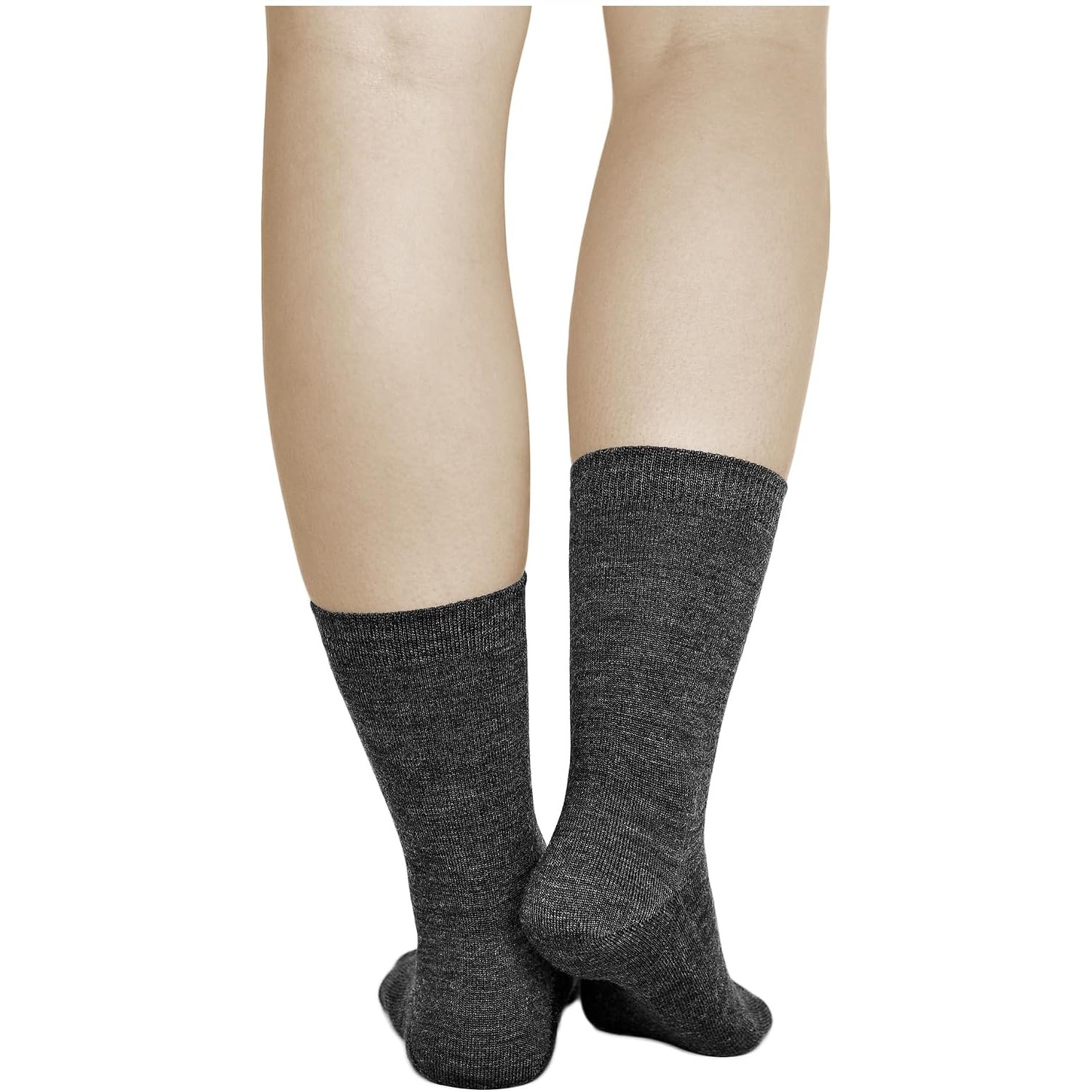
These are mid-weight merino blend socks for women, three pairs in grey, sized EU 39 to 42. The fibre mix is 80% merino wool, 17% polyamide and 3% elastane, so it is a merino-rich blend, not pure wool.
They are built for indoor cold, cool offices, cinemas, flights and trips to temperate places, worn with ordinary shoes. They are not built for hiking, stiff boots or hard frost, and the maker says so directly.
Wash them cool, inside out, and dry them flat. Do that and a set of three will help with cold feet in cold rooms.