

The complete guide
How to Choose a Merino Blend Blanket for Warm Climates and Cold Rooms
The cold you actually feel
If you live somewhere warm and humid, the idea of buying a wool blanket can sound odd. Then you sit through a three-hour meeting in a room where the air conditioning never stops, or a late flight where the cabin crew hand out a paper-thin sheet, and the logic clicks. The cold most of us deal with is indoor cold. It is manufactured, it is relentless, and no amount of outdoor heat fixes it once you are shivering at your desk.
A good throw helps with that problem in about ten seconds. You pull it over your shoulders or across your lap and the draught stops reaching you. No thermostat argument, no cardigan you then have to carry around all day.
This guide walks through what to look for in a merino blend blanket, what the fibre numbers mean, how to size one properly, and how to look after it.
What a merino blend really is
The fabric here is 25% merino wool, 72% polyester and 3% nylon, as stated by the maker. That is a blend, and it pays to understand it rather than skim past.
Merino is a fine wool from merino sheep, and the maker says the wool in this blanket is Australian merino. It makes up a quarter of the fabric.
Polyester makes up most of the rest, at 72%, with 3% nylon. So nearly three quarters of the blanket is synthetic fibre.
Put together, the maker describes a blanket that is lightweight and fluffy, with a soft pile, that does not wrinkle when folded and can be washed by hand or in the machine. A purist will tell you pure merino is nicer, and they may well be right about the feel. But this is a different product at a different price, and a blanket you can wash at home tends to get used.
Why 160 x 200 cm is a useful size
Throw sizes vary wildly and many of them are disappointing. A 125 x 150 cm throw looks fine folded on a chair but covers one adult awkwardly. At 160 x 200 cm you move into practical territory.
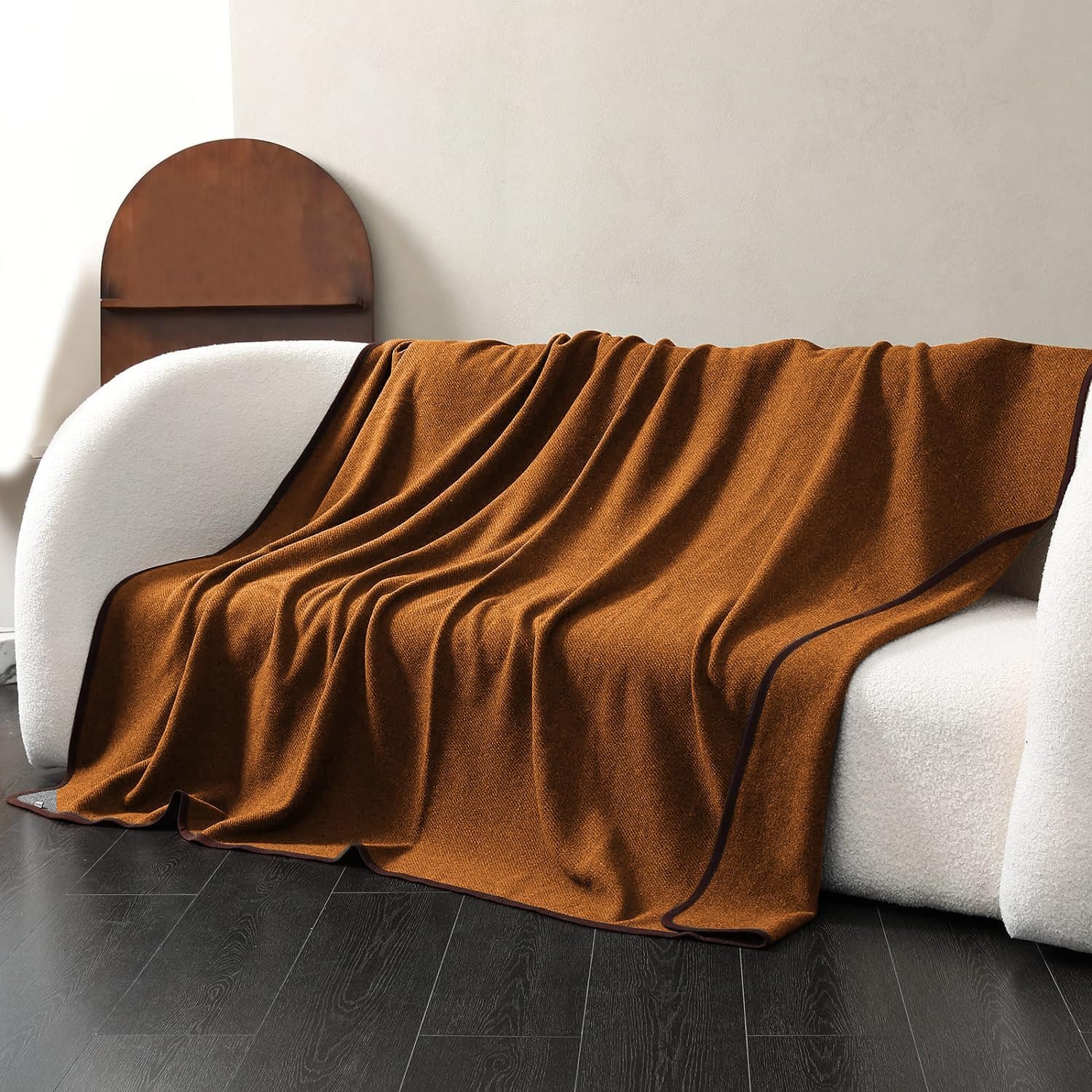
On a sofa, 200 cm of length means a tall adult can lie under it without their feet poking out. The 160 cm width covers two people sitting next to each other, which is the real test of a throw in a shared, air-conditioned living room.
On a bed, the maths works too. A double mattress is roughly 137 x 190 cm, so the blanket covers the surface with a neat drop at each side. That makes it usable as a bedspread in its own right, or as a top layer over a duvet. On a queen it still covers the sleeping area, though the sides sit closer to the mattress edge. On a king, treat it as a decorative layer across the foot rather than a full cover.
For travel, remember that 160 x 200 cm is a full-size blanket. Folded, it will take a fair share of a cabin bag, so check the fit before a trip. Unfold it on a long flight and you have a real blanket rather than a small square of fleece.
Single layer versus quilted
This is a single-layered blanket. One continuous piece of fabric, no filling, no stitched channels. There are trade-offs in both directions.
A single layer is lighter, folds flatter and drapes more easily. It follows the shape of your shoulders instead of standing away from them like a duvet. It also packs smaller than a quilted blanket of the same size.
A quilted or double-faced blanket has a filling, which adds bulk. If you want something for freezing conditions, that is the build to look at. For air-conditioned rooms, cool cabins and mild evenings, a single layer in a wool blend is a reasonable choice.
Picking the colour
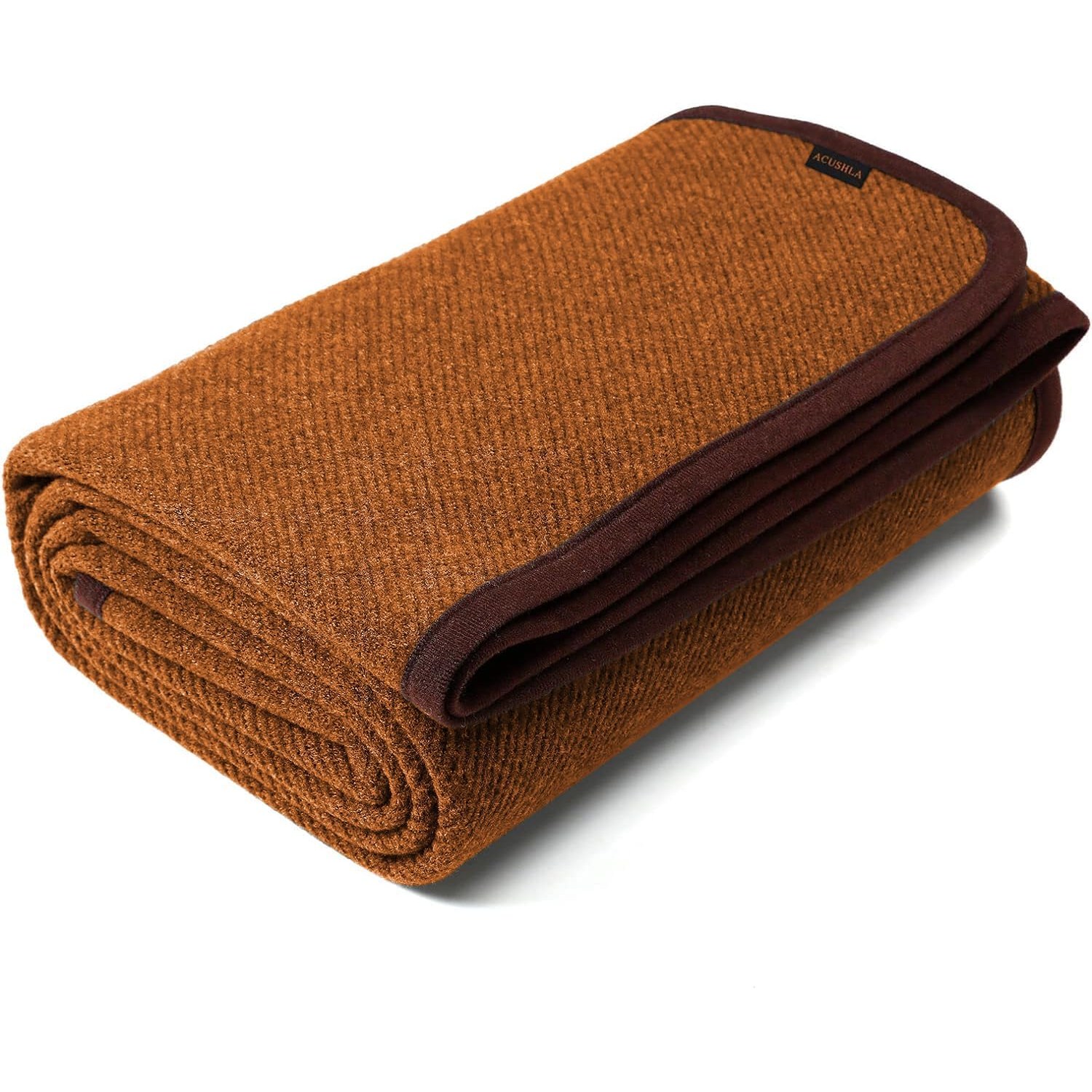
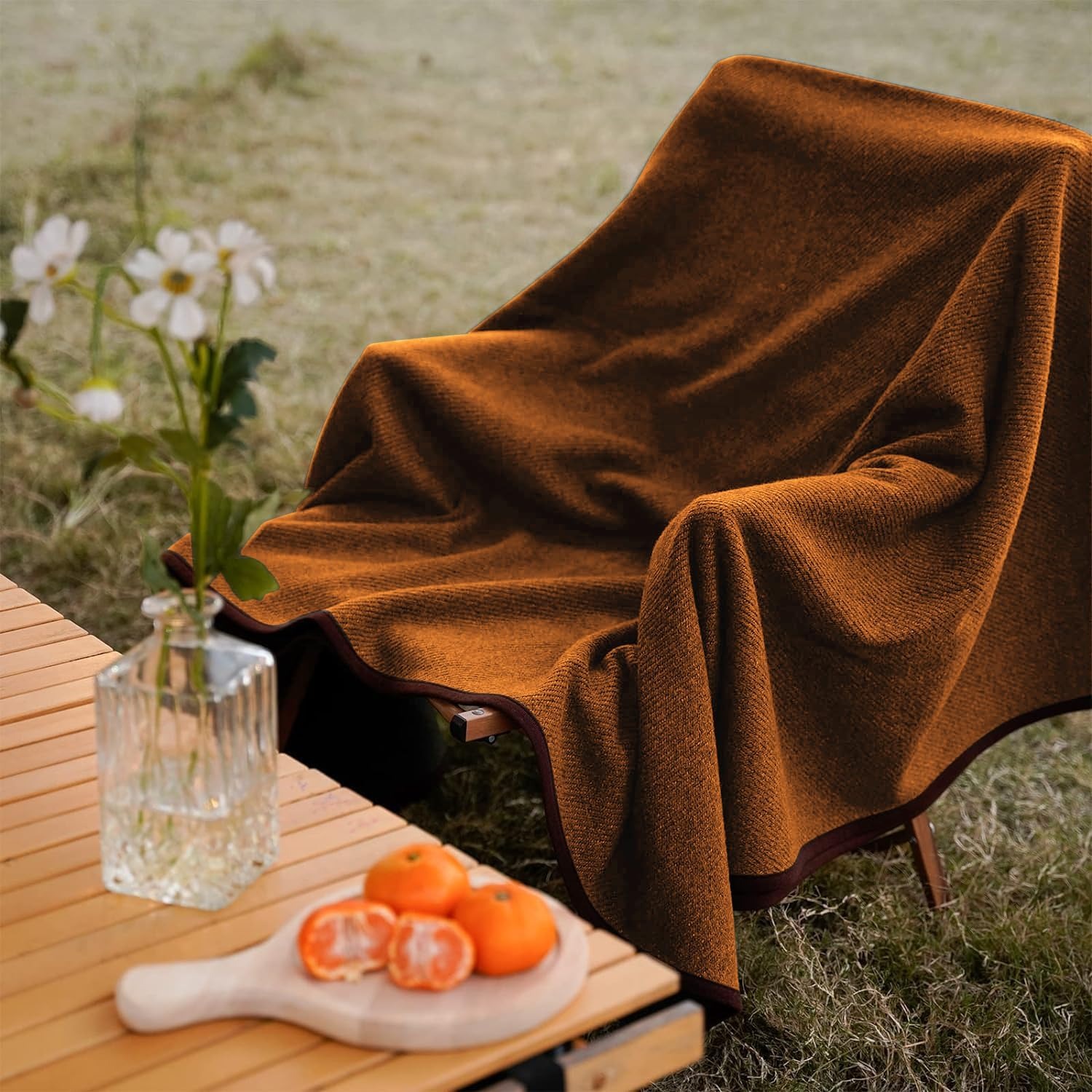
The maker calls the shade pumpkin. In the photos it is a solid burnt orange with a rustic character and a dark brown edge binding. Colour choice in a throw is low risk compared with, say, a sofa, because you can move it or swap it. But a little thought helps.
Warm orange works well as a single accent. Against grey, charcoal, cream, oatmeal or natural timber it adds life without fighting anything. Against rattan or cane furniture it looks intentional rather than loud. Where it struggles is in a room that already has several strong colours competing, so if your cushions are red, teal and mustard, consider which of those is leaving.
In a bedroom, a block of warm colour across the foot of a white or grey bed is one of the easiest ways to make the room look finished. That is partly why people shopping for a bedspread for a double bed often land on a coloured throw rather than a matched set.
Looking after it
Wool care has a reputation for being fussy. Most of that reputation comes from people who washed a jumper hot and watched it shrink to doll size. The rules are simple once you know them.
Wash cool, on a gentle or wool cycle, with a mild wool-safe detergent. Heat and agitation are what felt wool fibres together, so avoid both. Skip the fabric softener, which coats fibres and flattens the surface over time. Skip bleach entirely.
When it comes out of the machine, do not wring it. Press the water out, reshape it to its proper rectangle while damp, and dry it flat away from direct sun and direct heat. Hanging a wet wool blend over a line can stretch it out of shape under its own water weight.
In a humid climate, airing matters as much as washing. A weekly shake-out and a few hours of airflow often does more than another trip through the machine. Store it folded loosely in a cotton bag rather than sealed in plastic, where trapped damp causes problems.
If a few small pills appear where the blanket rubs against a sofa arm, that is normal surface wear. A fabric comb or a cheap pill shaver takes them off in a minute and the blanket looks tidy again.
Who it suits
This is a sensible buy if you work in a cold office, sleep in a room with the air conditioning on overnight, travel to cooler countries, or simply want a large throw that two people can share on a sofa. It also suits anyone who wants some wool in the mix and a blanket that washes at home.
It is less suited to someone who specifically wants 100% merino, someone looking for a child-sized blanket, or someone who needs heavy insulation for sub-zero conditions.
As a gift it is an easy choice, because the size is useful in almost any home and the colour works against most neutral interiors.
The short version
You are buying a 160 x 200 cm single-layered throw in a 25% merino, 72% polyester, 3% nylon blend, in a solid pumpkin orange with a brown edge. It covers a double bed, drapes a three-seat sofa and, as the maker states, washes by hand or in the machine.
If you want pure merino, buy pure merino and accept the extra care. If you want a soft, properly sized blanket that you will pull out two or three times a week, a blend like this is the practical answer. Measure your sofa or bed before you order, decide whether orange suits the room, and you will know within a minute whether it is right for you.