
The complete guide
How to Choose Linen Napkins That You Will Actually Use
The small thing that fixes a table
Most people furnish a dining table from the plates outward. Good crockery, decent glasses, maybe a wooden board for bread. Then dinner arrives and the napkins are a folded paper square from a supermarket pack, going grey at the fold line and tearing the moment anyone presses down on it.
It is a small gap, but you notice it. A paper napkin slides off a lap, bunches into a ball and leaves tiny white flecks on dark trousers. It cannot really absorb anything. And every meal, four of them go in the bin.
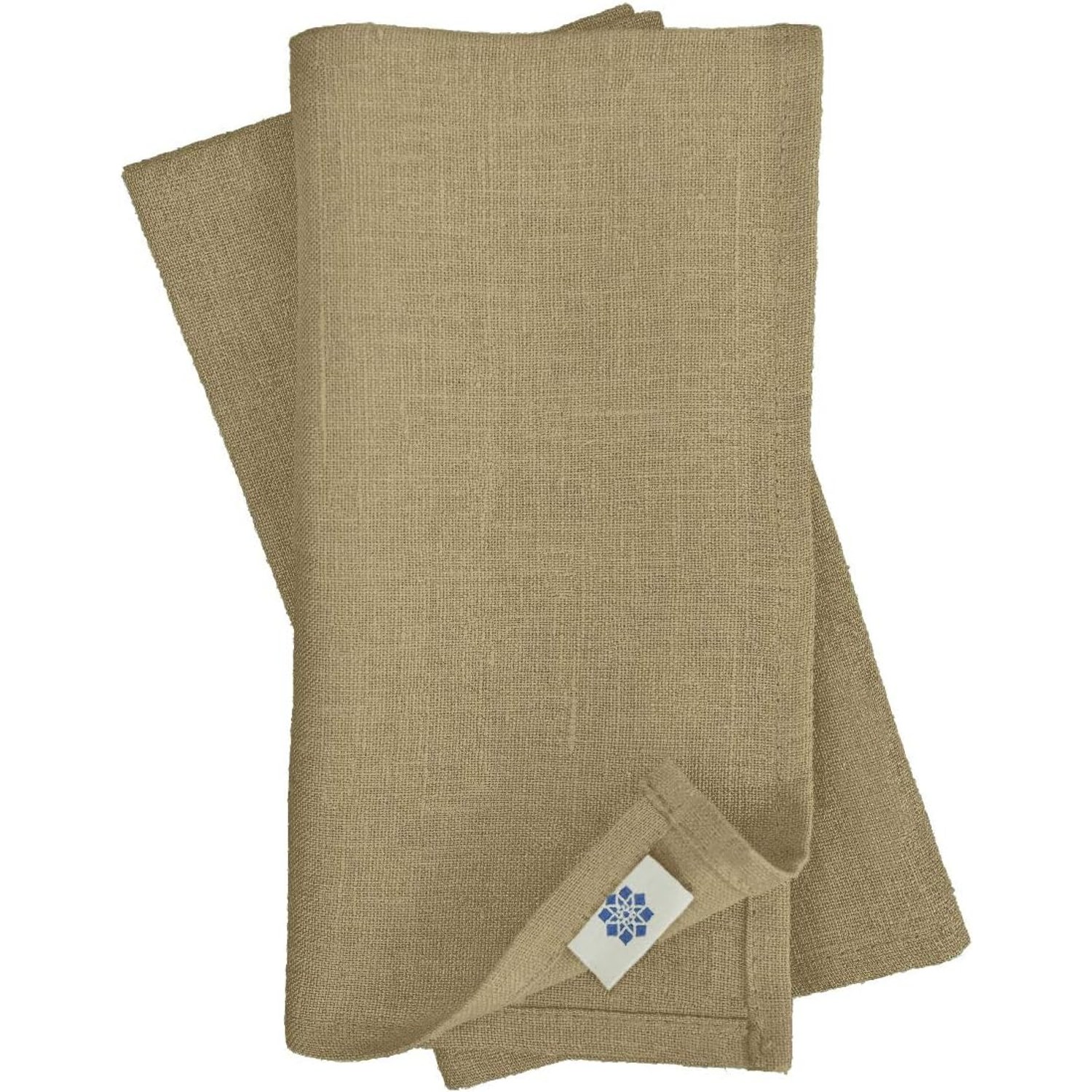
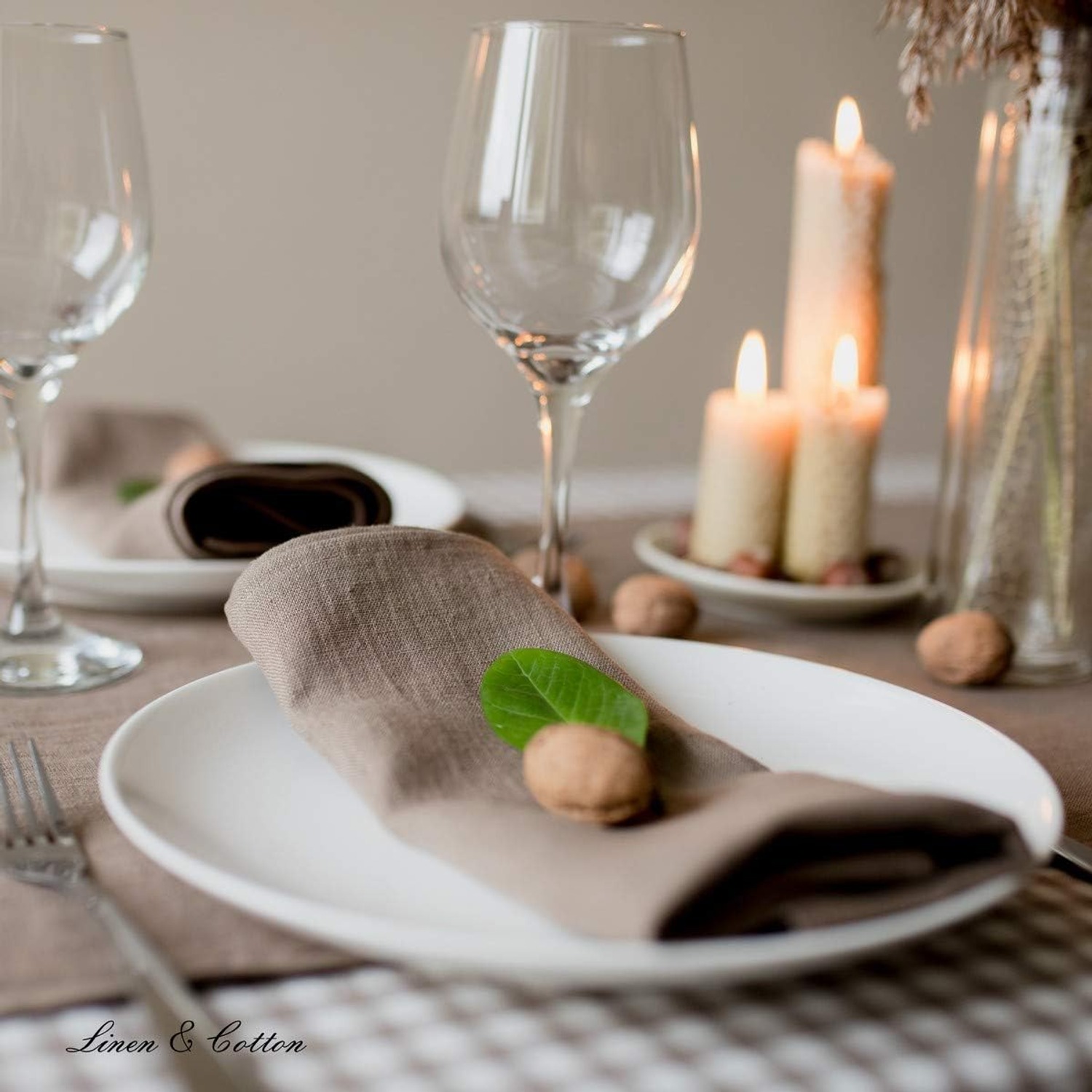
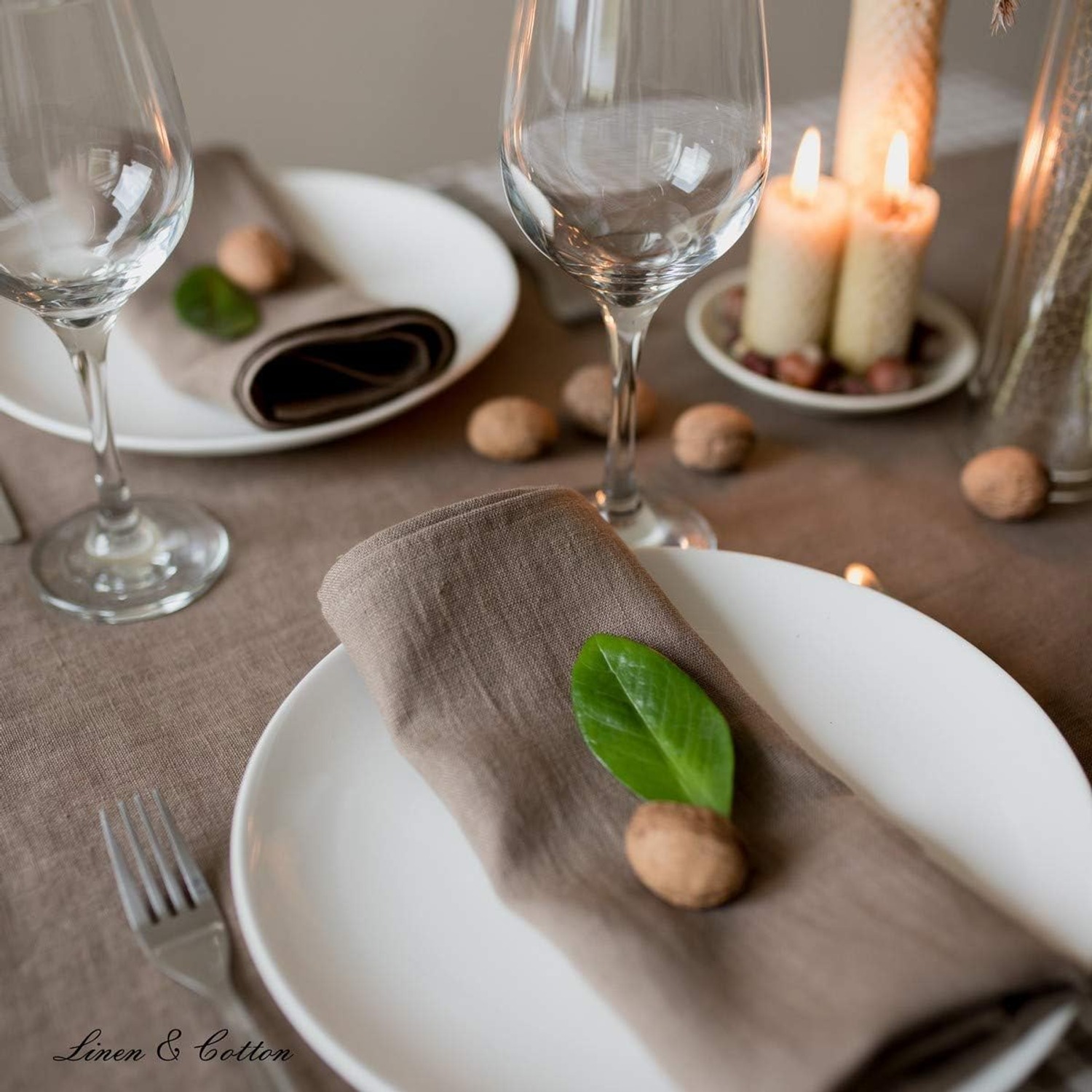
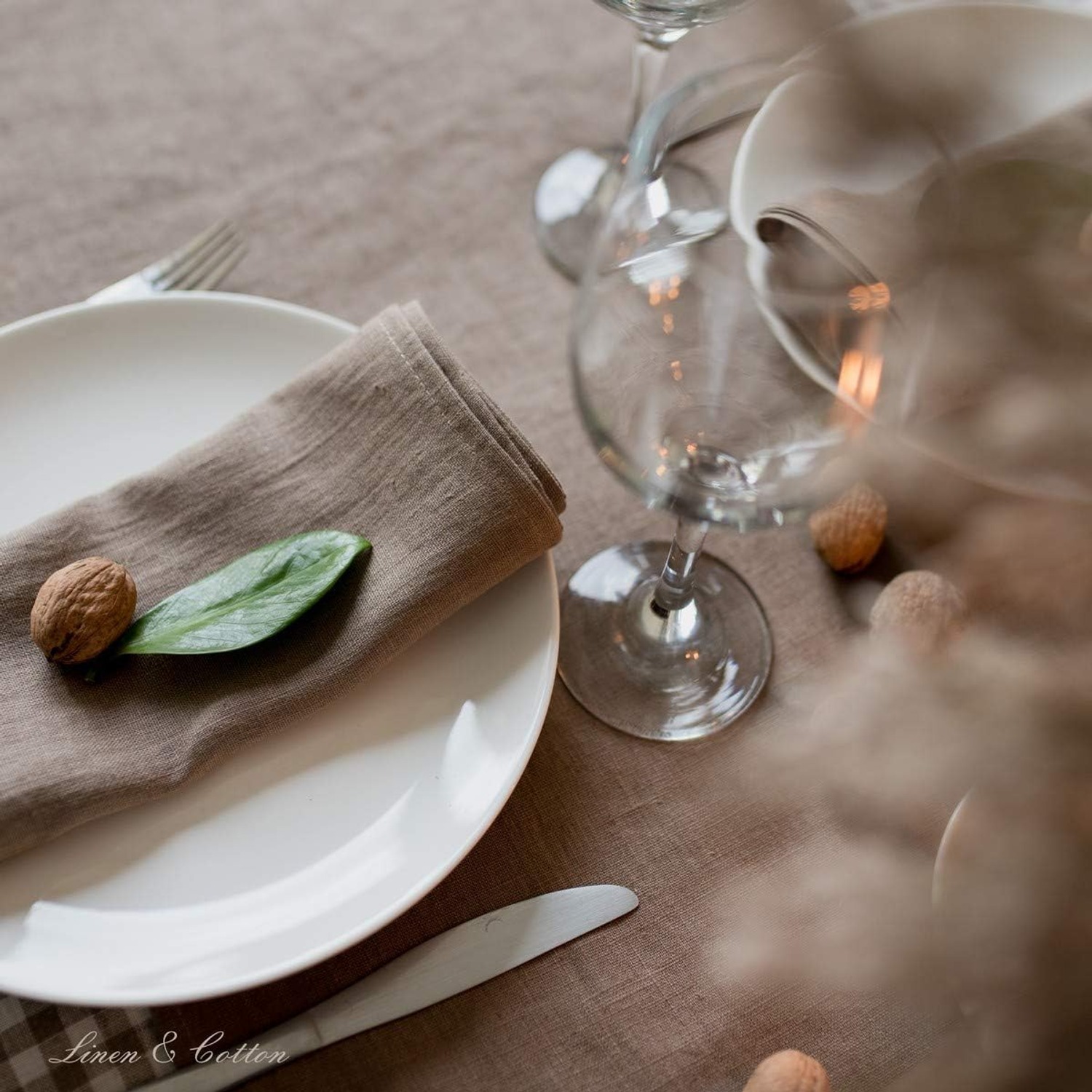
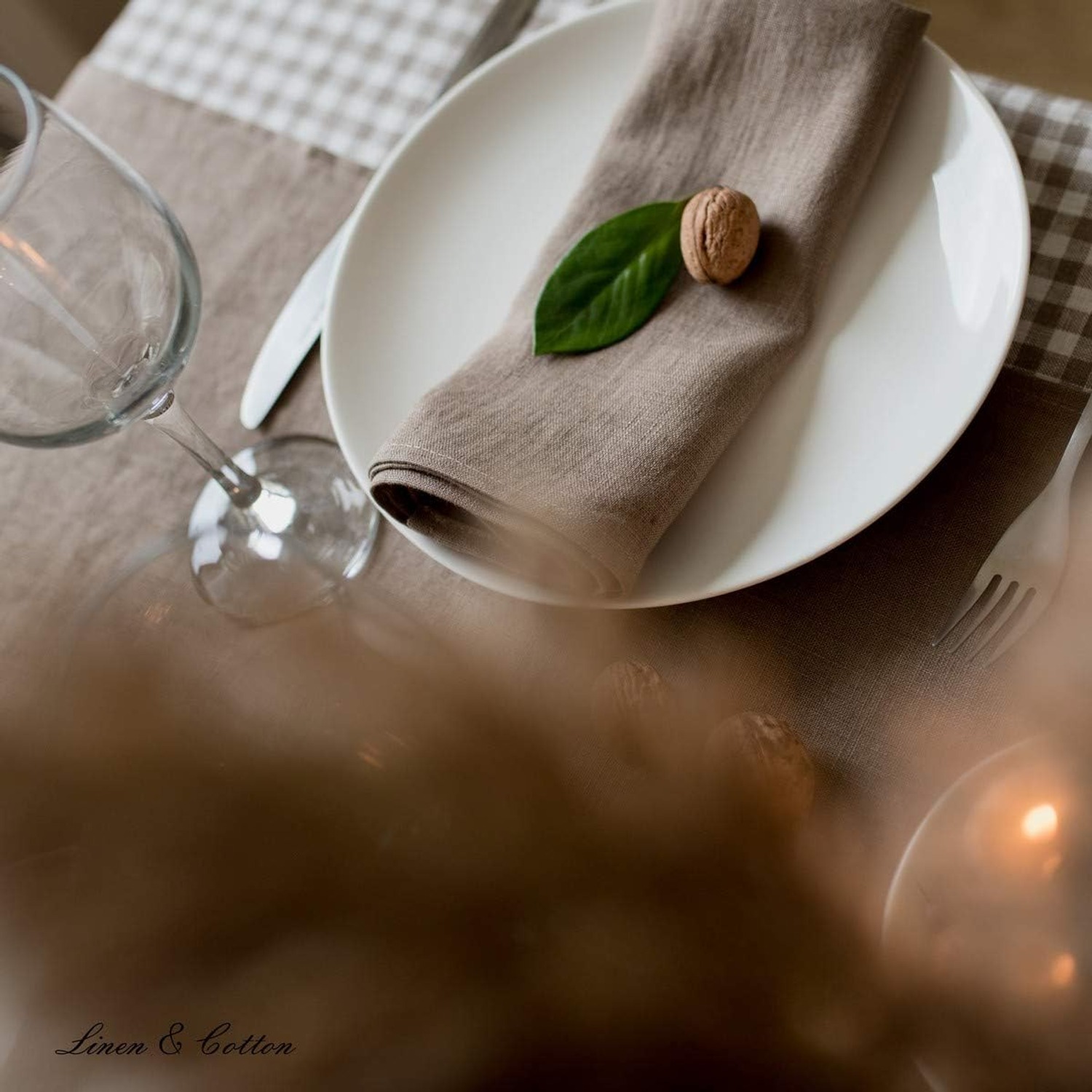
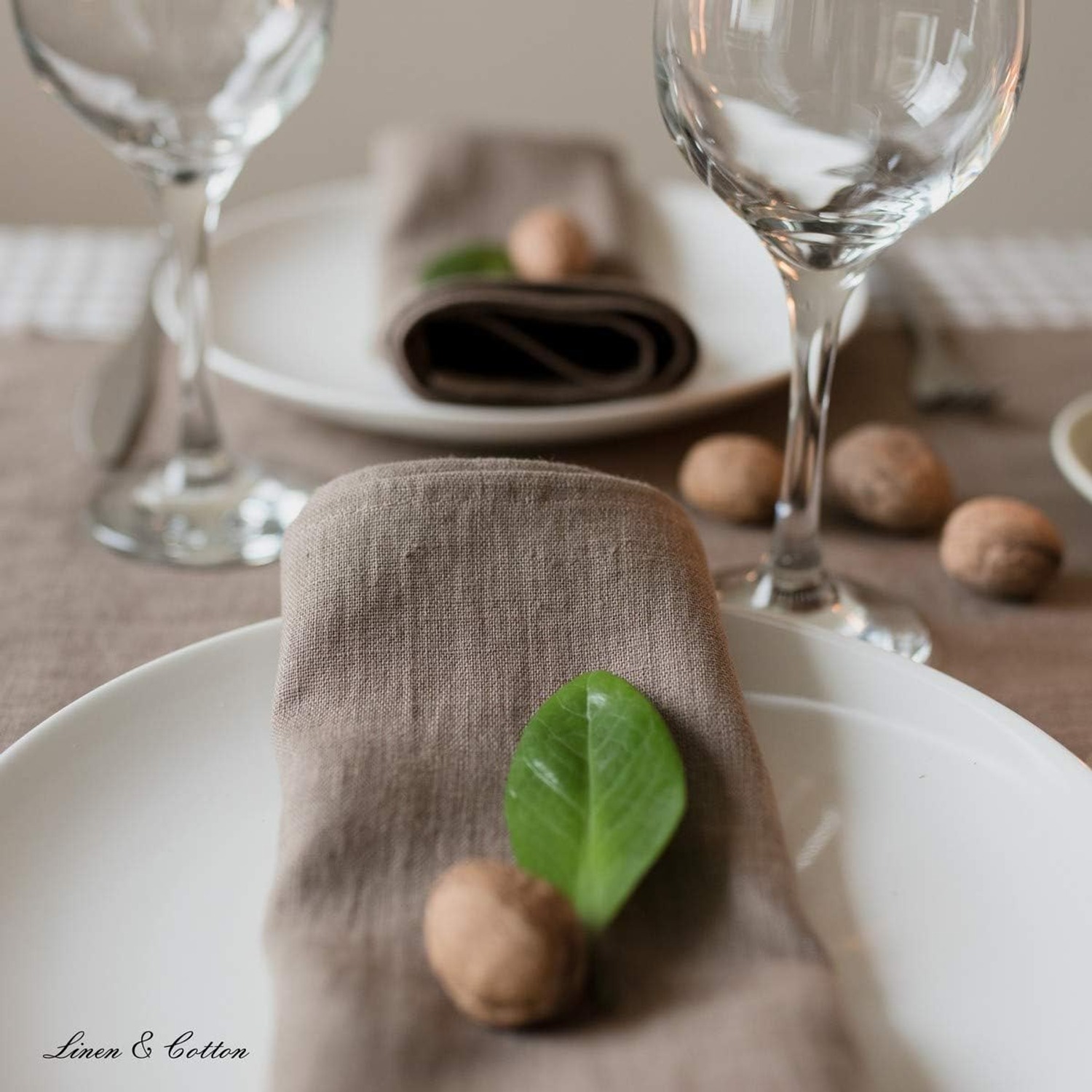
Cloth napkins solve all of that quietly. They stay put, they absorb properly, and they go in the wash with the tea towels. This set gives you four squares of 100% stonewashed linen in beige, each one 45 x 45 cm, which is the size most of us think of when we picture a dinner napkin.
Why linen, and why washed linen
Linen comes from flax, and it has been used for table cloth for a very long time for good practical reasons rather than romantic ones.
These napkins are machine washable at 40 degrees, which is what you want from something that will be used, stained and laundered week after week.
The catch with linen has always been the feel when it is new. Straight off the loom, it can be stiff and papery, almost like card. It softens, but it takes a dozen or more washes to get there, and plenty of people give up before that point.
Stonewashing is the fix. The maker describes this linen as industrially pre-washed, a step that takes away that initial stiffness. What you get in the packet already feels relaxed and slightly rumpled, more like a favourite shirt than a hotel tablecloth.
Getting the size right
Napkin sizes vary more than you would expect, from small cocktail squares around 25 cm up to large formal napkins past 50 cm.
For general dining, somewhere around 45 cm is the sweet spot, and that is what these are. Unfold one across your lap and it covers the area that actually needs covering. Fold it in half and it sits as a tidy rectangle beside the plate without swamping the setting. Fold it into a loose triangle or roll it and it still looks right.
Go much smaller and the napkin becomes decorative rather than useful. It will not stay on a lap and it runs out of clean surface quickly. Go much larger and it starts to feel like a formal banquet, which is lovely occasionally and slightly silly on a Tuesday.
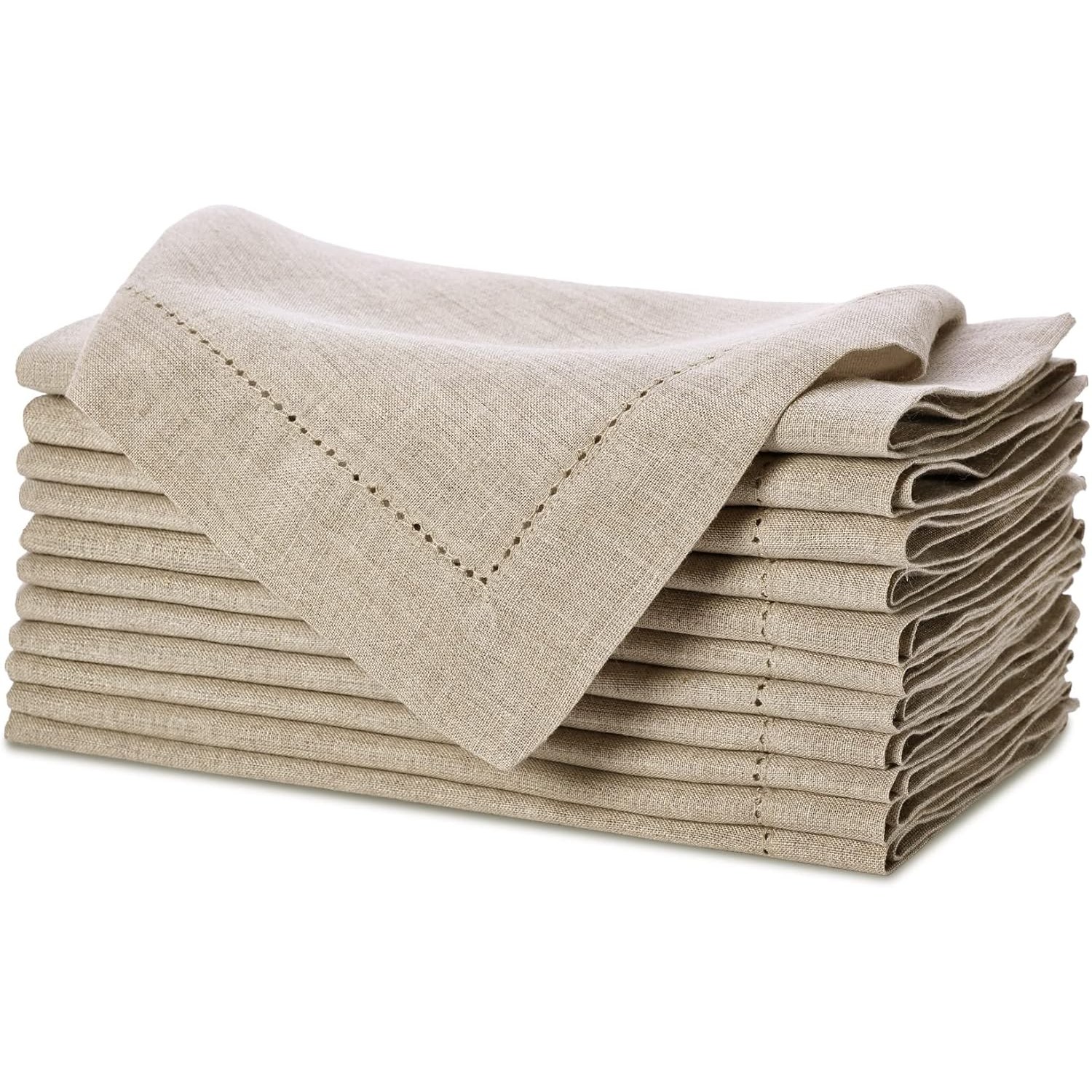
Four napkins is the standard household set. It covers a table of four, which is the most common dinner party size in a flat. If you regularly host six or eight, two sets give you matching napkins plus a couple of spares, and spares are genuinely handy because someone always needs a fresh one mid-meal.
Why beige works harder than white
White napkins look crisp and are the obvious default, but they are unforgiving. Every turmeric splash, every drop of soy, every smear of olive oil shows and stays showing until you deal with it seriously.
A warm beige sits in a more practical middle ground. It still reads as clean and neutral, it just does not advertise every mark. On a table it has a softer effect than stark white, warming up the setting rather than brightening it.
It is also easy to combine. Beige sits comfortably with plain white plates, with the darker glazes that are popular at the moment, with natural wood and with glass. If your crockery is patterned, a solid neutral napkin lets the pattern be the feature rather than competing with it. This is why a plain neutral is often the most useful table linen you can own. It does not lock you into one look.
How to look after them
The care is simple. The maker recommends machine washing at 40 degrees on a gentle or linen cycle.
A few habits make a real difference:
Do not overfill the drum. Linen needs room to move, and a packed wash creates hard creases that are much harder to shake out afterwards.
Skip the fabric softener. It coats the fibres with a thin residue, which is the opposite of what you want on something whose job is absorbing. Linen softens perfectly well on its own with repeated washing.
Deal with marks early. A quick rinse under cool water straight after a meal handles most things before they set. Oil and red wine are the usual troublemakers and both respond far better to immediate attention than to a stain remover three days later.
Dry gently. The maker's care advice covers washing only, so line drying is the gentle route, and it is fast in a warm room.
Iron only if you want to. Washed linen looks right with a little texture to it, and many people fold theirs straight from the line. If you prefer sharp, iron on a warm setting while the cloth is still a bit damp and you will get a clean finish with much less effort.
Store them folded and dry, away from strong direct sun. Avoid sealed plastic in humid conditions, since natural fibres do better with a little air around them.
Who these suit
If you eat at a table most evenings, cloth napkins will earn their keep quickly. The maths is unflattering to paper once you add up a year of packets.
They also suit anyone who cooks for friends and wants the table to feel considered without buying a whole new dinner service. Swapping paper for proper linen does more for the overall impression than most single purchases at this price.
They work as a gift too. A set of four pure washed linen table napkins is one of those presents that gets used rather than stored, and the neutral beige means you do not need to know anything about the recipient's colour scheme.
They are less suited to someone who wants everything perfectly flat and symmetrical at all times. Washed linen has texture, and small creases are part of the character of the fabric rather than a defect. If that bothers you, you will be reaching for the iron often.
The short version
Four square napkins, 45 x 45 cm each, in 100% stonewashed linen, beige, made in the EU as stated by the maker. The pre-washing means they feel soft from the first use rather than after six months of effort.
Machine wash at 40 degrees on a gentle or linen cycle, line dry, and iron only if you want the crisp look. Skip the softener.
They are a small purchase that changes the feel of an ordinary meal. That is really the whole case for them.