
The complete guide
How To Choose A Leather Catchall Tray That You Will Actually Use
The small problem that eats your mornings
Nobody loses their keys in a dramatic way. You put them down while you take your shoes off, or while answering a message, or while carrying groceries with one hand. Twelve hours later they are under a magazine, behind a fruit bowl or still in yesterday's trouser pocket. The same thing happens with coins, a watch, an office access card and the little dongle for the car.
A catchall tray solves this with almost no effort from you. It is a defined spot with raised edges. Once the habit forms, your hand goes there without being told. The reason trays work better than a bowl or a shelf is the edge. An edge stops coins rolling, keeps a watch strap from sliding off, and makes the pile look contained rather than messy.
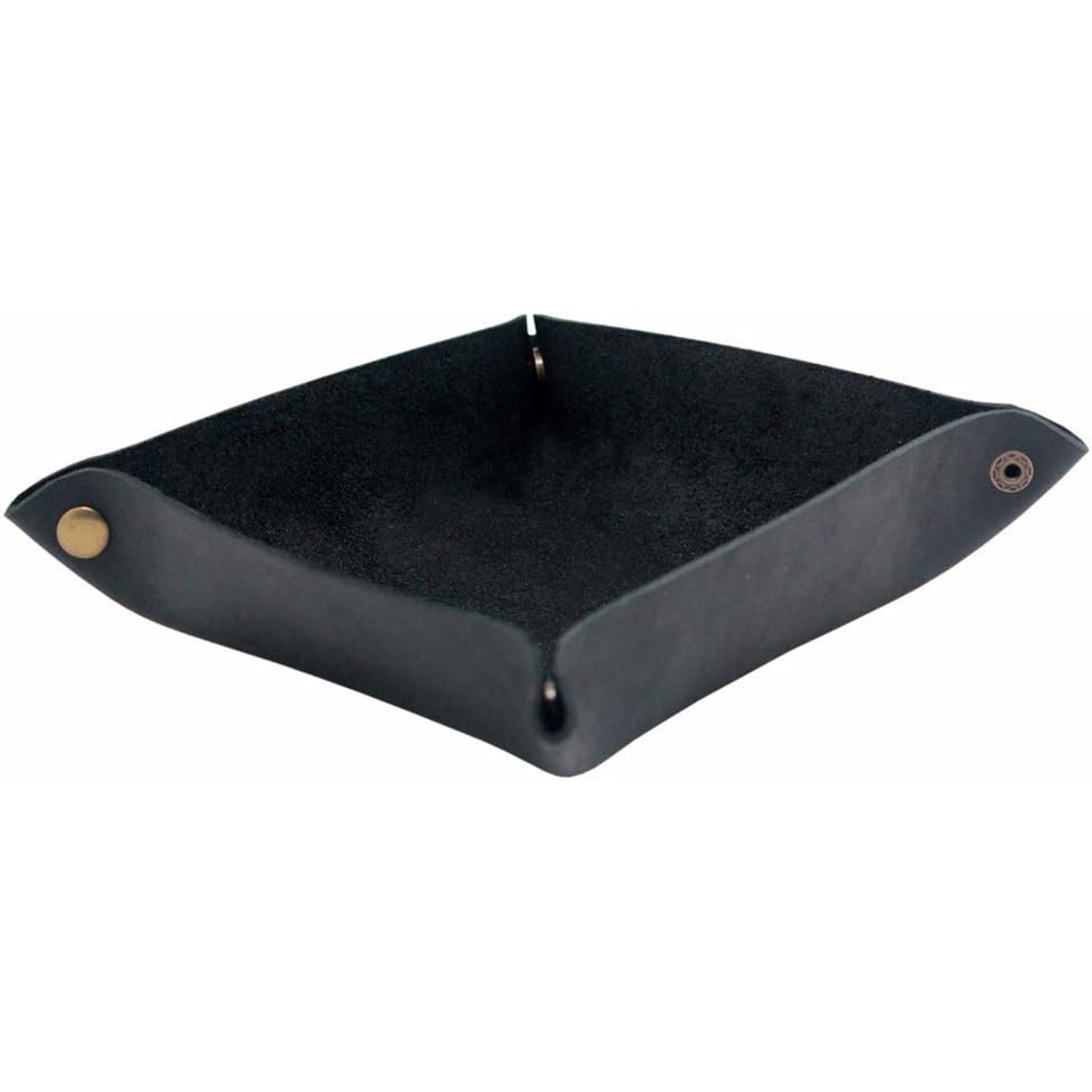
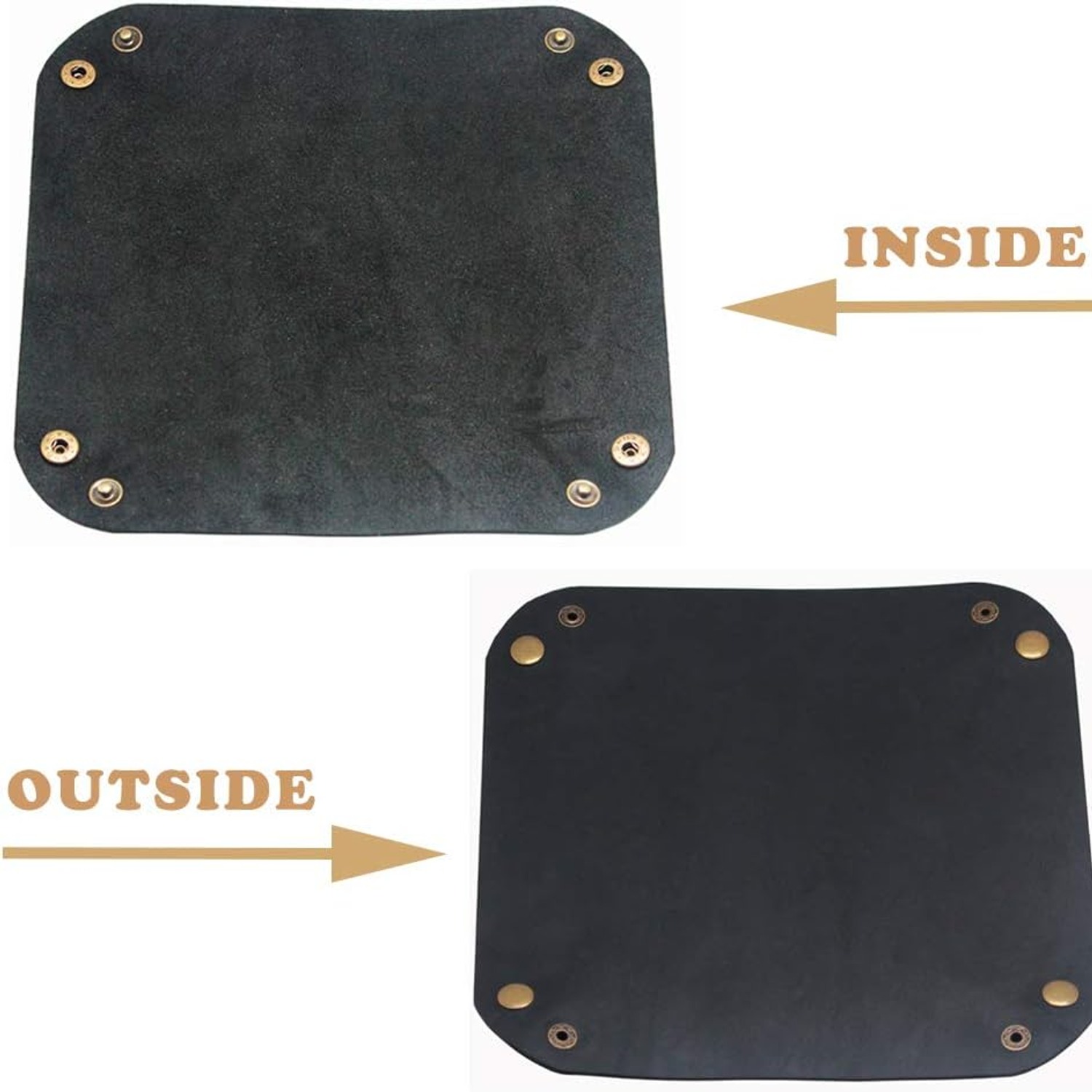
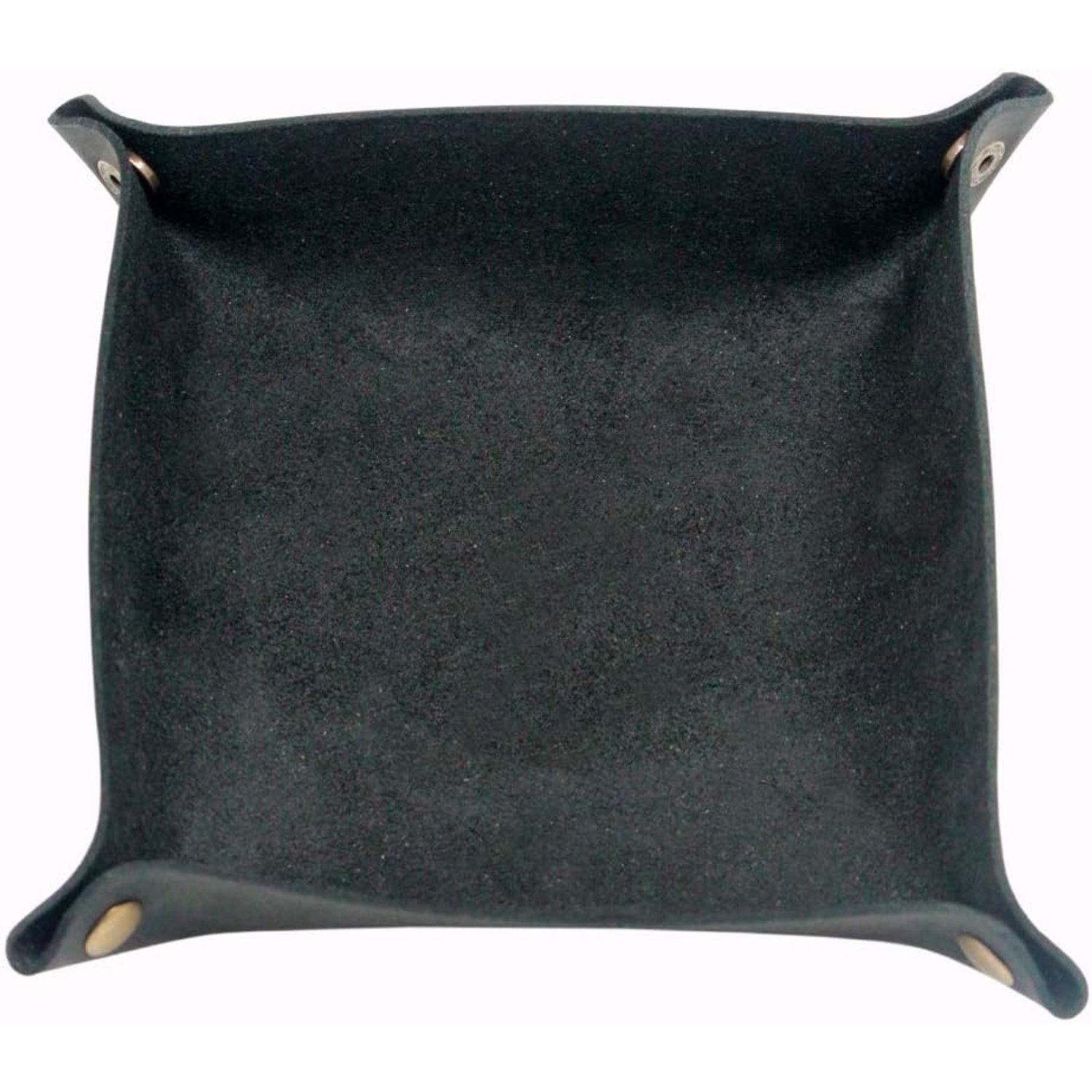
This one is a square of black cowhide leather with stainless steel rivets at the four corners. Snap the rivets and the flat square becomes a tray about 15 x 15 x 4.5 cm. Unsnap them and it lies flat again at 21 x 21 cm, just 0.5 cm thick.
How a folding tray works
The design is simple on purpose. The leather starts flat. Each corner has a stud on one edge and a matching socket on the other. When you press them together, the leather gathers at the corner and the four sides lift. The rivets are stainless steel, which is the part that takes the stress every time you fold and unfold.
Because the folding is mechanical rather than glued or stitched into shape, nothing is permanent. You can flatten it in a second to wipe underneath, to pack it or to store it in a drawer. People who travel often find this more useful than any amount of extra capacity, because a rigid tray simply will not fit in a packed suitcase.
The 4.5 cm wall height is the number worth noticing. That is enough to stop things escaping but low enough that you can see everything at a glance and pick items out with one hand. A deeper box makes you dig.
Who this suits
If you live in a flat or a condo, surfaces are usually limited and shared. A 15 cm square is a modest ask for a bedside table or a hall console. The right leather catchall tray for a small home is almost always the one that fits the surface you already have, not the largest one you can find.
It suits a few groups in particular.
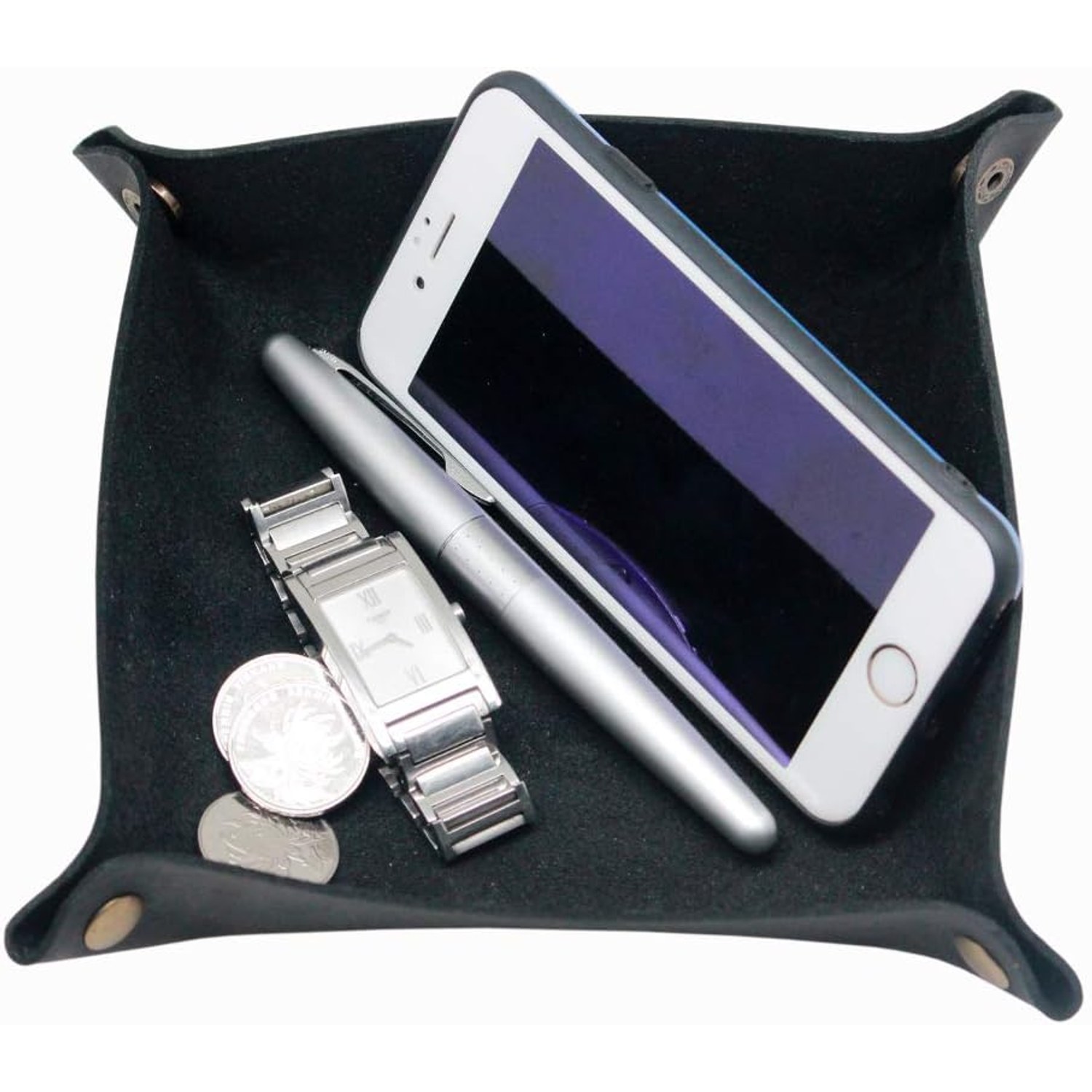
People who work from a desk at home get the most obvious benefit. Cables, a phone, a USB stick and earbuds all gravitate to the same tray, which means your working surface stays clear. People who wear a watch daily use it as a watch tray, since leather is a softer place to set a watch down than glass or stone.
Travellers like it because of the flat pack. If you stay in hotels regularly, emptying your pockets onto an unfamiliar desk is how things get left behind. A tray gives you a repeatable routine in any room.
It also works as a gift. Black leather is neutral, and it is the kind of object someone will use every single day without thinking about it.
Choosing the right size and spot
Before anything else, measure the surface. A bedside table in a flat might be 30 cm deep. A 15 cm square tray leaves room for a lamp and a glass of water. If your table is narrower, a tray may need to sit at the front edge, which is not ideal.
Then think about what goes in it. Keys, coins and a watch need very little depth. A phone sits flat and takes up most of the base. Rings and earrings need almost nothing but benefit from a soft surface so stones are not knocked against ceramic.
If you are after a coin tray for a bedside table, depth matters less than you think. Coins are flat. A tall-sided box just makes them harder to scoop out. Shallow and wide beats narrow and deep for daily carry.
One more thing to consider is how many you need. One tray handles one spot. The common pattern is two or three: by the door, on the desk, on the dressing table. Trying to make a single tray serve the whole house usually fails, because you will not walk to another room to put your keys down.
Leather versus the alternatives
Plastic trays are cheap and easy to clean, but they skate across smooth tables and they look temporary. Ceramic trays sit nicely and are easy to wipe, but they chip, and keys dropped in from a height make a noise that wakes a sleeping partner. Wood splits the difference, though it is usually bulkier and cannot fold.
Leather earns its place on a few points. It is quiet, it is a soft surface for watches and jewellery, and it can be made to fold flat. The trade-off is that leather dislikes water and long hours of direct sun. That is a fair exchange for most indoor uses.
Cowhide is the material given for this tray, with stainless steel at the corners where the wear happens. Over months of daily use, leather handled this often tends to soften and the fold lines take on a visible crease. Some people treat that as the point.
Looking after it
The care routine is short, and it comes from the maker. Keep it dry, keep it out of direct sunlight and use a leather conditioner. Dust it with a soft dry cloth. Do not soak it, do not put it in a washing machine, and keep bleach and solvents away.
When you use a leather conditioner, rub in a small amount with a soft cloth and test it on a hidden spot first.
It is not dishwasher safe and it is not oven safe. It is also not a water tray, so do not use it under a plant or beside a tap where it will catch splashes regularly.
If you fold it flat for storage, lay it flat rather than rolling it. Rolling puts a curve into the leather that takes a while to relax.
Getting the habit to stick
The tray only works if it is in the right place. Put it where you already put things down, not where you think you should. If your keys always land on the kitchen counter, the tray goes on the kitchen counter, not in the hallway where it looks tidier.
Give it a week. For the first few days you will walk past it and put the keys somewhere else. After that the habit forms on its own, and you will notice you have stopped doing the morning search.
If you have two spots that both collect things, use two trays rather than fighting the habit. That is cheaper than losing an access card.
The short version
This is a black cowhide leather square with stainless steel rivets at the corners. Snap them and you get a tray at 15 x 15 x 4.5 cm. Unsnap them and it lies flat at 21 x 21 cm and 0.5 cm thick, weighing 0.14 kg, which is why it travels well.
It suits keys, coins, a watch, jewellery, a phone and small desk items. It is not for liquids or food, it is not dishwasher or oven safe, and it needs to be kept dry and out of long sun.
Measure your surface first, put it where things already pile up, and keep a cloth handy for the occasional wipe. That is the whole method.