
The complete guide
How To Choose Stonewashed Linen Cushion Covers
The cushion problem nobody warns you about
Cushions are the thing people buy last and replace first. They start out plump and promising, and then six months later the fabric has gone slightly shiny, the corners have flattened, and the whole sofa looks tired because of two square items you stopped noticing weeks ago.
Most of the time the fabric is the culprit. Thin woven polyester looks fine in a photograph and feels like nothing in the hand. Printed cotton fades along the top edge where the light hits it. Anything with a shine picks up every bit of wear and shows it. The cushion has not failed structurally, it has just stopped looking good, which in a living room amounts to the same thing.
Linen is the usual answer, and it is a good one, but only if you pay attention to what sort of linen you are buying. That is really what this guide is about.
What stonewashing does to linen
Raw linen straight off the loom is stiff. It has a crisp hand, it holds a sharp crease, and it feels more like a tablecloth than something you want to lean on. It softens with use, but that takes a lot of washes and some patience.
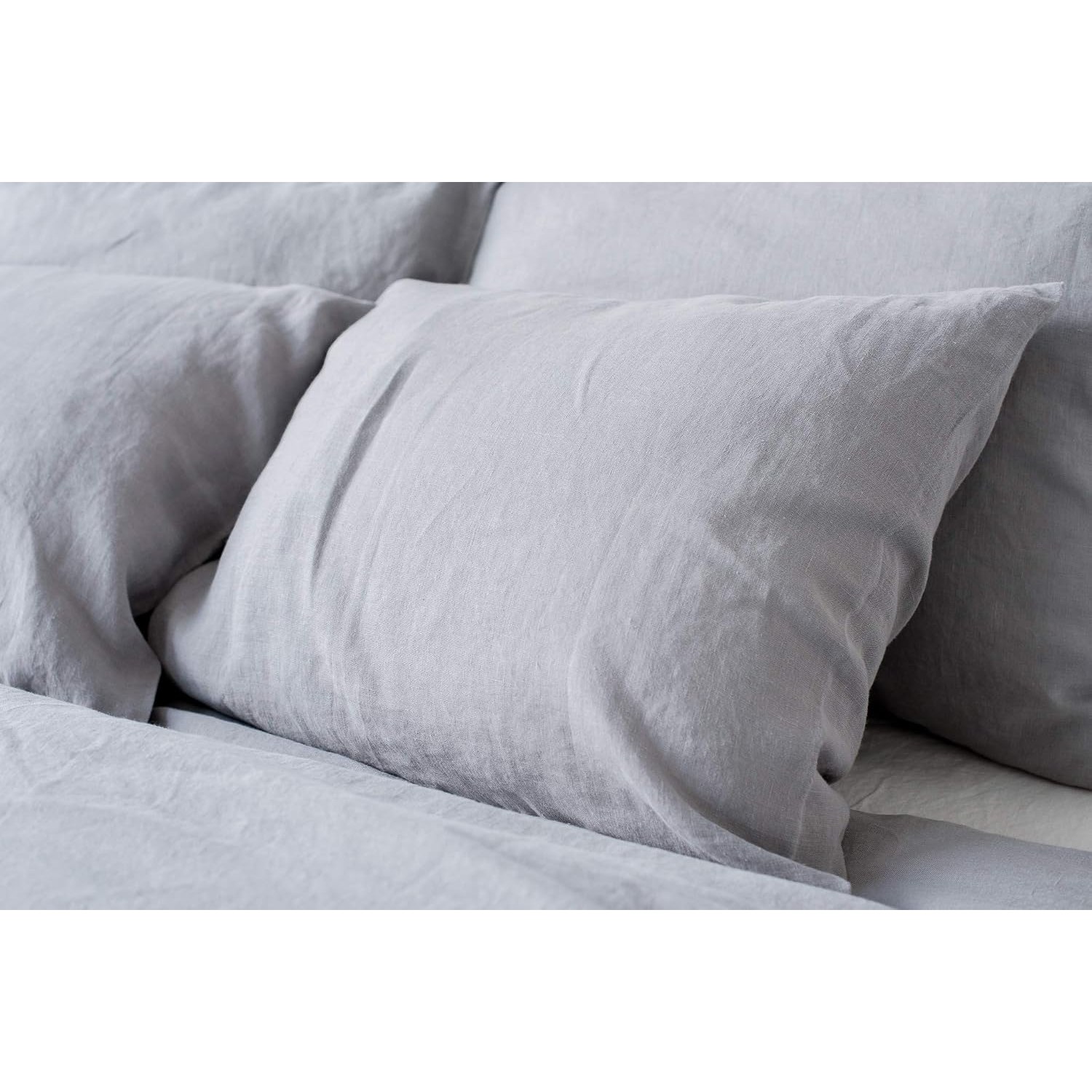
Stonewashing speeds that up. The linen is washed with an abrasive process, which breaks down the stiffness and relaxes the weave. The result is fabric that arrives soft, with a slightly crumpled surface and a matte finish that does not reflect light the way a new, unwashed linen does.
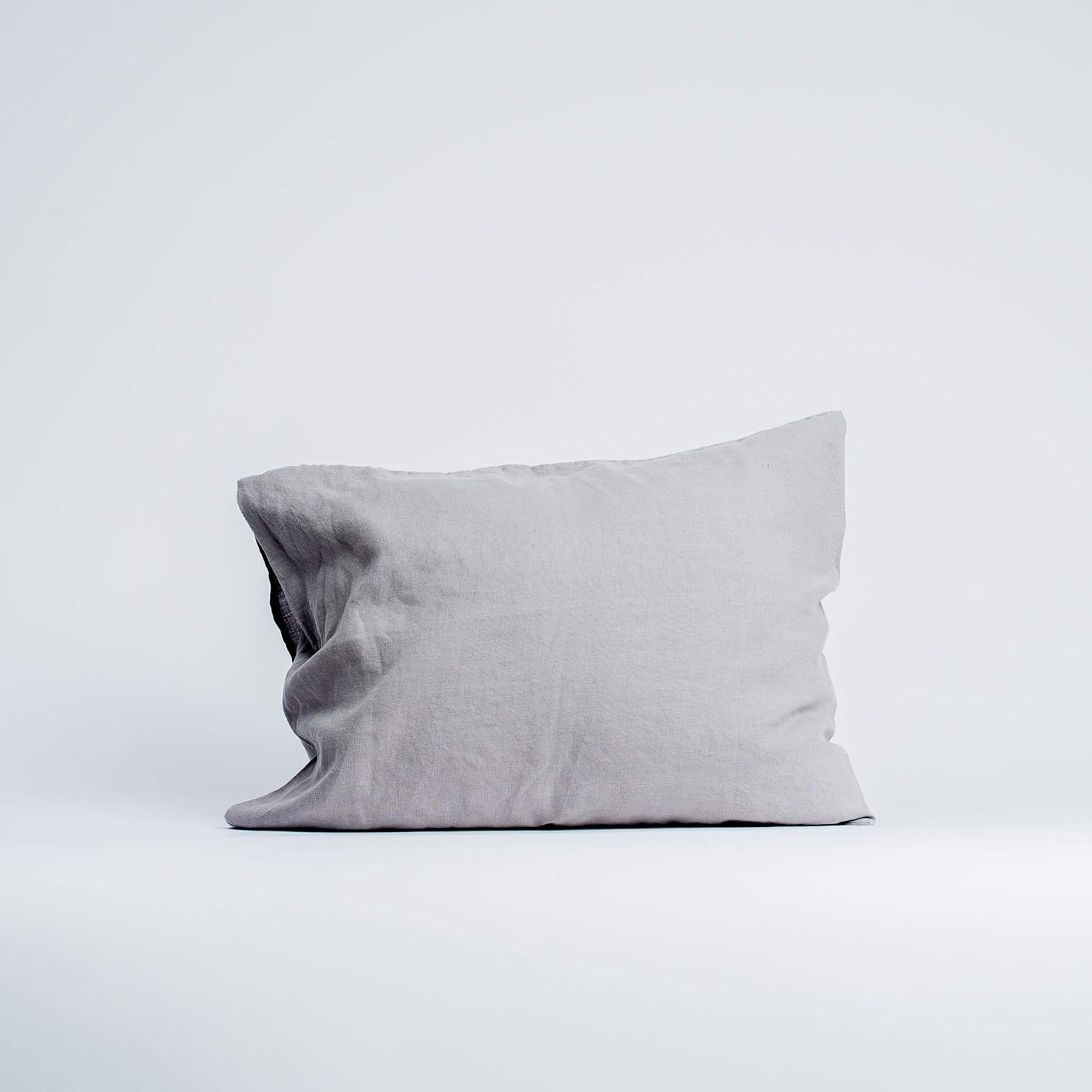
It also changes how the cover sits on an insert. Stiff fabric stands away from the pad at the corners and looks a bit like packaging. Washed linen collapses into the insert, so the cushion reads as something that lives on the sofa rather than something that was placed there for a photo.
These covers are made from 100% stonewashed linen at 160 g/m2, made in the EU from European linen as stated by the maker. The weight deserves a closer look.
Why fabric weight is the number to check
Grams per square metre is one of the most useful numbers on any linen product, and it is one that is often left out. It tells you how much fibre is in the fabric.
Lighter linens suit curtains and shirting, where you want air and movement. On a cushion a very light cloth can look thin and may show the insert through the weave in strong light.
The maker states 160 g/m2 for these covers and calls it a thick fabric, heavier than the linen of many other makers. A heavier cloth has body and hangs with some weight. If you are comparing two linen cushion covers and one tells you the weight while the other does not, that itself is useful information.
The maker also points to the long flax fibres in linen and says the fabric gets softer with every wash. Those are the maker's statements and we pass them on as such.
The envelope back, and why it matters more than it sounds
The back of a cushion cover gets ignored until it annoys you.
Zips are the common alternative. They work, but they add a hard line across the back of the cushion, they can catch on knitwear, and the cheap ones fail at exactly the moment you are trying to get a damp insert back inside. Buttons look lovely and press into your shoulder blade.
An envelope closure is two overlapping panels of fabric. You push the insert in, flatten the flap, and the overlap does the rest. Nothing to break, nothing to catch, nothing hard against your back. It is also why washing these is painless. If changing a cover takes thirty seconds, you will wash them. If it takes five minutes of wrestling with a zip, you will tell yourself they look fine for another month.
Getting the size and the insert right
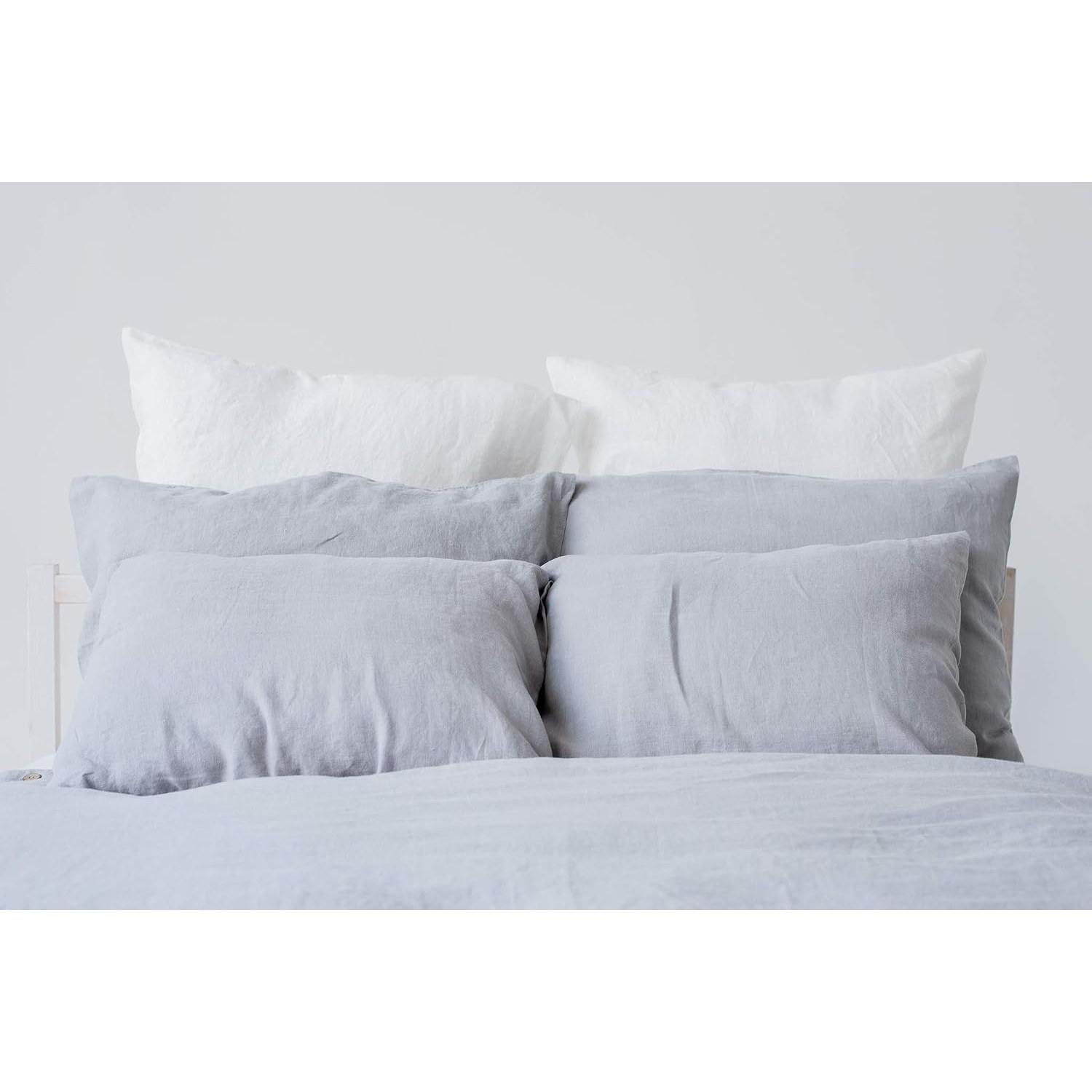
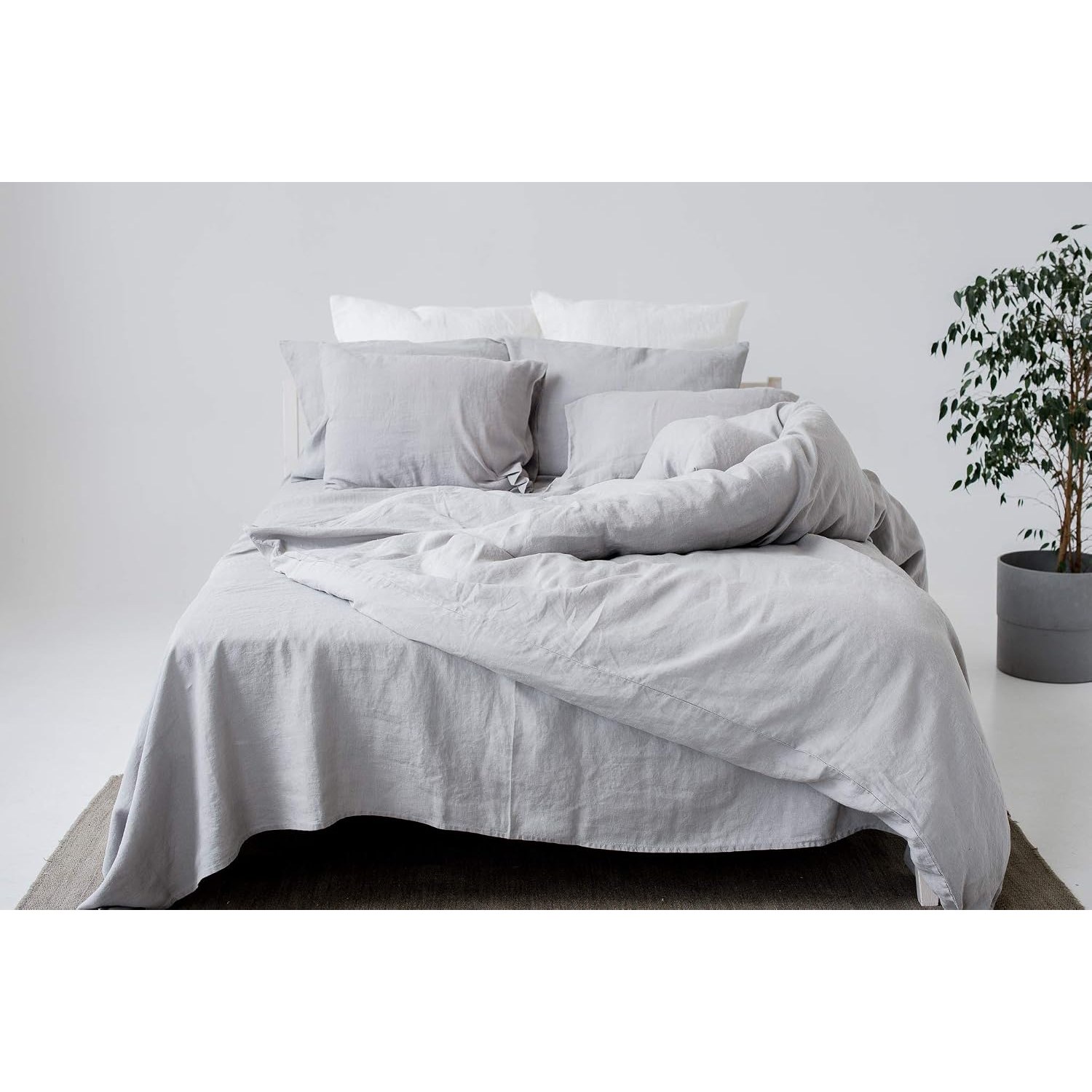
These covers are 40 x 40 cm, which is the most useful square size in a home. It suits an armchair without swallowing the seat, it works as a layered piece in front of a larger cushion, and it sits comfortably on a bed in front of sleeping pillows.
The covers come without inserts, so you have a decision to make.
A matching 40 x 40 cm pad gives a relaxed, softly filled cushion with a bit of slouch at the corners. That is the look most people want with washed linen. If you prefer a fuller, tighter cushion, step up to a 45 x 45 cm insert. The cover will stretch over it and look plumper, though you lose some of the crumple that makes linen attractive in the first place.
Fill type matters too. Feather and feather-blend inserts compress and settle, so the cushion looks lived in and karate-chops nicely if that is your thing. Polyester inserts stay bouncy and hold a neater shape, and they are easier to wash. Neither is wrong. It depends on whether you want your sofa to look casual or crisp.
Buying two covers together is quietly practical. A single cushion always looks a bit lonely, and matching a second one later is a gamble on dye lots. A pair gives you balance at either end of a sofa immediately.
Living with light grey
Grey has a reputation for being safe, which is accurate but not an insult. On a cushion, safe means it works with what you already own and will still work when you change the rug.
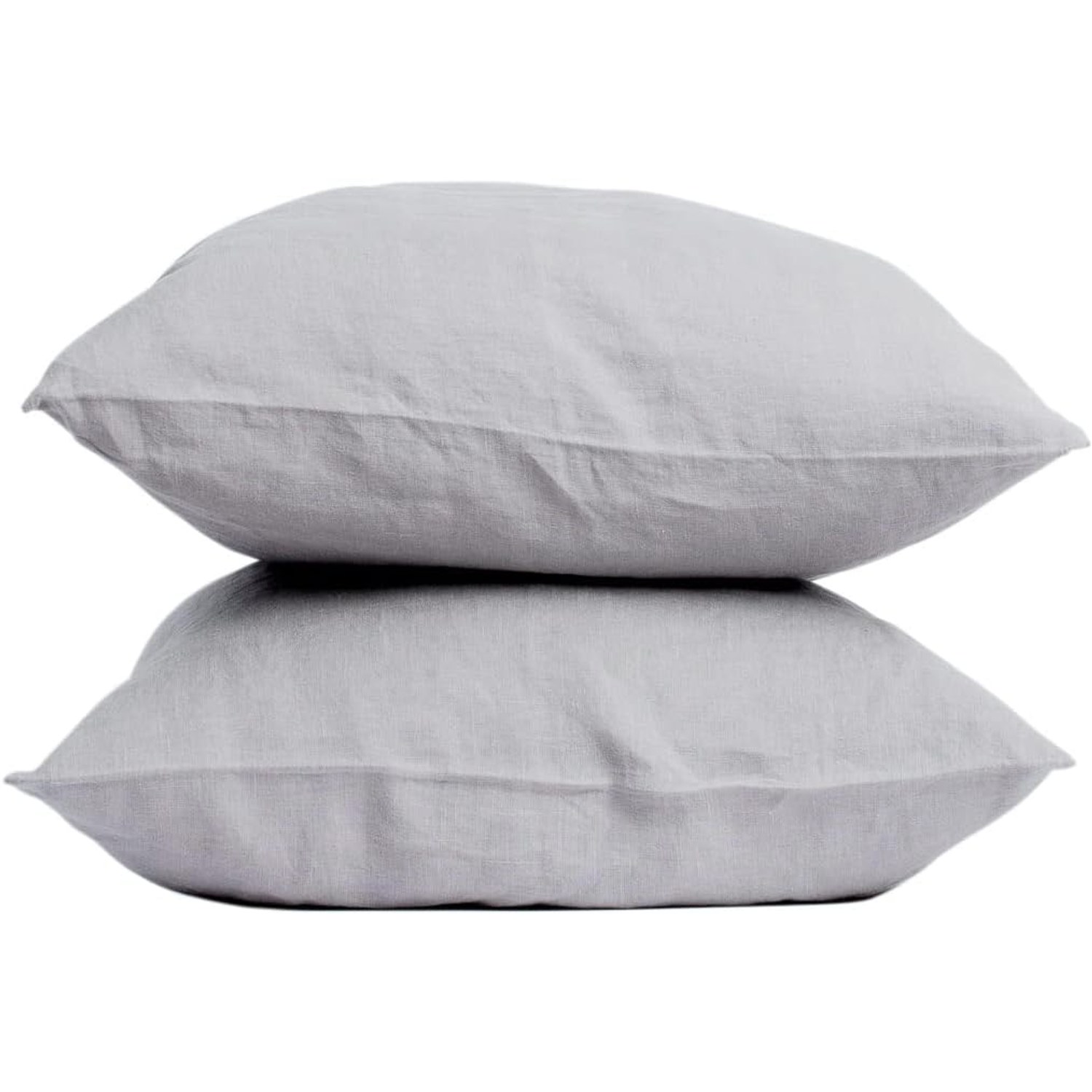
Light grey linen sits well against white and off-white walls, pale timber, rattan, leather and most warm neutrals. It does not fight with pattern, so it makes a good base layer under something louder. And because the surface is matte and slightly textured, it never looks flat the way a plain grey synthetic can.
If the room feels too cool, a warm timber side table or a woven basket fixes it quickly. If you want contrast, one strong colour in the middle of a sofa does more than three competing ones.
Keeping them looking good
Start with the care label sewn into the covers, because that is the maker's instruction. What follows is general guidance for linen.
A gentle machine cycle in cool or warm water with mild detergent and similar colours is the usual approach. Leave out bleach, and think twice about fabric softener, which can leave a film on natural fabric. Line dry in the shade, or use low heat if the label allows tumble drying, and take the covers out while they are still slightly damp.
Iron while damp if you like a tidier look and the label allows it. Most people do not bother, because the relaxed texture is the point.
For spills, blot rather than rub. Rubbing drives the mark deeper into the weave. Rinse with cool water, treat anything oily with a dab of mild detergent, and wash as normal.
Rotate your cushions occasionally so the same two faces are not always catching the light. It takes two seconds and it evens out fading across the set.
The short version
You are buying two 40 x 40 cm covers in 100% stonewashed linen at 160 g/m2, light grey, with envelope backs and no inserts. The stonewashing means they arrive soft. The maker states the weight and says the linen is made in the EU from European linen. The envelope back means changing and washing them is quick.
Pick a 40 cm insert for a relaxed look or a 45 cm one for a plumper cushion, follow the care label, and leave the creases alone. That is all there is to it.