
The complete guide
How to Choose Merino Wool Socks for Men, A Practical Buyer's Guide
The problem nobody warns you about
You live somewhere warm. The weather app says 31 degrees and humid, and it says that most of the year. So why are your feet cold?
Because the cold is indoors. Office air conditioning is often set somewhere between 18 and 22 degrees, and it runs all day. Cinemas are worse. Taxis are a lottery. Sit still at a desk for three hours with your circulation ticking over slowly and your feet will be the first part of you to complain. Then you add flights, where cabins get cool and you are not moving much, and trips to places that are genuinely cold.
Thin cotton socks are not much help here. Wool is the traditional answer to cold feet. That is the whole argument for merino wool socks for men, even in a city that is warm all year.
What merino actually does
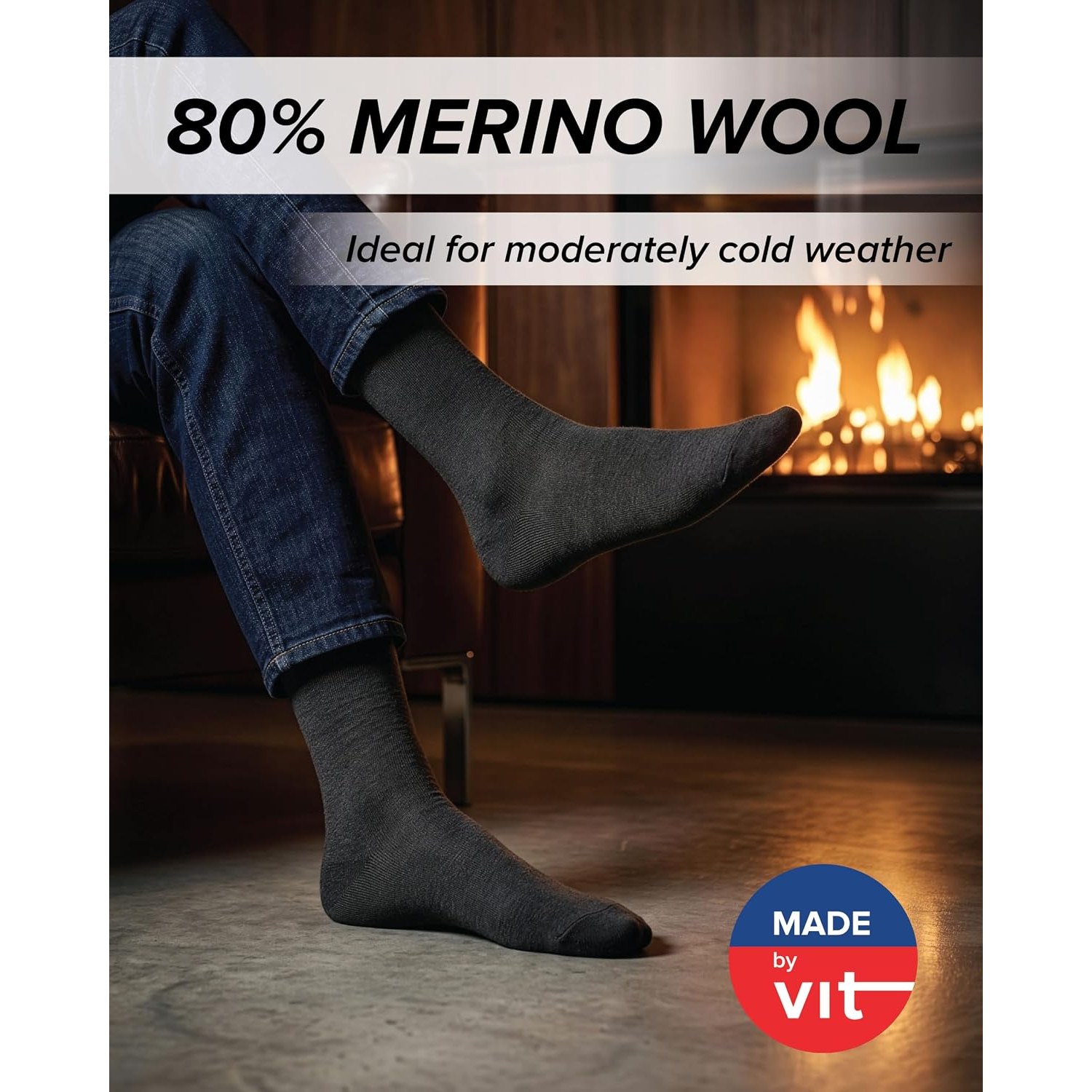
Wool fibres are crimped, meaning they are naturally wavy rather than straight. Pack them into a knitted sock and all those tiny kinks create pockets of still air. Still air is a poor conductor of heat, which is why wool insulates. It is the same principle as a double-glazed window, just softer.
The maker also describes these socks as breathable, and as medium thickness rather than heavy. That matters in a humid climate where you walk from an air-conditioned lobby into the heat and back again.
Merino specifically is wool from a breed of sheep with very fine fibres. The finer the fibre, the more easily it bends when it meets your skin. A coarse fibre pushes back and triggers the itch response. A fine one folds over. That is the entire reason merino does not scratch the way an old jumper does.
Why this is a blend, not pure wool
These socks are 80% merino wool, 17% polyamide and 3% elastane, as stated by the maker. Some buyers see that and wonder why it is not 100% wool. The answer is that pure wool makes a lovely scarf and a disappointing sock.
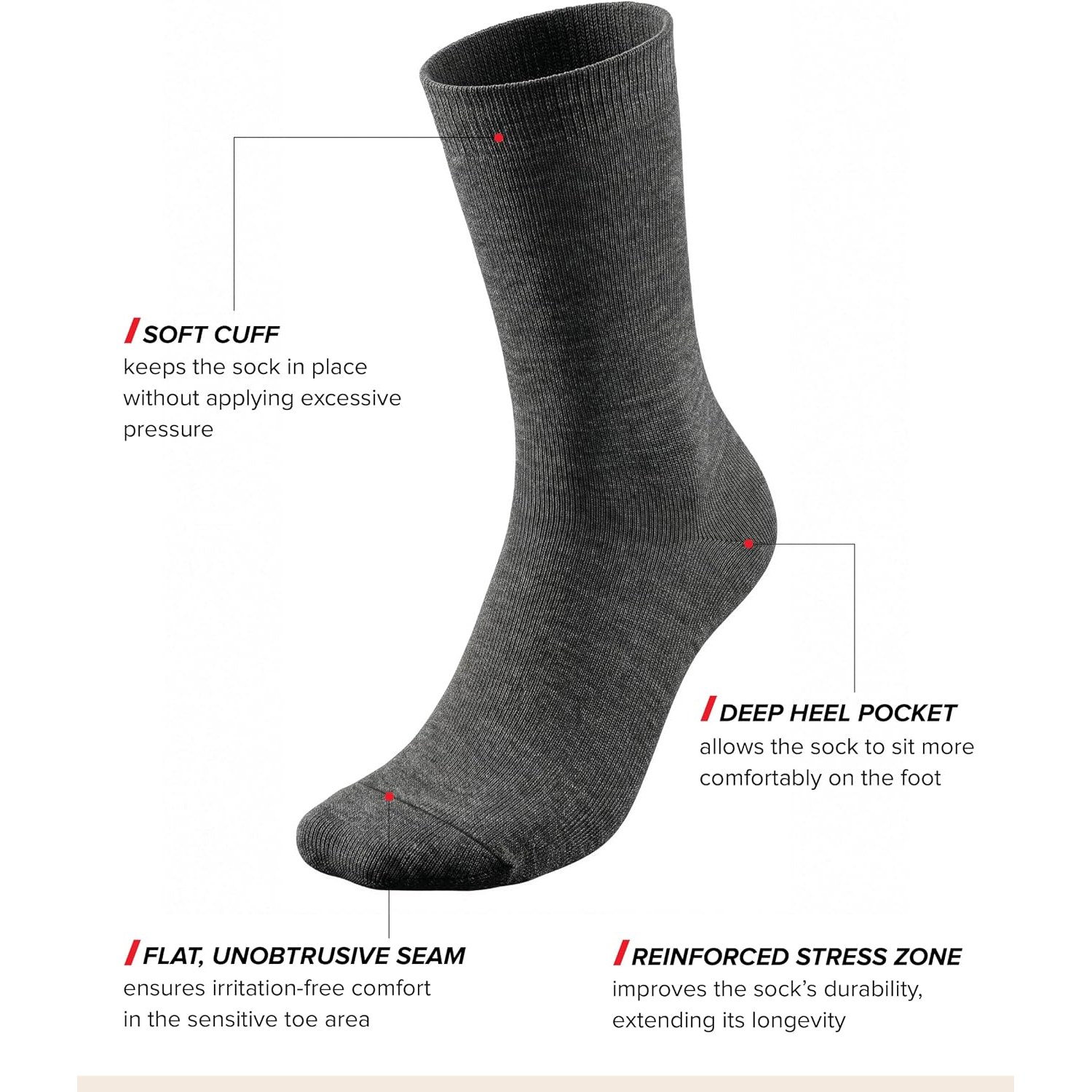
Socks live a harsh life. They are compressed between your foot and the inside of a shoe, rubbed thousands of times a day at the heel and the toe, then stretched over a heel every morning. Pure wool tends to wear at those points and sag out of shape. Polyamide is commonly added to sock yarn for durability, and elastane gives the stretch that helps a sock stay up.
So an 80% merino blend is not a compromise on quality. It is a common kind of blend for an everyday wool sock.
The size question, read this bit
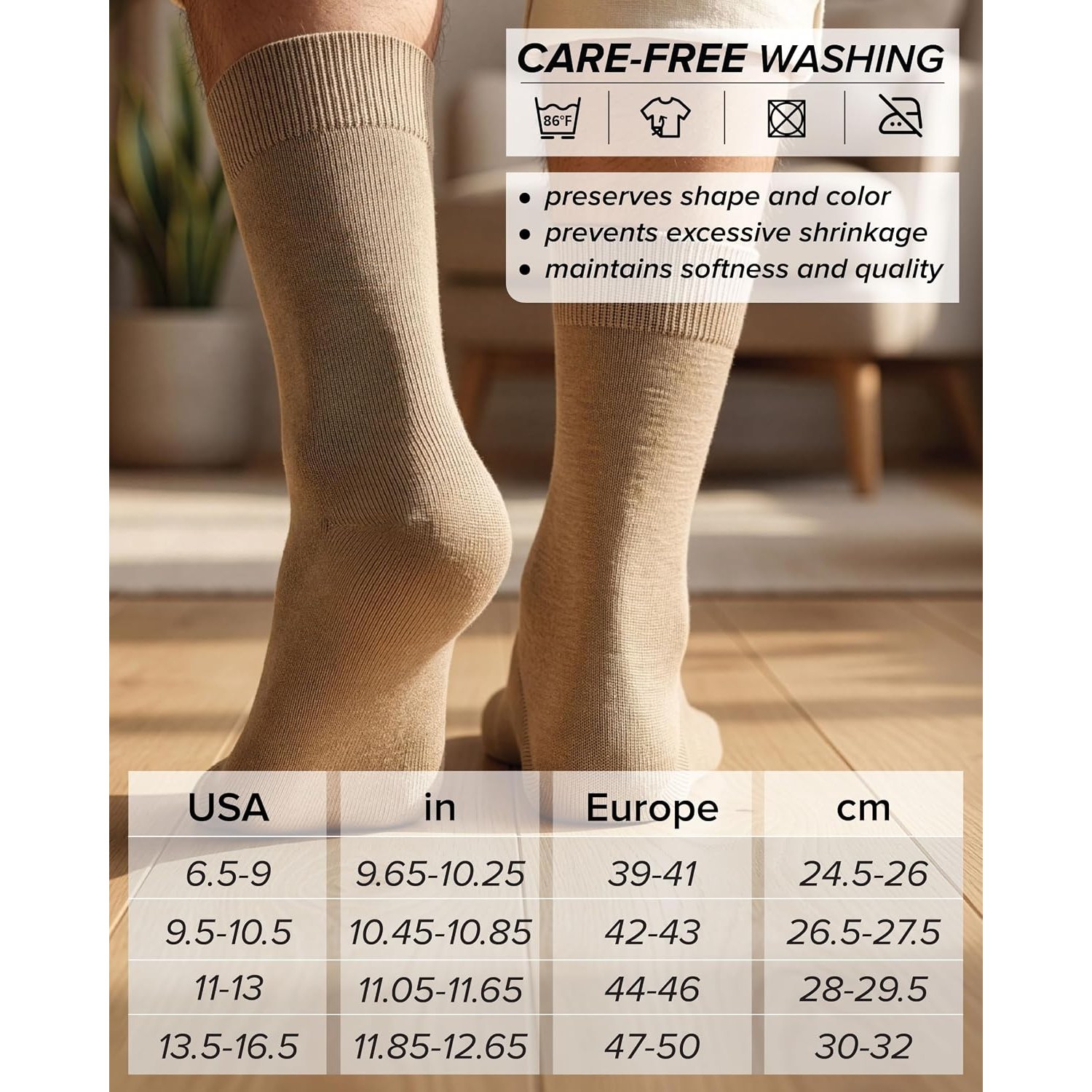
This pack comes in one size range only, EU 47 to 50. That is a large size.
It is worth being blunt about it, because size is the single most common reason a sock order goes wrong. Go and look at the number printed inside your current shoes. If it reads below 47, this is not your size and a smaller range will serve you better. A sock that is too long does not just feel odd, it bunches under the arch and slides at the heel.
If you are in that 47 to 50 range, a three-pack in a stated large size is useful.
Height, thickness and where these fit
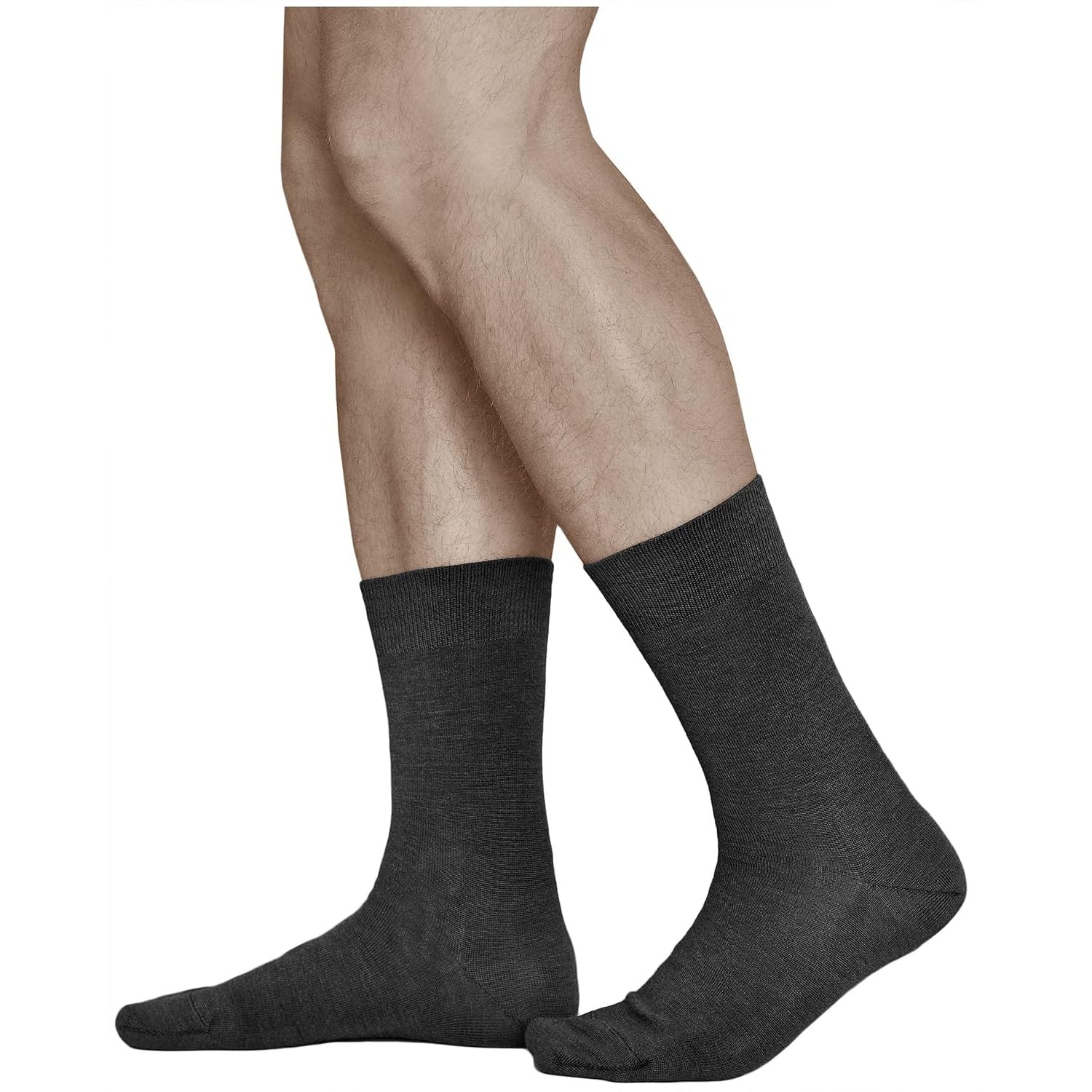
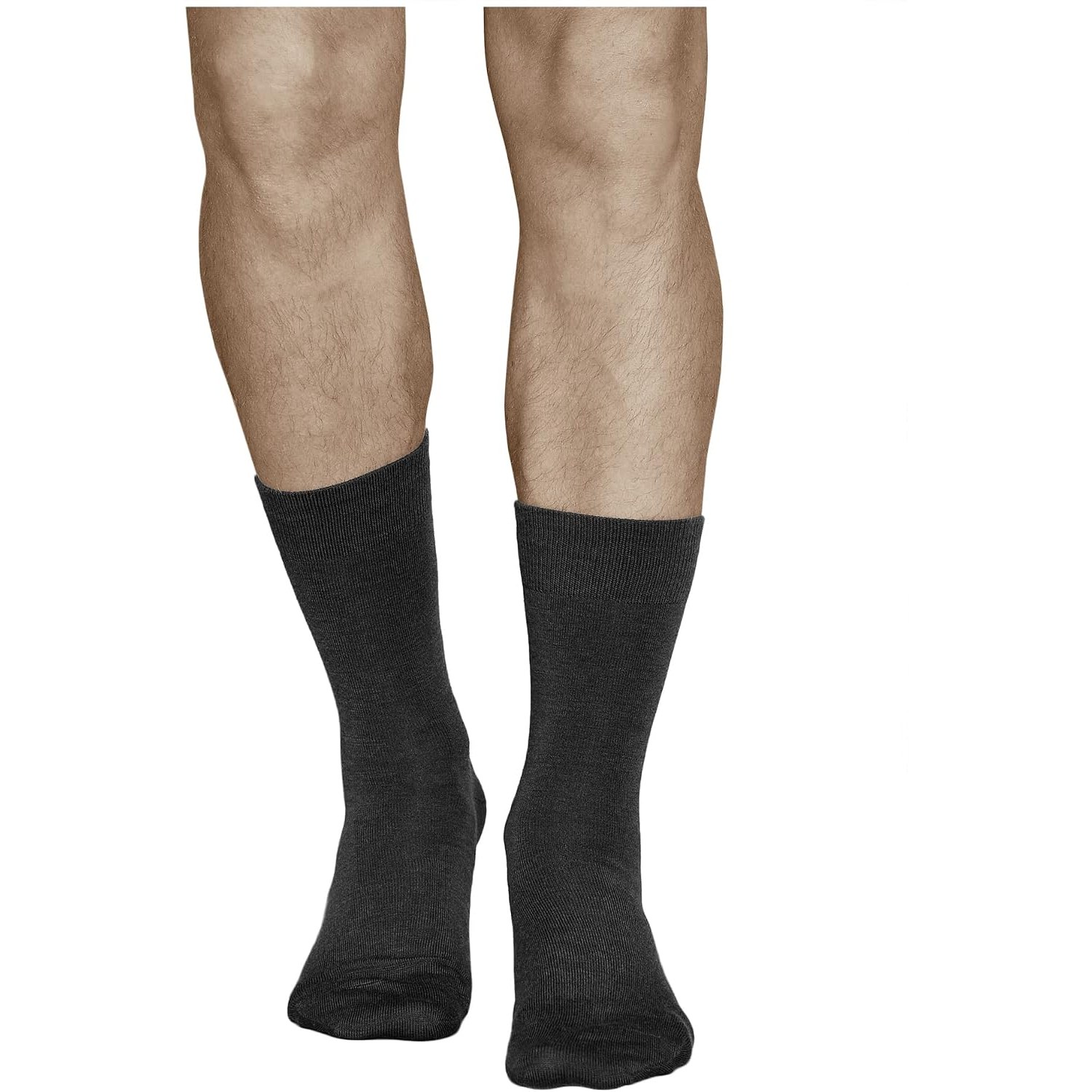
These are mid-height socks, sitting around mid-calf, with medium thickness.
Height matters more than people think. A low-cut sock disappears below the trouser hem when you sit down, which leaves a strip of bare ankle on show in a meeting. Mid-calf stays covered. It is also the standard height for wearing with suit trousers, chinos or jeans, so one height covers most of a wardrobe.
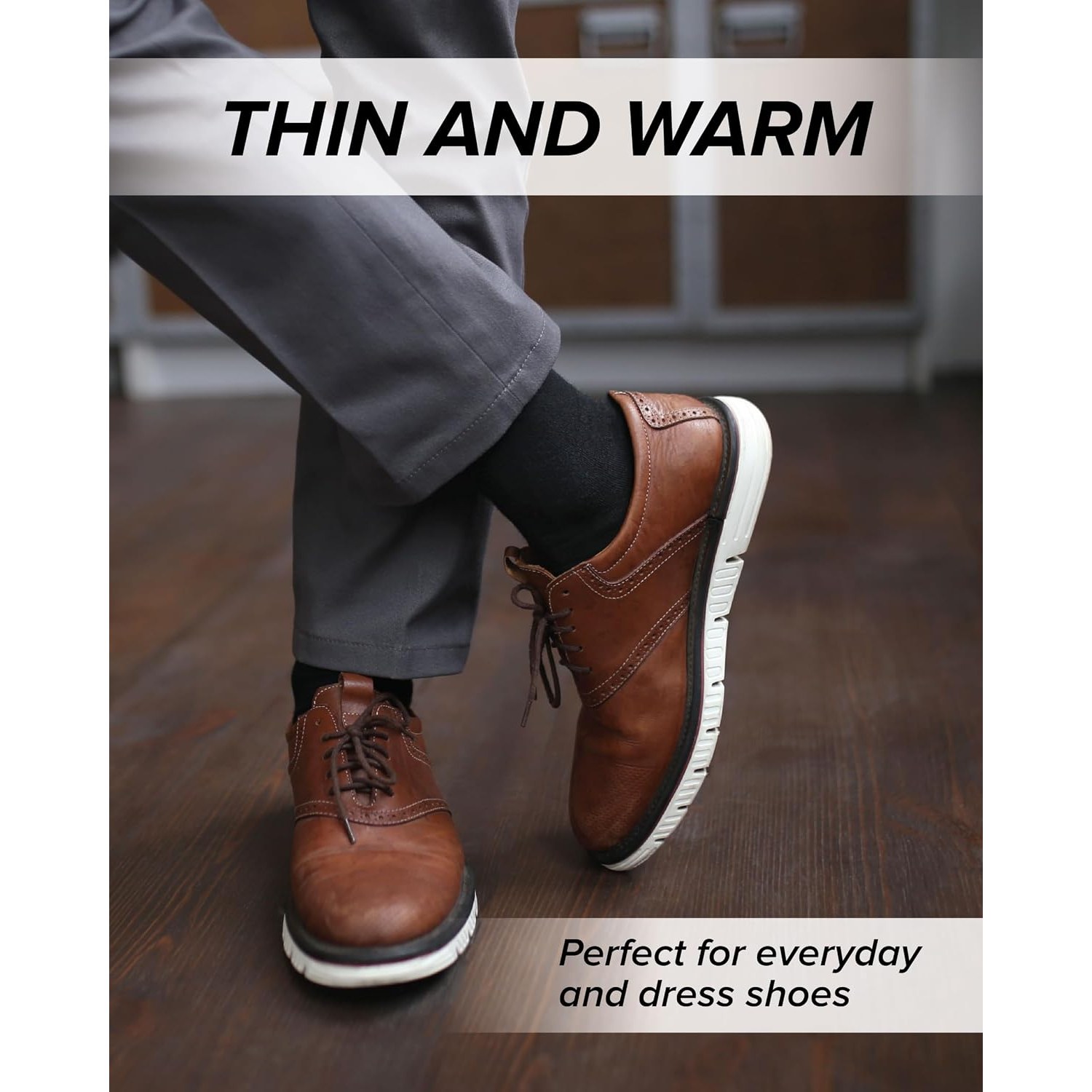
Thickness is the other half of the decision. Thin dress socks look neat but offer little warmth in a cold office. Thick boot socks insulate well but will not fit in a normal shoe without squeezing your toes. Medium sits between the two. It gives you warmth while still going into everyday shoes, which is what most people need on most days.
One honest limitation. The maker states these are not suitable for hiking, stiff leather boots, or very cold frosty weather. That is a reasonable boundary. Hiking socks need heavy cushioning at the ball and heel, and very cold conditions call for a thicker thermal sock. These are built for everyday wear and travel, and they do that well.
Who these suit
They work for a few fairly specific situations.
Office workers who spend eight hours under aggressive air conditioning get the most obvious benefit. So do frequent flyers, since a cool cabin and hours of sitting still is a reliable recipe for cold feet. Anyone travelling to a cooler country for a week will appreciate having three pairs that handle city temperatures without needing a separate bag of cold-weather kit.
The maker describes them as an everyday sock, for normal shoes rather than boots.
They also happen to be plain black, which means they work under formal trousers without any thought. A plain black sock that is also warm covers both the office and the flight.
Looking after them
Wool care is simple once you know the two rules that matter.
Rule one, keep the temperature down. Machine wash at a maximum of 30 degrees on a gentle cycle, turned inside out. The inside out part shifts the rubbing of the wash cycle to the inner surface, so the visible outside stays smoother for longer.
Rule two, no heat afterwards. Do not tumble dry, do not iron. Heat plus agitation makes wool fibres lock together permanently, which is felting, and a felted sock never comes back. Reshape them while damp and dry them flat, away from direct heat and away from an air conditioning vent blowing straight at them.
Beyond that, skip the bleach and skip the fabric softener. The maker's care instructions say no bleach, and a normal wool detergent is all the socks need.
With three pairs in the pack, one can always be drying flat while another is in use.
Getting the most out of a three-pack
Three pairs is a sensible number rather than an arbitrary one. It lets you run a rotation, one on your feet, one in the drawer, one in the wash. Rotating means no single pair takes all the wear.
Keep them together in the drawer rather than scattered. Fold them over rather than stretching the cuff of one sock over the ball of both, which is the classic way people wreck the elastic at the top.
The short version
These are men's merino wool socks in a 3-pair black pack, made from 80% merino wool with 17% polyamide and 3% elastane. Mid-calf height, medium thickness, built for everyday shoes rather than boots.
They solve a specific problem, cold feet indoors in a hot country, plus flights and trips somewhere cooler. The maker says the merino gives warmth and a soft feel without itching. The polyamide and elastane are there for durability and stretch.
Two things to confirm before you buy. First, the size, EU 47 to 50 only, so check inside your shoes. Second, the use, everyday and travel rather than hiking or deep cold. Get those right and you have three pairs for cold meeting rooms and cold cabins.