
The complete guide
How To Choose 50 cm Linen Look Cushion Covers
The problem with tired cushions
Most living rooms do not need new furniture. They need the two cushions on the sofa to stop looking sad.
Cushion covers take the brunt of daily life. People lean on them, children sit on them, arms with sunscreen or hand cream rest on them, and over a year or two the fabric goes grey at the edges and slightly shiny where it gets the most contact. The insert underneath is often still fine. It is only the outer layer that has given up.
That is the gap a pair of fresh covers fills. You spend a small amount, you keep the inserts you already own, and the room looks tidier within a few minutes. No tools, no rearranging, no commitment.
What this set actually is
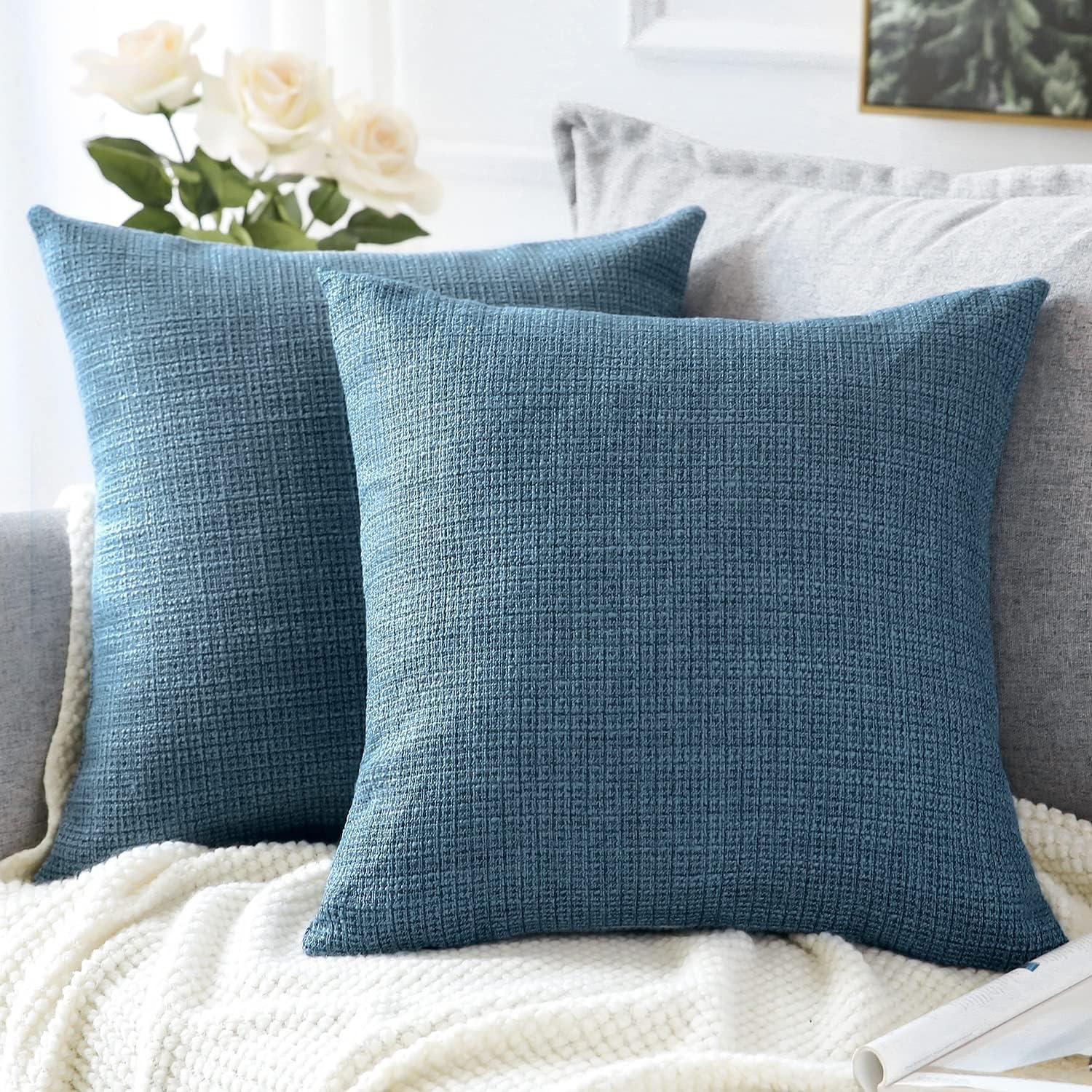
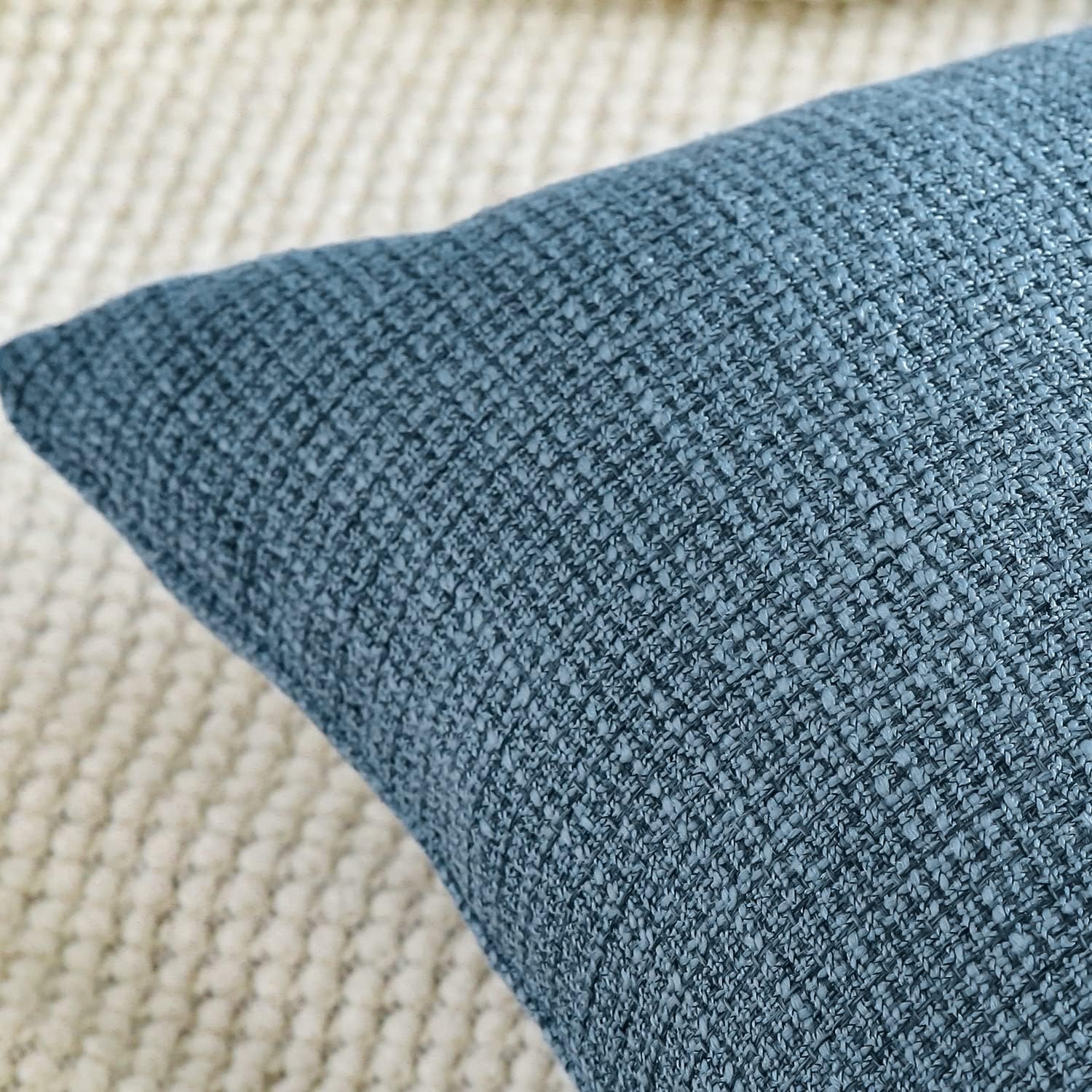
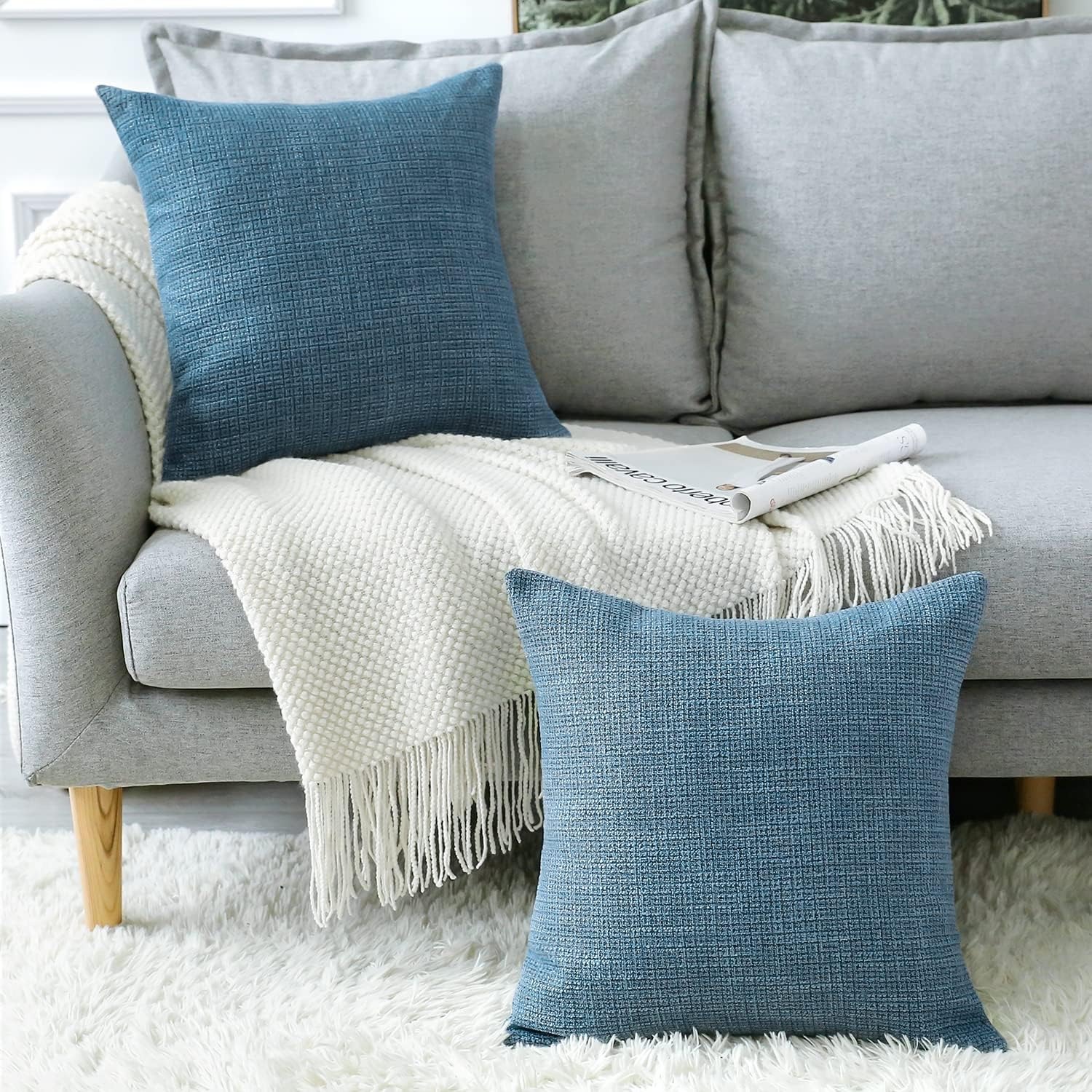
Two covers, each 50 x 50 cm, in a plain blue. The fabric is polyester woven with a linen look, which the maker describes as polyester linen. It is not pure linen and the maker gives no linen percentage, so it is a cushion cover that borrows linen's texture rather than one made from the fibre itself.
That distinction matters, so it is stated plainly here. Real linen has a feel of its own and it creases the moment you sit on it. Some people love that crumpled look. Others find it messy. A polyester weave made to resemble linen gives you the visual texture, the slightly irregular surface that catches the light. If the fibre itself is what you are after, this is not the set for you.
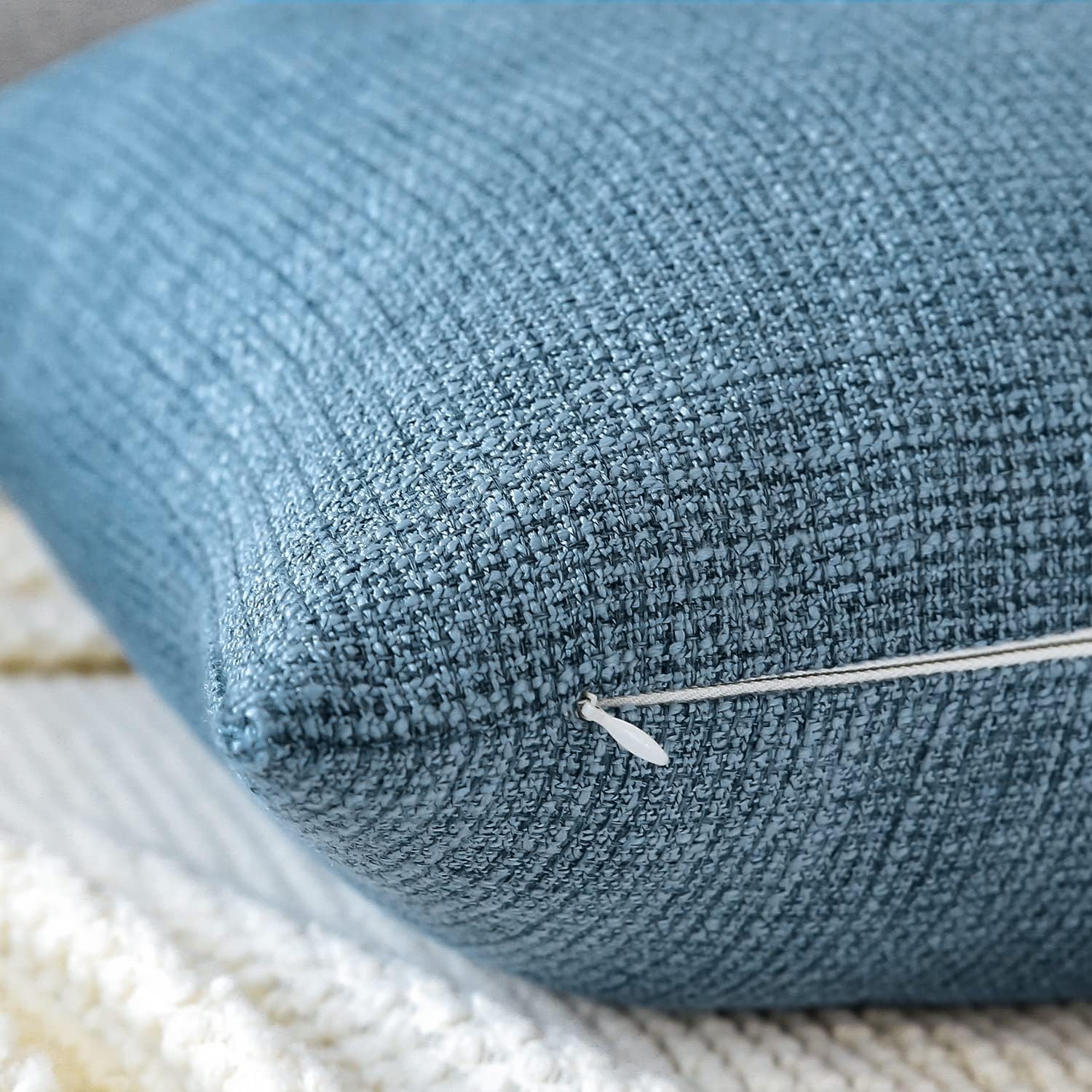
Each cover has a hidden zip, and the maker says it is the same colour as the cover. On a plain cushion the zip is the only detail there is, so keeping it out of sight is the right call. It also makes the covers easy to remove, which is the whole point of buying covers rather than complete cushions.
Inserts are not included. That keeps the price sensible and avoids you paying for filling you may not need.
Getting the size right
Fifty centimetres square is one of the most common cushion sizes sold, which is good news. If you already own square cushions, there is a reasonable chance they are this size or close to it.
Before you order, measure one. Lay the cushion flat and measure seam to seam across the front, not around the puffy middle. If it reads 50 cm, you are set. If it reads 45 cm, the cover will fit but will look slack at the corners, and you would be better off buying new inserts in the right size.
There is a trick worth knowing. Many interior stylists deliberately use an insert slightly larger than the cover, usually 5 cm up, so a 55 cm pad in a 50 cm cover. The result is a cushion that fills right to the corners and holds a plump shape instead of collapsing into a floppy square. It takes a bit more effort to zip up, but the look is noticeably better. If your existing pads are 55 cm, do not assume they are too big. Try one first.
Also take a moment to assess the pads themselves. Squeeze one and let go. A good insert springs back. A tired one stays dented and feels lumpy in the centre, where the filling has migrated to the edges. New covers over dead inserts is money half wasted, so replace both if you need to.
Who these suit
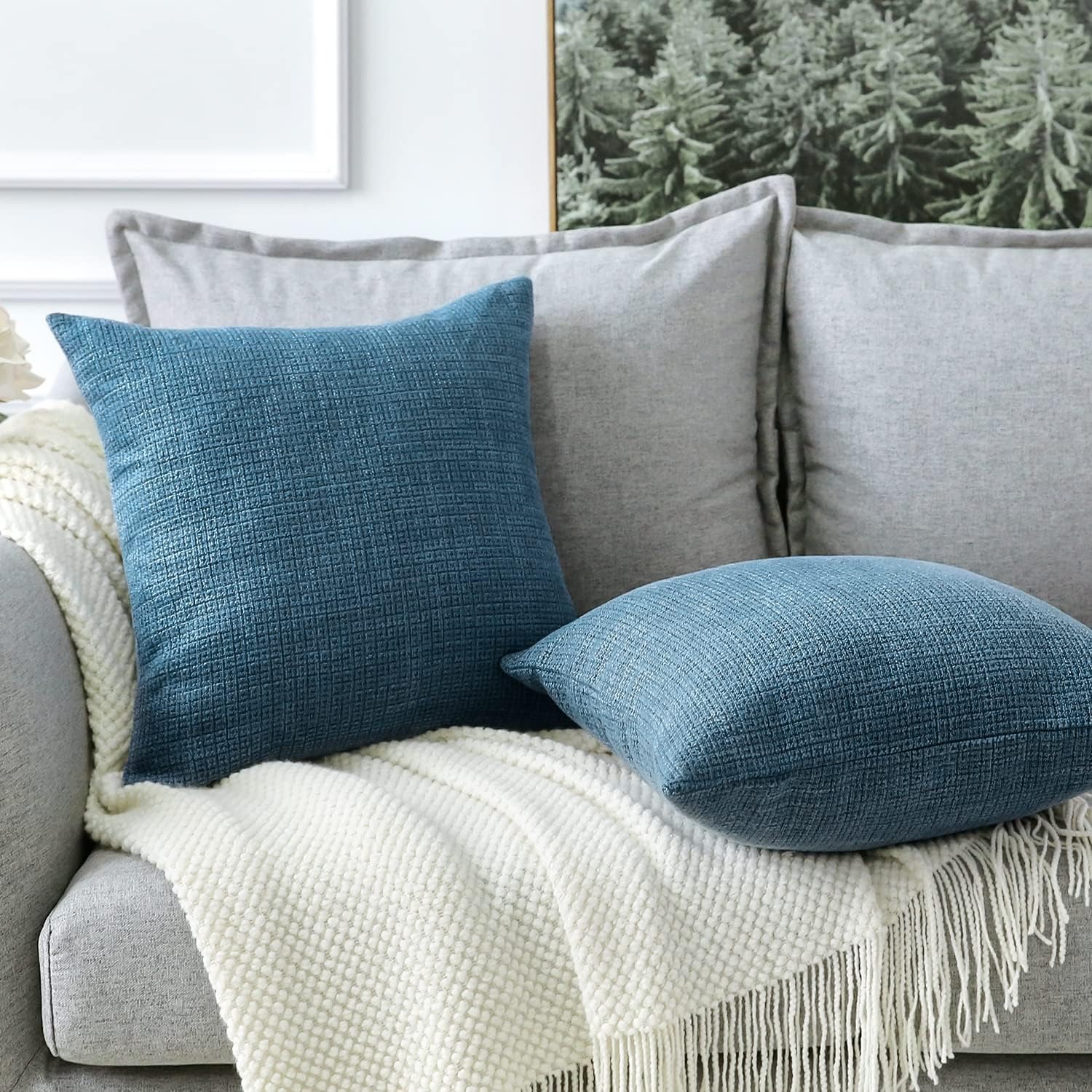
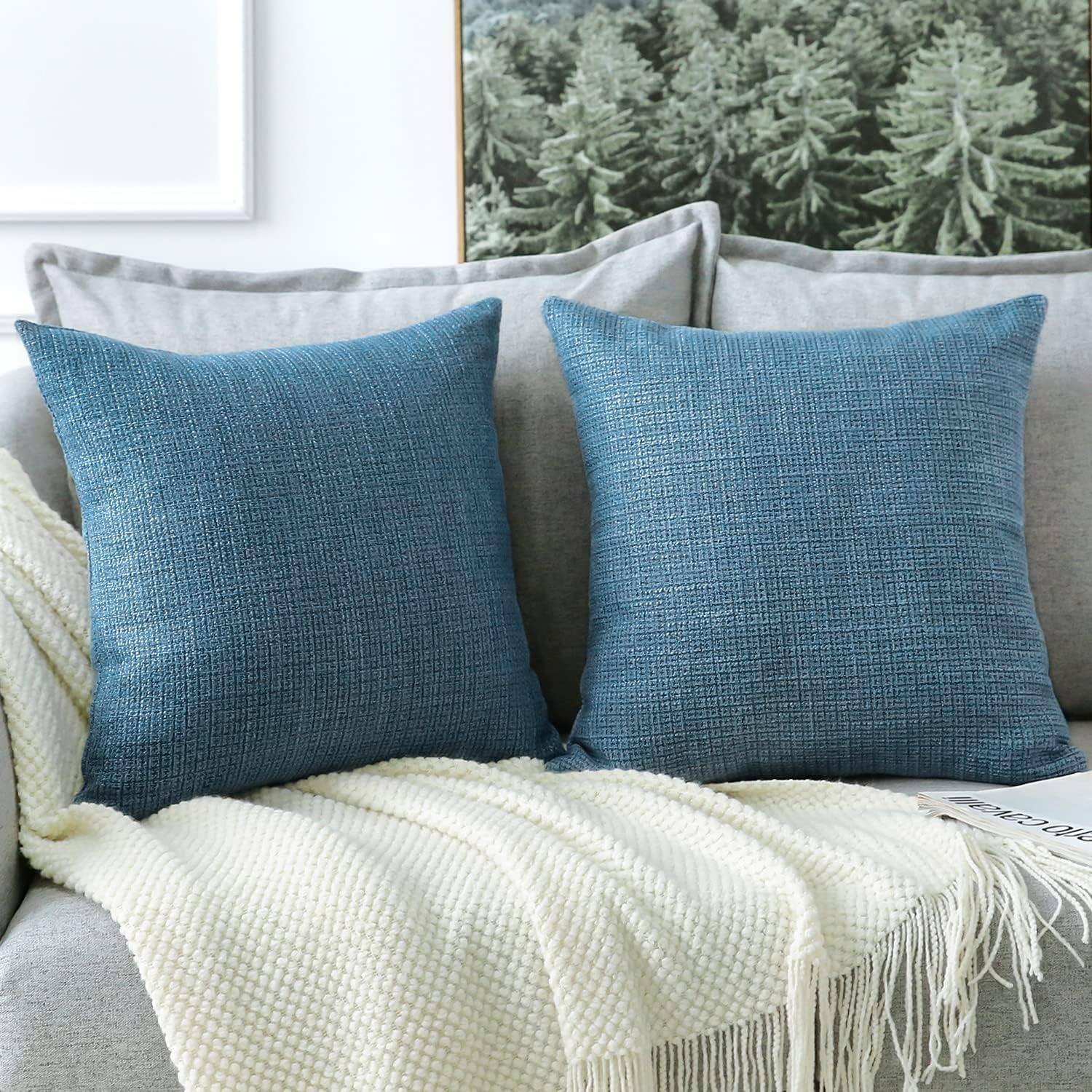
Anyone in a flat or condominium who wants a quick, low-cost refresh. Blue is a forgiving colour that sits next to grey, white, pale wood and most natural textures without clashing, so you are unlikely to buy a pair and then discover they fight with the rug.
They work in several spots:
- At either end of a two or three seater sofa, which is the classic arrangement.
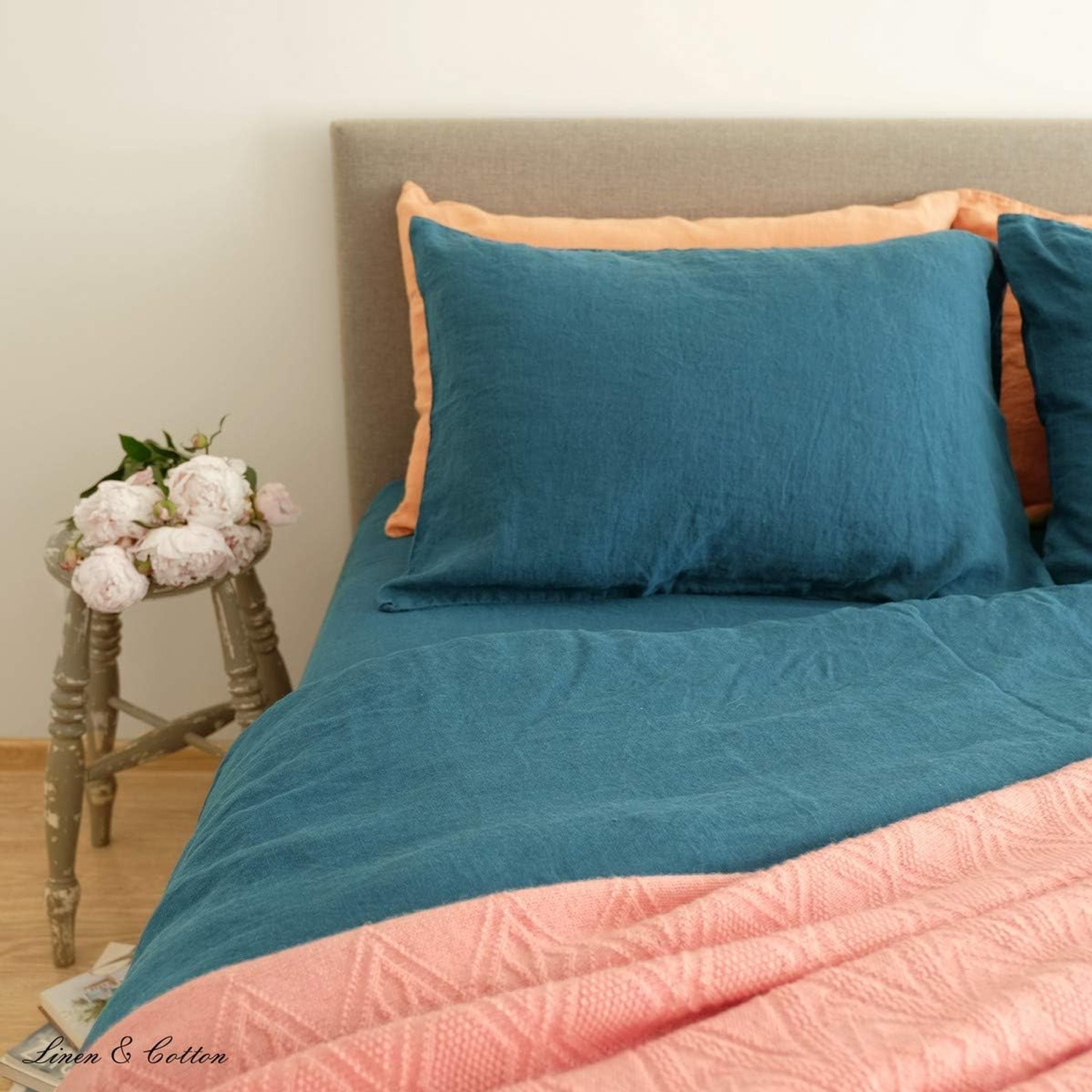
- At the head of a bed, propped in front of your sleeping pillows.
- On a bedroom bench or a window seat.
- On an armchair in a study or reading corner.
In a flat where the air conditioning runs most of the year, a plain woven cover like this is an easy fit. It looks tidy, it comes off for washing, and the blue sits quietly next to most sofas.
They are less suited to very small chairs. Fifty centimetres is a decent-sized square, so a narrow desk chair or a compact dining chair will look swamped. For those, a smaller square or a lumbar shape works better.
How to build a group that looks considered
A matched pair is the safe starting point and it is what you get here. If you want to go further, the usual advice is to vary something while keeping something constant.
Keep the colour family constant and vary the size. Two 50 cm blues at the ends, one 40 cm in a related tone in the middle. Or keep the size constant and vary the texture, pairing these plain woven covers with something ribbed or knitted. What tends to look unconsidered is four identical cushions in a row, or five cushions that share nothing at all.
Odd numbers often work better than even numbers on a long sofa, which is why three is a common arrangement. On a two seater, two is plenty. On an armchair, one.
Looking after them
The maker says to machine wash in cold water. Wash with similar colours, and close the zip before the cover goes in the drum, because an open zip can catch the fabric and damage it.
Use only non-chlorine bleach, if you use any at all, and hang the covers to dry. Both points come from the maker's care notes.
The same notes say not to use a warm iron. Smooth the covers flat by hand while they are still damp and let them dry on the line. Once an insert is back inside, light creases tend to pull flat.
Wash the covers separately from inserts. Inserts take a long time to dry properly and can go musty in the middle if they do not get full airflow, which is a problem in a humid climate. If an insert does need washing, do it on its own and give it a full day or two somewhere with moving air.
Spot cleaning handles most small accidents. Blot rather than rub, use cool water and a tiny amount of mild detergent, and work from the outside of the mark inwards so you do not spread it.
Two or four?
This is a question to settle before you order. Buying two sets gives you four covers, which lets you either dress a larger sofa fully or keep a spare pair on rotation. Rotation is the quiet advantage. While one pair is in the wash, the sofa still looks finished, and swapping them every few months spreads the wear so neither pair ages faster than the other.
It also means you always have clean covers on hand when someone spills something twenty minutes before guests arrive.
The short version
This is a pair of 50 x 50 cm cushion covers in blue, made from polyester woven to look like linen. It is not pure linen and the maker gives no linen percentage, so buy them for the look and the easy care rather than for the fibre. They close with a hidden zip, they machine wash cold, and they come without inserts.
Measure your existing pads first. Match 50 cm or go slightly larger for a fuller shape. If the pads are flat and lifeless, replace those too, because no cover can rescue dead filling.
Done right, it is one of the cheapest changes you can make to a room, and one of the few you can finish before the kettle boils.