
The complete guide
How To Choose A Soy Candle Gift Set That Actually Gets Used
The problem with buying one big candle
Most people buy candles the same way. You find one jar you like the look of, bring it home, light it a few times, and then stop. Not because it is bad, but because you have had enough of that particular smell. The jar sits there, two thirds full, slowly collecting dust on a shelf.
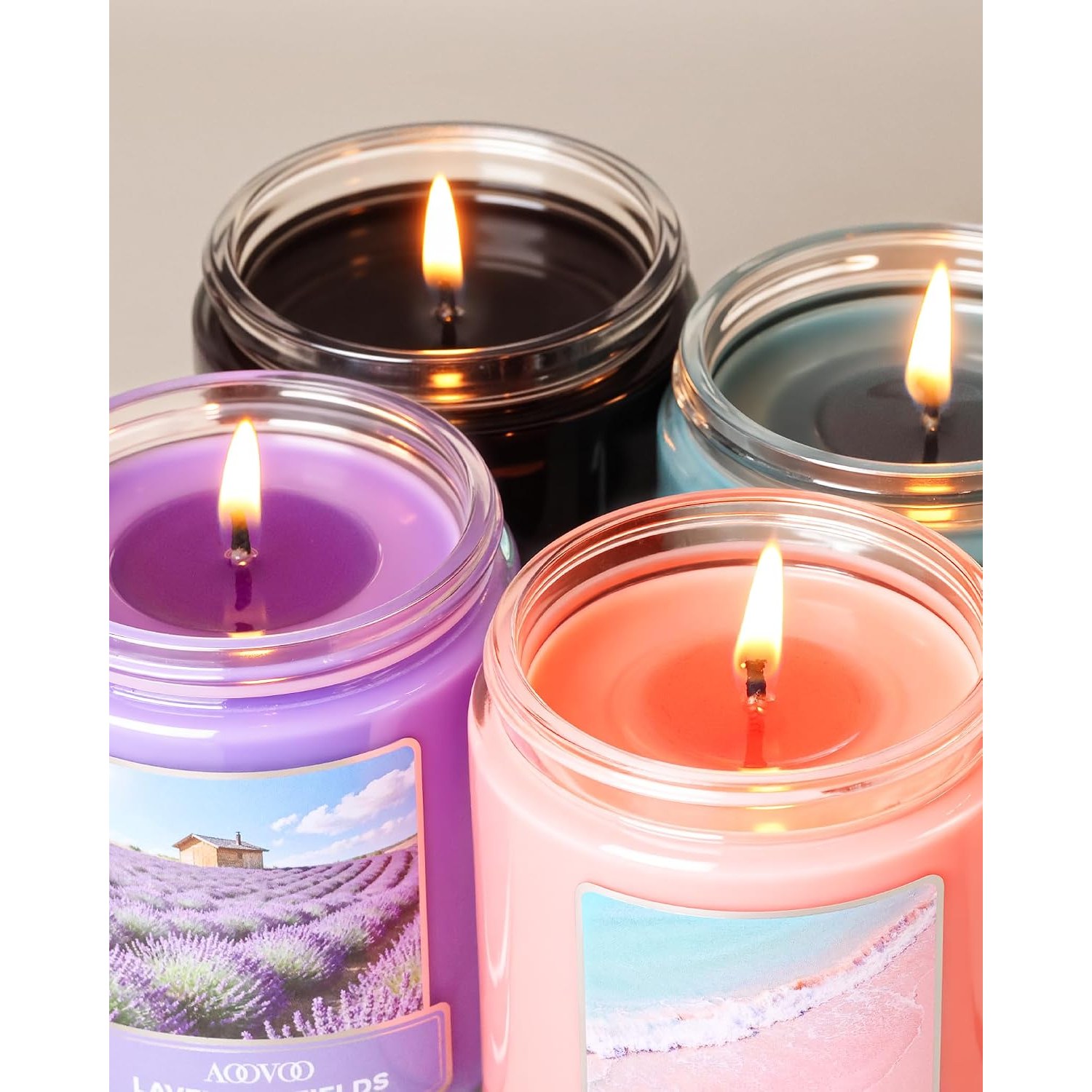
A set of four works differently. You are not committing to one fragrance for the next six months. You are building a small shelf of options, and you light the one that fits the evening. That is the real argument for a soy candle gift set 4 pack over a single large jar at the same price.
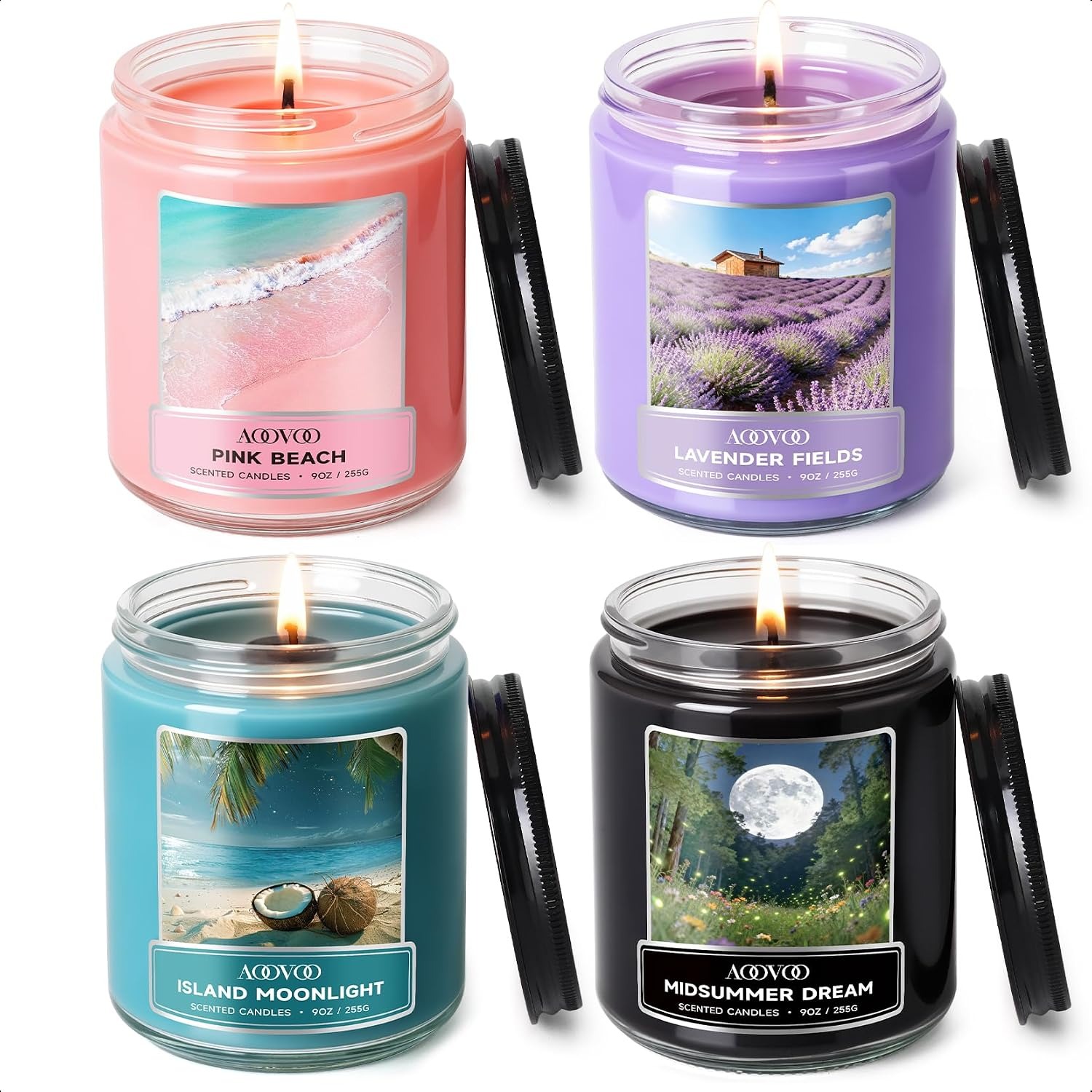
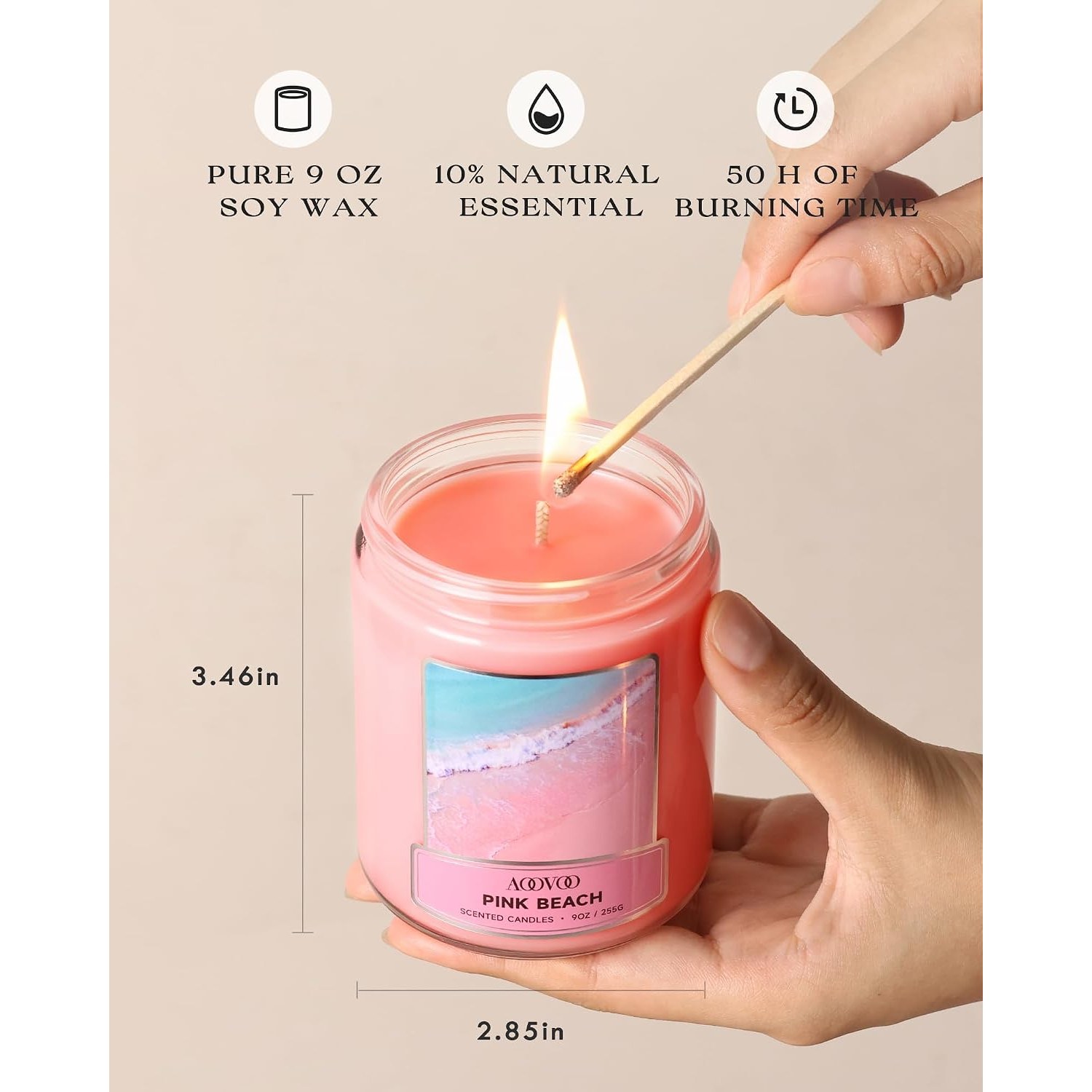
This set gives you four candles of 255 g each, which comes to 1,020 g of wax in total. The maker states the wax is 100% soy, and that the four jars together offer up to 200 hours of burn time. Each jar is 7 cm across and 8.8 cm tall with a single wick.
What soy wax changes
Wax type is one of those details that sounds technical and then turns out to matter in ordinary ways.
Soy wax is made from soybean oil, and it is softer than paraffin. The maker states up to 200 hours of burn time across the 1,020 g set.
On scent, the maker says the fragrance spreads well through a living room, and suggests pairing the candles with a candle warmer lamp. In a small flat, start with one candle and see how it fills the room before lighting a second.
One thing to expect from soy, and it catches people out: the surface often looks imperfect. It frosts, it sets unevenly, and it can look a bit bumpy after it cools. That is normal for soy wax. It has nothing to do with quality and nothing to do with how the candle burns.
Some candles sold as soy are blends. The maker here states 100% soy wax, not a soy blend. If that distinction matters to you, it is stated plainly.
Going through the four scents
Knowing roughly what each jar does helps you use the set properly instead of just grabbing whichever one is closest.
Pink Beach is the sweet one. The maker describes coconut and vanilla with tropical fruits. It reads as warm and sweet, which makes it a decent choice for a Sunday afternoon or a bathroom after a shower.
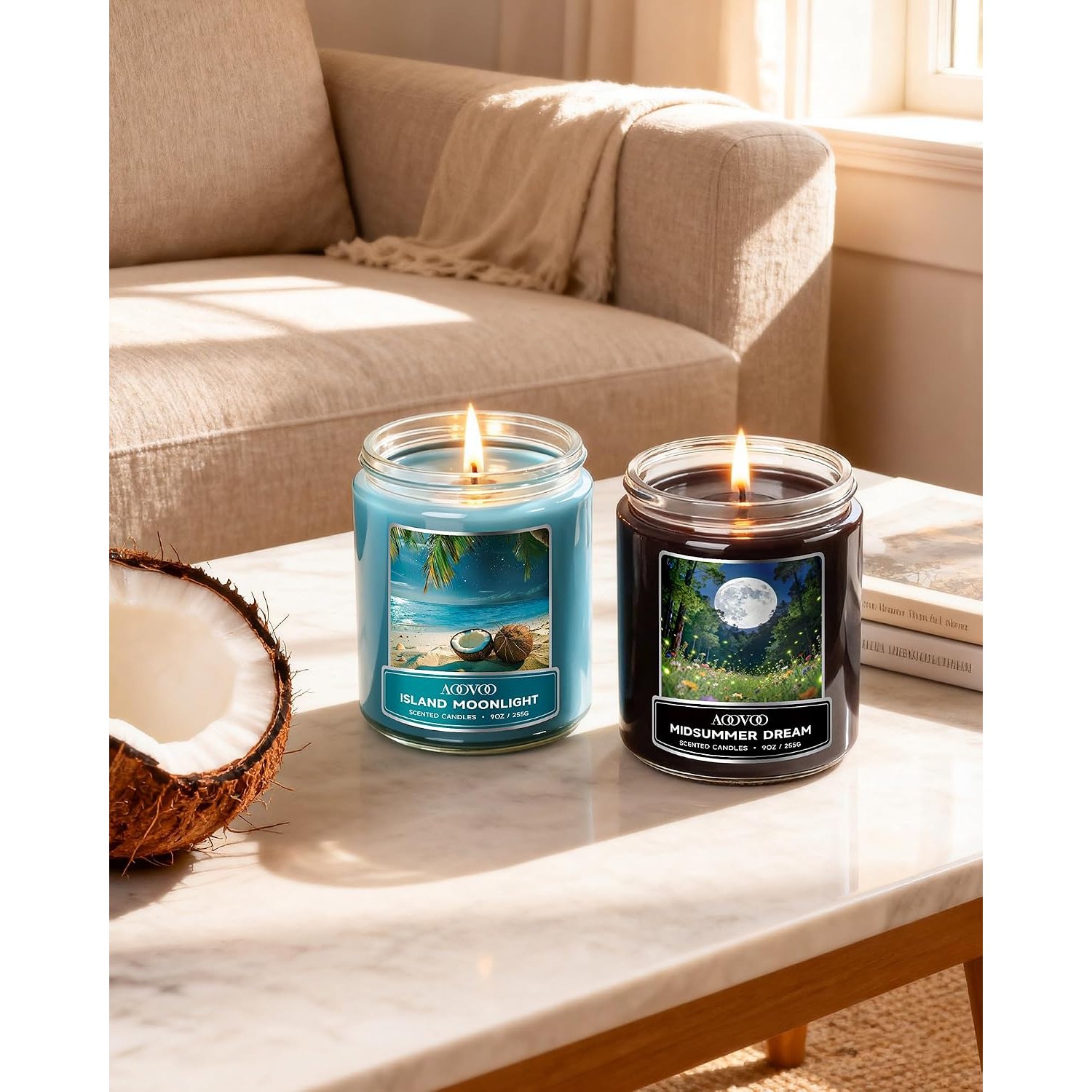
Island Moonlight also carries coconut, which the maker blends with what it calls a watery clay note for a fresh, sea feel. This is the one to try in a kitchen or a room you have just tidied.
Midsummer Dream puts lavender next to sage and cedar wood. The woody notes stop it being soft or floral, which makes it the most neutral of the four. If you are lighting a candle while people are over, this tends to be the safest pick.
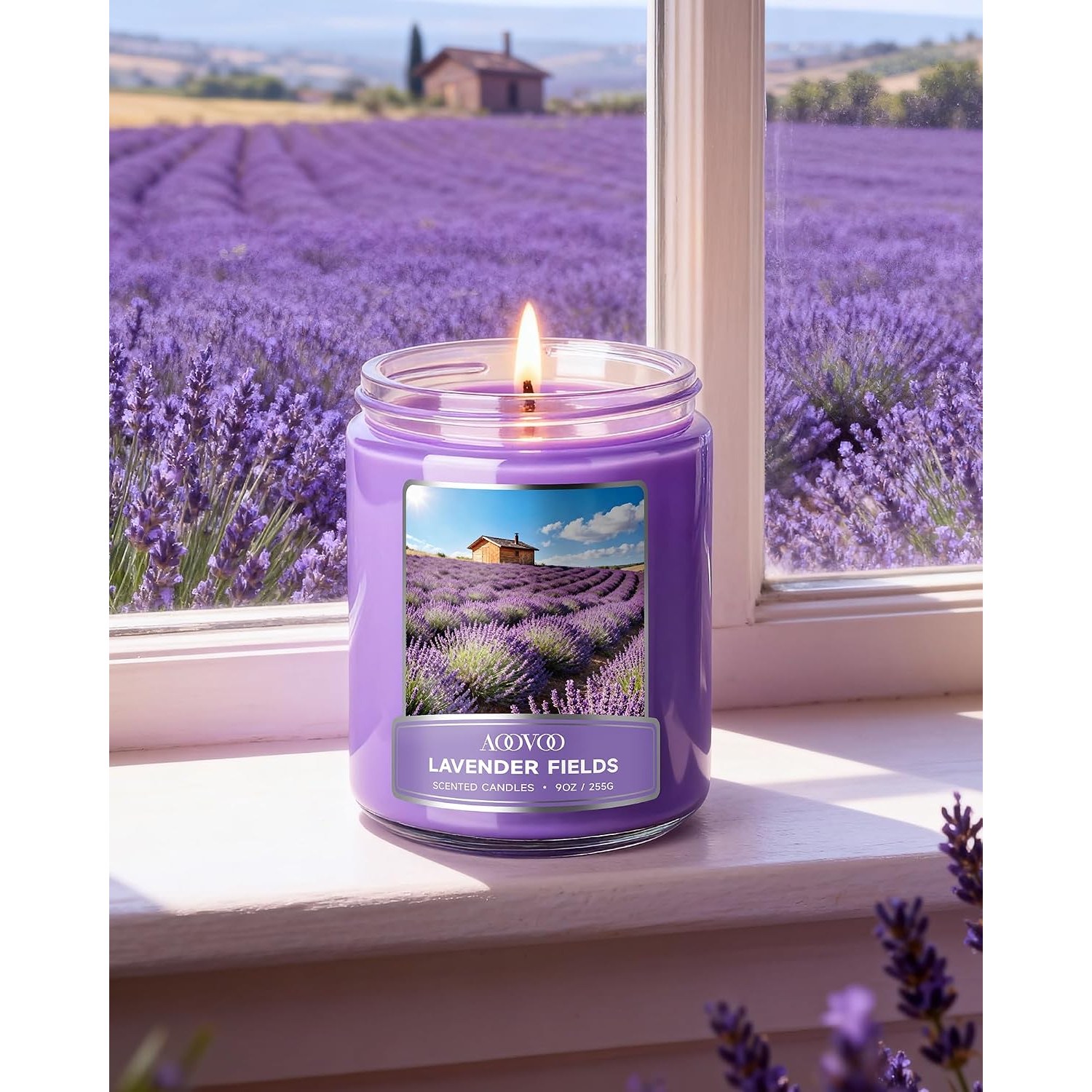
Lavender Fields is lavender with amber behind it. It is the quietest jar in the box and the obvious one for a slow evening.
You do not need to use all four at once. Keep one in the bedroom, one in the bathroom, one in the main room and one in reserve. That way each one gets used.
Who this set suits
Gift buyers. This is the clearest case. A scented candle gift box needs no sizing, fits almost any home, and gets used rather than stored. Four fragrances also removes the guesswork, because you are not betting everything on one scent landing. It works for a housewarming, a birthday, a bridal shower or a thank you.
People in small flats. The 7 cm by 8.8 cm jar is genuinely small. It fits on a narrow shelf, a bedside table, a desk corner. You are not giving up surface space to a large bowl candle.
Anyone who gets bored of one smell. Covered above, but it is the most practical reason to go for a set.
Candle warmer lamp owners. A container candle in a jar this size is the standard shape for warmer lamps. If you already own one, these slot straight in.
How to get the most out of them
A few habits make a surprising difference to how long a set like this lasts.
The first burn sets the pattern. Soy wax remembers the edge of its first melt pool. If you light a new candle for twenty minutes and blow it out, you leave a hard ring of unmelted wax around the rim, and every burn after that digs a narrow tunnel down the middle. You end up throwing away a third of the jar. Give a new candle two to three hours the first time, long enough for the melted wax to reach the glass all the way round.
Trim the wick to about 5 mm each time. An untrimmed wick grows, the flame gets tall, and tall flames eat wax fast and leave soot on the glass. Ten seconds with a pair of scissors before you light it solves it.
Watch where you put the jar. The biggest enemy of an even burn in an air-conditioned home is airflow. If a candle sits directly under a vent or in front of a fan, the flame leans, the wax melts hard on one side, and you get a lopsided jar within a few burns. Move it half a metre away from the vent and the problem goes away.
Stop at roughly 1 cm of wax left. Burning the last of the wax lets the glass get hot. There is no real benefit to squeezing out the final half hour.
Keep spare jars out of the sun. Soy is soft, and direct sunlight plus a warm room can soften the surface. A cupboard is fine.
Making the empties useful
When a jar finishes, the glass is worth keeping. Pour just-boiled water in, wait for the leftover wax to loosen and float, let it set, then lift the disc out. Wash with warm soapy water and the jar comes back clean. At 7 cm across they are a handy size for cotton buds in a bathroom, paper clips on a desk or hair ties on a dressing table.
The short version
You get four candles, 255 g each, 1,020 g of wax altogether, made from 100% soy wax as stated by the maker, and the maker states up to 200 hours of burn time across the set. The four scents run from sweet and tropical through to quiet lavender, which gives you something appropriate for most rooms and most times of day.
The jars are small at 7 cm by 8.8 cm, so they suit flats and shelves, not large sideboard displays. Single wicks mean modest flames and a steady, slow melt.
Treat the first burn properly, trim the wick, keep it away from the air-conditioning vent, and the set will stretch across months. As a gift it is one of the lower-risk choices you can make, because a candle set gets used up rather than put away.