
The complete guide
How to Choose an Embroidered Cotton Linen Tablecloth for a Long Dining Table
The problem with a half-dressed table
Plenty of dining tables live in a strange in-between state. There is a runner that covers a strip down the middle, a couple of placemats, maybe a bowl of fruit. The table still looks like furniture instead of a set table, and every water ring and crumb is on display.
A full cloth changes that quickly. It covers scratches on an older table and gives you a clean surface to build a setting on. The catch is that many tablecloths are too short. If you have an extended table, a joined pair of tables, or a long console you use as a buffet, a shorter cloth stops awkwardly at each end.
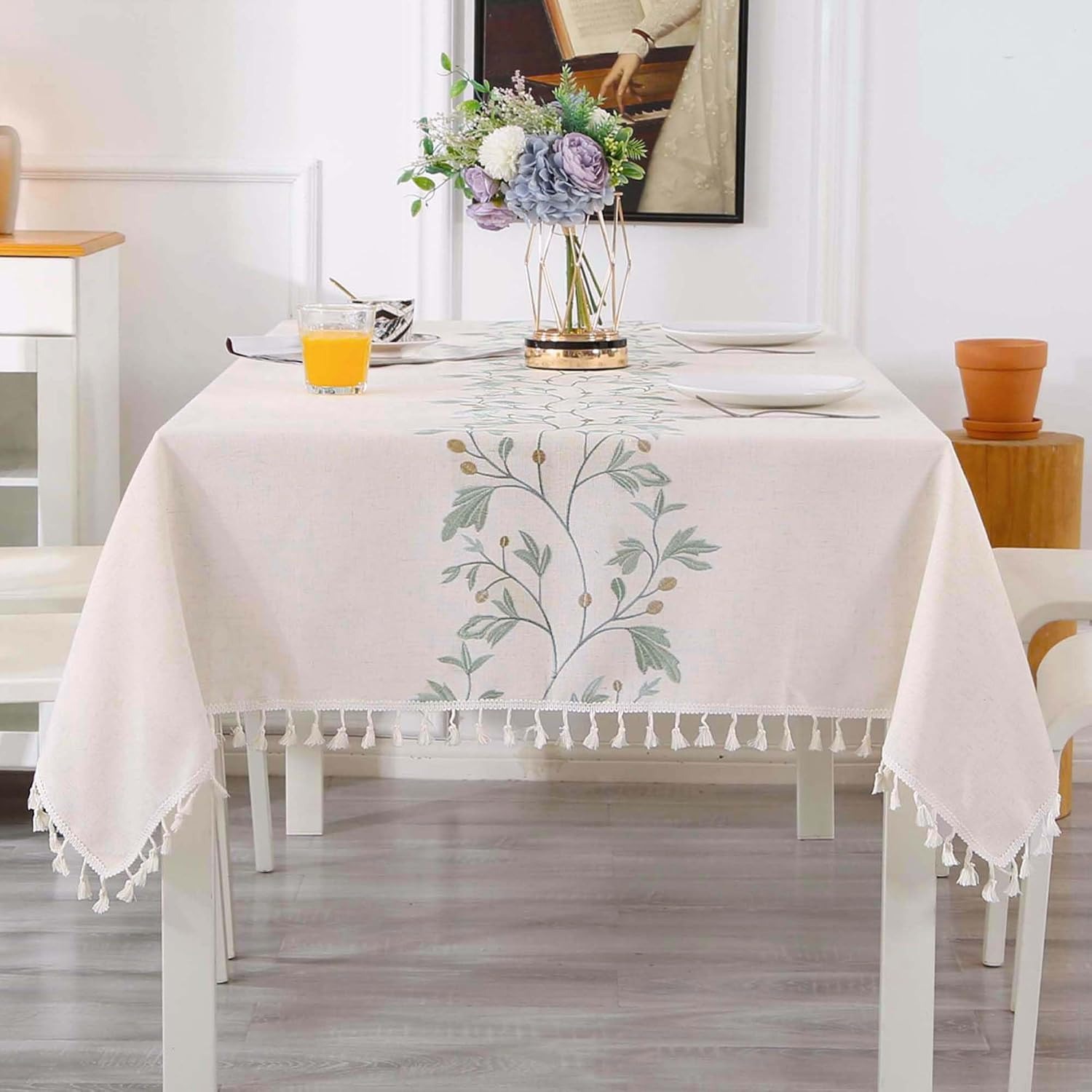
That is the gap a 140 x 300 cm cloth fills. Three metres of length covers long tables, and a beige ground with green embroidered leaves means you are not stuck with a plain hotel-banquet look.
What the fabric is
The fabric here is a blend of cotton and linen. The maker says so but gives no percentages, so we call it a blend and not pure linen. That is worth knowing up front.
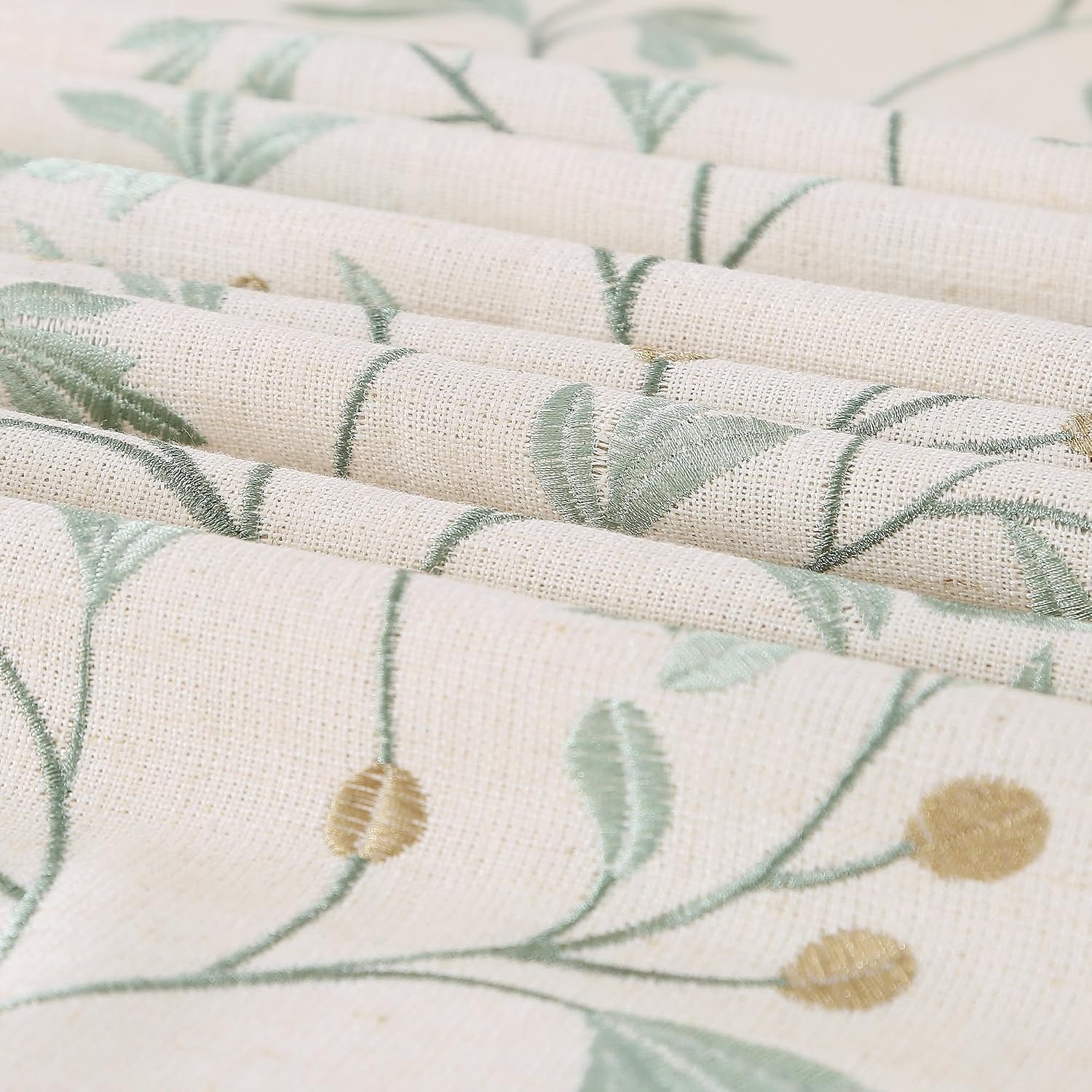
The listing also gives the material as canvas. In the close-up photo you can see a close, even weave in a pale beige. The item weight is listed as 1.27 kg for the full cloth.
If you want pure linen and nothing else, look at a different cloth. If you want a washable beige cloth with stitched detail in a cotton and linen blend, this is that.
The details that do the work
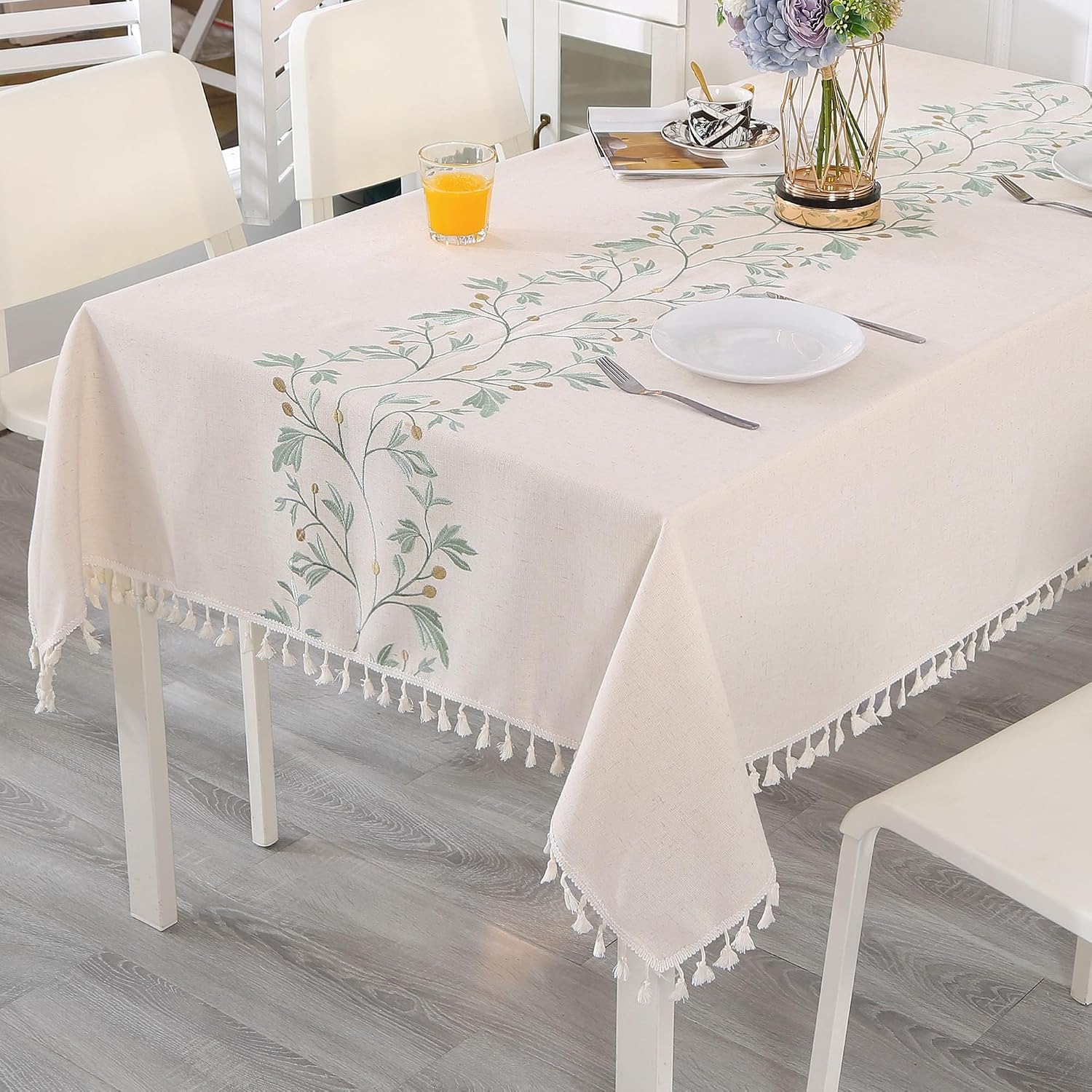
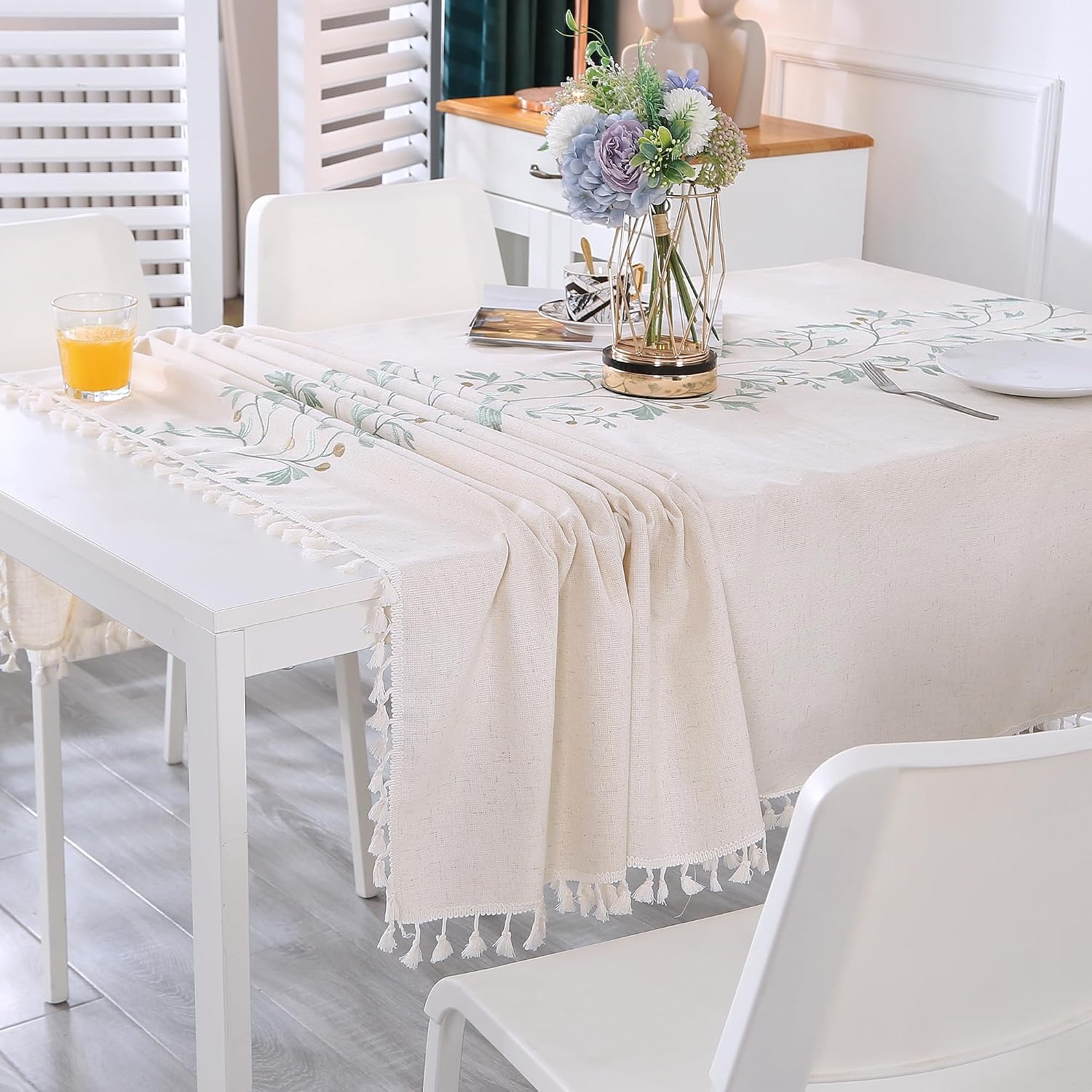
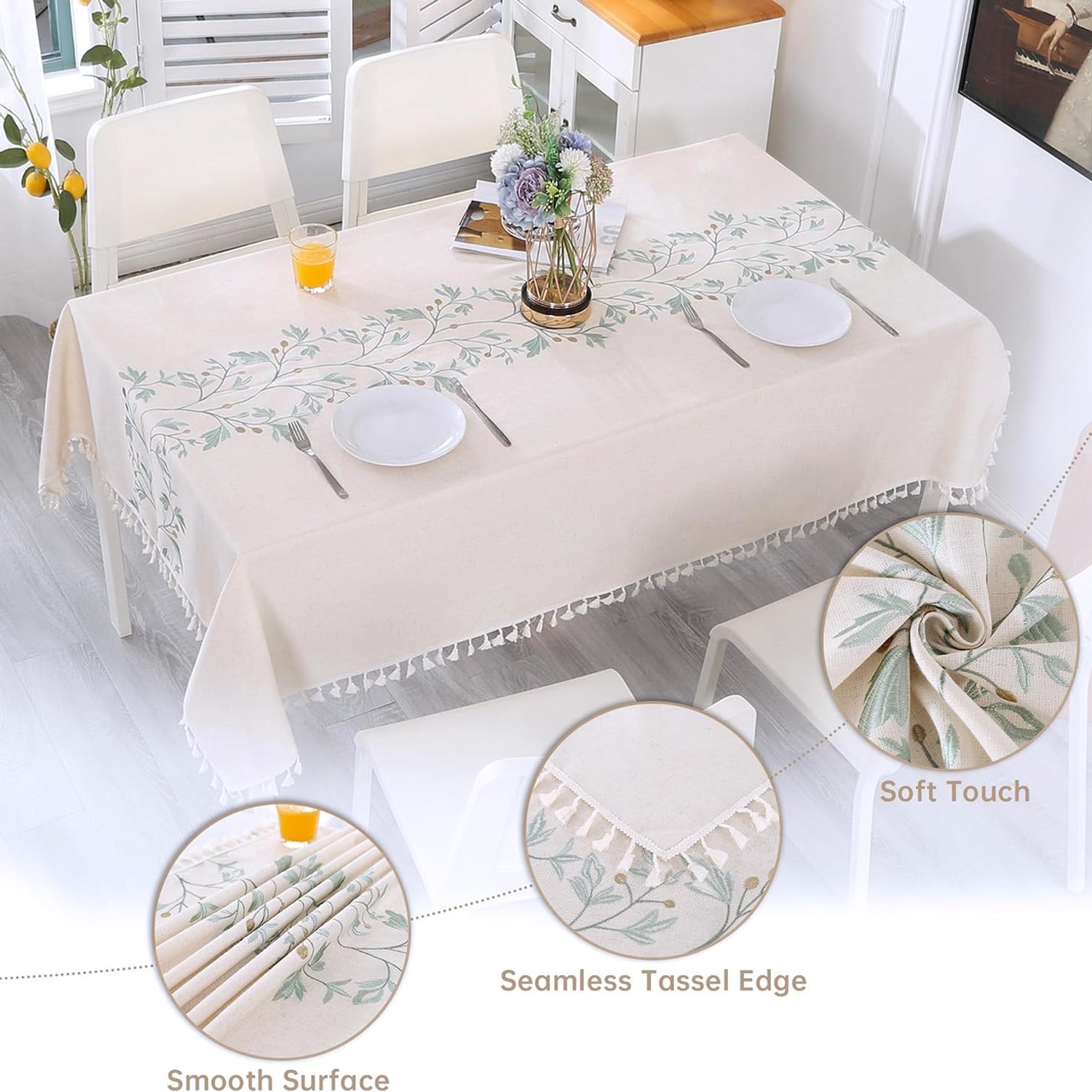
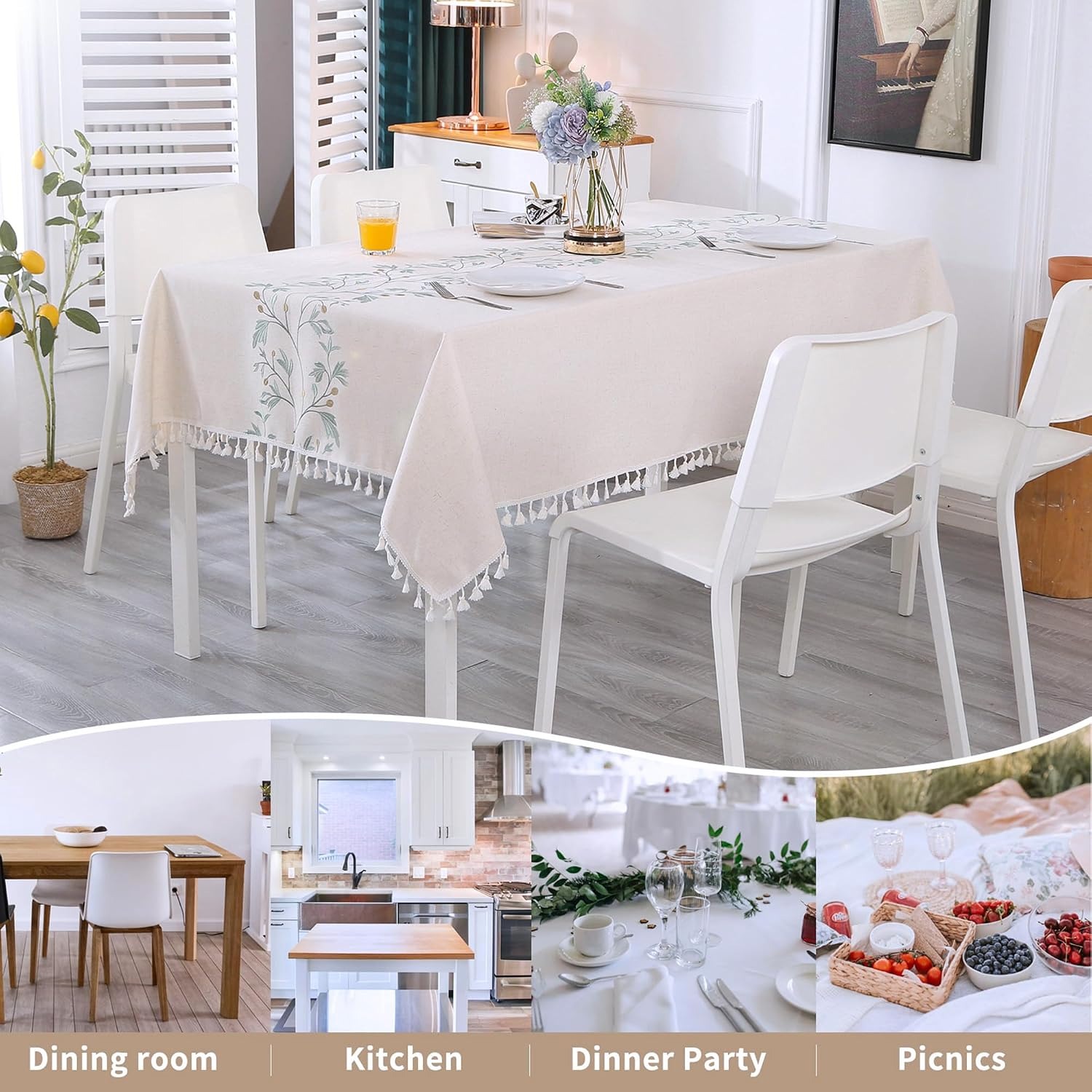
Two things lift this above a plain cloth. The first is the embroidery. The maker describes green embroidered leaves. The photos show a leafy branch stitched in green across the beige ground, with a few small gold-coloured buds. You get pattern without a loud print.
The second is the tassel edge. A row of small beige tassels runs along the edge of the cloth. They hang below the table line, so they do not get in the way of place settings. They do ask for a bit of care in the wash, which we will come to.
The listing also gives the corner style as pleated and the hem stitch type as pick.
One note on the photos: they show this design on a shorter table. The cloth sold here is the 140 x 300 cm size, so on a small table it will hang much lower at the ends than the pictures suggest.
Working out your size
This is the part people get wrong, and it is easy to get right with a tape measure.
Measure your table top: length and width. Then decide on your drop, which is how far the cloth hangs down each side. Around 20 to 30 cm is a common choice for home dining, enough to look deliberate without pooling in laps. For a buffet or a display table where nobody sits, 35 cm or more looks generous and hides anything stored underneath.
The maths is simple. Add twice your chosen drop to each table measurement. A 240 x 90 cm table with a 25 cm drop wants roughly 290 x 140 cm, which is almost exactly this cloth. A 180 cm table will get a much deeper fall at the ends, about 60 cm, which can look lovely on a styled table but may brush against knees at a seated dinner.
If you are joining two tables for a party, measure the combined length. That is where a 3 m cloth is most useful.
Who it suits
This cloth works well if you entertain in a flat or condominium and your dining table doubles as a work surface, a homework desk and a place to drop the shopping. A washable cloth means you can dress the table for guests and strip it back the next morning.
It suits people who want their table to look considered but do not want a strong colour scheme. Beige takes white porcelain, dark stoneware, clear glass and metal equally well. If you change your napkins and your centrepiece, the same cloth looks fresh.
It also suits occasions. The maker lists birthdays, parties and weddings, and gives the season as all-season. A leaf design is not tied to any one festival, so it can come out all year.
It is less suited to anyone who specifically wants pure linen, or who prefers a dark cloth that hides every mark. Beige is honest about spills.
Styling it without overthinking
Because there is already embroidery on the cloth, keep the rest quiet. A low run of greenery down the centre, or two or three candlesticks spaced along the length, leaves room for serving dishes and does not block the view across the table. Tall arrangements look good in photos and are a nuisance at dinner.
For napkins, keep it plain. White, oatmeal, soft sage or a warm terracotta all sit comfortably against beige and green. Avoid another pattern unless you enjoy that kind of layering.
If your table is glass or very smooth, a thin felt underlay stops the cloth sliding and protects the surface underneath.
Keeping it looking good
The maker's care instructions are short. Machine wash up to 40 degrees. If necessary, iron at a low temperature.
The rest is our general advice. Wash with similar colours on a gentle cycle. Keep bleach away, since it can pull colour out of the green stitching. For spills, blot instead of rubbing, rinse with cool water, and get it into the wash reasonably soon.
Put the cloth in a laundry bag so the tassels do not twist around other items in the drum. The maker does not mention a dryer, so a line or a drying rack is the careful choice.
If you want a crisp finish, iron on low while the fabric is still slightly damp. Turn it over and press from the reverse across the embroidered areas so the stitches keep their shape. Then store it folded over a hanger or rolled, so it does not come out with a grid of creases across the middle. In a humid home, make sure it is fully dry before you put it away.
The short version
This is a 140 x 300 cm rectangular tablecloth in a cotton and linen blend, beige, with green embroidered leaves and a tassel edge. It is not pure linen. The listed weight is 1.27 kg, and it washes at up to 40 degrees.
The length is the main reason to choose it, so measure your table and check the drop before you order. The beige colour and the stitched leaves mean it works for everyday meals as well as a party. Wash it gently and keep bleach away from the embroidery.