
The complete guide
Choosing a Marble Ruffle Bowl That Earns Its Place
The problem with small surfaces
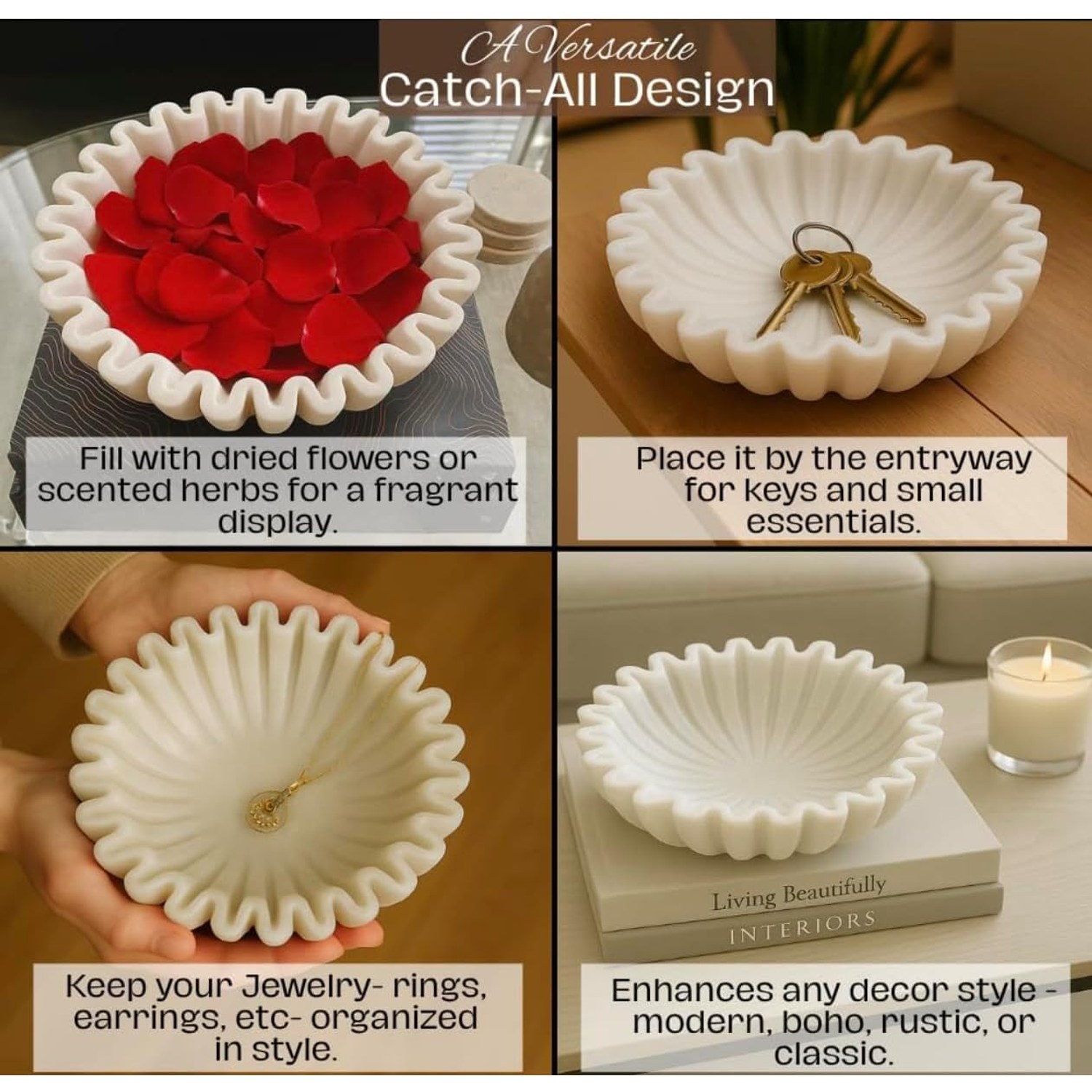
Most homes have a handful of surfaces that end up doing everything. The console by the door collects keys, receipts, a packet of tissues and whatever came out of a pocket. The coffee table collects remotes. The sideboard collects mail. None of it looks bad exactly, it just looks like nothing was decided.
A bowl fixes that faster than almost anything else you can buy. It gives the mess a boundary. The pile stops being a pile and becomes contents. And if the bowl itself is worth looking at, the surface goes from neutral to styled without you adding a single extra object.
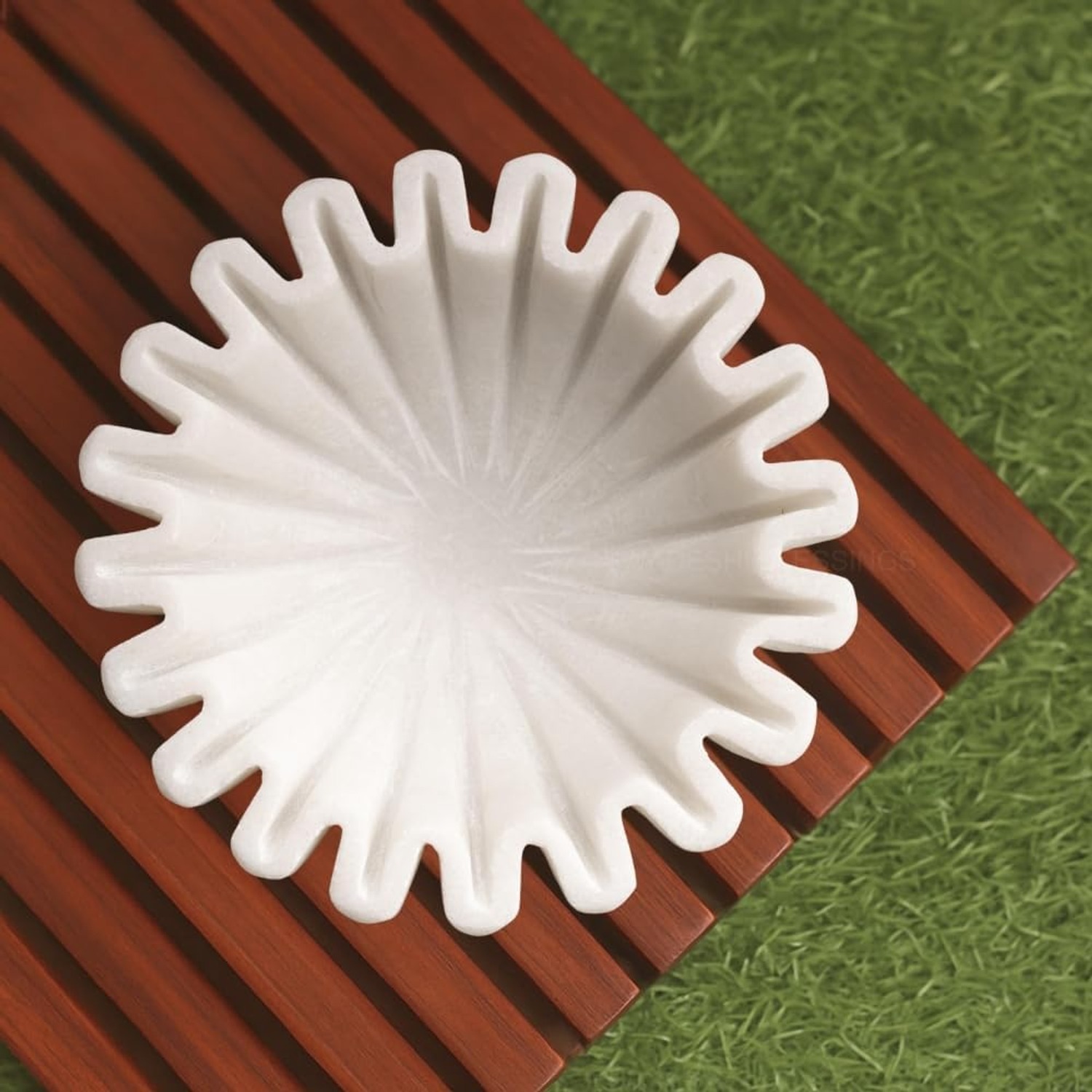
That is the job a marble ruffle bowl does. The scalloped rim gives it shape and shadow, the stone gives it weight, and the open form means it works whether it is full or empty. There is no awkward middle state where it looks half used.
What you are actually buying
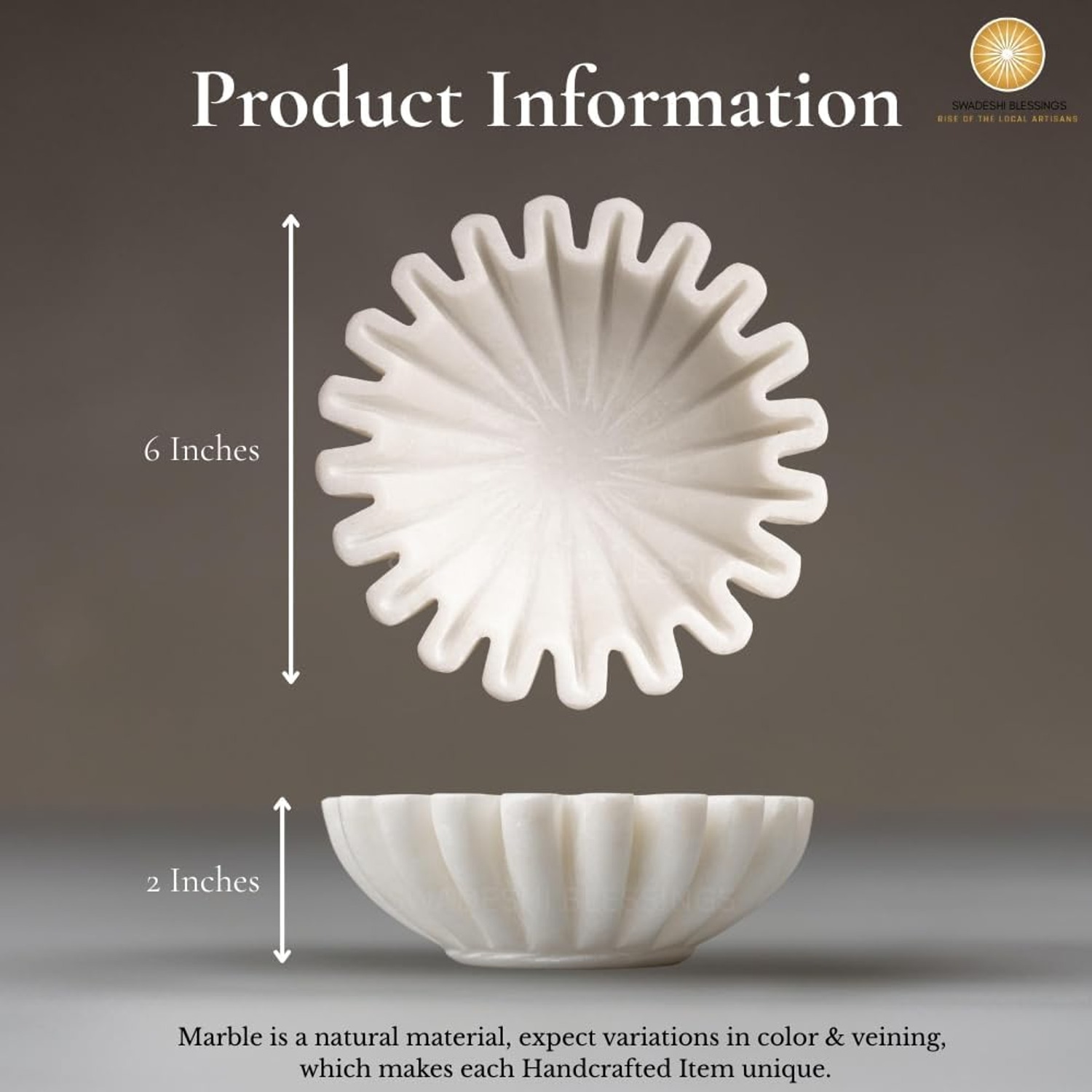
This piece is carved from natural marble by hand and then polished, according to the maker. It is round, white, with a fluted or scalloped edge, and it measures about 15 cm across by 5 cm high. The maker lists it as a 6 inch bowl with a 1 kg capacity. One bowl per order, nothing else included.
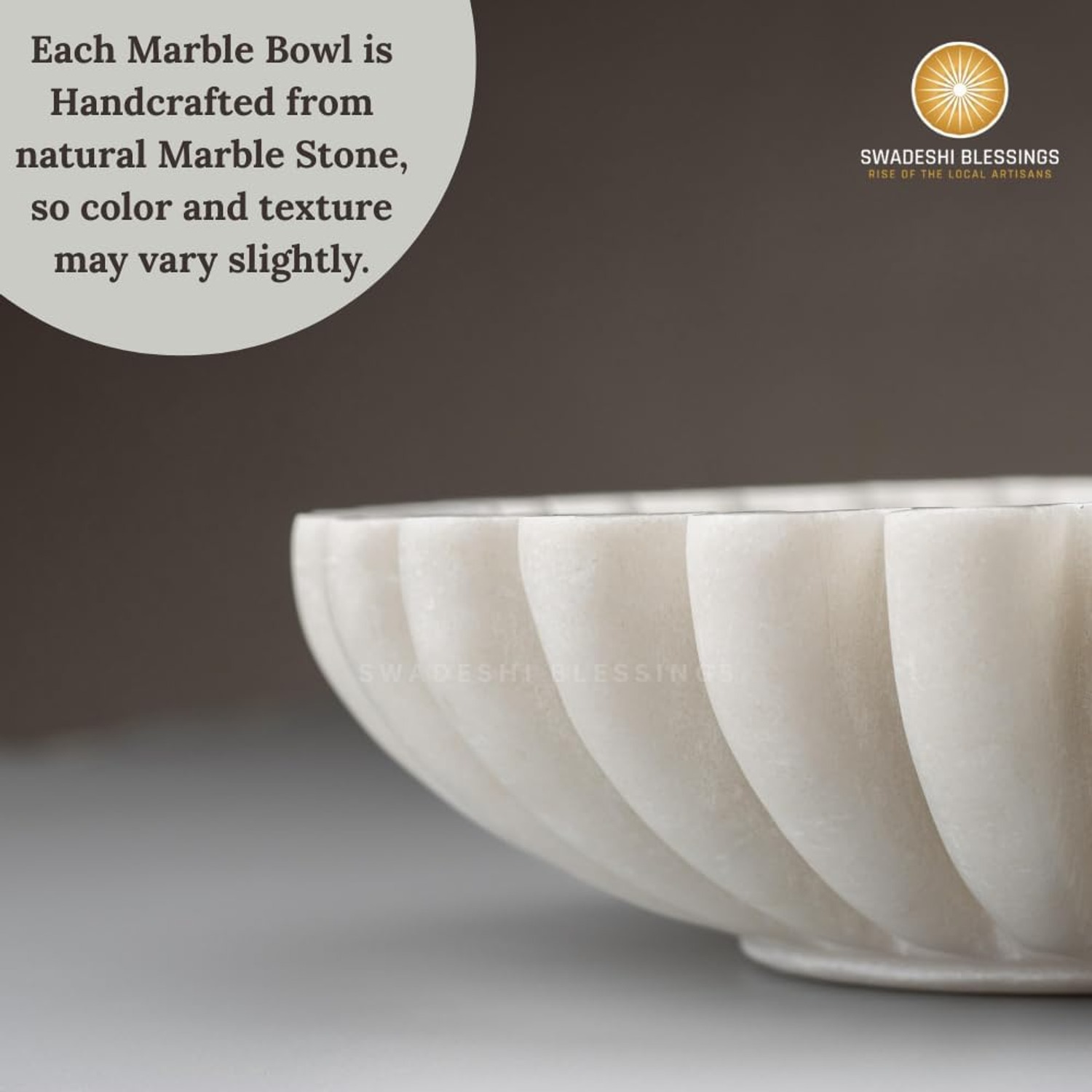
The hand carved part matters more than it sounds. A moulded bowl has perfectly even walls and an identical rim on every unit. A carved one can have very slight differences in how the scallops sit, and natural stone varies a little in tone from piece to piece. That is a large part of why people choose stone over ceramic at this size.
For the finish, the maker says the bowl is rubbed thoroughly with a special stone, which gives it a mirror finish.
How the shape works in practice
Low and open beats deep and narrow for most uses. At 5 cm high, nothing in the bowl is hidden. You can see the fruit, which means you eat the fruit. You can see your keys, which means you are not patting around at the bottom while running late.
On a dining table that low profile is a real advantage. Tall centrepieces force people to lean around each other. A 5 cm bowl with a couple of lemons or a few figs in it sits below eye level and keeps the table feeling open. It also leaves room for plates, which is where a lot of decorative centrepieces fall down.
The 15 cm diameter is the other half of the equation. It is big enough to read as a proper object rather than a trinket, and small enough to share a surface with a lamp, a stack of books or a brass tray. If you have measured for larger bowls before and found them overwhelming, this is the size that usually works.
Who it suits
If you live in a flat or condominium and surfaces are at a premium, a single well chosen piece beats three small ones. This bowl covers decoration and function at the same time, which is the only reasonable argument for bringing anything new into a small home.
It also suits people who like the look of stone but do not want a slab of it. A marble side table is a commitment. A 15 cm bowl is not. You get the same material and the same weight in the hand, at a scale you can move to a different room whenever you feel like it.
Gift buyers get a lot out of it too. A good housewarming gift is usually one that does not assume anything about the recipient's taste, and plain white stone assumes very little. It sits fine in a minimal flat, a busy one, a rented place or a new build.
Choosing where to put it
Think about three things: how flat the surface is, how close the edge is, and what the bowl will sit on.
Flat matters because stone does not flex. On a slightly uneven surface a solid bowl will rock, and over time that is how rims get chipped. Edge proximity matters because the weight that makes the bowl feel good in the hand also makes it unforgiving if it goes over the side onto tile. Push it in further than feels necessary.
What it sits on matters for the furniture, not the bowl. A stone base can mark a soft timber or lacquered finish if it gets dragged. Lift it when you move it, and if the surface is precious, slip a felt pad or a folded cloth underneath. It takes a minute and removes the problem entirely.
Light is worth thinking about as well. The scalloped rim is the feature here, and it only shows properly when something is casting a shadow across it. Near a window or a lamp, the ridges do the work. Under flat overhead light, the bowl reads much plainer.
Looking after marble
The maker's care advice is short: clean the bowl with a damp cloth. A few simple habits help keep the polish looking even.
The one thing to respect is porosity. Marble has tiny pores, and liquids with acid or colour can sit in them if left. Lemon and lime juice, vinegar, red wine, strong coffee and oil are the usual suspects. None of them will ruin the bowl on contact, but all of them can leave a dull patch or a faint mark if they are left to dry.
The habit to build is simple. Wipe spills when you see them, dry the spot afterwards, and never leave a cut citrus half sitting in the bowl overnight. If you want to serve something wet or oily, drop a small glass or ceramic dish inside the bowl and let that do the work.
For cleaning, a soft damp cloth is the whole routine. If something sticky has dried on, a drop of mild soap on the cloth loosens it. Skip bleach, descaler, bathroom sprays and anything labelled for limescale, because those are often acidic. It is not dishwasher safe and not microwave safe, so keep it out of both.
Styling it with other pieces
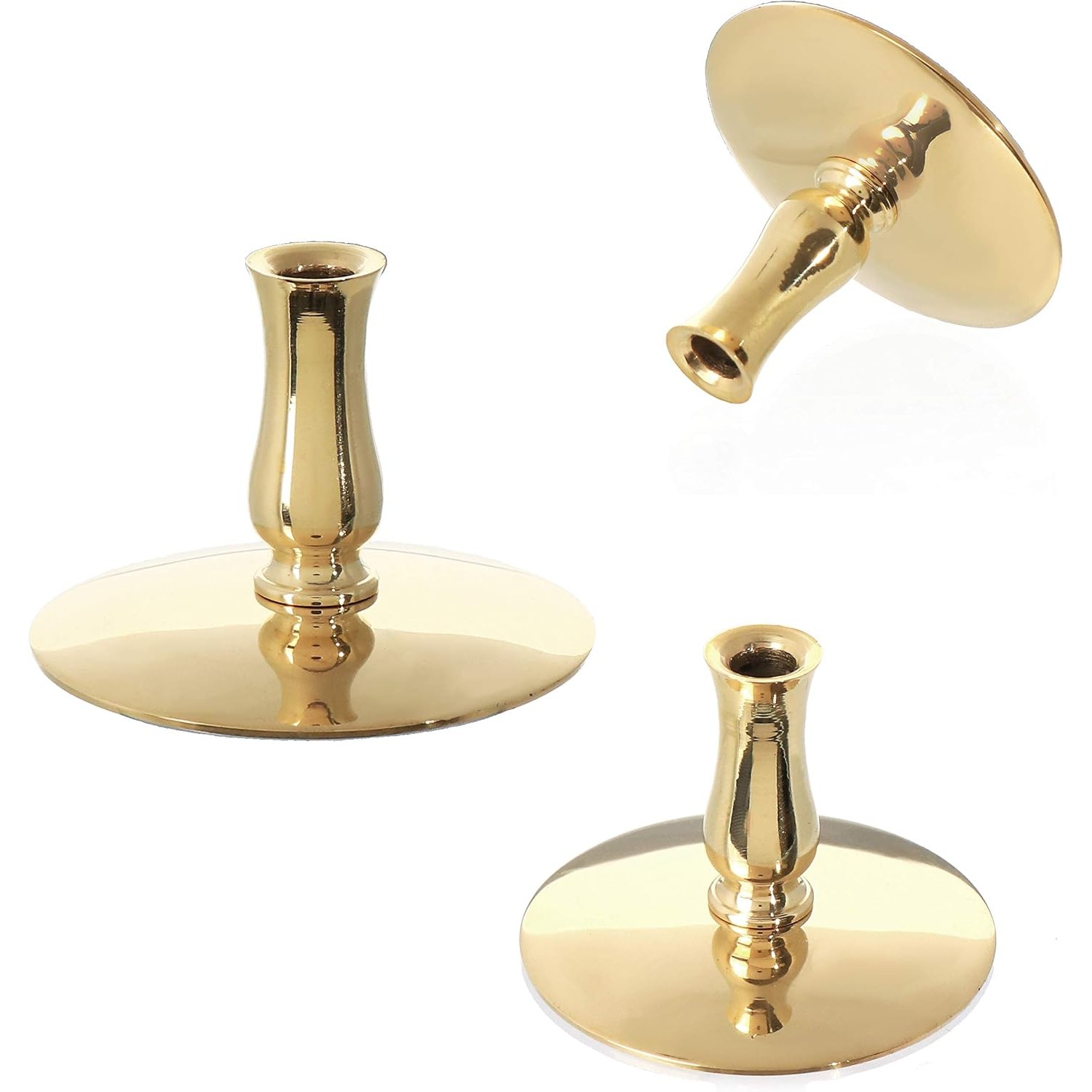
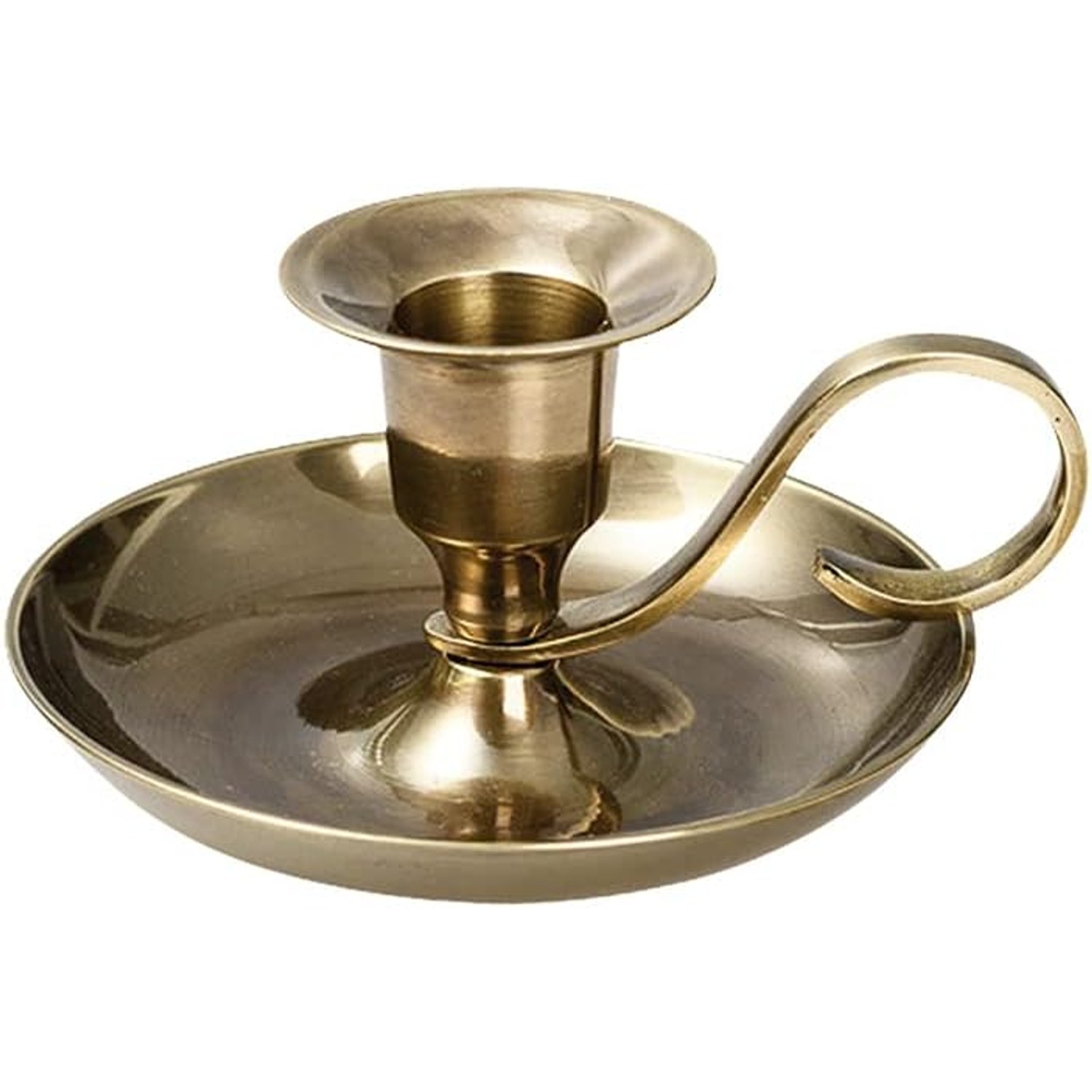
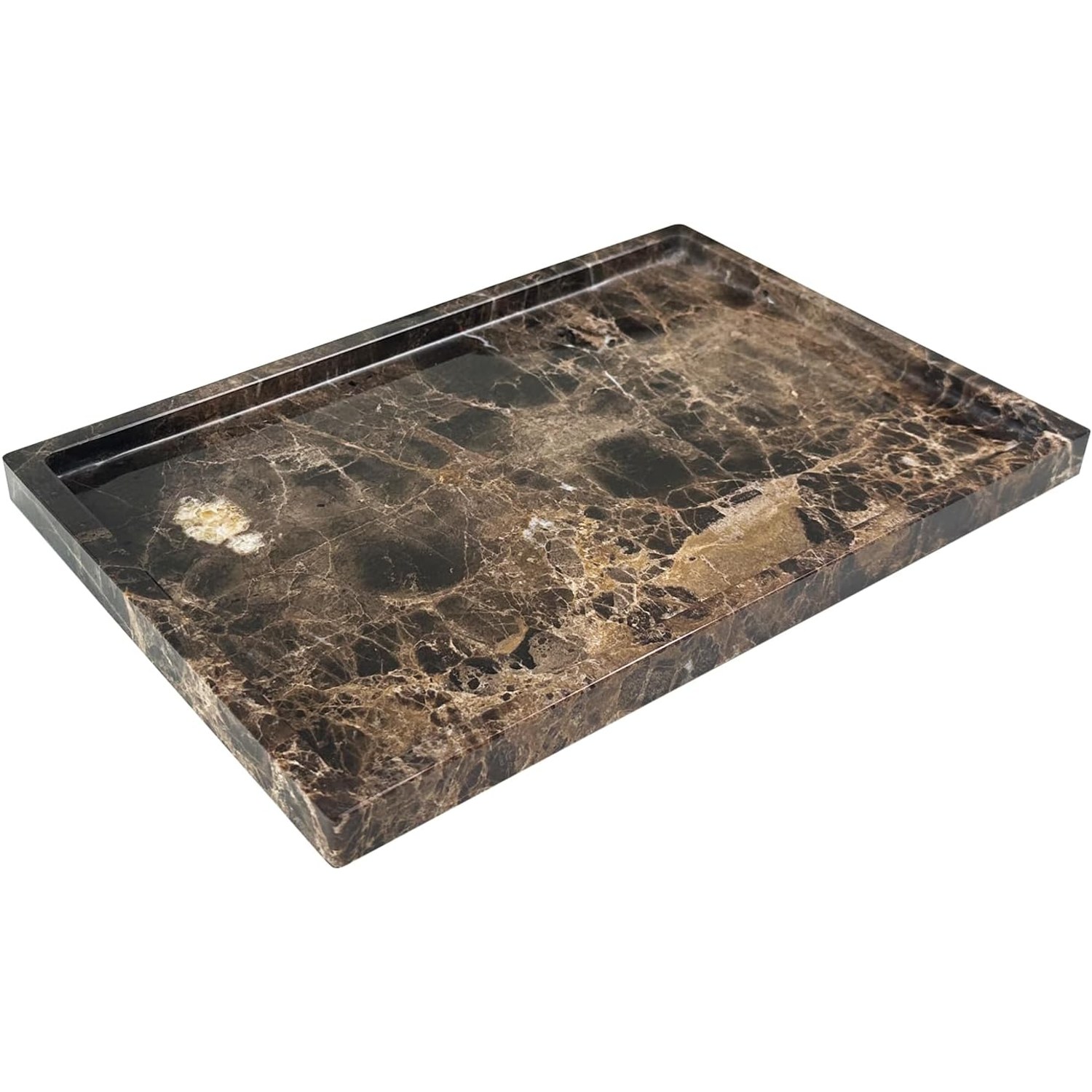
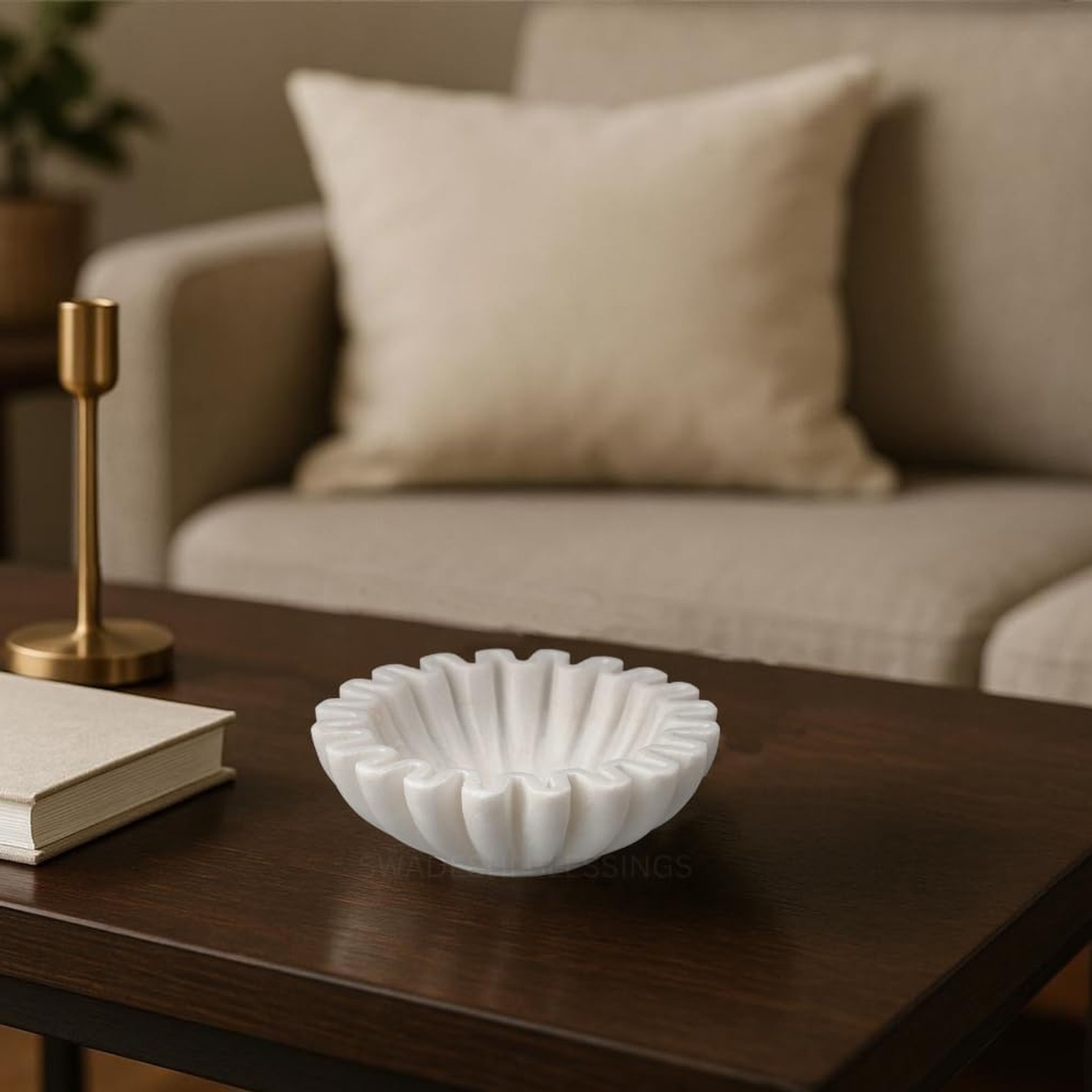
Marble and brass work together because they do opposite things with light. Stone absorbs and softens it, brass bounces it back warm. Put the bowl on a brass tray and the tray frames it. Put a brass candle holder beside it and the two materials give a surface depth without you needing a third object.
If you want a more pared back look, let the bowl sit alone on a wide surface with nothing within 20 cm of it. Empty space is a styling choice, and a sculptural object with a ruffled edge holds that space well.
For a layered look, stack two or three hardback books with the bowl on top. The lift puts the rim closer to eye level and gives the shadows somewhere to fall.
The short version
You are getting one hand carved natural marble bowl, white, about 15 cm across and 5 cm high, with a polished finish and a scalloped rim. The maker lists a capacity of 1 kg. It is not for the dishwasher or the microwave, and it is cleaned with a damp cloth.
It suits fruit, keys, jewellery, small accessories and plain empty display. Treat the surface the way you would treat a good stone worktop and wipe spills early.
If you want one object that makes a surface look finished, this is a straightforward way to get there.