
The complete guide
How to Choose a Marble Tray That Earns Its Place
The small pile of stuff nobody talks about
Every home has one. The spot by the sink where perfume, hand cream, a hair tie and a half-used lip balm collect. The end of the kitchen counter that fills with keys, receipts and a charging cable. The coffee table that somehow holds three remotes and a coaster you never put away.
None of that is a disaster. It is just daily life. The problem is that loose items read as mess, no matter how tidy each one is on its own. Your eye has nowhere to stop.
A tray solves this in about four seconds. You put the things inside it, and the pile becomes a group. The group has an edge, a shape and a purpose. Suddenly the counter looks arranged instead of abandoned.
What changes from there is which tray you choose. A plastic one does the job but adds nothing. A stone one does the job and gives you something nice to look at. That is the whole argument for marble.
What you are actually buying
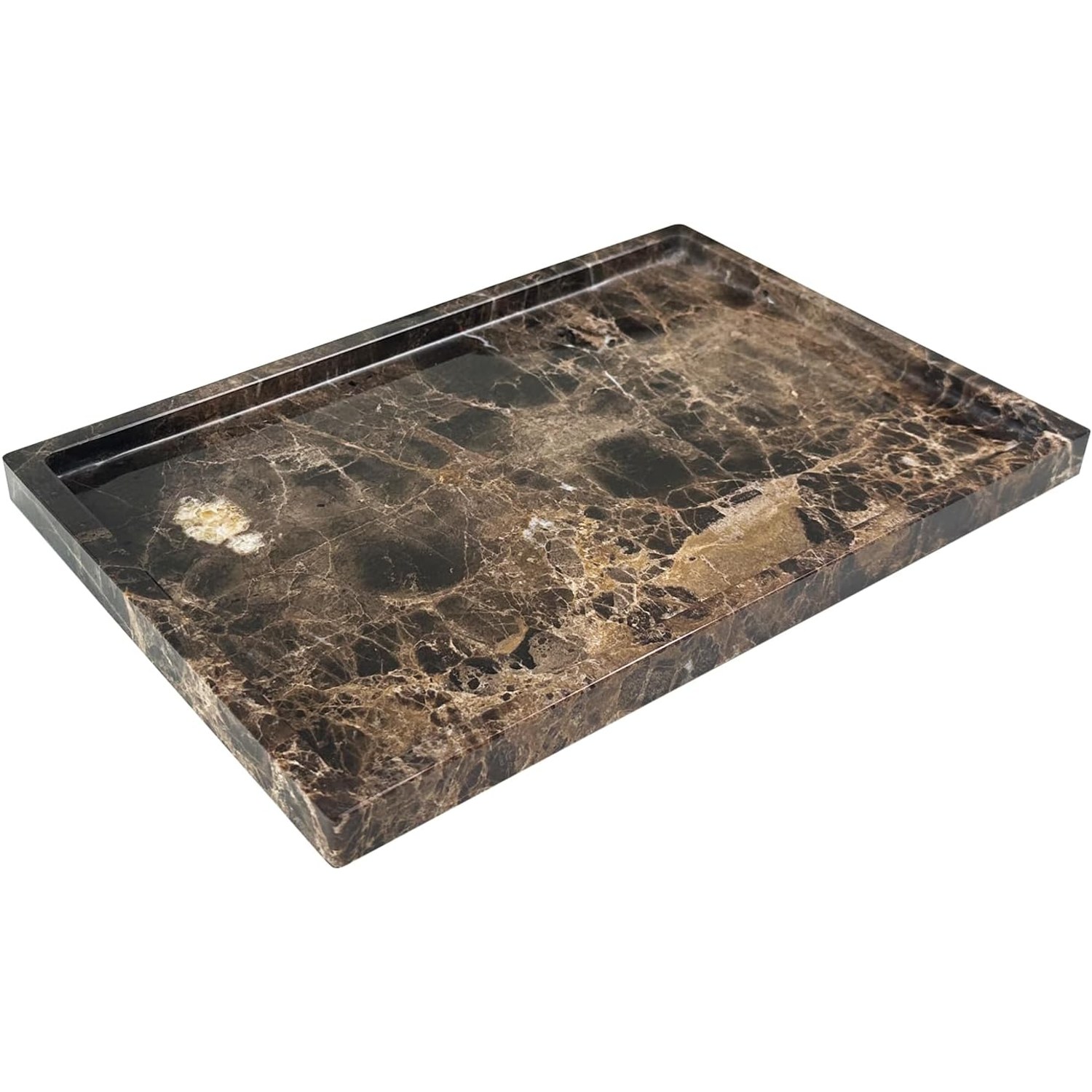
This tray is carved from a single block of natural marble. Not cut panels glued at the corners, not stone veneer over a core. One block, shaped into a flat base with a low raised edge all the way round.
That construction method is worth understanding. Assembled trays have seams where the panels meet. A one-piece carve has none. The maker says there are no glued joints or assembled sections, and credits the method with added strength, stability and a seamless look.
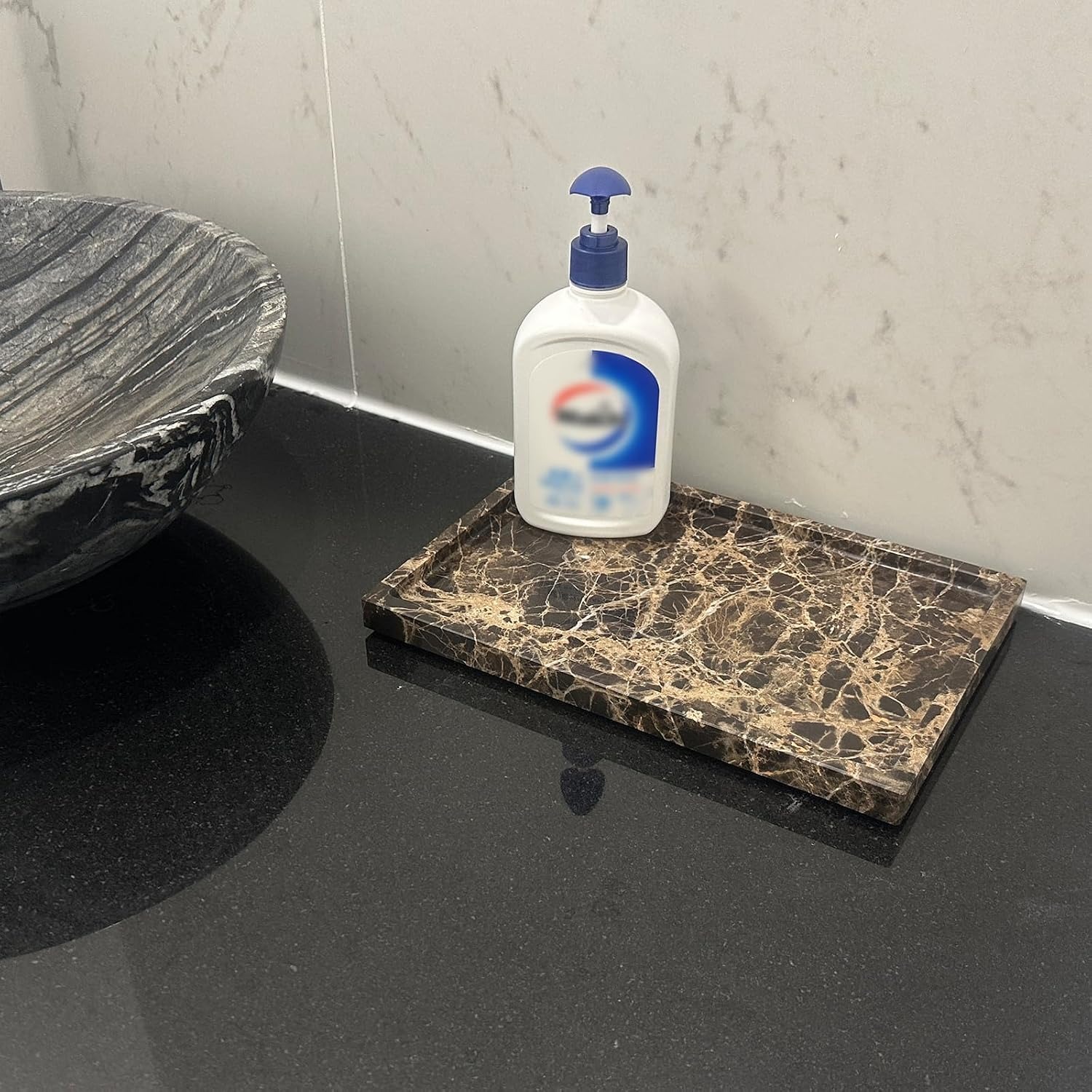
The colour is coffee, a dark brown with lighter veining running across the surface. The finish is polished, so the top is smooth and gently reflective. Under a warm lamp it picks up light along the veins.
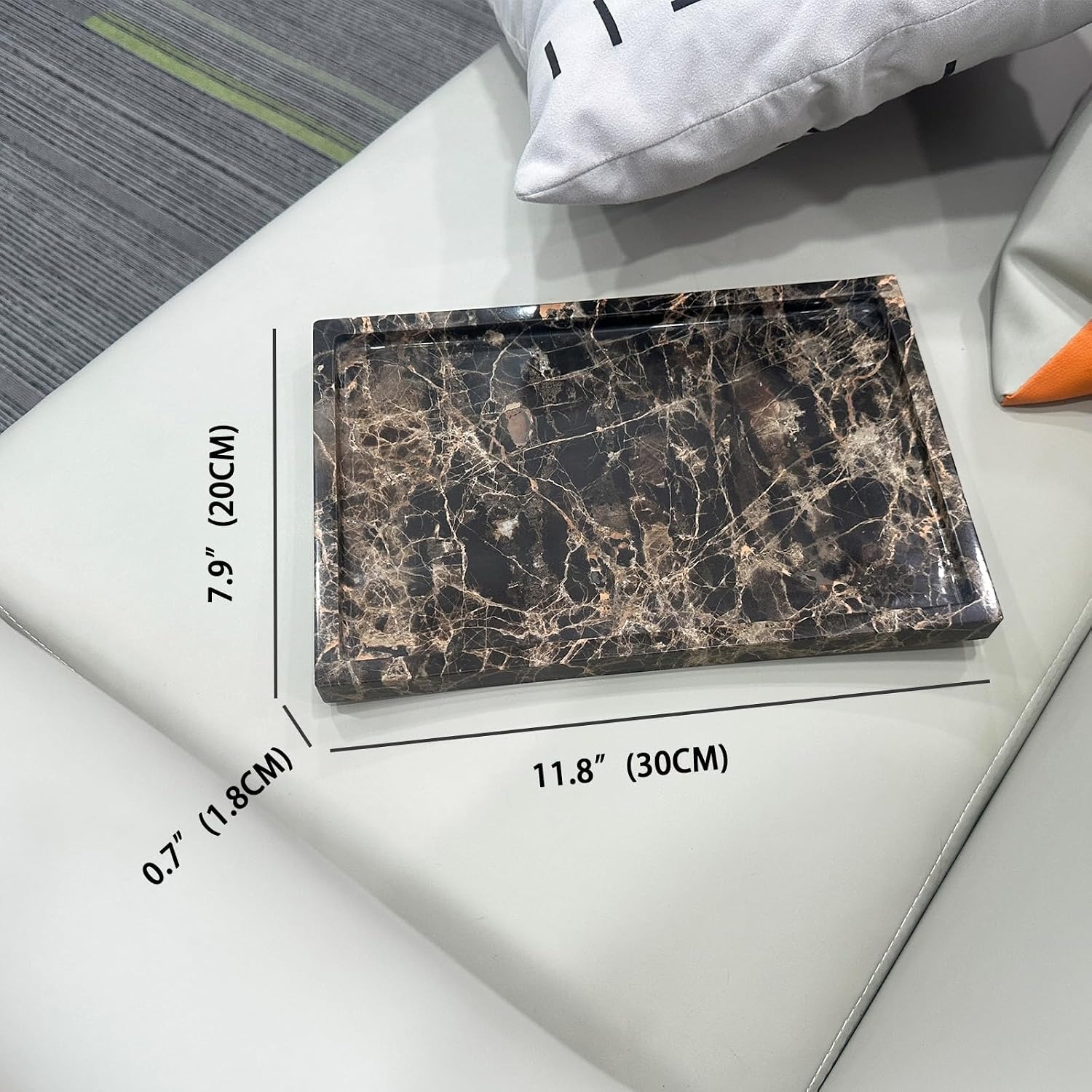
Dimensions are about 30 cm long by 20 cm wide, standing 1.8 cm tall. It weighs roughly 1.5 kg. The maker gives a recommended maximum load of about 1.7 kg, which tells you this is an organiser and a display piece rather than a workhorse for carrying heavy things across a room.
Why no two are the same
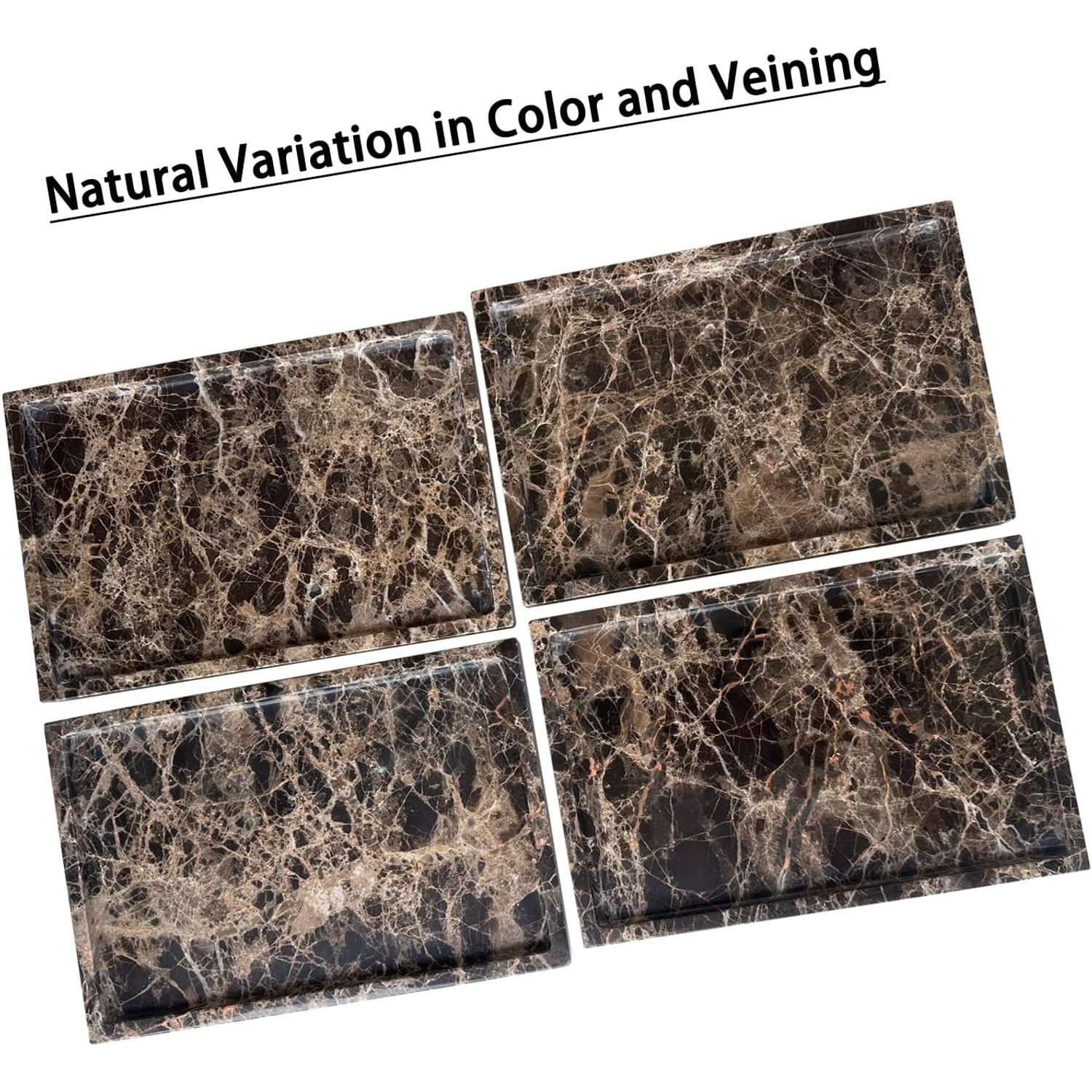
Marble forms over a very long time, and the mineral deposits that create veining never repeat exactly. So the pattern on your tray is specific to the block it came from.
This catches some people out. They see a photograph, expect a match, and get something with the veins running at a different angle or with a paler band through one corner.
Think of it the way you would think of timber grain. You would not expect two oak boards to be identical, and you would not call the difference a fault. Same stone, same character, individual markings. If you want a product where every unit is identical, natural stone is the wrong material entirely.
The upside is that you own a piece nobody else has. For something that sits in plain view every day, that counts for more than it sounds like it should.
Where it works
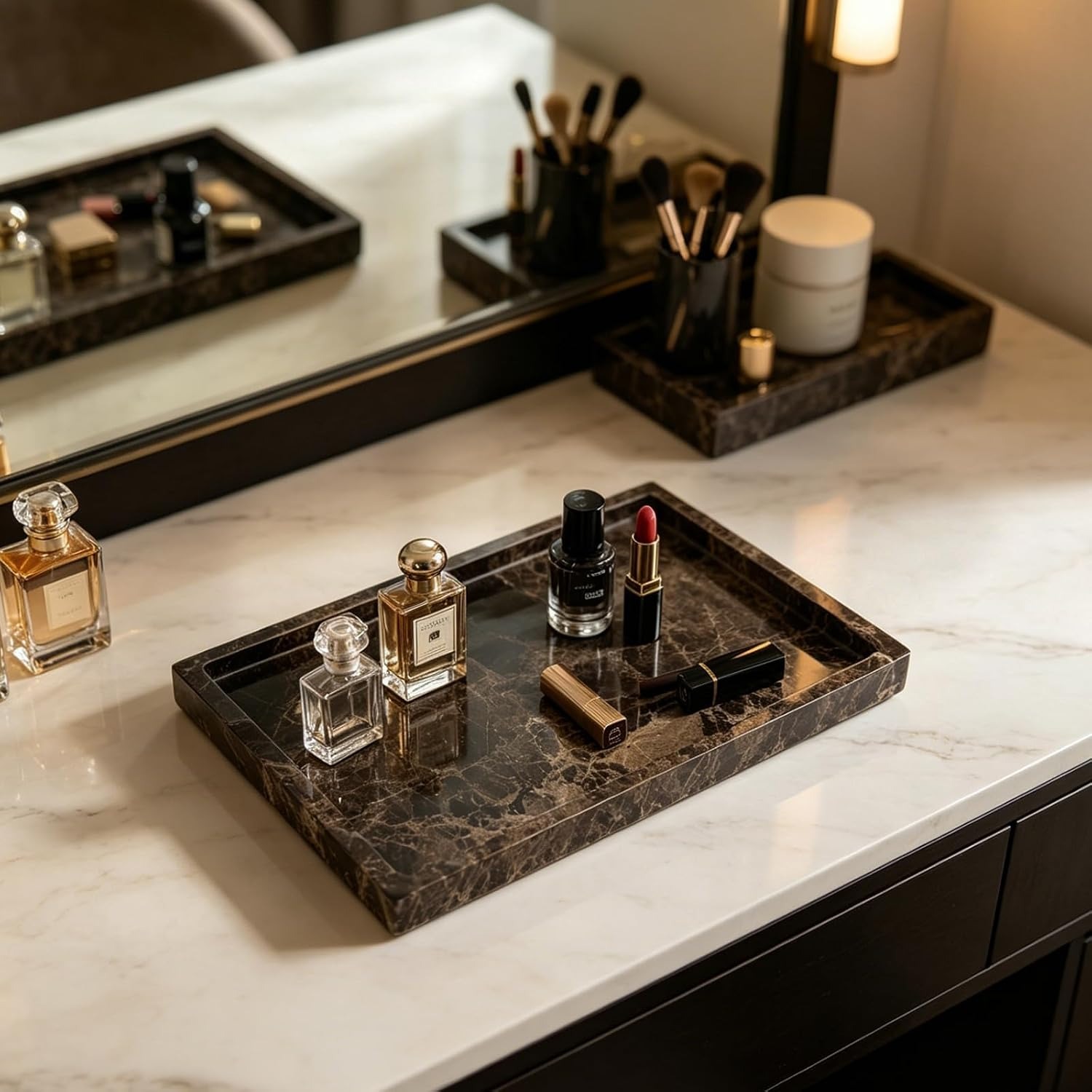
Bathroom vanity. This is the classic placement, and the maker describes the piece as a bathroom tray. Perfume bottles, a soap pump, a small ceramic dish for rings. The raised edge keeps everything inside the boundary, and a splash wipes off the polished surface with a cloth.
Bedroom dresser. Jewellery, a watch, a candle. Having one defined spot also means fewer lost earrings.
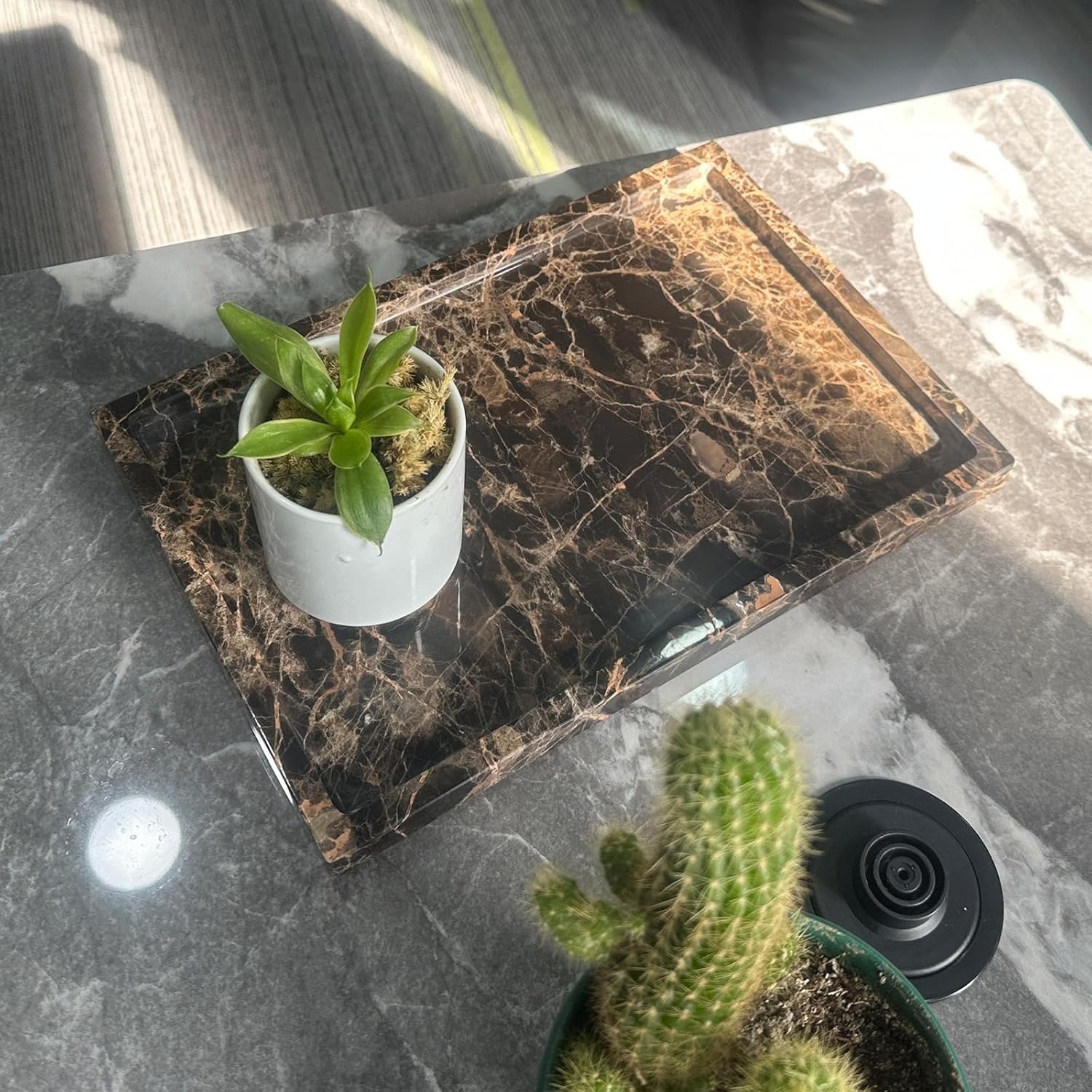
Kitchen counter. Olive oil, salt, pepper, a small plant. It stops the group from spreading sideways over the weeks. The main thing to check is that your counter depth leaves room behind it.
Coffee or side table. Remotes, coasters, a candle, a book of matches. The dark stone reads as deliberate against pale tabletops and gives the surface a focal point.
Entry console. Keys, sunglasses, loose change. A catchall by the door saves a lot of morning searching.
Getting the size right
The single most common regret with trays is choosing one that does not fit the space. Measure before you buy, not after.
For a vanity, check the clear depth between the splashback and the front edge of the counter. You want the 20 cm width to sit with a bit of breathing room, not pressed up against the tap base.
For a coffee table, think about proportion. A tray should look like it belongs on the surface, roughly a third to a half of the table's width. At about 30 cm long, this one suits most standard coffee tables and side tables, but it will look oversized on a very small nesting table.
For a dresser, consider what else lives there. If you already have a lamp and a mirror, a tray this size may be the last thing that fits comfortably. Mark out the footprint with a piece of paper if you are unsure.
Living with real stone
Marble is not difficult, it just has one rule that plastic does not: keep acids off it.
Lemon juice, vinegar, wine, some cleaning sprays and a few cosmetic products can etch a polished marble surface if they sit on it. Etching looks like a dull patch where the shine has gone. It is not a stain and it is not dirt, which is why scrubbing harder makes things worse.
The fix is prevention, and it is easy. Wipe spills when you see them. Use a soft damp cloth for regular cleaning, then dry the surface. Avoid bleach, avoid abrasive pads, avoid anything labelled as a heavy-duty degreaser.
The tray is not dishwasher safe and not oven safe. Do not use it as a trivet for hot pans straight off the heat.
When you move it, lift rather than slide. Stone is harder than most tabletop finishes, so dragging it across polished timber can leave a mark. Set it down gently on tile and granite, where a hard knock can chip a corner.
None of this takes long. The maker's own care instruction is one line: wipe with a damp cloth.
Styling it without trying too hard
A few habits make any tray look better.
Vary the heights of what you put on it. A tall perfume bottle, a medium candle, a flat dish. Three different heights look composed. Three items of the same height look like a shop shelf.
Leave some empty stone showing. The marble is part of the display. If you cover every square centimetre, you have just built a smaller pile in a nicer container.
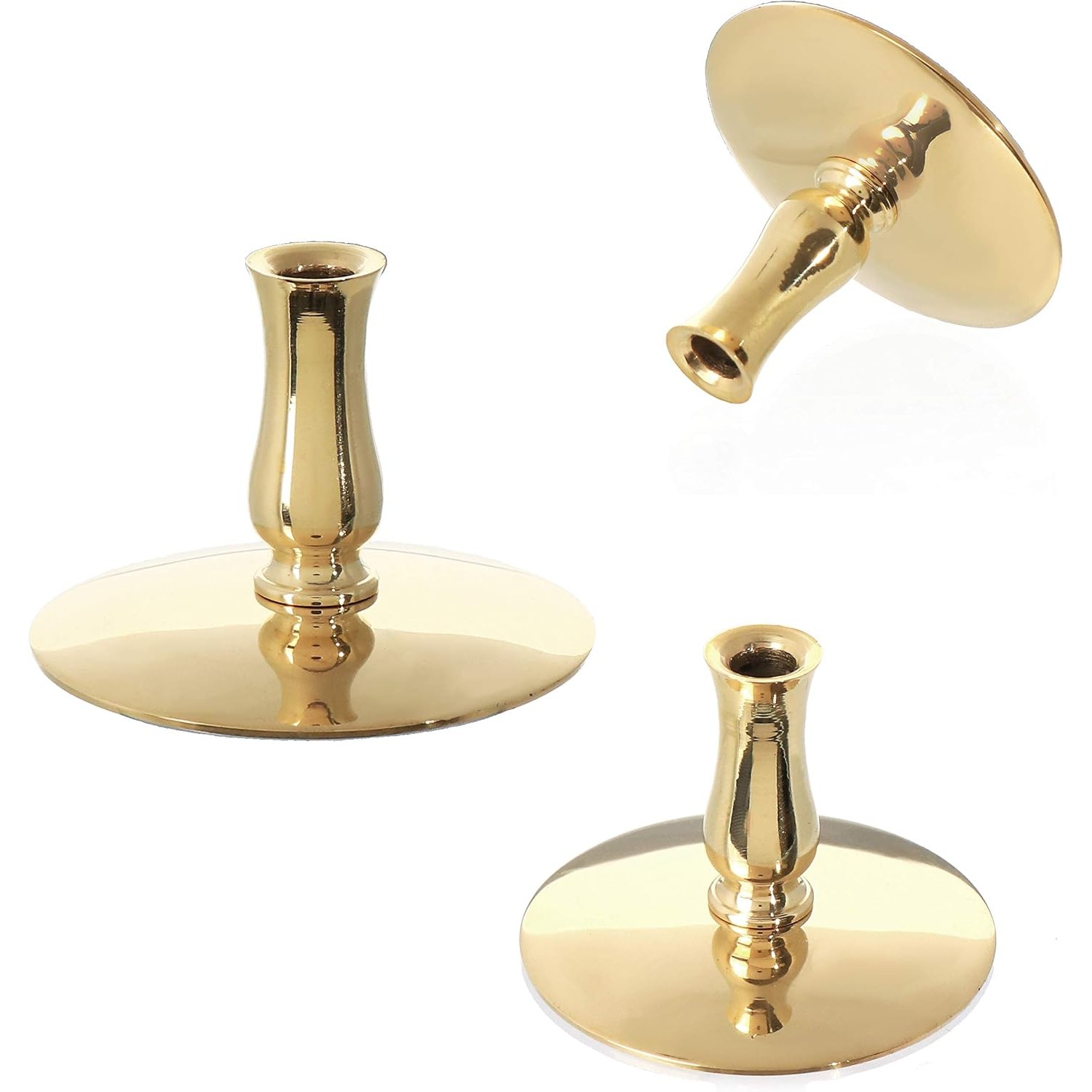
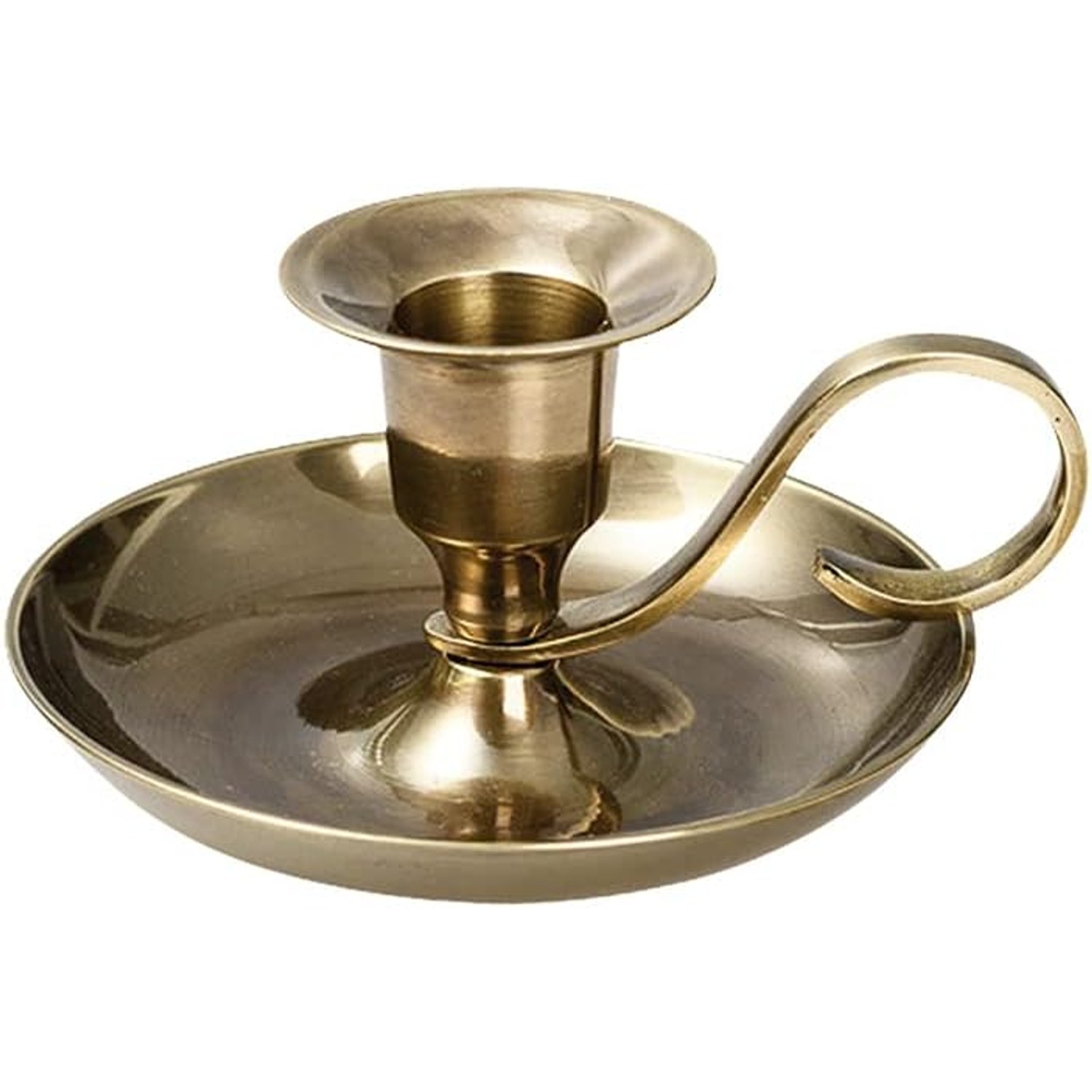
Let metal do the contrast work. Brass, gold and antique bronze all sit beautifully against dark brown stone, which is why marble and brass decor is such a steady pairing. A brass candle holder or a small gold dish on top of the tray does more than another ceramic piece would.
Keep the function honest. If the tray is by the door for keys, do not style it so carefully that you stop using it. The most useful catchall tray is the one you actually drop things into.
The short version
This is a solid natural marble tray, about 30 by 20 by 1.8 cm and about 1.5 kg, carved from one block with no glued joints, as the maker states. The colour is dark brown with veining that is different on every piece, and the finish is polished.
It suits a bathroom vanity, a dresser, a kitchen counter, a coffee table or an entry console. Keep loads under about 1.7 kg, wipe it with a damp cloth, keep acids and abrasives away from it, and do not put it in the dishwasher or the oven.
Measure your space first. If 30 by 20 cm fits with a little room to spare, this will do exactly what you want it to do, and look considerably better than a plastic one while doing it.