
The complete guide
How to Choose Linen Napkins That Actually Get Used
The problem with most napkins
Most households sit in one of two camps. Either there is a packet of paper serviettes near the kitchen, pulled out when guests arrive and binned at the end of the meal, or there is a set of cloth napkins somewhere in a cupboard that only appears at Lunar New Year and then goes straight back into storage.
Neither works well. Paper is fine for a quick meal but it tears, it does not cover a lap, and it adds up to a surprising amount of waste over a year. The special-occasion cloth set has the opposite problem. It is too precious to use, so the only time it comes out, nobody is relaxed.
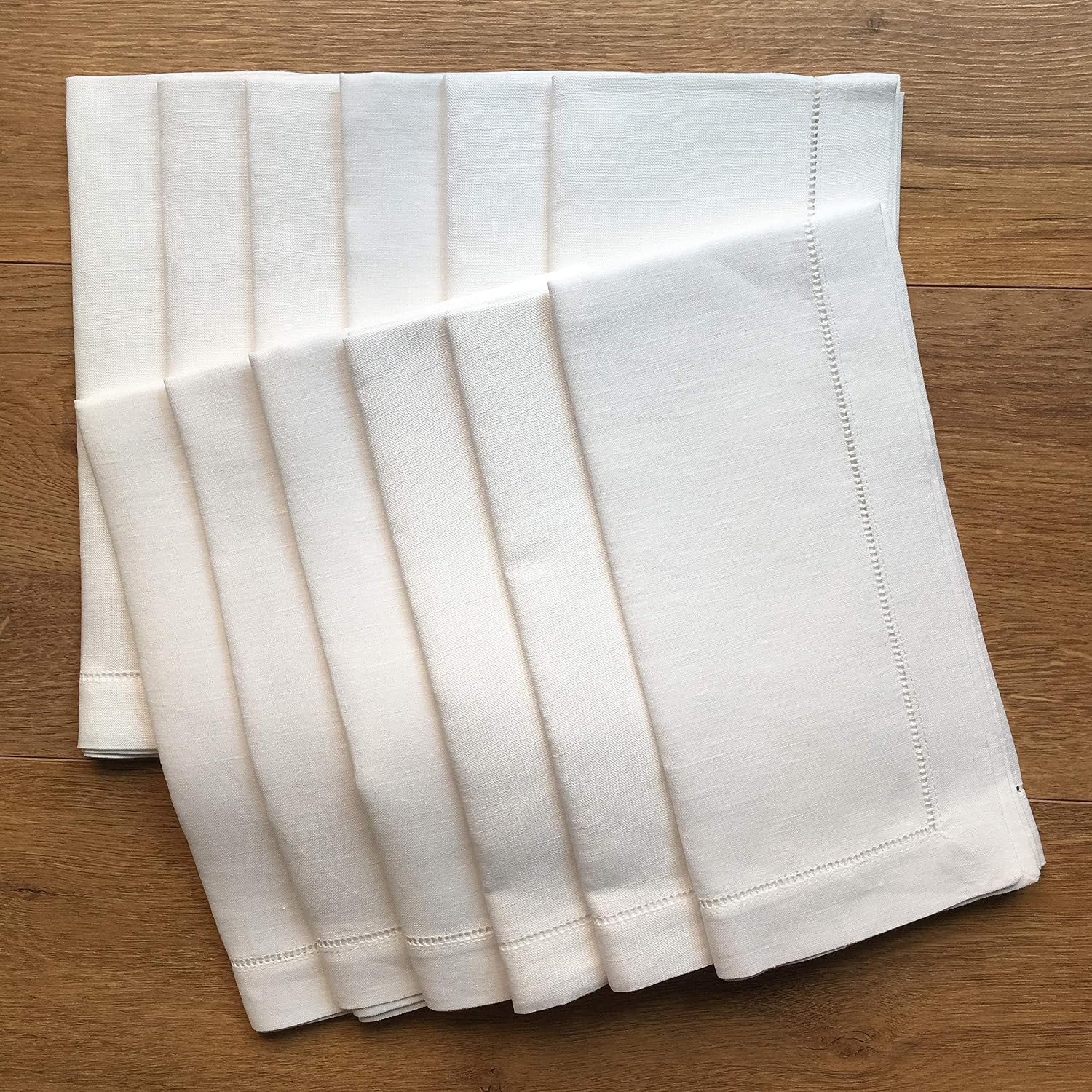
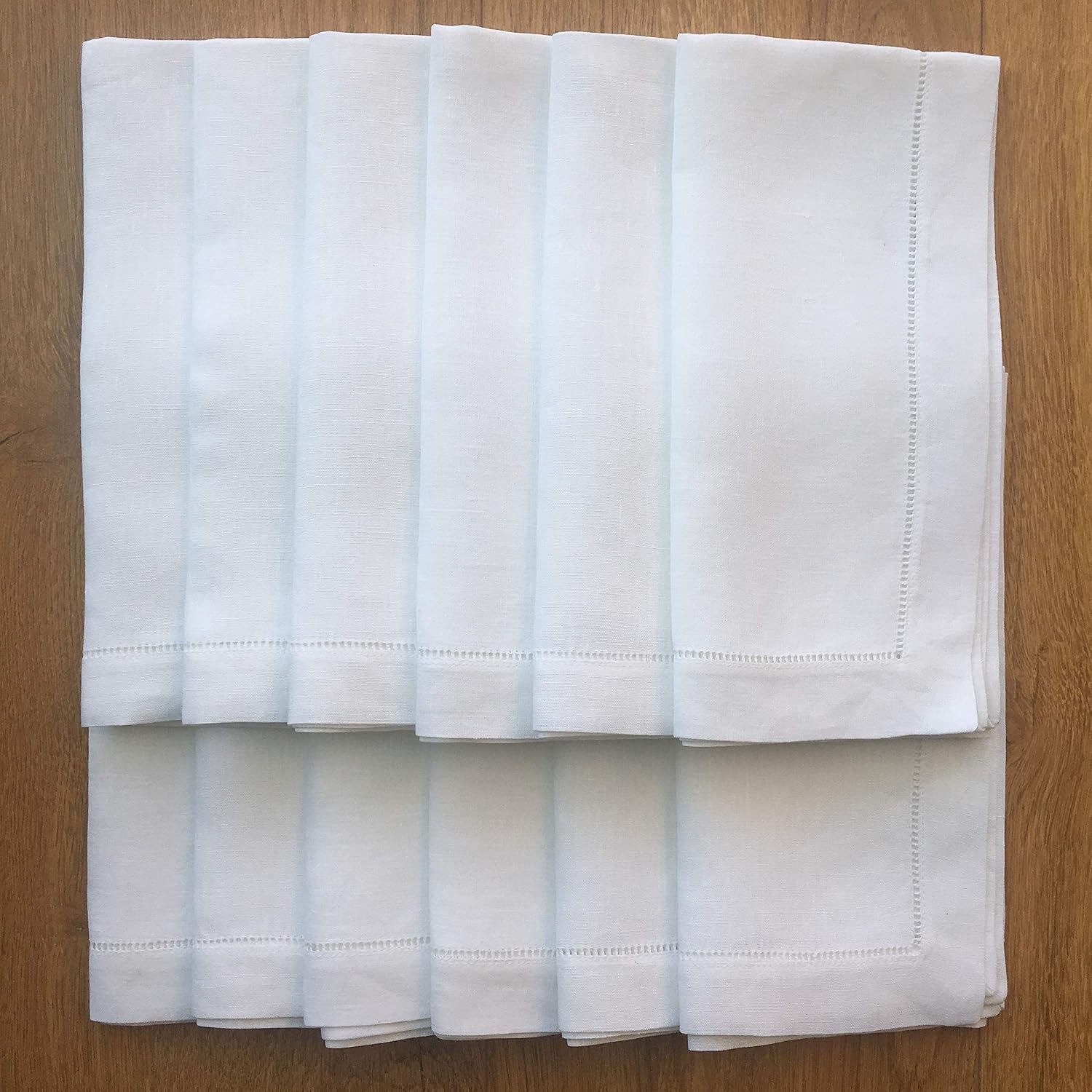
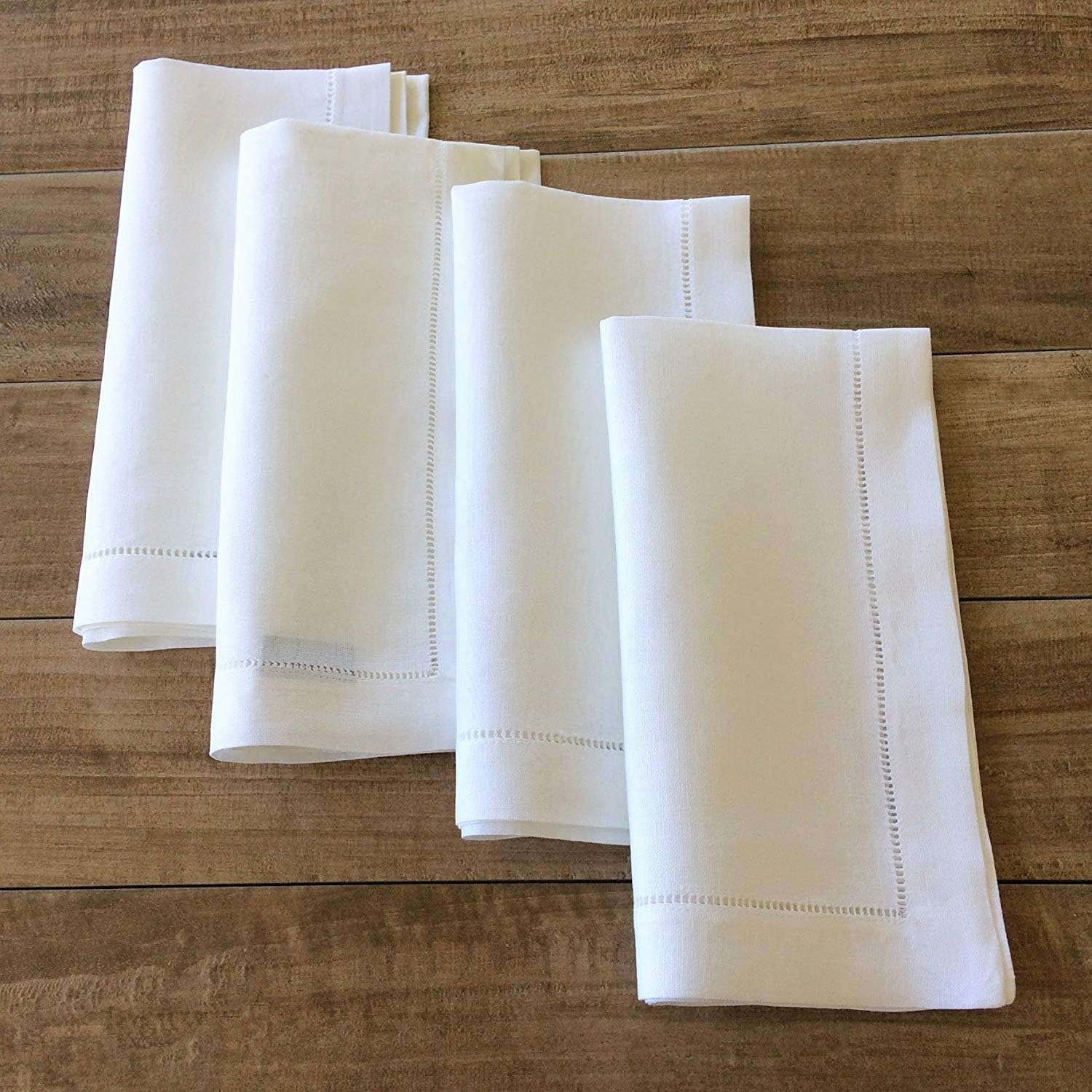
What solves both is a set of good, plain, washable napkins large enough to be useful and ordinary enough that you reach for them without thinking. That is the job these white linen hemstitch napkins are built for.
What makes linen the right fibre
Linen comes from flax, and it has been used for table napkins for a very long time. New linen has a bit of crispness to it, and it generally relaxes with washing and use.
The set here is 100% linen, as stated by the maker, in a solid white with no pattern.
Why size is the thing people get wrong
Napkin sizes run from about 25 cm for a cocktail napkin through 40 cm for lunch and up to 50 to 55 cm for dinner. People often buy at the small end because it looks neater folded, then wonder why the napkin keeps sliding off a knee.
These are 51 x 51 cm, a 20 inch square. That is a proper dinner size. Spread across a lap it stays put, and there is enough cloth to fold over if one corner gets messy. For anyone with children at the table, the extra width makes a real difference.
Larger squares also fold better. A big napkin folded into a simple rectangle sits with some presence beside a plate. A small one folded the same way looks thin.
The hemstitch, and why it is worth noticing
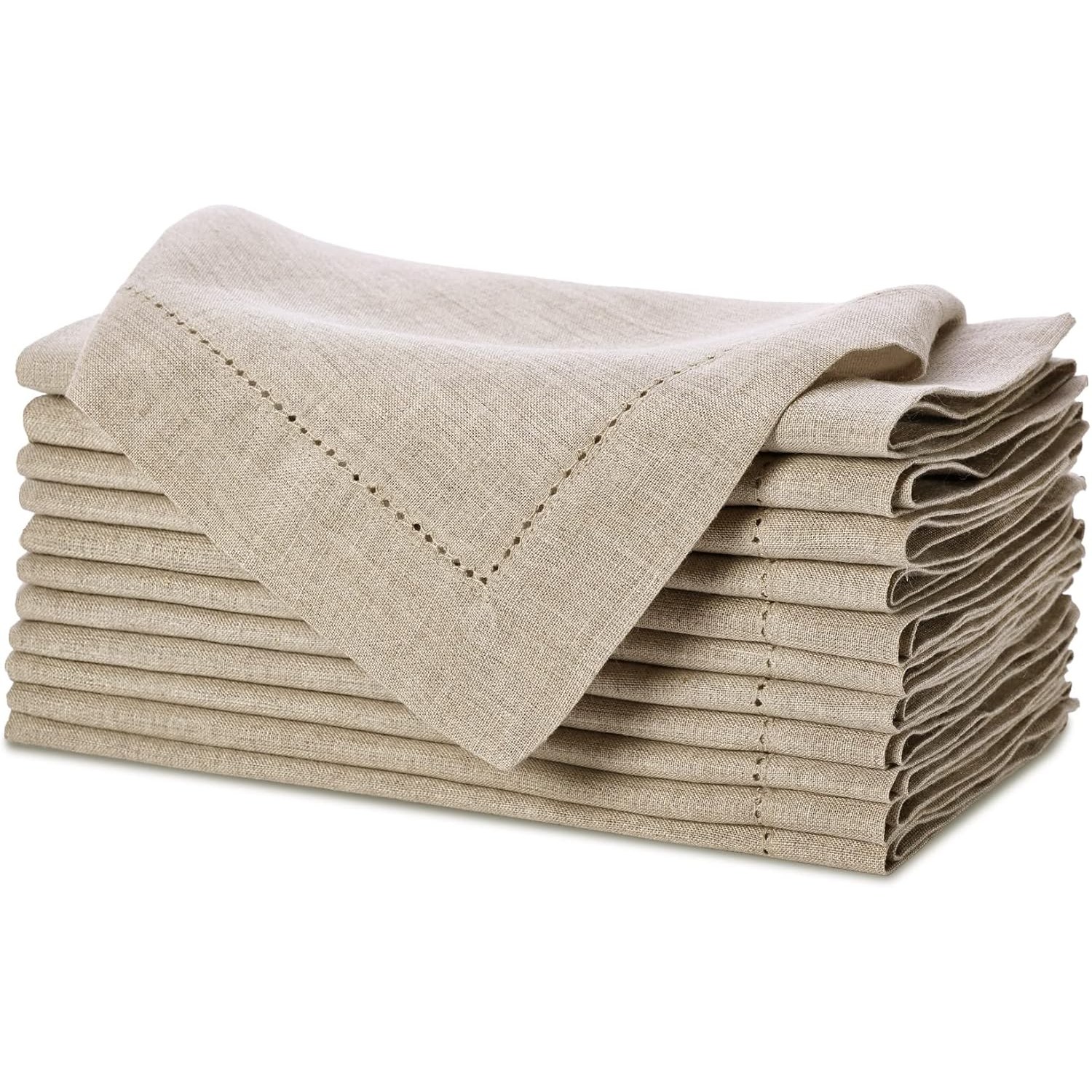
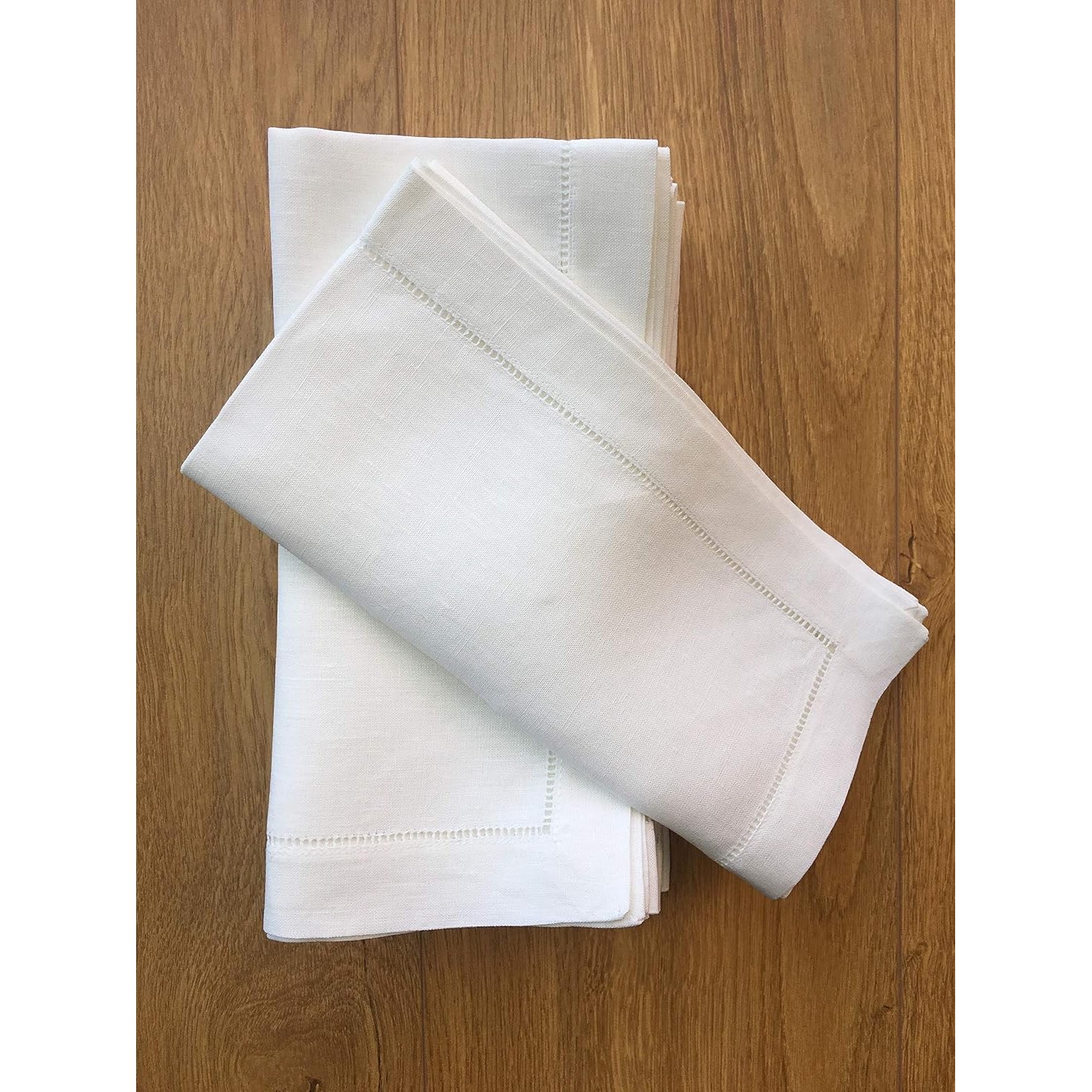
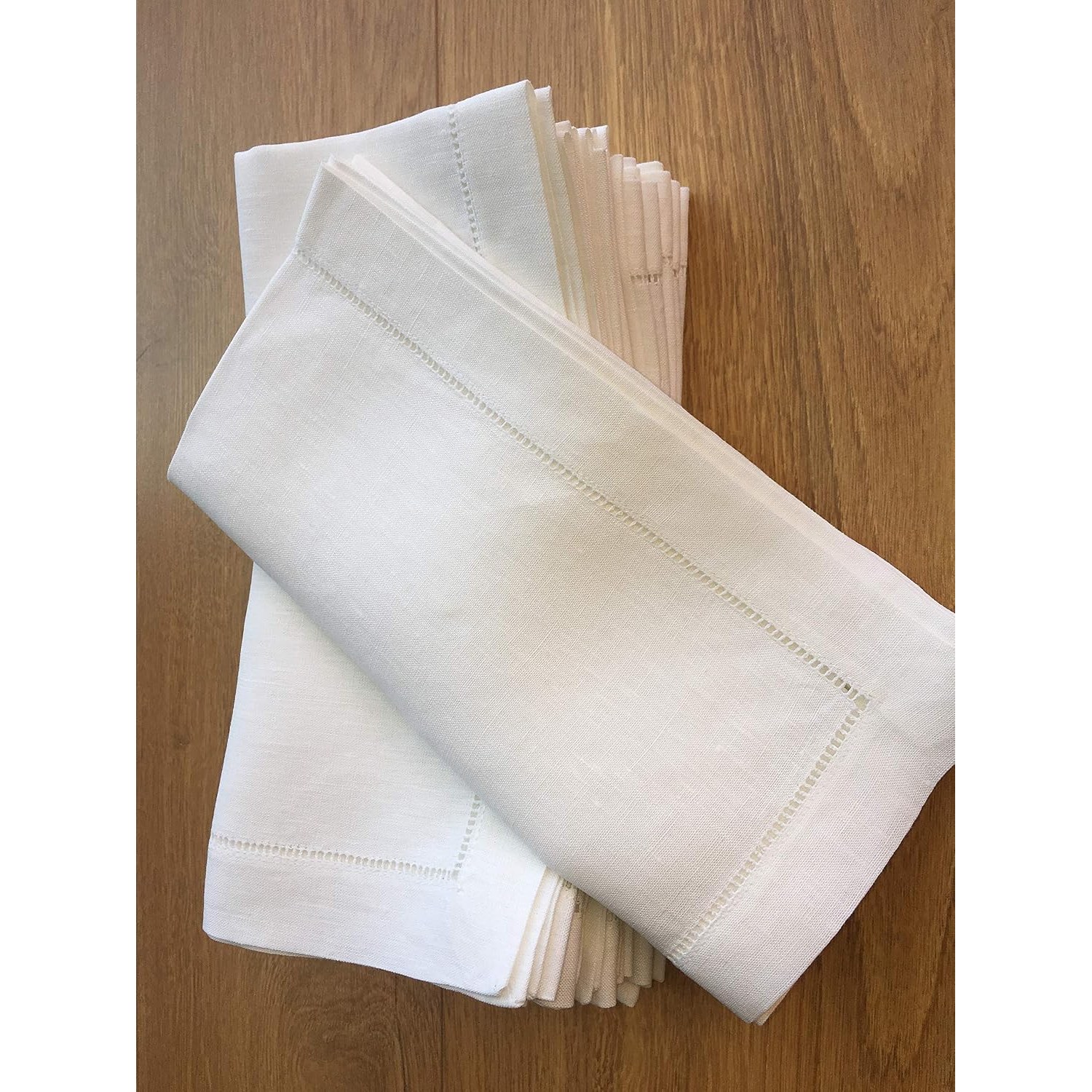
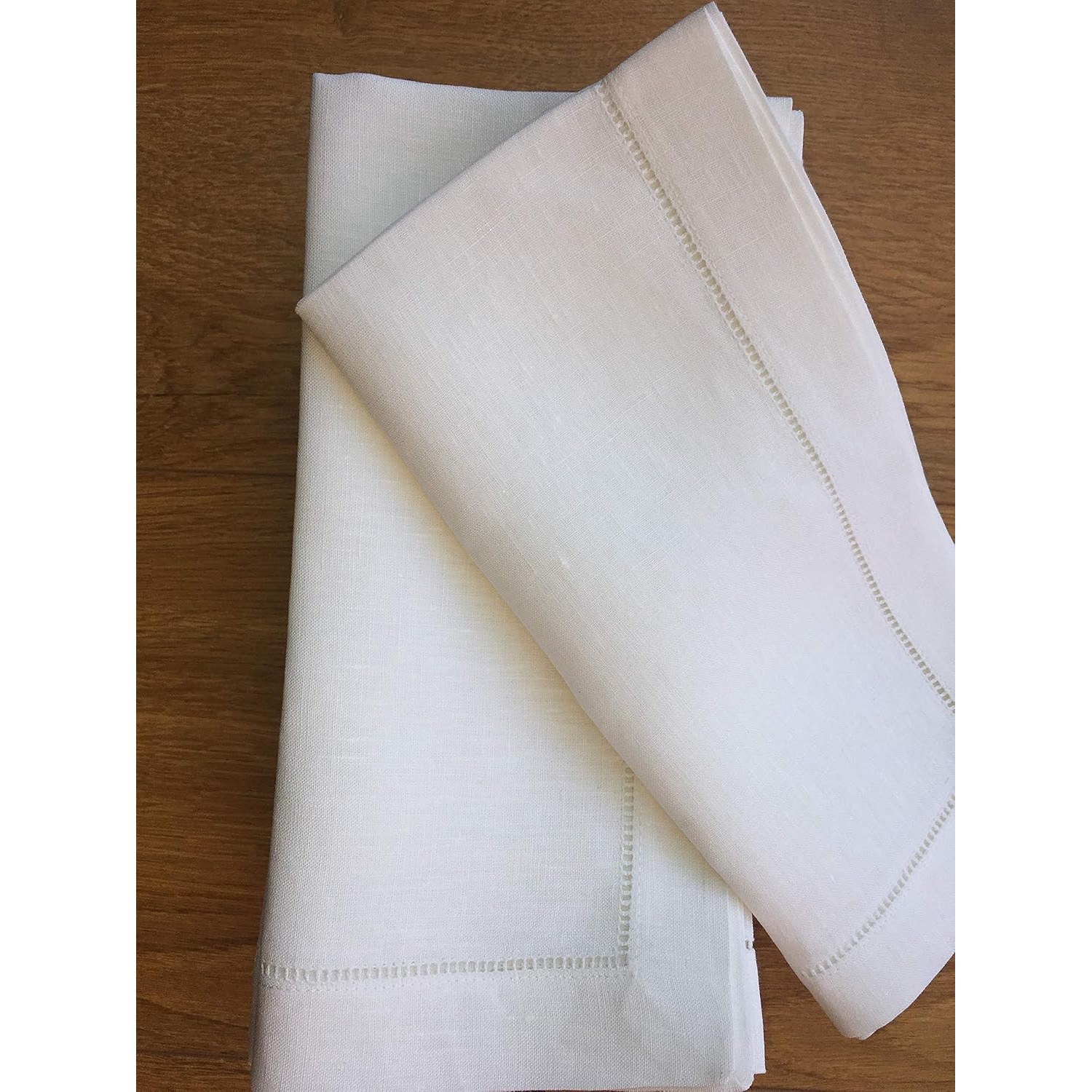
Look closely at the border and you will see an open row of stitching running parallel to the edge, like tiny rungs. That is a ladder hemstitch. It is made by pulling out threads from the weave and binding the remaining ones into small bundles, which leaves the open ladder pattern.
It serves two purposes. It secures the hem properly, and it adds a line of detail to a plain white cloth that would otherwise be completely flat. On a table where everything is white, that small texture is what keeps the setting from looking blank.
The corners are mitred, meaning the two hem folds meet at a diagonal rather than stacking on top of each other. The result is a flat corner with no lump. It is a small construction detail, and it is one of the clearest signals of whether table linen was made carefully or cut and run through a hemmer as fast as possible.
Who this set suits
People who host. Twelve napkins cover a table of twelve, two tables of six, or a table of eight with four held back as spares. For engagement lunches, birthday dinners and festive meals, having enough matching napkins is half the battle.
People planning a wedding. White is the default for a reason. It photographs cleanly, it never clashes with the flowers, and it reads as formal without being fussy.
People who want to stop buying paper. If the set lives in a kitchen drawer rather than a storage box, it will get used nightly. Washing cold on a delicate cycle takes no extra effort when they go in with the rest of the wash.
People who like to personalise things. Plain white linen takes embroidery and monogramming well, so a local shop can add initials to a corner if you want them to feel properly yours.
Choosing between white and colour
Colour is tempting in a shop and limiting at home. A set of deep green or terracotta napkins looks wonderful against one specific set of plates and slightly off against everything else. White works against every glaze, every wood tone, every runner, and every centrepiece.
The usual objection is stains. In practice, white is the easiest colour to keep clean because you can see a mark immediately and treat it, and because brightening treatments that would strip colour from a dyed napkin are available to you. The thing to avoid is chlorine bleach, which weakens natural fibres and can turn white linen slightly yellow over time.
Living with them day to day
Washing is simple. The maker says cold water on a delicate cycle. Wash with like colours and leave out the fabric softener.
Drying is where you decide how the napkins will look. The maker's care note does not mention tumble drying, so line dry them and take them down while slightly damp, then either fold them flat (relaxed finish) or press them with an iron (crisp finish). Ironing damp linen is far easier than ironing it bone dry.
For stains, speed beats product. Blot, do not rub. Flush with cold water from the back of the fabric so the mark pushes out rather than through. Save hot water for after the stain is gone, because heat sets most food marks permanently.
In a warm, humid flat, make sure napkins are fully dry before they go in a drawer. Damp cloth stored in a closed space is how musty smells start. Air the drawer occasionally and the set will stay fresh.
How to fold without overthinking it
You do not need a complicated fold. Three options cover almost every table.
Fold into a rectangle and lay it to the left of the fork. This is the standard for a formal setting and it takes two seconds.
Fold loosely into a soft rectangle and place it on the plate. Slightly more relaxed, still tidy, and it suits a plated first course.
Roll it and slide it through a ring. Good for casual dinners and buffets, and a 51 cm square has enough body that the roll looks full rather than skinny.
The hemstitch border shows in all three, which is the point of buying a napkin with a decorative edge.
The short version
This is a set of 12 napkins in 100% linen, 51 x 51 cm each, white, with a ladder hemstitch edge and mitred corners. Machine wash cold on a delicate cycle, iron if you want them crisp.
The size is the part most people underestimate, and it is what makes them genuinely useful rather than decorative. The hemstitch is what makes them look like real table linen rather than hemmed squares. White keeps them compatible with everything you already own.
Buy them, keep them in a kitchen drawer, and use them on ordinary nights as well as big ones.