
The complete guide
Choosing a Linen Cushion Cover, A Practical Buyer's Guide
The problem with most cushions
Most cushions in most homes are a compromise. They were bought because they were the right colour that week, they are covered in a fabric that feels faintly plasticky, and after a year they have gone flat and slightly grubby and nobody can work out how to wash them because the cover does not come off.
That is the real issue. A cushion is one of the few things in a room you actually touch every day. You lean on it, you shove it behind your back, you push it off the bed at night and pick it up again in the morning. If the fabric feels unpleasant against your arm, you notice, even if you never quite name why the sofa is not as comfortable as it should be.
A washed linen cover solves most of this at once. The fabric is pleasant to touch, the colour is calm rather than loud, and the whole thing comes off and goes in the machine. That last point matters more than it sounds.
What stonewashed linen actually means
Raw linen is stiff. Anyone who has bought cheap linen and been disappointed has probably met it in its unwashed state, where the fabric feels closer to paper than cloth and the creases are sharp instead of soft. It does soften over time, but it can take dozens of washes to get there.
Stonewashing skips the wait. The fabric is industrially pre-washed before the cover is sewn, which relaxes the weave and breaks down the natural rigidity in the fibre. What you get is a cover that already feels like it has lived in your home for a year. It drapes rather than stands up, and the surface has that slightly uneven, slubby character that makes linen look like linen.
The maker recommends a machine wash at 40 degrees on a gentle or linen cycle. Stay at that temperature and the cover should keep fitting a 50 x 70 cm insert.
Linen in a warm climate
Linen comes from the flax plant, and it has been a common cloth in hot parts of the world for a very long time. The maker lists this cover as a summer item.
We make no cooling claims for it, because the maker makes none. What we can say is what it is: 100% linen, washed and softened, in a cover that comes off and goes in the machine at 40 degrees. In a flat where the air conditioning runs most of the day, a cover you can wash easily is a practical thing to own.
If you have ever noticed that some cushions feel fine for five minutes and unpleasant after twenty, the fabric is usually the reason. Fibre choice matters more than price tag when it comes to how something feels over time.
The case for a rectangle
Square cushions are the default, which is odd when you think about how people actually sit. Nobody has a square back.
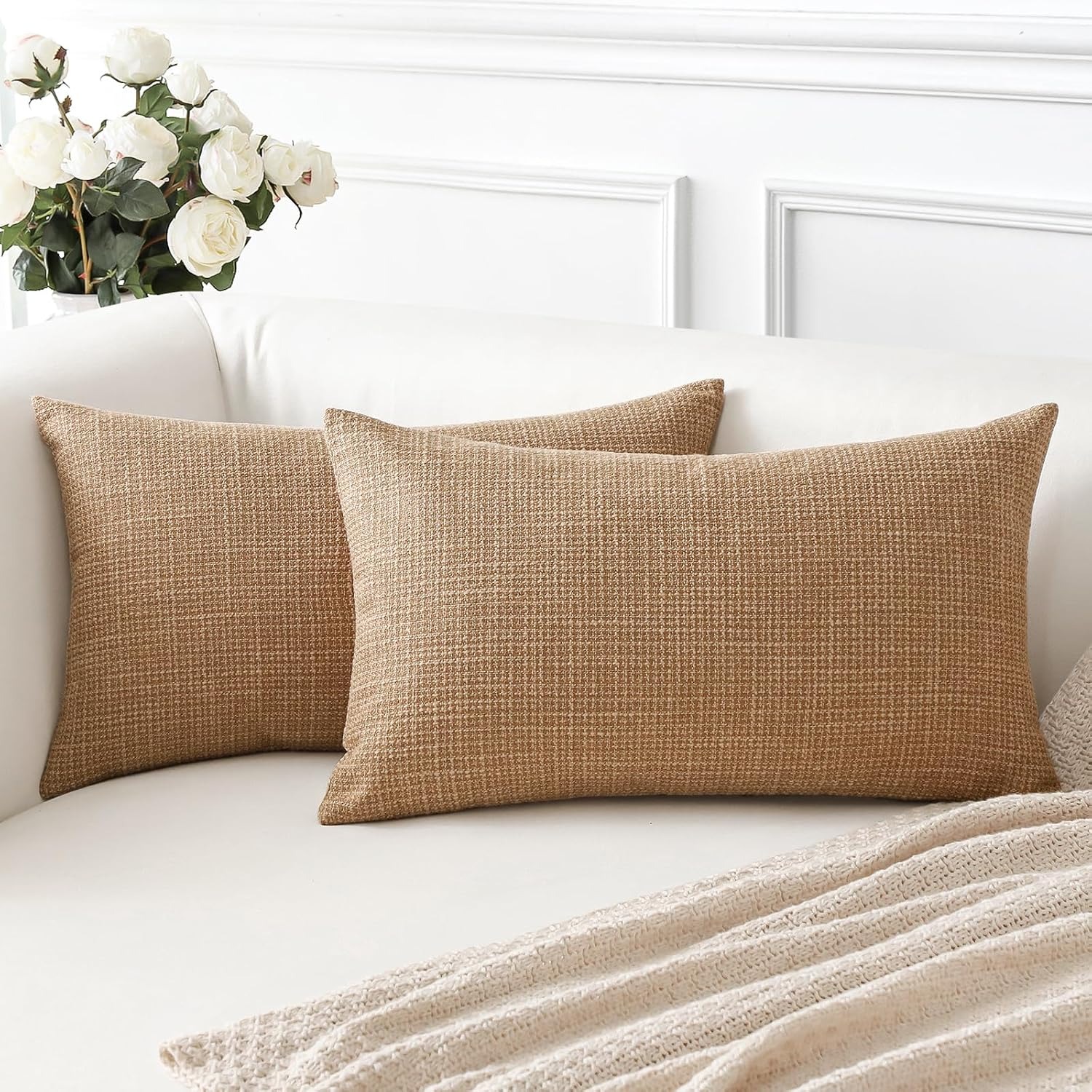
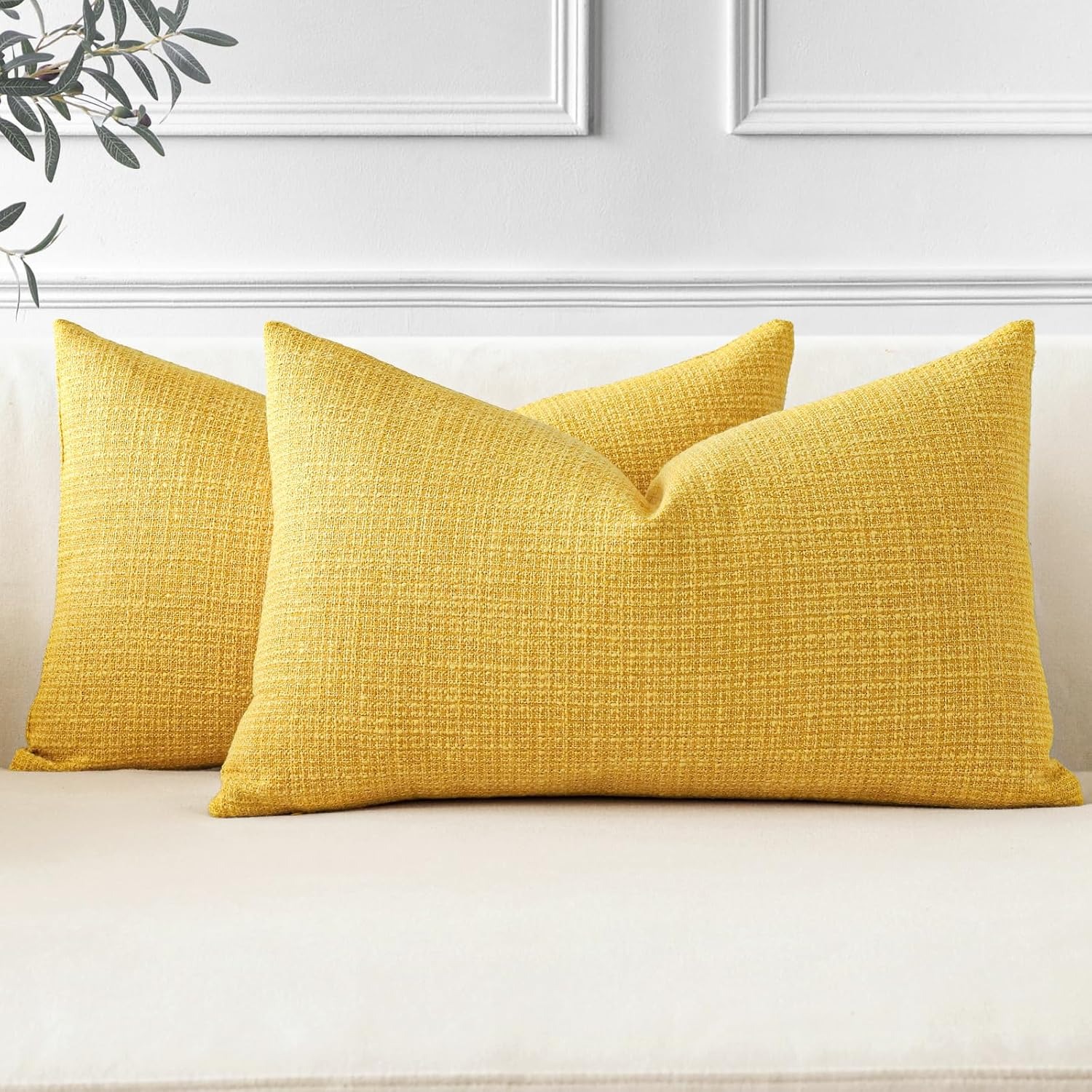
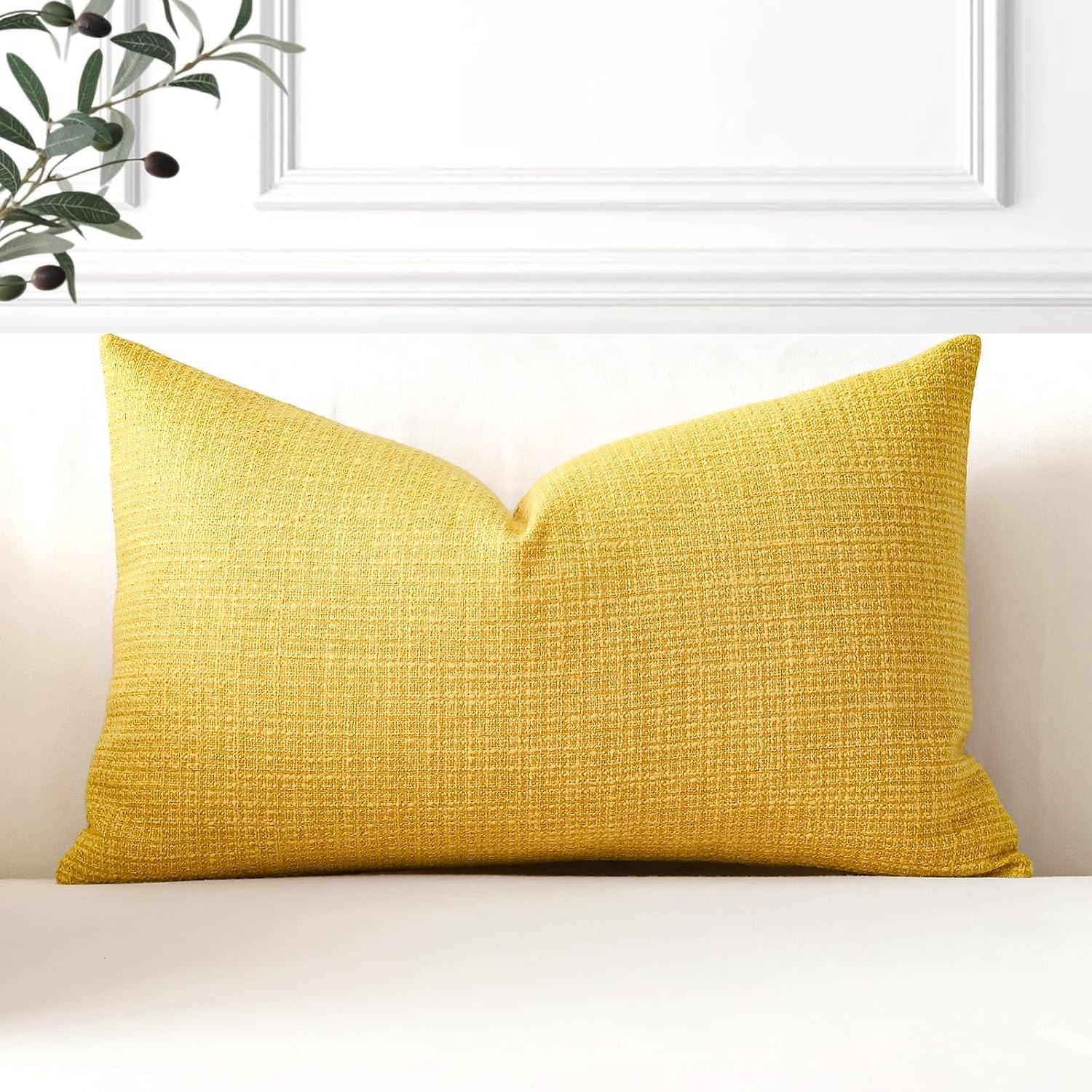
A 50 x 70 cm rectangle is the shape that works for leaning. It slots into the gap between the sofa back and your lower spine, it props you up properly when you are reading in bed, and it stays put better than a square does when you shift position. If you only own one supportive cushion, a rectangle is the more useful choice.
It also layers well. On a bed, rectangular covers sit in front of your sleeping pillows without hiding them, which gives you depth instead of a flat wall of fabric. On a sofa, mixing one or two rectangles with squares reads as considered rather than showroom-perfect. People looking for a rectangular cushion cover usually land here for exactly these reasons.
Getting the insert right
Since this is a cover only, the insert you pair it with determines a great deal about how the finished cushion looks and feels.
A matching 50 x 70 cm insert gives you a clean, smooth fit with no slack. That is the safe choice and the one most people want. If you prefer the plump, full-cornered look you see in magazine photographs, going slightly larger pushes the fabric taut and fills out the corners. Going smaller is the only genuine mistake, because the cover will sag and the corners will flap.
Fill type is a separate decision. Feather and down give a soft, sinkable cushion that you can karate-chop into shape, but they need regular plumping. Polyester holds its shape with less fuss and costs less, though it feels firmer. There is no wrong answer, just a trade-off between slouch and structure.
Thinking about the colour
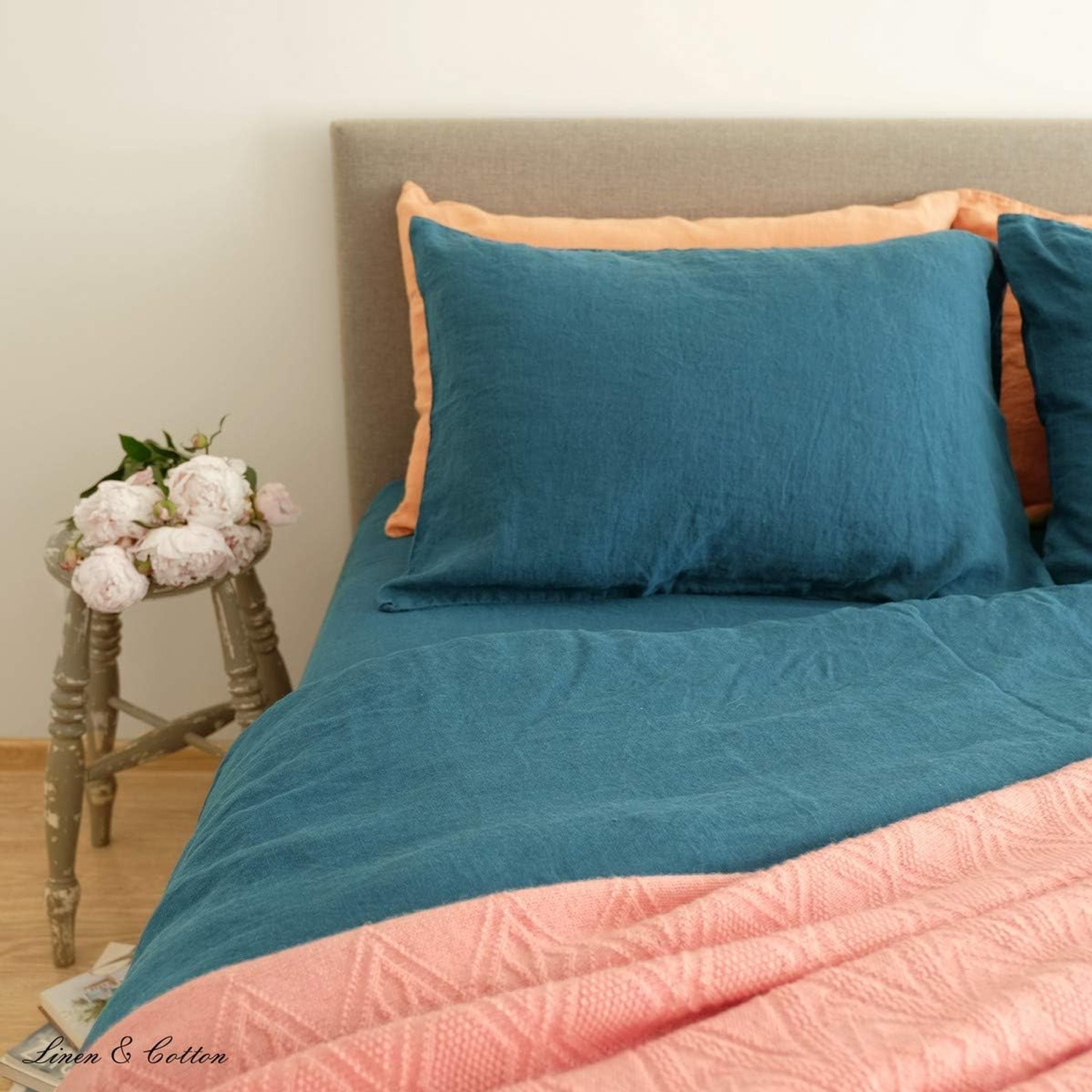
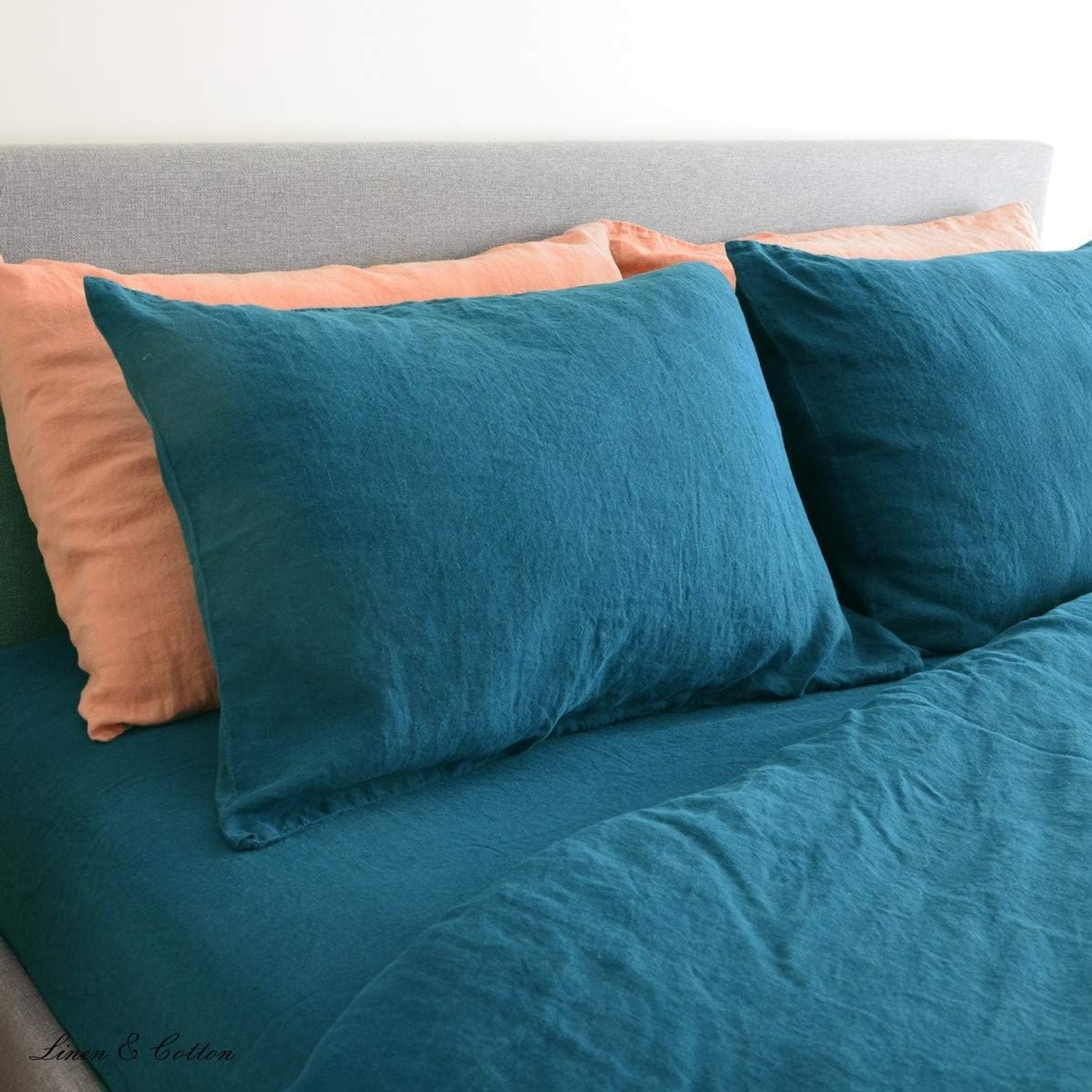
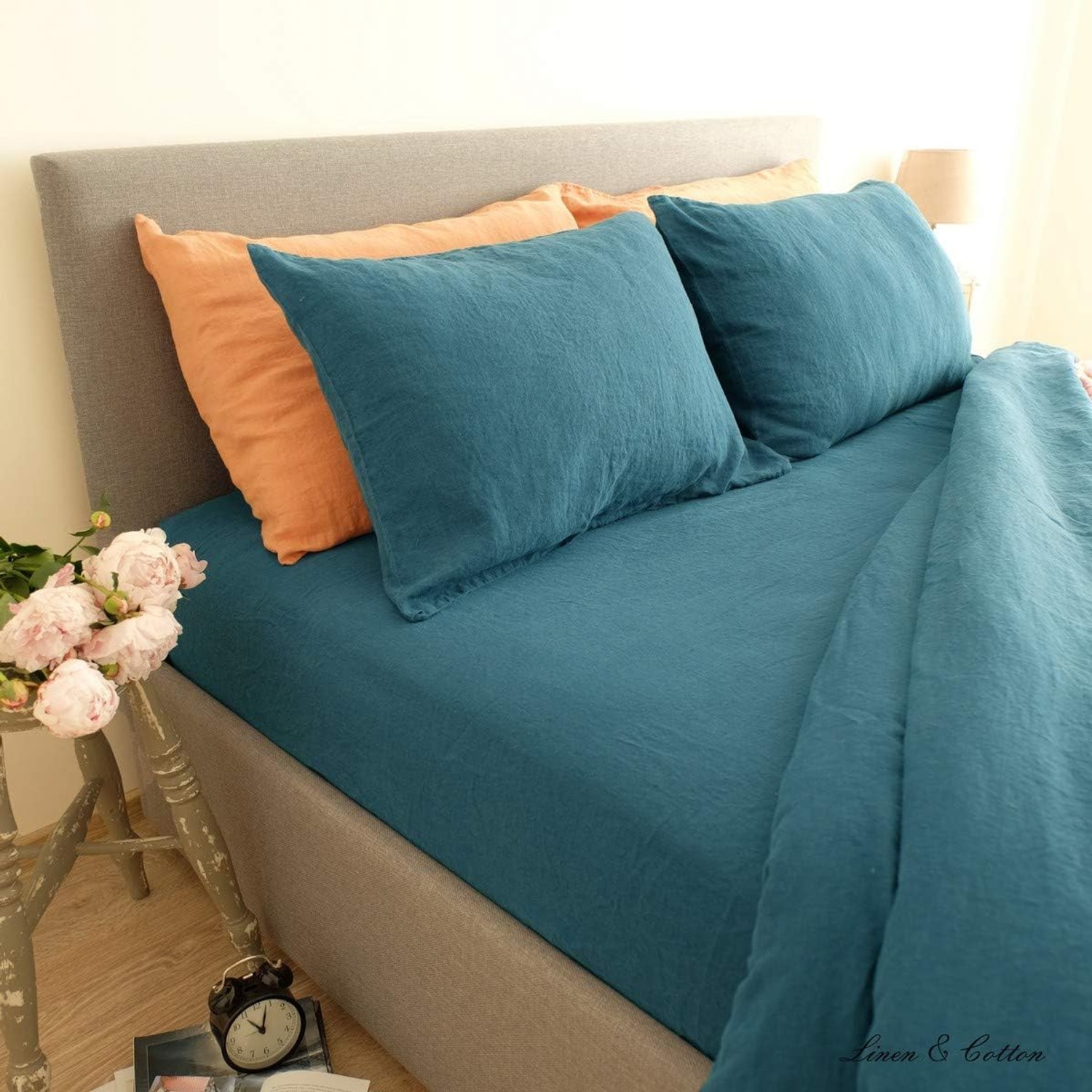
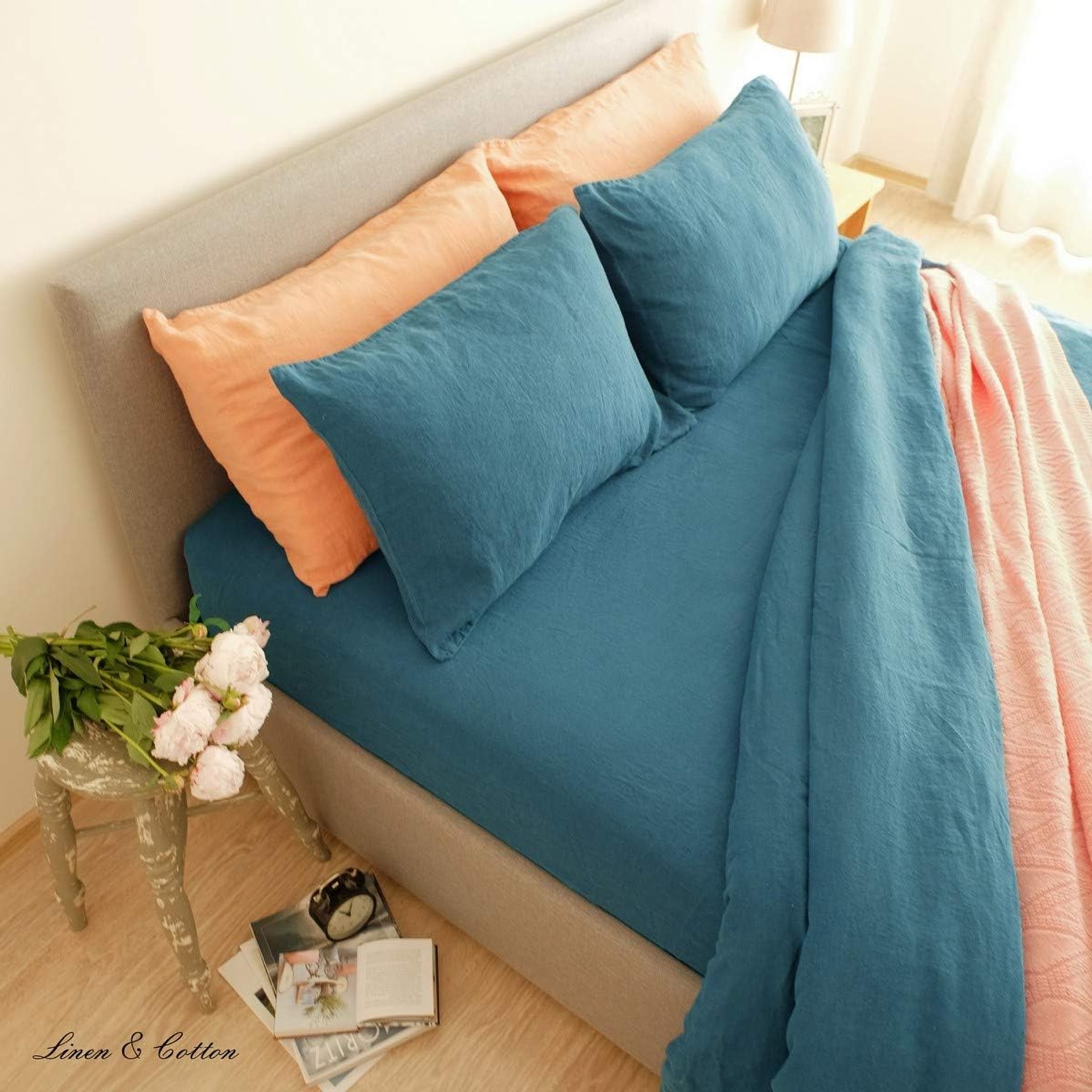
Petrol blue is a useful colour because it is not quite any one thing. It has enough green in it to feel softer than navy, and enough depth to anchor a pale room rather than disappearing into it. Under warm evening light it shifts towards teal. In bright daylight it reads closer to a muted navy.
That shifting quality is actually the strength. A flat, saturated colour tends to look exactly the same in every light and tends to date quickly. A muted tone with undertones moves with the room.
It sits comfortably with white and off-white bedding, with oatmeal and warm grey, with natural timber and rattan, and with brass or aged metal. If you want a bit of friction, rust, terracotta and mustard all work against it without clashing. People who want blue linen cushions usually want something that reads as blue without looking nautical, and this is roughly where that lands.
Living with it day to day
Linen creases. This needs saying plainly because it surprises people who have only owned polyester covers. The difference is that washed linen creases softly, in rolling folds rather than sharp lines, and on a cushion that looks relaxed instead of neglected.
If you want it smoother, iron it on a warm setting while it is still slightly damp. If you are happy with the lived-in look, shake it out when it comes off the line and put it straight back on the insert.
Washing is straightforward. Machine wash at 40 degrees on a gentle or linen cycle, with similar colours, using a mild detergent. Skip the bleach and skip the fabric softener, which coats fibres and works against the handle you paid for. Line drying in the shade is kindest to the colour. The maker gives no tumble-drying guidance.
That is genuinely the whole routine. No dry cleaning, no hand washing, no special products.
Who this suits
This makes sense for someone who wants a bedroom or living room to look calm and considered without buying a whole new set of furniture. One or two good covers change the character of a room more cheaply than almost anything else you can do.
It also suits anyone who already owns inserts and is tired of replacing entire cushions when the outer fabric gets tired. Covers are the part that wears, gets washed and goes out of style. Keeping the insert and swapping the cover is cheaper.
It is probably not the right pick if you want something highly patterned or very bright, or if you need a square cushion to fill a specific gap. Measure before you buy, as 50 x 70 cm is a definite rectangle.
The short version
This is a single cover in 100% stonewashed linen, 50 x 70 cm, petrol blue, with a zip closure and no insert included. The fabric has been pre-washed and softened, so it feels settled straight away instead of stiff. The maker lists it as a summer item, and the rectangular shape is comfortable to lean against.
Buy a matching insert, wash the cover at 40 degrees when it needs it, and let it crease. That is more or less all there is to it.