
The complete guide
Choosing Striped Linen Look Cushion Covers, A Practical Buyer's Guide
The problem with most cushions
Cushions look like a small decision, which is exactly why they so often go wrong. People buy a whole cushion, insert included, in whatever fabric caught their eye. Six months later the pad has gone flat, the cover cannot be removed, and the only fix is to throw the lot out and start again.
Buying covers separately solves that. The cover is the part that gets dirty, fades and dates. The insert is the part that decides how a cushion feels. Keeping them separate means you can replace one without the other, wash the cover as often as you like, and swap the whole look of a room for the price of some fabric.
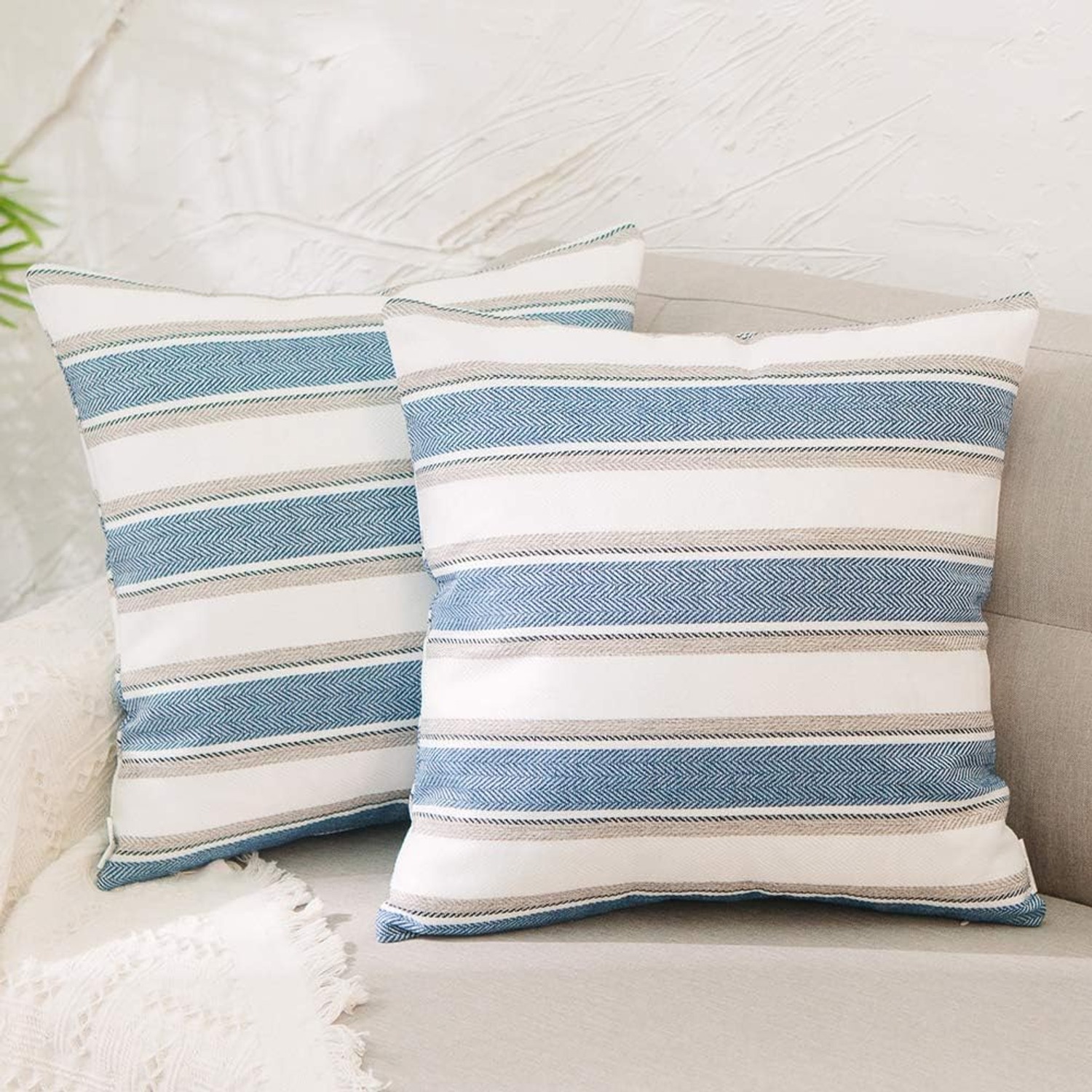
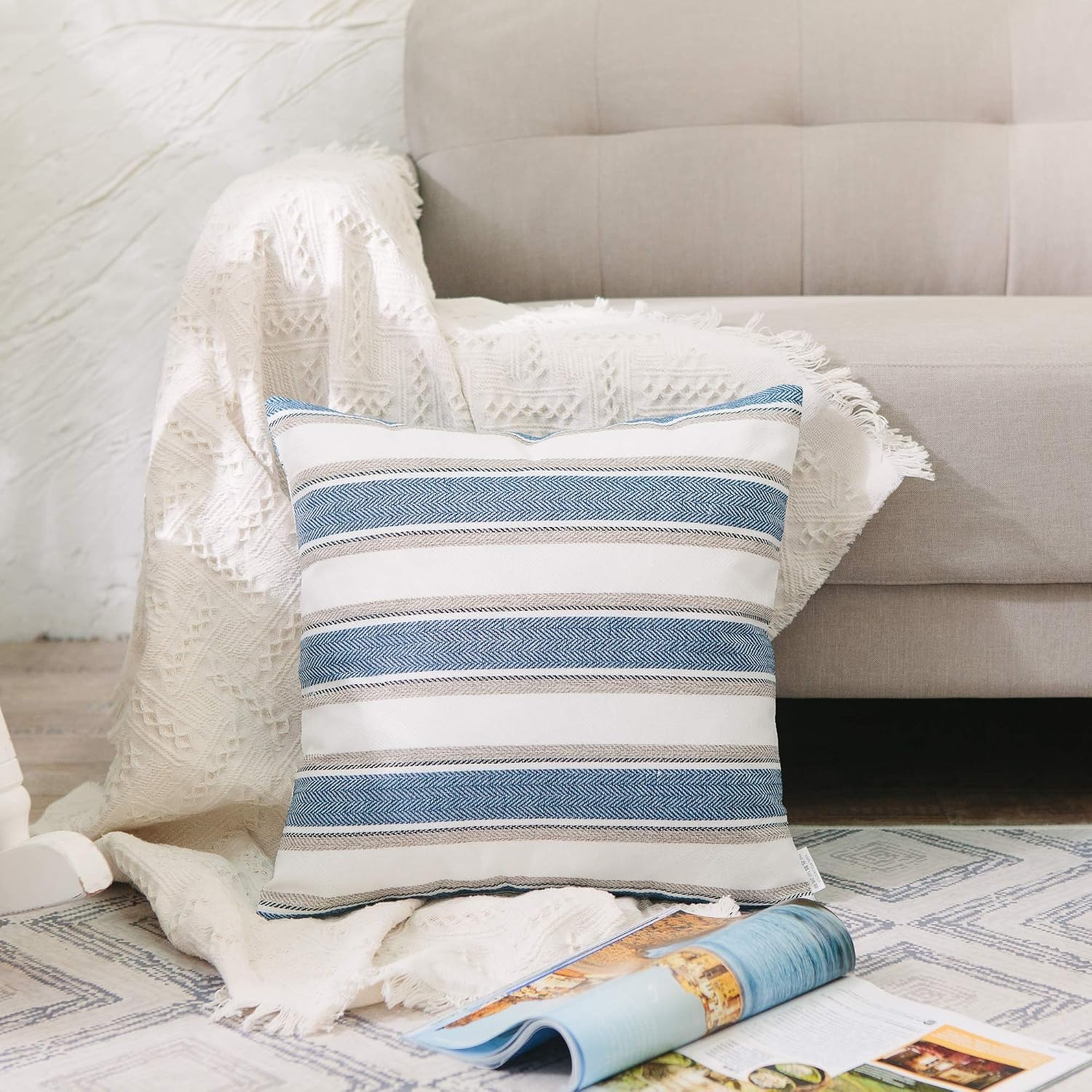
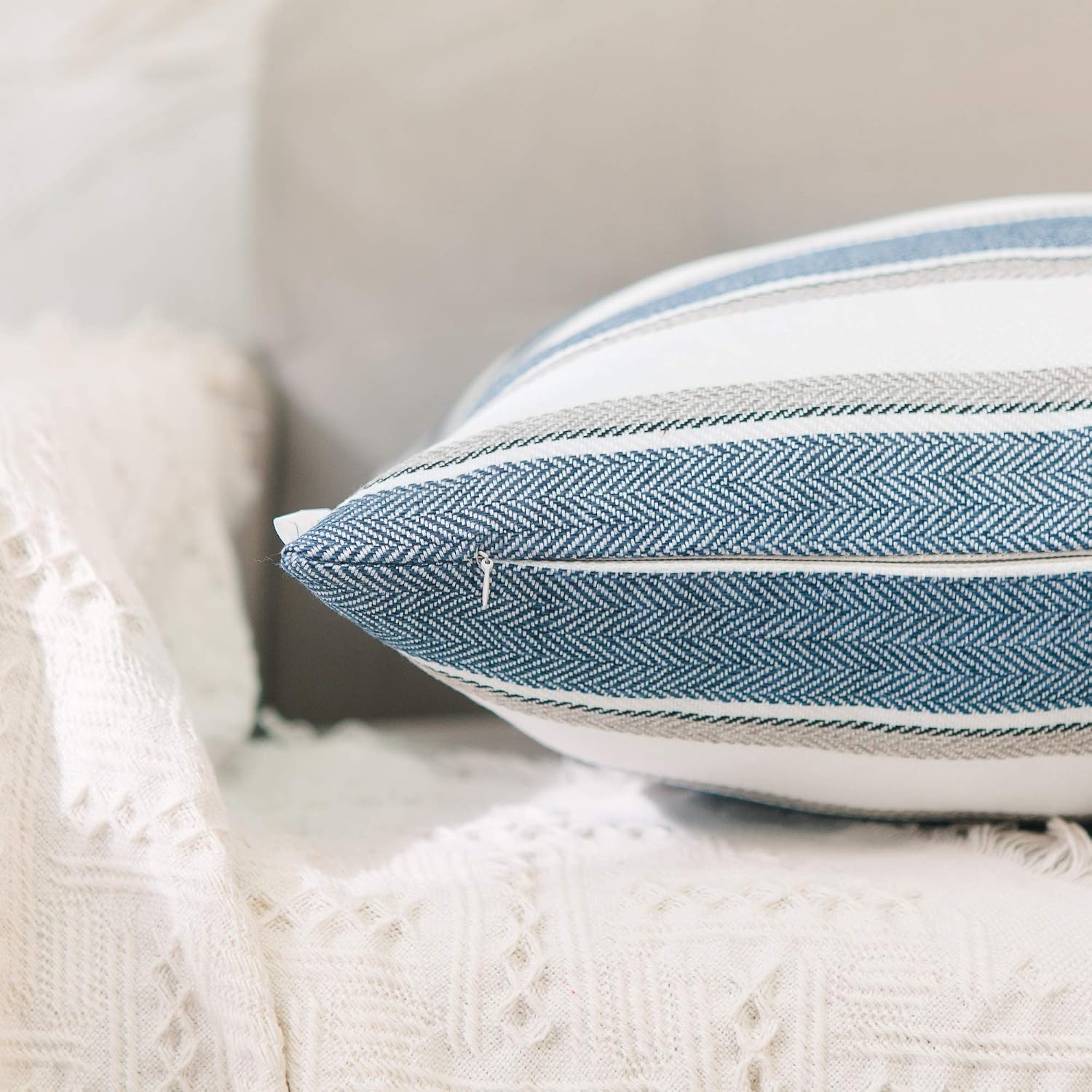
That is the thinking behind a pair of striped linen look cushion covers. They are 55 x 55 cm, they close with a hidden zip, and they are sold without inserts so you choose the firmness yourself.
What "faux linen" actually means
This needs saying plainly, because the name does a lot of work. Faux linen is a polyester blend woven to look like linen. That is how the maker describes it, and that is what you are buying. It is not flax linen.
The look comes from the yarn. Slubby, slightly irregular threads woven in a plain weave give you the textured, matte surface that people associate with linen cushions. Up close you can see the stripe sitting on that texture rather than printed flat.
What you gain from polyester is practical. It holds dye well, so a navy stripe stays navy. It creases far less than real linen, so a cushion that gets leaned on all evening does not look crumpled by morning.
What you give up is the particular hand of flax, that cool, dry, slightly papery feel that softens over years of washing. If that is what you are after, buy real linen and accept the creasing. If you want the look with less fuss, faux linen earns its place.
Why navy and white stripe works almost anywhere
Navy behaves like a neutral. It sits next to grey, beige, oatmeal, cream, natural timber, rattan and black without arguing with any of them. Paired with white in a stripe, it reads as fresh rather than heavy, which matters in a warm climate where dark, solid blocks of colour can make a room feel closed in.
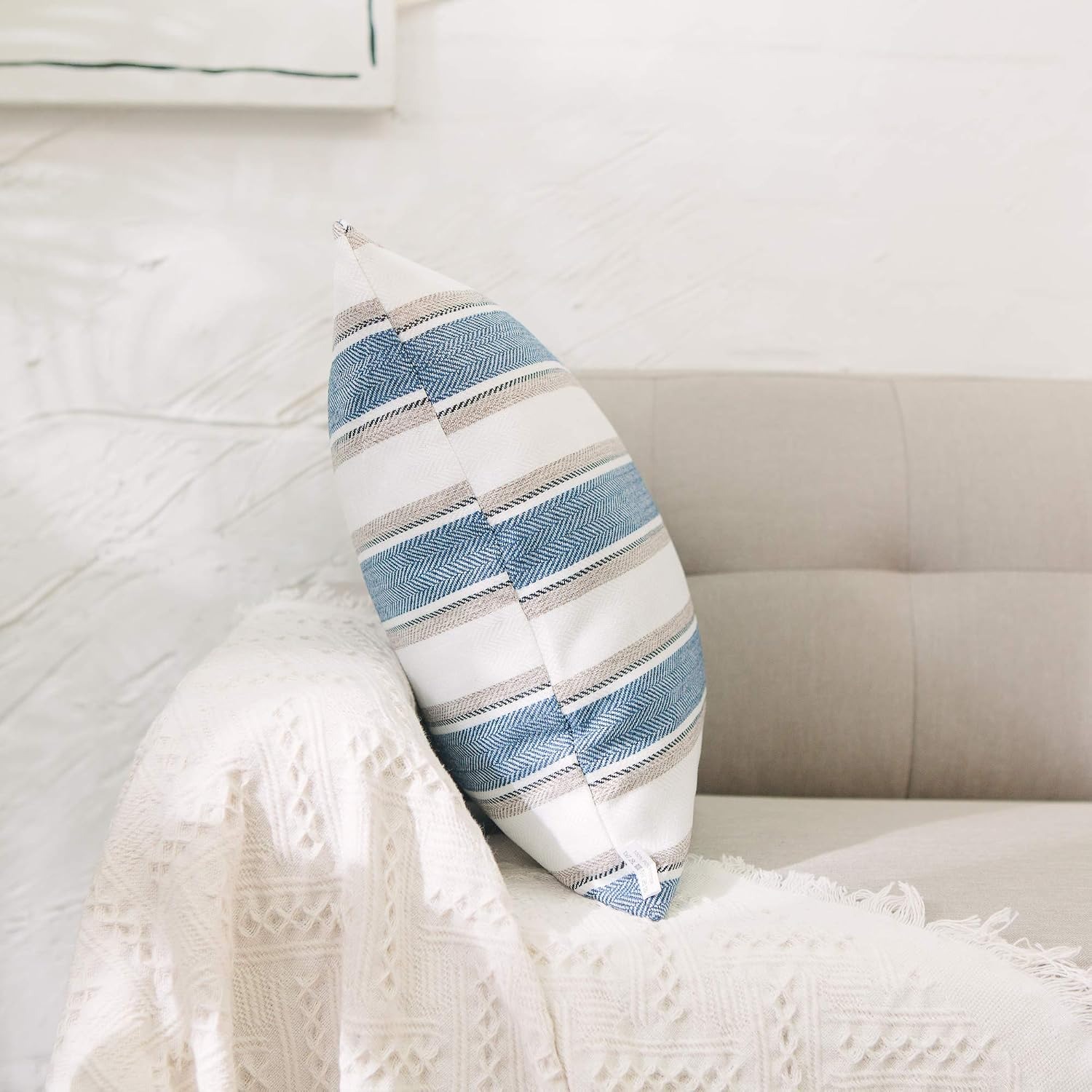
Stripes also give a room structure. A plain sofa with plain cushions can look flat. Add a stripe and suddenly there is a line for your eye to follow. Because the covers are square, you can turn them ninety degrees, running one vertical and one horizontal along a sofa, which looks deliberate rather than accidental.
If you already have patterned curtains or a rug with a strong design, a stripe is still usually safe. It is the simplest pattern there is, so it tends to sit under busier ones rather than competing.
Getting the insert right
This is where most people go wrong, and it is easy to fix.
The covers are 55 x 55 cm. A 55 cm insert gives you a neat, tailored cushion that sits fairly flat. A 60 cm insert gives you a fuller, plumper cushion with corners that stay sharp. Both fit, because fabric has give, but the larger pad takes more effort to zip in.
Insert fill matters too. Feather and down blends compress nicely, hold their shape and can be plumped back up with a shake. They cost more and need occasional attention. Polyester pads are cheaper and need no maintenance, but the budget ones flatten quickly and go lumpy. A mid-weight polyester or a microfibre fill is a reasonable middle ground.
For a sofa that gets real use, go slightly firmer and slightly larger. For a bed or an office chair where the cushion is mostly decorative, a softer pad looks better.
Who these suit
Anyone furnishing a flat or condominium who wants a lift without a full redecoration. Two covers is enough to change the feel of a sofa. It is one of the cheapest ways to make a room look considered.
They also suit people who rent and cannot change the big things. You cannot repaint the walls or replace the sofa, but you can put a stripe on it.
Home offices are another good fit. A cushion behind your back on a dining chair or a desk chair makes long stretches at a laptop more bearable, and a tidy navy stripe looks right on camera.
They are less suited to anyone who specifically wants natural fibres, or anyone who needs a cushion for heavy outdoor exposure. This is an indoor fabric with no weather or fade treatment claimed.
Care that actually keeps them looking good
Three habits make the difference.
Close the zip before washing. An open slider can catch the fabric and chew a hole in it, and it can snag whatever else is in the drum.
Wash cold on a gentle cycle, on their own or with other light items. Hot water and heavy loads are what wear fabric out. No bleach, which will strip the navy and leave patchy marks.
Dry low or in the shade. High dryer heat is hard on synthetic fibres, and long hours in direct sun will dull any colour eventually. If you hang them, turn them inside out.
Beyond that, a warm iron on the reverse handles creases, and rotating the pair every few weeks spreads the wear evenly. Because you have two covers, you can wash one while the other stays on the sofa, which is useful in a humid flat where covers get washed often.
Building a group that looks right
If you are starting from scratch, a pair of striped covers plus a pair of plain ones is the easiest combination to get right. Pick the plain colour from somewhere already in the room, the rug, a lamp, the wood of a side table.
Vary the size if you can. Two 55 cm squares with a smaller square or a rectangular lumbar cushion reads as a thought-out group rather than a matched set. Even number symmetry is fine on a small sofa, but on a longer one an odd arrangement often looks more relaxed.
Keep textures varied. If everything is the same smooth weave, the group looks flat. A linen look texture next to a knit or a smooth cotton gives the eye something to do.
The short version
You are buying two square covers, 55 x 55 cm, in a navy and white stripe, with a hidden zip and over-locked seams. The fabric is faux linen, a polyester blend made to look like linen, not flax linen.
No inserts are included, which is deliberate. Buy 55 cm pads for a neat finish or 60 cm pads for a plumper one, and pick a fill that matches how hard the cushions will work.
Wash cold, dry low, skip the bleach, and rotate the pair. Do that and a pair of covers that cost a fraction of new furniture will keep a sofa looking fresh.