
The complete guide
How to Choose a Two Ply Cashmere Shawl That You Will Actually Use
The cold that nobody warns you about
Ask someone in a warm, humid city where they feel cold, and the answer is never "outside". It is the office two floors up where the vent sits directly above a desk. It is the cinema. It is the meeting room with the glass walls that somebody set to 18 degrees years ago and nobody has touched since. It is the eight-hour flight where the cabin crew hand out a blanket the thickness of a paper napkin.
This is the gap a cashmere shawl fills. It is not outerwear. It is a portable fix for rooms and seats that other people control the temperature of. Once you have one in your bag, you stop rearranging your day around air conditioning.
What two ply actually changes
A lot of cashmere is sold on softness alone. How the yarn was built matters just as much to how a shawl hangs and wears.
Single ply cashmere is one strand. It feels lovely in the shop, but it is thin. Two ply means two strands twisted together before the cloth is made. That twist gives the cloth structure. You see it in how the fabric hangs, which is with a bit of weight rather than clinging flat to your arm.
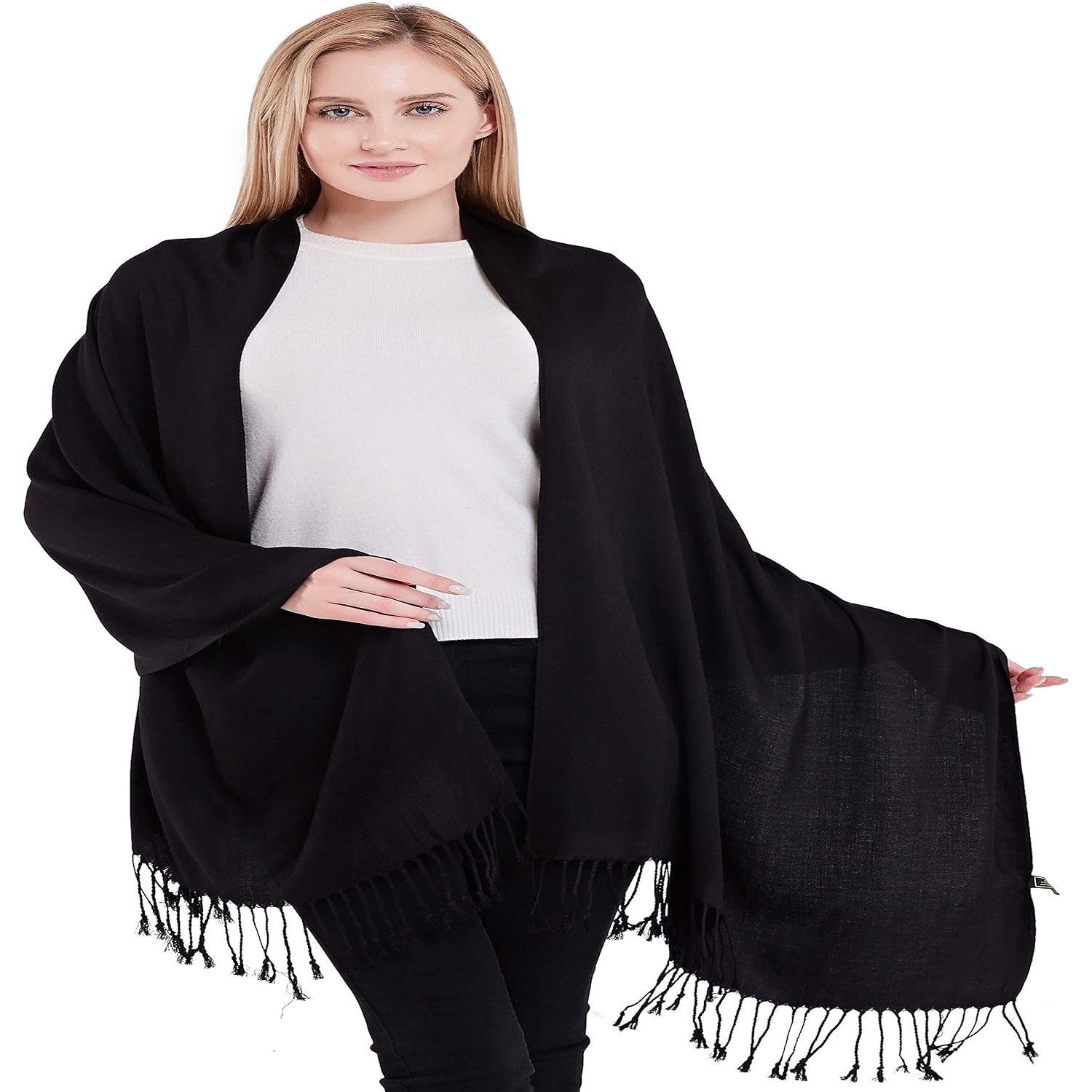
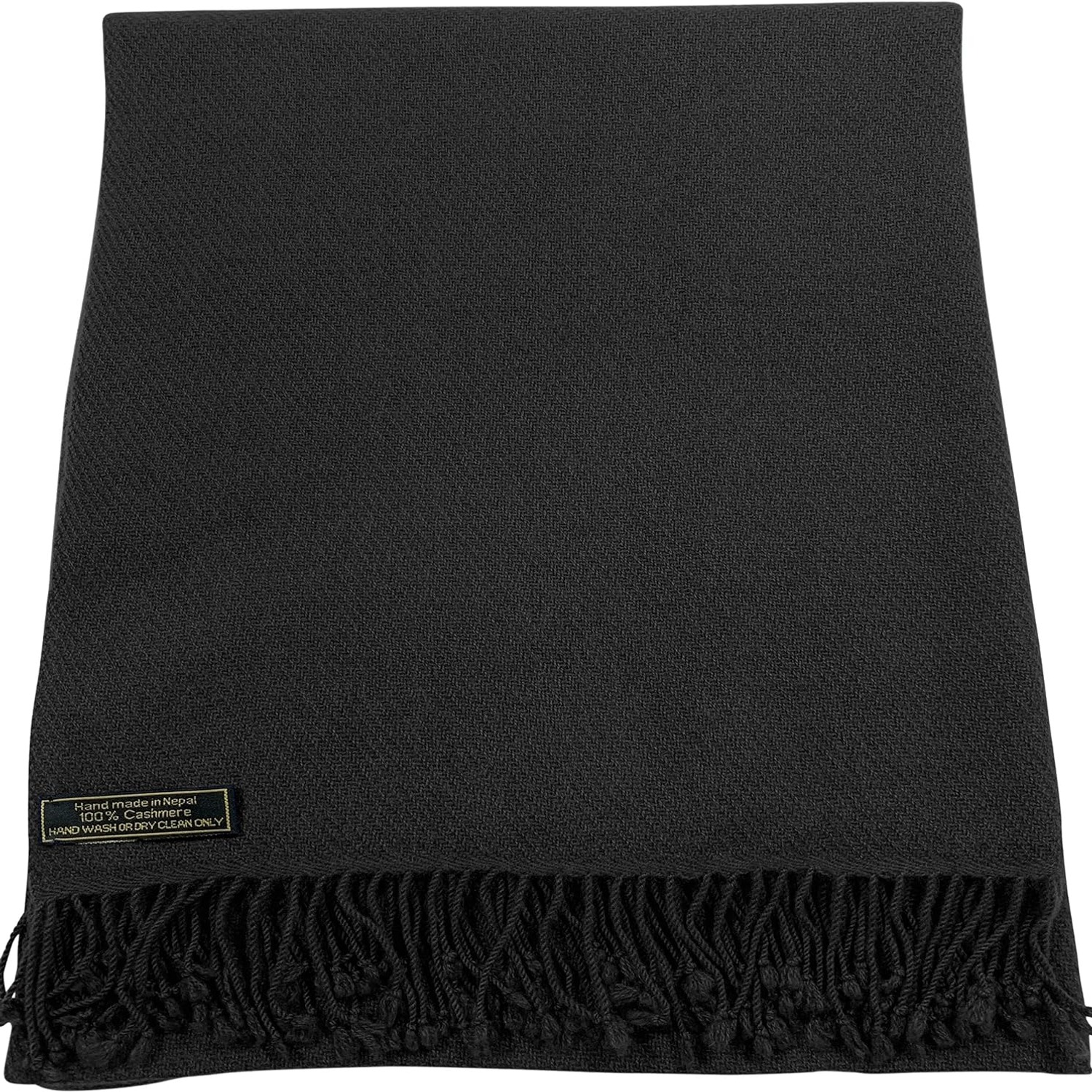
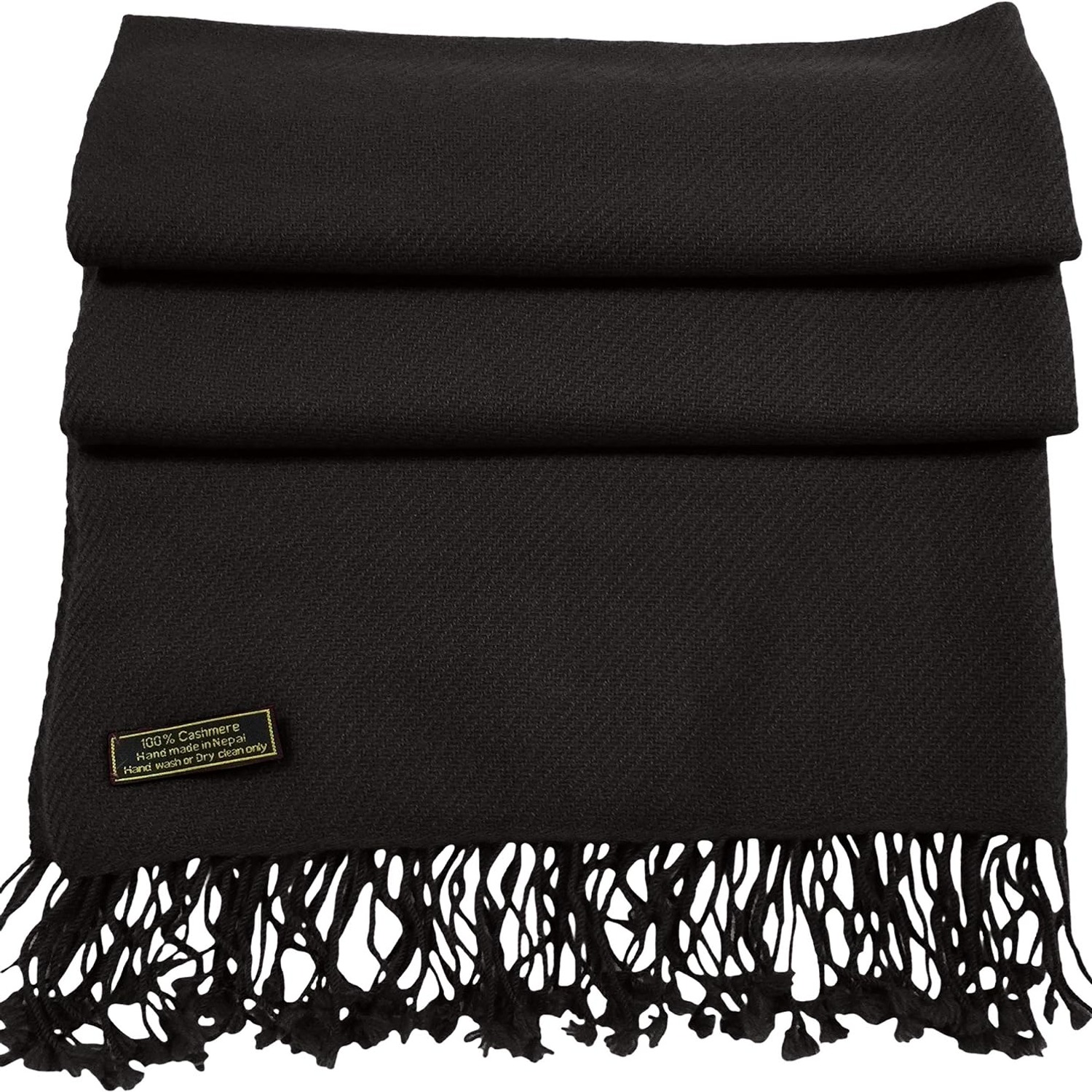
This shawl is two ply, 100% cashmere, hand made in Nepal according to the maker. At about 200 g, it has enough body to do a job and is light enough to carry.
The numbers that matter
Dimensions decide how a wrap gets used, so it is worth picturing them properly.
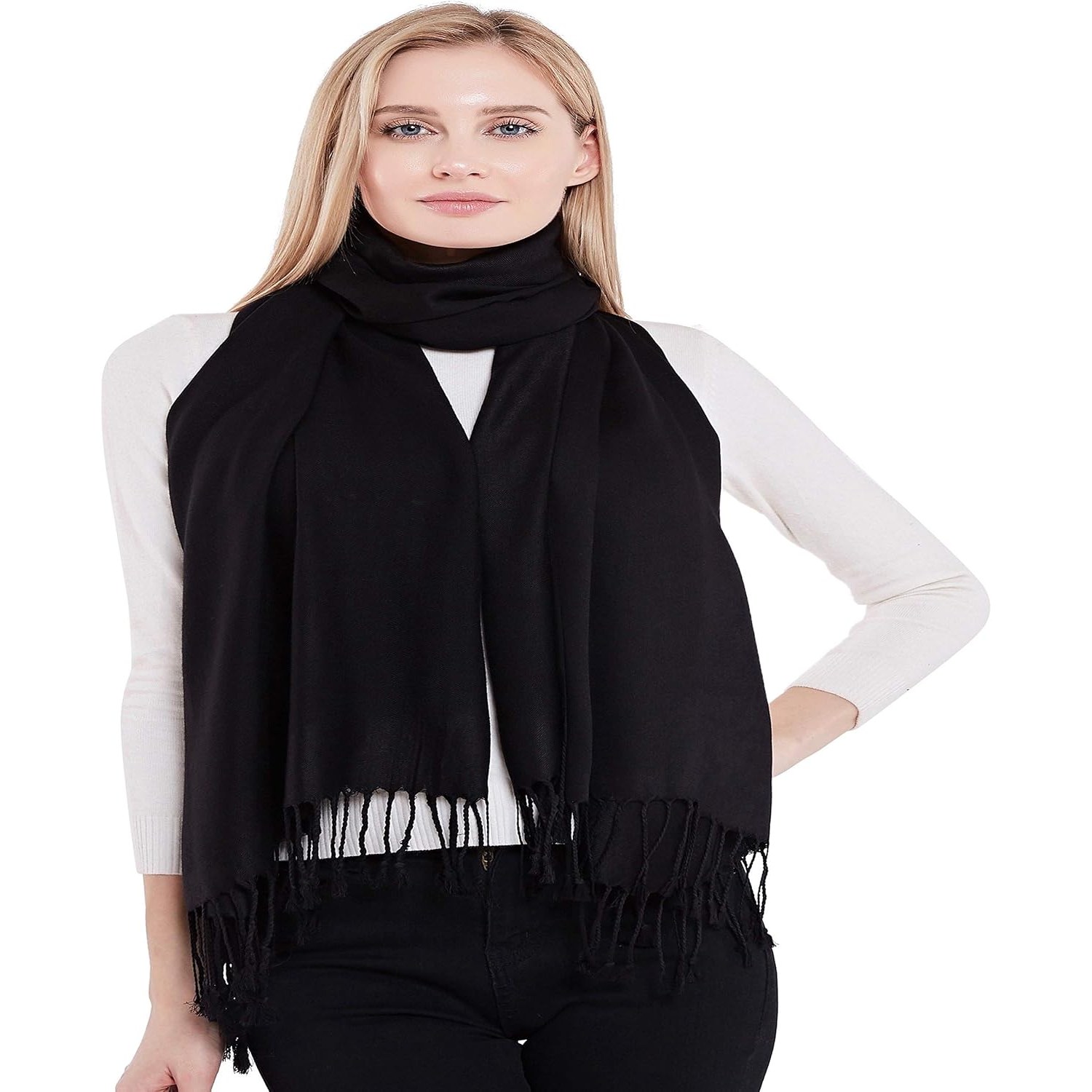
At 188 cm long, this goes around the neck twice with the ends still hanging low, or opens out across the shoulders as a proper wrap. At 70 cm wide, it is deep enough to cover your lap and knees on a flight, or to fold into a slim scarf when you want warmth at the neck only. Narrower wraps, the 50 cm sort, can only really do the scarf job. The extra width here is what makes it versatile.
Then there is weight. About 200 g. At two hundred grams you stop making a decision about whether to bring it. It just lives in the bag.
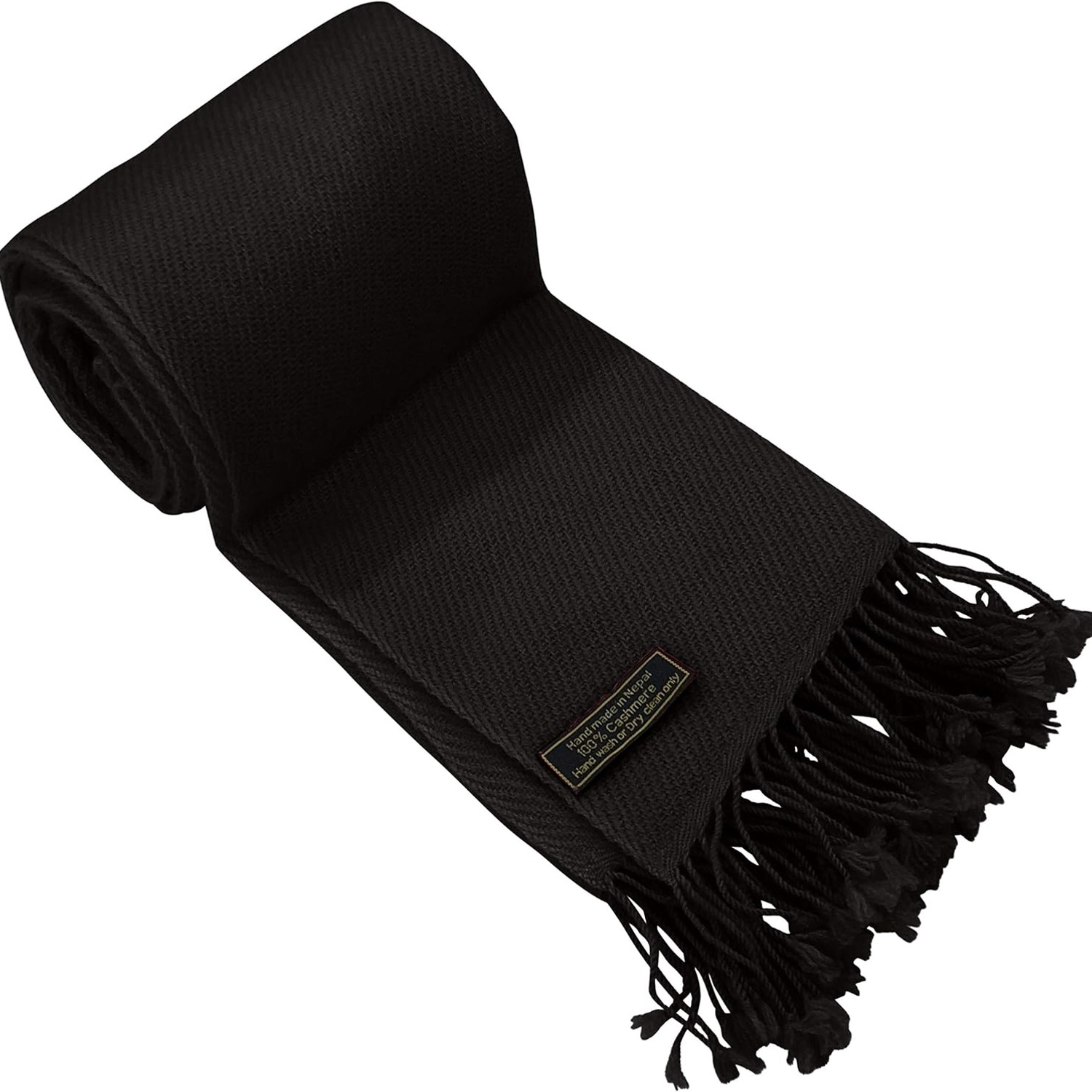
The 10 cm hand-twisted fringe at each end is a finishing detail rather than a function, but it changes the look. Twisted fringes hang with a bit of weight and soften the rectangle. A plain hemmed edge reads more corporate.
Who this suits
People who commute into air-conditioned buildings get the most out of it, because the cold is daily and predictable. Frequent flyers are the second group, and they tend to be the most loyal, because once you have slept under your own cashmere on a red-eye you will not go back to the airline blanket.
It also suits anyone who travels to colder countries a few times a year but does not want to own a wardrobe for it. A lightweight cashmere shawl layers under a coat, adds warmth at the neck, and folds flat in a suitcase.
Less suited: someone who wants a heavy, thick scarf for deep cold, or someone who wants a statement pattern. This is a solid black, deliberately plain.
How to choose between wraps
A few questions sort most of it out.
How wide do you need it? If you only ever want a neck scarf, 50 cm is enough and will cost less. If you want something that can also serve as a lap cover or a shoulder wrap, you need 65 cm or more. This one is 70 cm.
How often will you carry it? Daily carry pushes you towards lighter weights. Occasional evening use lets you go heavier.
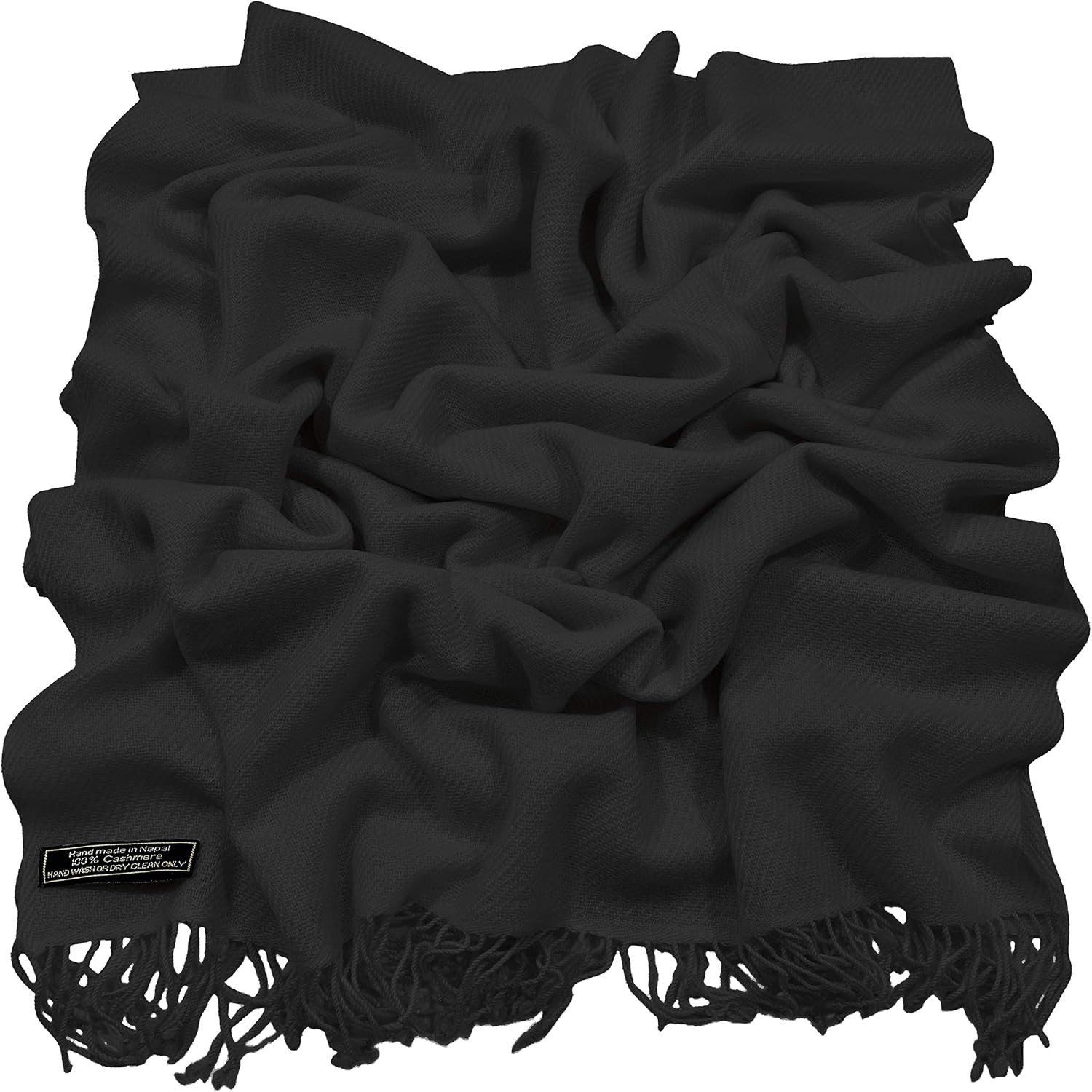
What colour earns its keep? Black is boring and that is the point. It goes under a blazer, over a dress, with jeans. A black cashmere shawl rarely clashes with anything already in the bag, which is why it gets used more than the interesting colour you bought first.
Is it a gift? If so, one size matters enormously. Wraps are the rare clothing gift where you cannot get the fit wrong. This one arrives in a gift box with labels and care instructions already included, so the wrapping is done for you.
Looking after cashmere without fuss
Cashmere has a reputation for being delicate. It is more accurate to say it is low maintenance but particular about a few things.
It does not need washing after every wear. Airing it out is usually enough between washes. When it does need cleaning, the care here is hand wash or dry clean.
If you hand wash, use cool water and a small amount of detergent made for wool. Move it gently, do not scrub, and do not wring it out. Press the water out between your hands or inside a towel, then lay it flat in its proper shape to dry. Keep it away from direct heat and direct sun.
Store it folded, never on a hanger. A hanger puts all the weight of the cloth on two narrow points and stretches the shoulders of the fabric over time. In a humid flat, give it air rather than sealing it in a plastic bag, and keep it somewhere dry.
Pills will appear eventually, mostly where a bag strap or a coat collar rubs. That is normal for cashmere. Lift them off with a cashmere comb, working gently in one direction. Do not pull them, because pulling takes fibre with it.
Getting more use out of one piece
The simplest trick is to learn two ways of wearing it. Folded lengthways into thirds and looped once at the neck gives you a tidy, office-appropriate scarf. Opened flat across the shoulders with the ends hanging gives you an evening wrap. Same object, two completely different registers.
On a plane, fold it in half widthways and it becomes a double-layer lap cover. Roll it and it becomes a neck support. Spread it over an armrest and it stops the cold metal getting to you.
At a restaurant where the air conditioning is working too hard, leaving it draped over the back of the chair and pulling it up when you need it is more graceful than keeping a jacket on through dinner.
The short version
This is a 188 x 70 cm two ply cashmere shawl, hand made in Nepal from 100% cashmere, weighing about 200 g, in solid black with a 10 cm hand-twisted fringe at each end. It arrives new with labels in a gift box, and it can be hand washed or dry cleaned.
What that adds up to is a piece you carry without thinking and use more than you expected, mostly indoors, mostly against air conditioning, and sometimes at 10,000 metres. If you have been looking at cashmere accessories for women and could not work out which size does the most jobs, the wide-and-light combination here is the one to start with.