
The complete guide
How to Choose a Tall White Ceramic Floor Vase
The corner that never works
Every home has one. A stretch of wall beside the sofa, a dead space near the entry, the patch of floor next to the balcony door that collects nothing but dust and a stray charger cable. You have probably tried a plant there and watched it sulk. You may have tried a small decorative object and found it disappeared against the wall.
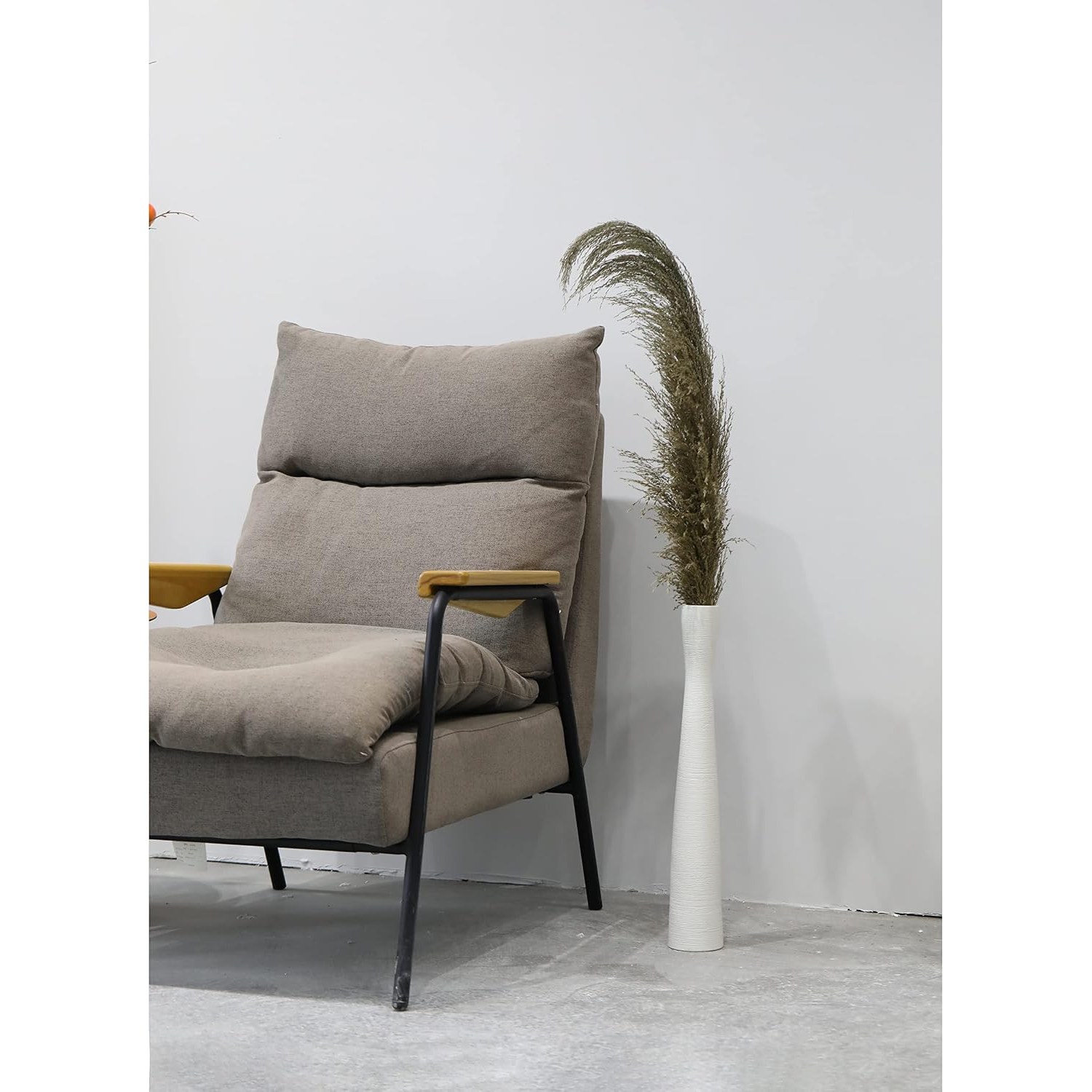
The problem is almost always vertical. A floor-level gap needs something with height, and a 15 cm tabletop vase simply cannot do that job. A tall white ceramic floor vase at about 51 cm solves it in one move, and it does so without eating floor area, because the base here is only around 8 cm across.
What this vase actually is
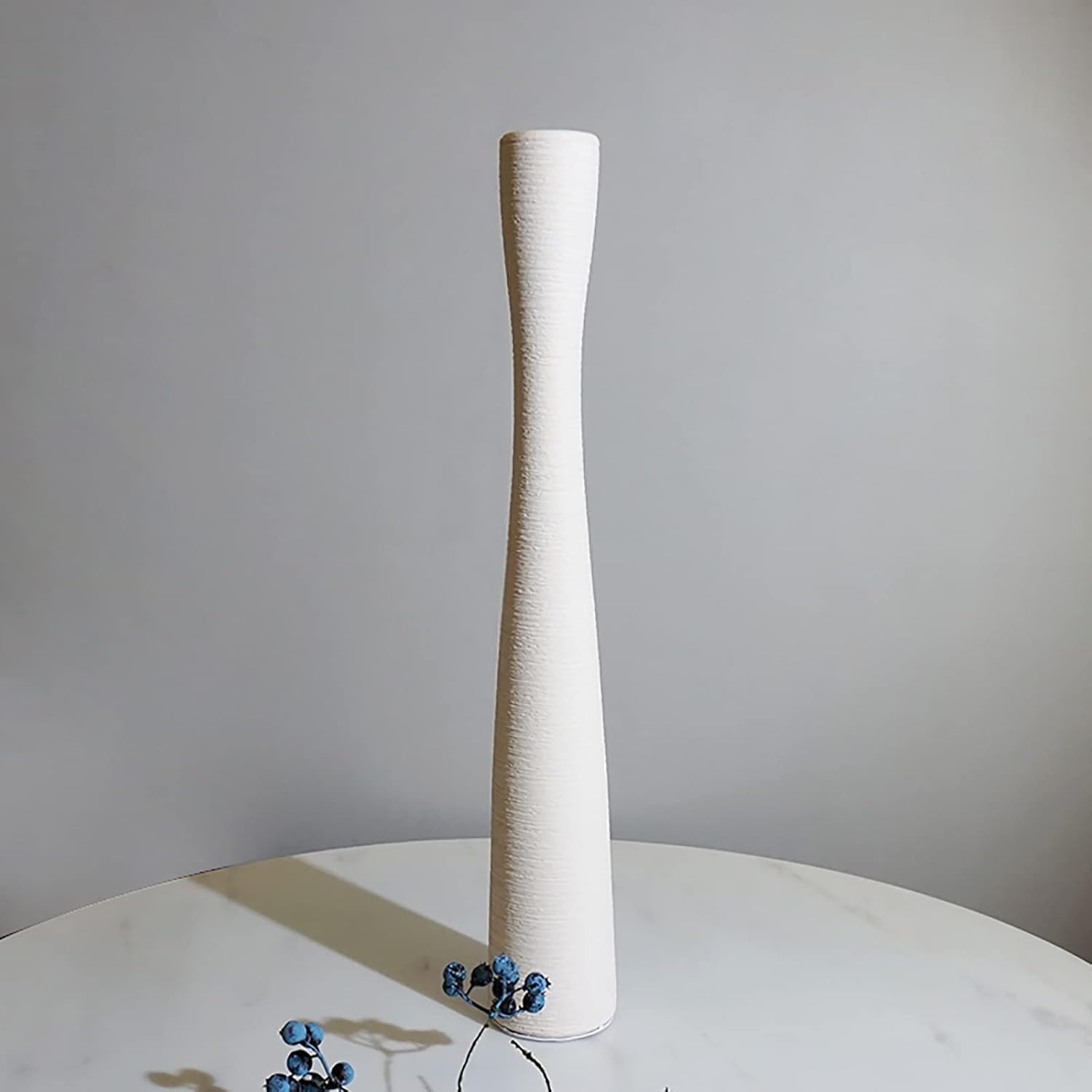
Stripped of styling photos, it is a slim ceramic column in white. Around 51 cm from the floor to the rim, 8 cm at the base, with a 5 cm opening at the top. The finish is brushed, which means the surface has a soft, lightly textured look rather than a glassy shine.
The maker states that this white vase holds water. That is a useful detail, because some decorative floor vases cannot hold water and can only ever take dry stems. Here you have the option of fresh flowers, which widens what the piece can do across a year.
One more thing worth repeating because it catches people out: you receive the vase alone. No pampas, no branches, no dried palm. The arrangement is yours to build.
How the shape changes the arrangement
The narrow neck is the design decision that matters most. A wide-mouthed vase lets stems fan out and lean, which looks lovely with a generous florist bunch and terrible with five supermarket stems. A 5 cm opening does the opposite. It grips the stems near the base and holds them upright, so even a small number of tall pieces look intentional.
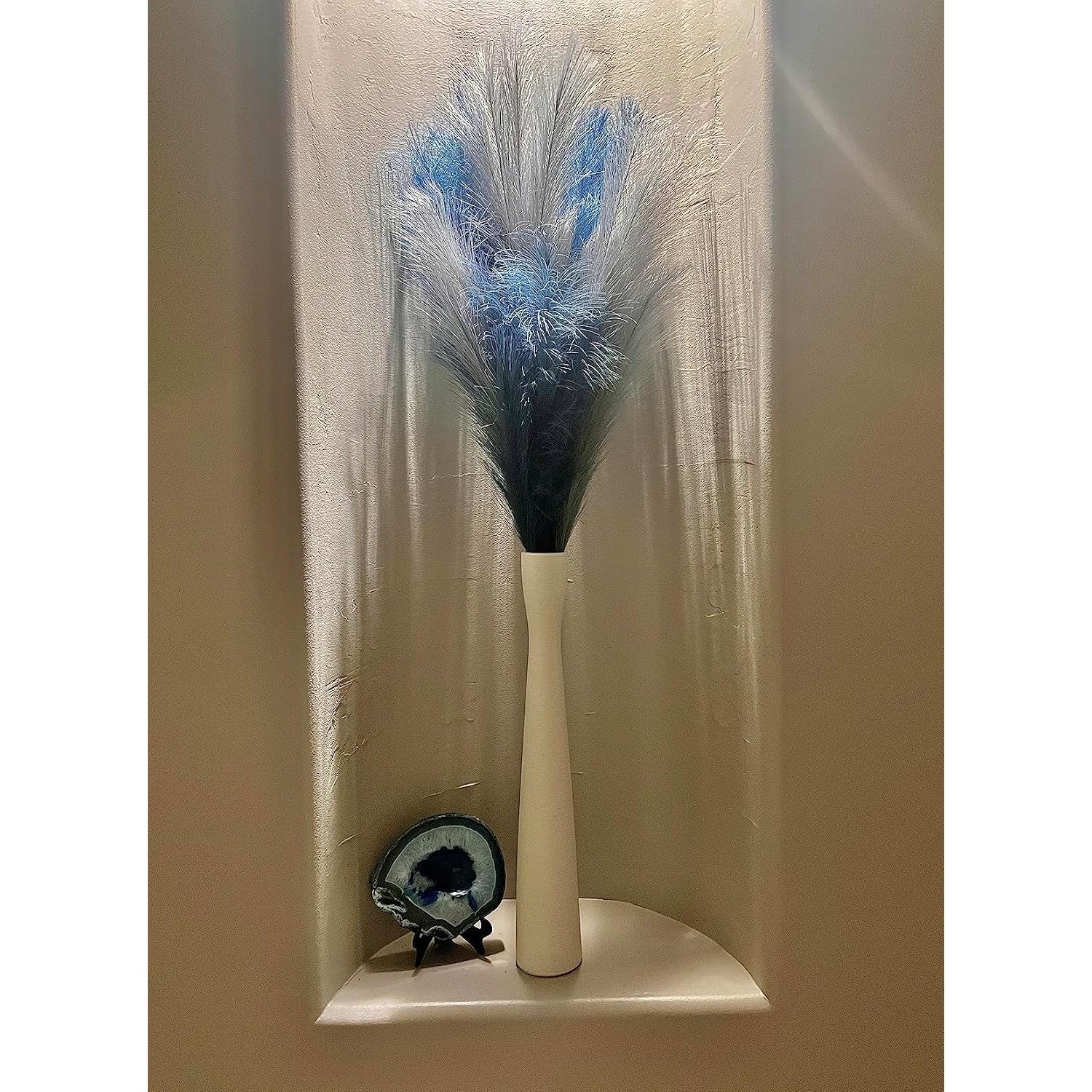
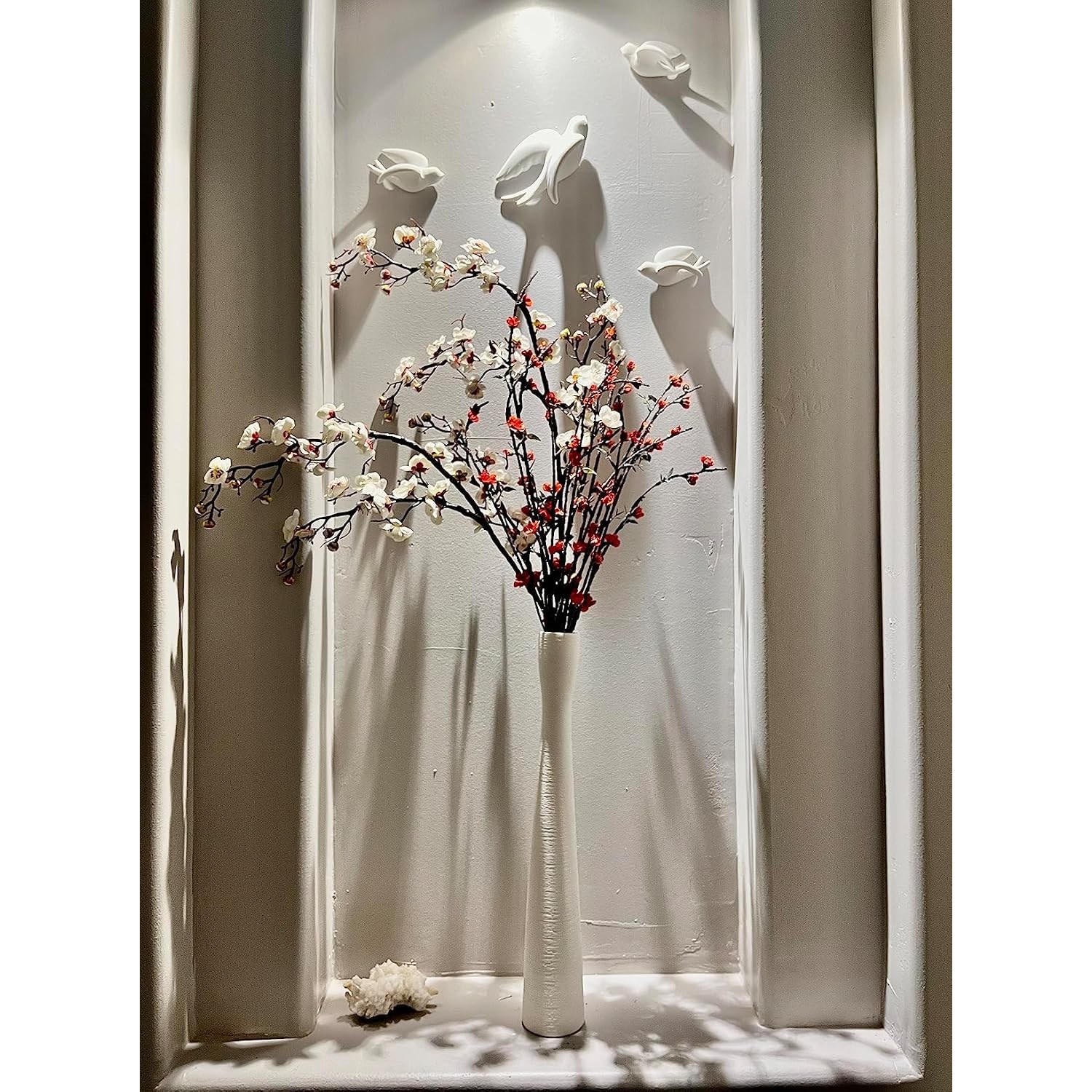
This is why it works so well with the usual suspects. Pampas grass holds its plume up instead of drooping. Bare branches keep their angles. Eucalyptus stays architectural rather than flopping. For fresh flowers, think long and upright: lilies, gladioli, a single orchid spike, tall roses with the lower leaves stripped.
A simple rule for proportion. Let the visible stem above the rim reach roughly one and a half times the vase height. With a 51 cm vase, that means stems showing about 70 to 80 cm, for a total silhouette somewhere near 1.2 metres. That is the height that stops a floor vase looking stubby.
Who it suits
It suits anyone working with limited floor space who still wants a piece with presence. In a flat or condominium, the 8 cm base is the headline feature. You can stand it between a sofa and a side table, beside a shoe cabinet, at the end of a sideboard or in the gap behind a dining chair, and it will not get in the way.
It suits renters, because it adds height without drilling, mounting or committing to anything. It suits people who are bad with plants, because dried stems ask for nothing. And it suits anyone furnishing a room in stages, since a tall white vase is one of the easiest pieces to slot in early and build around later.
It suits offices too. Reception corners and meeting-room edges tend to feel hard and flat, and a tall vase with a few branches softens them for very little effort. A plain white vase works in a working space because white does not clash with office furniture.
Who it suits less well: households where it would stand in an open walkway with small children running past. It is ceramic and it is narrow. Placement solves that, but it is worth thinking about before it arrives.
Choosing the right height for your space
Before anything else, measure. Stand in the spot and note the height of whatever sits nearest, usually a sofa arm, a console top or a windowsill.
A good outcome is when the rim of the vase sits somewhere between the sofa seat and the sofa arm, letting the stems rise above the back of the sofa. At about 51 cm, this vase lands in that zone for most standard three-seaters. Next to a dining sideboard it is different, because you would typically place it on the floor at the end rather than on top, otherwise the combined height overwhelms the piece.
If you want it on a surface instead, check your ceiling and your sight lines. A 51 cm vase on an 80 cm console puts the rim at 1.3 metres, with stems reaching well over two metres. That can look dramatic in a hallway and oppressive in a low-ceilinged living room.
Fresh, dried, or both
Because the white vase holds water, you can switch between the two.
Fresh works best for short bursts. A bunch for a dinner, flowers for a birthday, something seasonal for a celebration. Keep the water level moderate rather than full, change it every couple of days, and rinse the inside between arrangements.
Dried is the low-effort default. Pampas, dried palm, preserved eucalyptus and plain branches will sit happily for months and need nothing at all. If you go dry, a handful of clean pebbles in the bottom adds a bit of ballast.
Some people run a permanent dry arrangement and only swap to fresh for occasions. That is probably the most practical approach, and it is what makes a neutral white vase worth the floor space.
Looking after it
Care is simple and mostly about restraint.
Wipe the outside with a soft, barely damp cloth and dry it immediately. Do not attack a brushed finish with scouring pads or abrasive powders, because that is how a soft matt surface starts to look patchy. For the inside, warm water and a long bottle brush will reach down the narrow neck. Let it dry fully before you put dry stems back in.
Move it with two hands, one near the base and one near the middle. Never drag it across a floor or a timber top, even with the non-slip sticker underneath. If you are storing it between uses, stand it upright in a corner with something soft around it rather than laying it flat where it can roll.
Styling ideas that take five minutes
Keep the stems taller than you think. Short stems in a tall narrow vase look apologetic.
Use odd numbers. Three, five or seven stems in a narrow neck looks more natural than four or six.
Let one element lean. If every stem stands perfectly vertical, it reads stiff. One branch angled slightly out of the group does a lot of work.
Repeat the white elsewhere. A white vase sitting alone in a room of warm wood can look like it wandered in. Echo it with a cushion, a lamp base or a ceramic bowl and it ties in immediately.
As a gift
White is the easiest colour in home decor and height makes a present feel substantial, which is why a tall vase is such a reliable housewarming vase gift. It works for weddings, anniversaries and new-home celebrations without needing to know anything about the recipient's colour scheme.
If you are giving it, add stems. A vase on its own can land a little bare on opening. A bunch of dried pampas or a few preserved branches turns it from a component into a finished object.
The short version
This is a slim ceramic column in white, about 51 cm tall, 8 cm at the base, with a 5 cm opening and a brushed finish. The maker states it holds water, so fresh and dried stems are both on the table. It arrives on its own, with no flowers included.
It earns its place in a room by solving a specific problem: vertical empty space where there is no room for anything wide. Measure your gap, plan for stems that rise 70 to 80 cm above the rim, keep it out of walkways, and it will quietly improve that corner.