
The complete guide
How To Choose A Cotton Linen Bib Apron That You Will Actually Wear
The problem with not owning a decent apron
Most people do not avoid aprons because they dislike them. They avoid them because the apron they own is slightly wrong. It is too stiff, or the neck strap digs in, or it is a souvenir novelty thing that feels silly, or it lives in a drawer under the tea towels where nobody can find it. So the apron stays folded and the oil splashes land on a shirt instead.
That is a small, repeating cost. A shirt with a faint grease shadow on the front is a shirt you stop wearing to work. Multiply that across a year of cooking and the maths gets annoying.
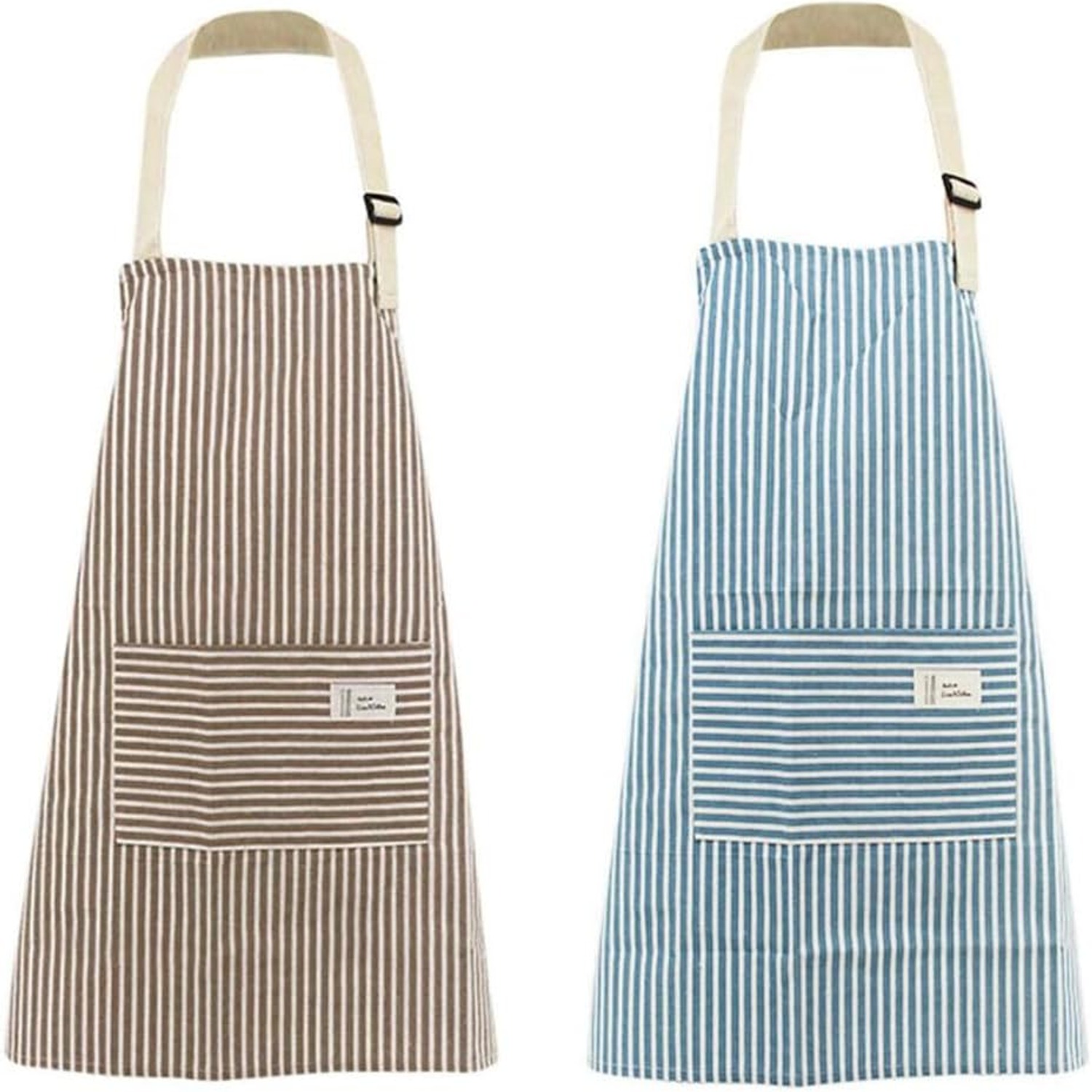
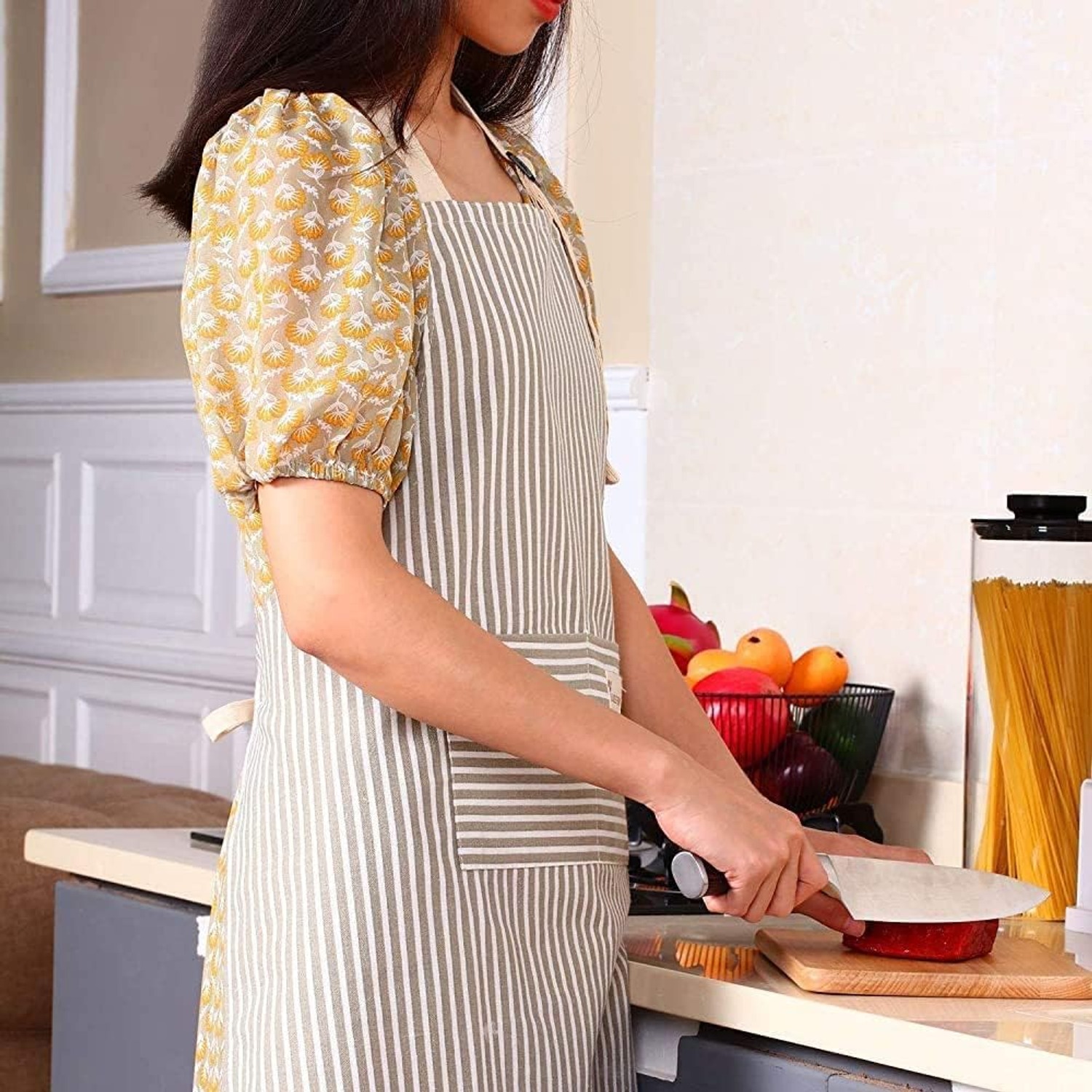
A plain striped bib apron fixes the problem by being unremarkable in a good way. You put it on without thinking about it. It covers your chest and your lap, which is exactly where splatter, flour and dropped sauce land. It has a pocket panel, so you stop balancing your phone on the edge of the counter next to a boiling pot. And because this is a two pack, the second apron means the hook is never empty while the first one dries.
What cotton and linen actually means here
The maker states the fabric is cotton and linen. No percentages are given, so this is a blend and not pure linen, and it is right to say so up front.
The result is a woven fabric with a slightly textured, casual look. The maker classes it as lightweight with no stretch, which tells you two useful things.
Lightweight means it is a thin, easy apron rather than a heavy canvas one. No stretch means the apron drapes rather than clinging.
The trade off is plain. A woven fabric like this is not waterproof. Splashes soak in rather than beading off. For everyday home cooking that is fine. If you are deep frying daily or working with litres of liquid, a coated apron would serve you better.
Why two aprons beats one
A single apron has a habit of being dirty exactly when you want it. You cook on Monday, the apron picks up a tomato stain, and because the care instruction is hand wash, it is not just going in with the next machine load. It sits in the sink. Then Tuesday arrives and you cook without it.
Two aprons breaks that cycle. One is on the hook, one is drying or waiting to be washed, and the rotation sorts itself out.
There are other reasons the pair is useful. The colours differ, blue stripe and coffee stripe, so you can assign them. One for food, one for painting or craft, which stops turmeric meeting acrylic paint. Or two people cook together and nobody is left wearing a tea towel tucked into their waistband. Some households simply keep one in the kitchen and one with the craft supplies.
For gifting, the two pack is handy. You can give both as a matched set for a couple, or split them between two small gifts.
Fit, and why the adjustments matter
An apron fits properly when you forget you are wearing it. Two features do the work here.
The neck strap is adjustable. That sounds minor until you share an apron between people of different heights. A strap set for someone tall leaves the bib sagging low on a shorter wearer, exposing the chest, which is where most splatter goes. Being able to shorten the strap in seconds is the difference between protection and decoration.
The waist closes with ties, which the maker lists as a drawstring closure. Knot them behind you, snug enough that the apron does not swing as you move between hob and sink.
The apron is sleeveless and cut as a plain bib, in one adult size that the maker gives as 70 x 75 cm. It works as a shared household apron. Forearms stay uncovered, which most cooks prefer, as sleeves near a hob are a nuisance.
The pockets, and what people actually put in them
A pocket panel sits across the front, which the maker describes as two pockets. On paper that is a dull feature. In use it is the reason you keep the apron on.
Typical contents include a phone with a recipe video playing, a small towel for hands, a pair of tongs at a barbecue, a pen or a shopping list. The point is that your hands stay free and you stop putting things down on surfaces you are about to wipe.
A note of care. Open top pockets are open, so a phone can slide out if you bend sharply at the waist. Get into the habit of crouching rather than bending, or simply keep the heavy item in the lower part of the pocket.
Care that keeps it looking good
The maker's care instruction is hand wash, so follow it rather than ignore it.
Use cool water and a mild detergent. Work the soapy water through the fabric rather than scrubbing hard, rinse until the water runs clear, then press the water out gently. Do not wring, because twisting a damp woven fabric is what creates permanent creasing at the fold lines. Hang it in the shade to dry, since strong direct sun fades dyed stripes over time.
Wash the blue and the coffee apron separately for the first few washes. A little caution costs nothing.
For oil stains, speed is everything. Blot the excess, dab neat dish soap onto the mark, rub it in with your fingertips, wait a few minutes, then hand wash. Check before drying, because heat sets a stain you did not fully lift. Flour and dry ingredients should be shaken or brushed off while dry rather than rinsed, as water turns loose flour into paste.
A warm iron on the reverse will crisp the apron up if you like that look. Plenty of people skip ironing entirely.
Who this suits, and who should look elsewhere
This is a good match for home cooks, hobby bakers, people who do craft or painting at the kitchen table, and anyone who wants a simple striped apron for a cafe counter. It suits compact kitchens because it folds flat and hangs from one hook. It suits households that share, because of the adjustable strap and because there are two.
It is less suited to heavy industrial work or anything near open flame, since this is a lightweight woven fabric with no heat resistance claimed. It is also not the right pick if you need a machine washable apron for daily commercial laundering, because the stated care is hand wash. And if you specifically want pure linen, this is a cotton linen blend and the maker does not state the ratio.
The short version
You are getting two sleeveless bib aprons, one blue stripe and one coffee stripe, in a cotton and linen blend that the maker classes as lightweight with no stretch. Each has a front pocket panel, an adjustable neck strap and waist ties, in one adult size of 70 x 75 cm. Care is hand wash.
Buy it if you want a plain apron that you will reach for, plus a spare so you never go without. Skip it if you need waterproofing, flame resistance or a machine washable workhorse. For most home kitchens, the simple version is the one that gets worn.