
The complete guide
How To Choose Euro Sham Cushion Covers, A Practical Buyer's Guide
The problem with most cushions
Most people buy cushions the way they buy biscuits at the checkout: quickly, on colour alone, and in whatever size happens to be stacked in front of them. Then the cushions get home, land on the sofa, and somehow the room looks busier instead of better.
The usual cause is scale. A 40 cm cushion on a deep modern sofa looks like a stamp on an envelope. You add another, then another, and now there are six small cushions fighting for the same corner and nobody can actually sit down. The fix is almost always fewer cushions in a bigger size.
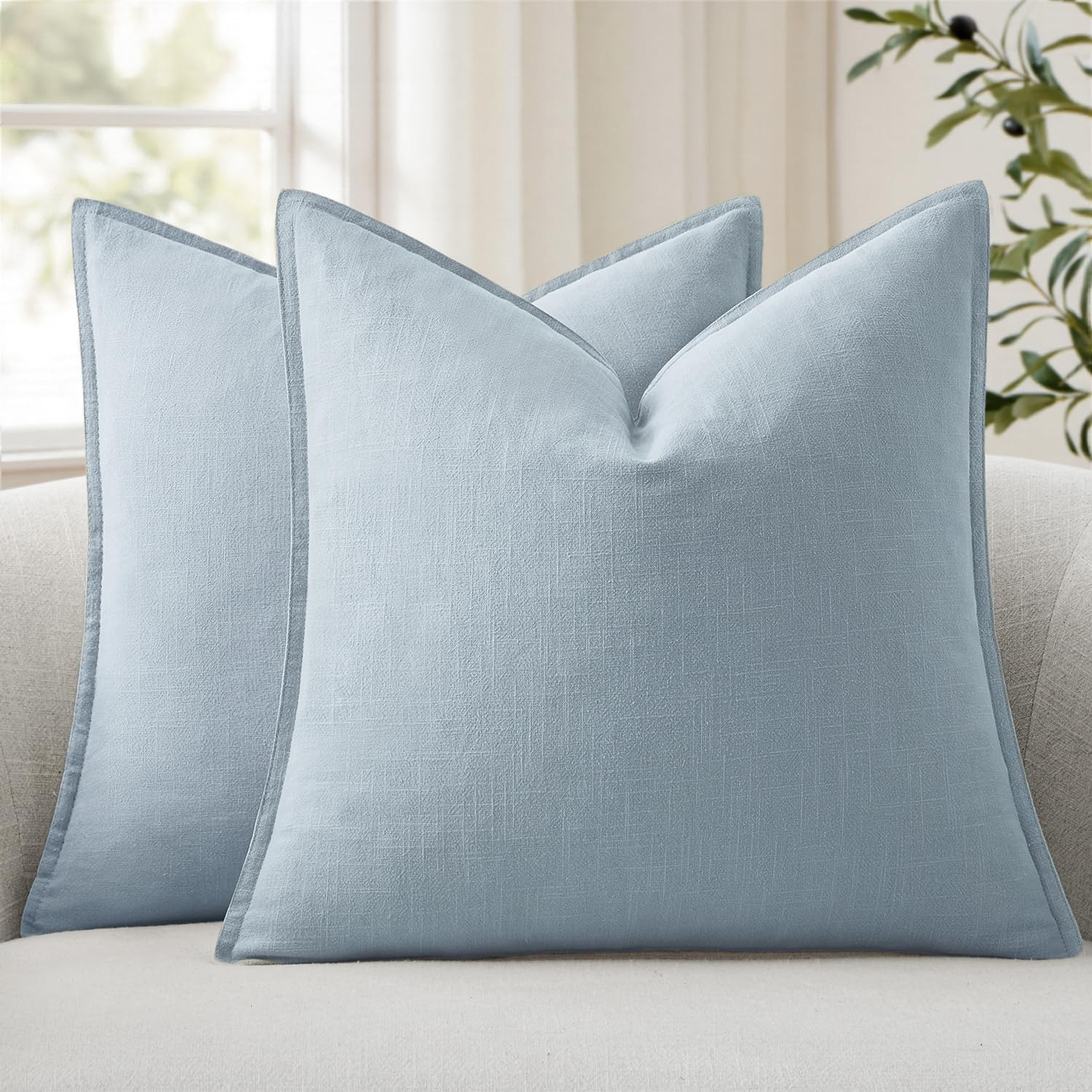
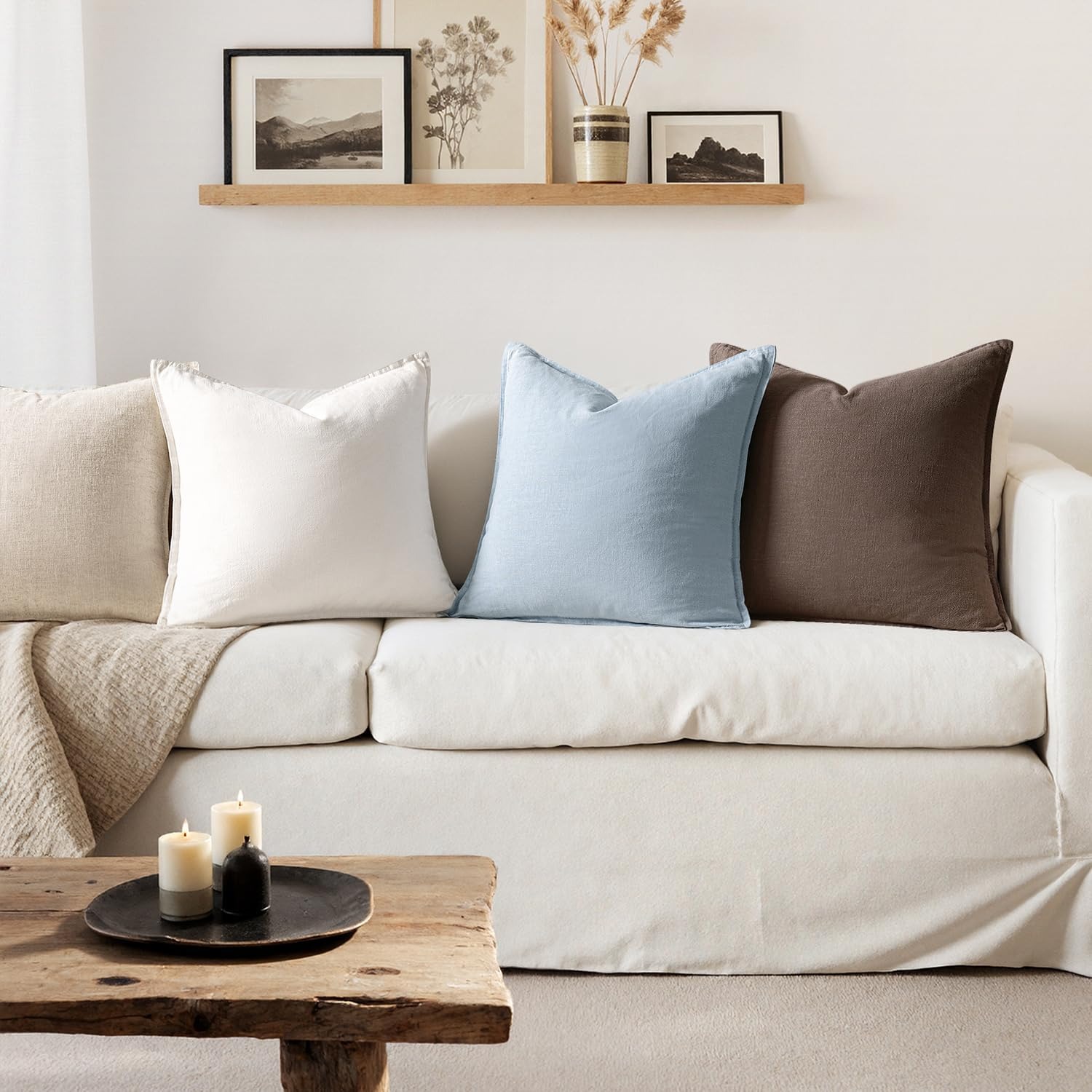
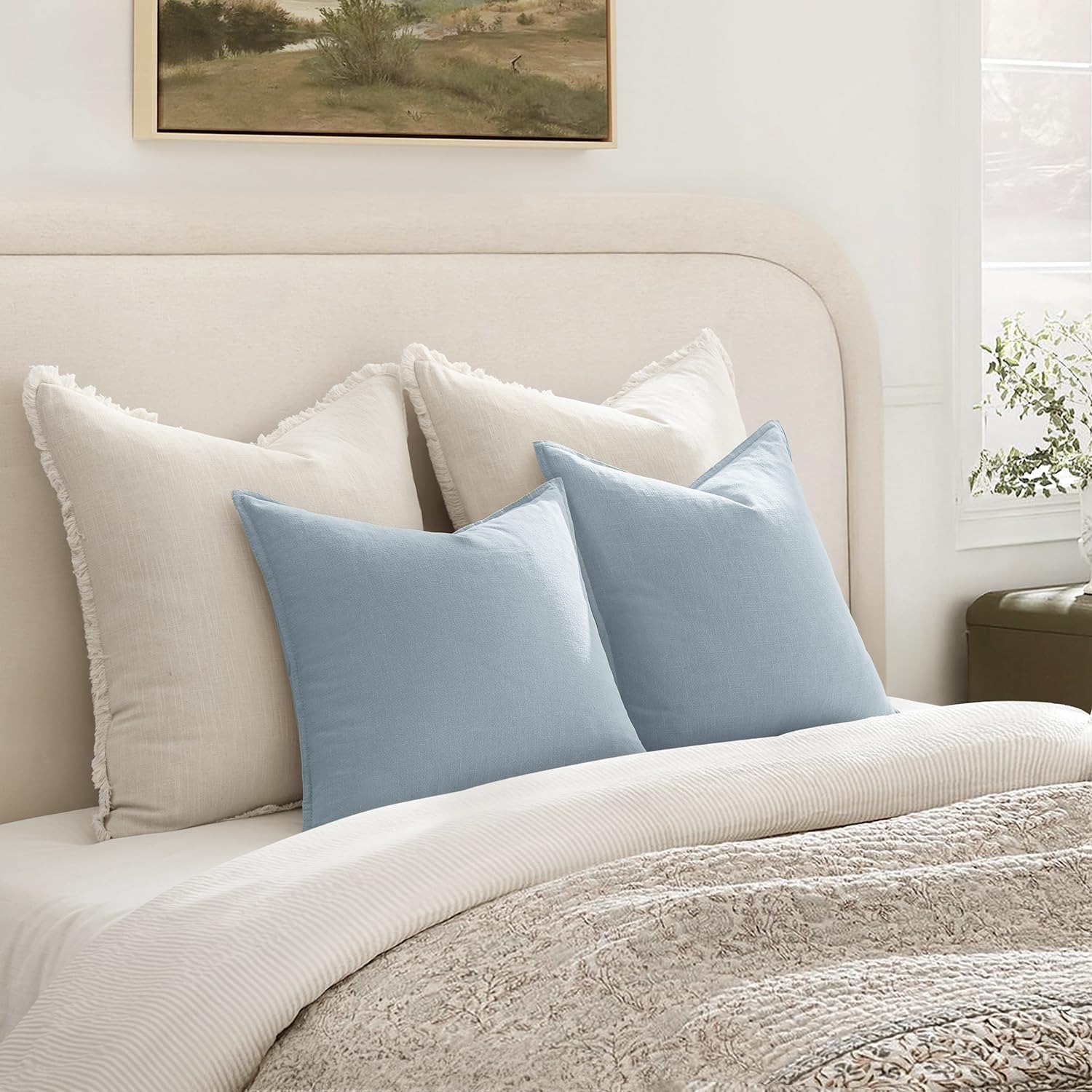
That is what a 61 cm euro sham does. It is large enough to fill the back corner of a sofa on its own, which means two covers can finish a whole three-seater. A pair of light blue euro sham covers 61 cm set of 2 does more work than five small ones, and it does it with less visual noise.
What ramie and cotton actually is
The fabric here is 70% ramie and 30% cotton in a plain weave, as stated by the maker. That is worth explaining, because ramie is a fibre many people have touched without being able to name.
Ramie is a plant fibre with a texture like linen. Put the cloth next to flax linen and many people would struggle to tell them apart by sight. The honest description is that these are ramie cotton cushion covers with a linen-like texture. They are not flax linen and they are not a linen blend, so we do not call them either.
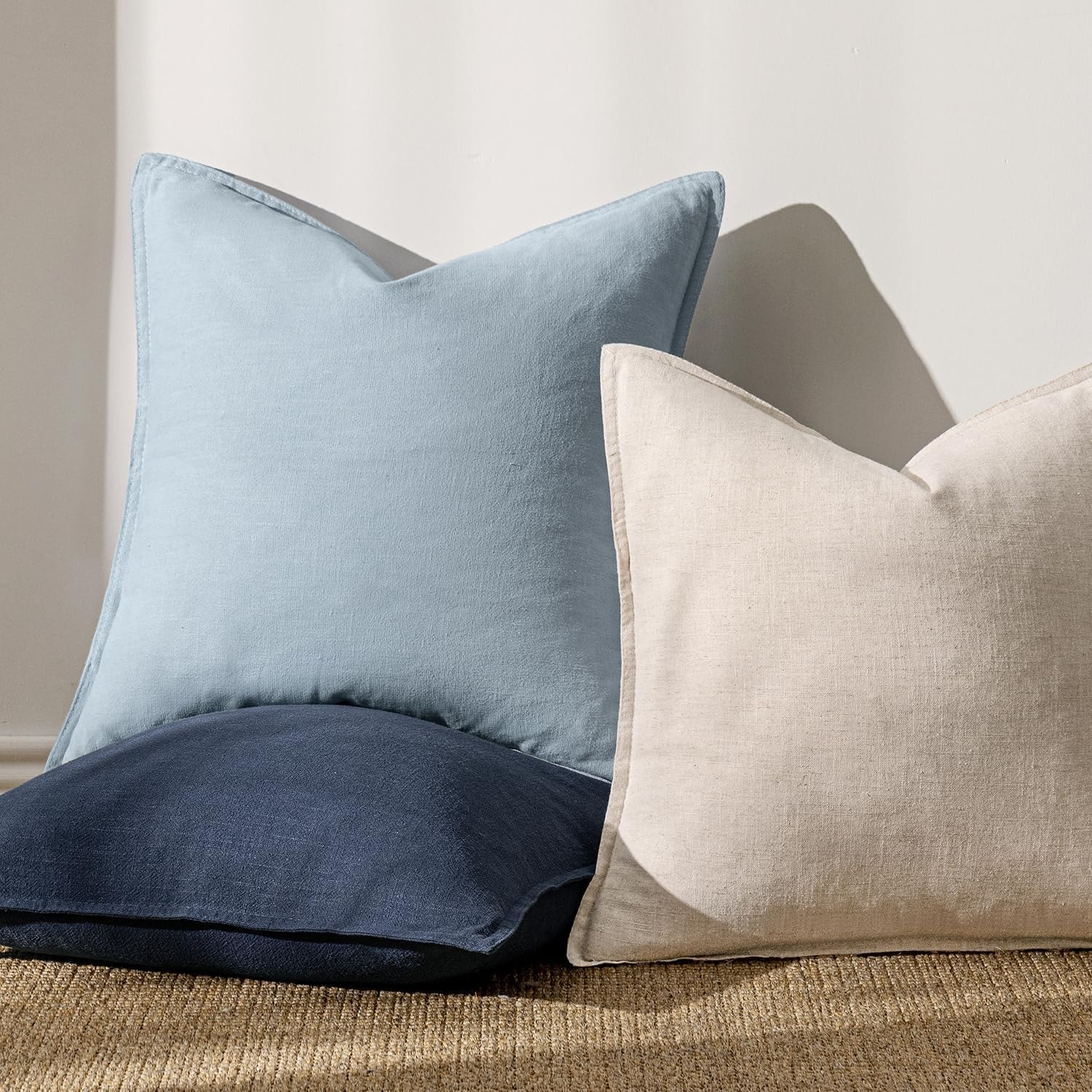
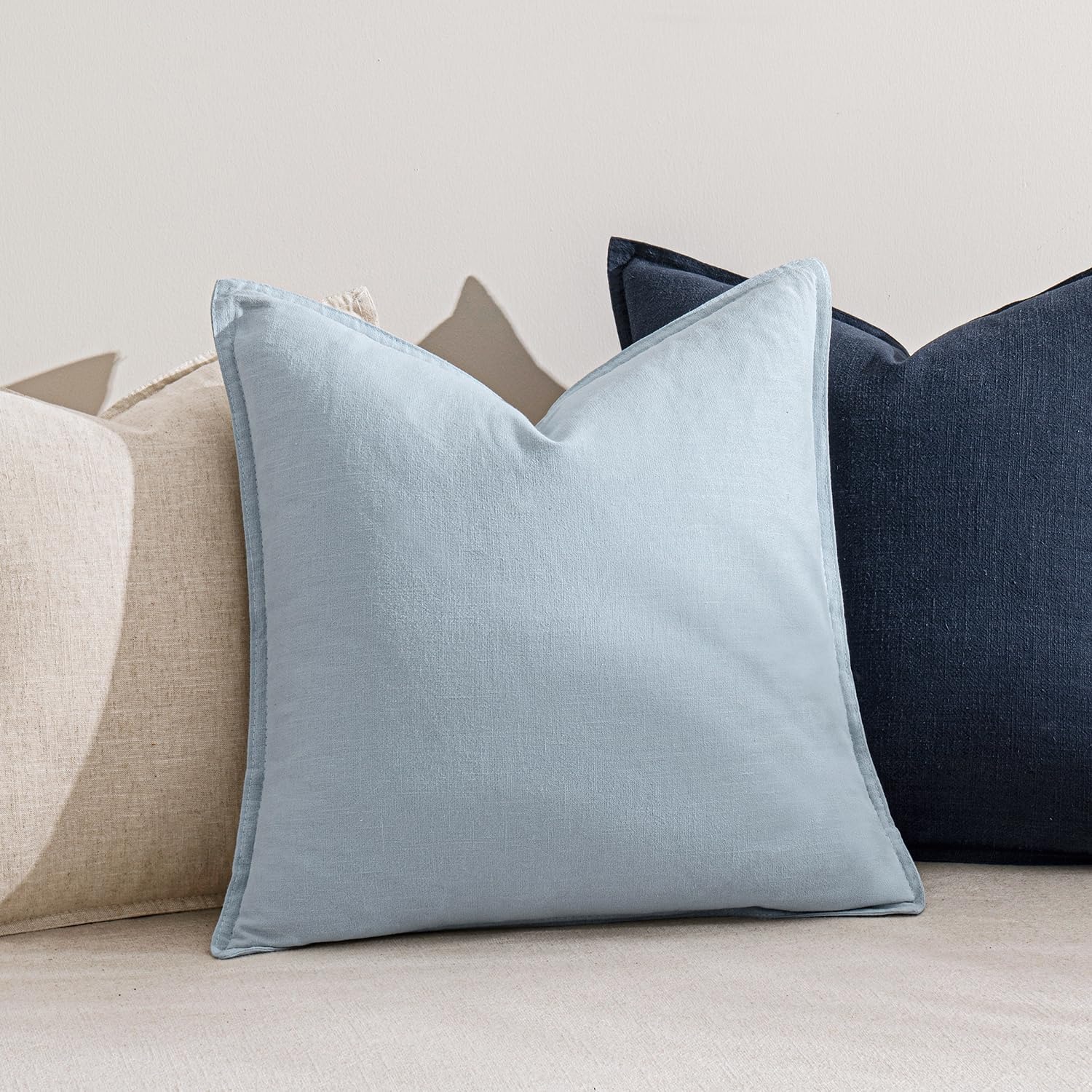
The maker describes the fabric as woven, with a naturally textured surface and a relaxed feel. In the photos you can see a plain weave with small slubs across the surface and a matte finish.
Why size 61 cm specifically
Euro sham is the usual name for a large square in this range, and 61 cm (24 inches) is a common version of it. That is useful for a very practical reason: inserts in this size are easy to find.
On a sofa, a common rule of thumb is that your largest cushion should reach somewhere around two thirds the height of the back cushion. Any shorter and it looks lost. Any taller and it starts to crowd the seat. For many full-depth sofas, 61 cm lands in that window.
On a bed, euro shams are the back row. Two of them stand behind your sleeping pillows and give the layered look hotels use. On a queen bed, two 61 cm squares span much of the width. On a king, you can keep two and let them sit a little apart, or add more from a second set.
Where you need to be careful is in a compact flat. On a small two-seater or a slim armchair, a 61 cm square can swallow the furniture. Measure before you commit. Hold a tape across the seat back and picture a 61 cm block sitting there.
The pressed edge, and why it helps
Each cover is finished with a pressed-edge border, a flat band of fabric that runs around the cushion face. It is a small detail that changes how the cushion reads.
A plain cushion with no border can look like a soft lump once someone has leaned on it. The border gives the cushion an outline. The maker describes it as a tailored detail that frames each cover for a clean, structured look.
The closure type is listed as no closure, and the photos show no zip or button breaking up the front face. The result is a clean panel, which suits a plain solid colour.
Choosing the right insert
The covers are supplied on their own. No inserts. That sounds like a gap, but the insert decides almost everything about how the cushion feels and sits, so it helps to choose it yourself.
Feather and feather-blend inserts collapse easily. They give you a soft, slightly slouched look where the cushion folds a little in the middle when you chop the top. They need a quick plump every few days.
Polyester and microfibre inserts hold a firmer, more upright shape. That matters if the sofa gets heavy daily use or if you simply do not want to fuss with cushions.
The other decision is size. Buying an insert the same size as the cover gives a neat, flat finish. Buying one size up, say a 65 cm insert in a 61 cm cover, fills the corners and gives a plumper look. Both are correct. It depends whether you want crisp or generous.
One small tip: use a pale insert. A dark grey or navy pad can shadow through a light blue cover in bright daylight. White, cream or light grey keeps the colour clean.
Styling a pale blue solid
Pale blue is one of the easier colours to live with because it behaves almost like a neutral. It does not demand that the rest of the room match it.
It works well against pale timber, rattan, white walls and oatmeal or grey upholstery. If the room is already quite neutral, two light blue squares add just enough colour to stop things looking washed out.
If you want more interest, build in layers. Put the two 61 cm covers at the back corners, then add one smaller cushion in front of each. The smaller ones can carry the pattern, a stripe or a check or a subtle weave, while the large squares hold the base colour.
Avoid matching everything exactly. A room where every cushion is the same colour and size tends to look like a showroom, not a home.
Looking after them
The care instructions are simple and worth following. Hand wash, or machine wash on a gentle cycle inside a wash bag. Tumble dry on low. Do not iron.
The wash bag is part of the maker's instructions, not an optional extra. Wash with similar colours and use a mild detergent.
Take the covers out of the dryer while they are still slightly damp. Smooth them flat with your hands, pull the pressed edges straight, and lay them out to finish drying. That takes the place of ironing, which the maker says not to do.
Between washes, a quick shake and a plump keeps everything looking fresh. Rotating the covers every couple of months evens out any wear and any fading from the brighter side of the room.
The short version
This is a pair of large, plainly styled cushion covers in a textured plant fibre weave. They are 61 x 61 cm, light blue, made from 70% ramie and 30% cotton, finished with a pressed-edge border, and supplied without inserts.
Buy them if your sofa or bed needs scale more than it needs extra small cushions, and if you like texture over shine. Choose a firm insert for a structured look or a feather one for a softer slouch, consider going one size up on the pad, and wash them gently in a bag.
That is most of it. Two large covers, the right inserts behind them, and a room that looks finished.