
The complete guide
How to Choose a Slim Leather Card Holder That You Will Actually Use
The lump in your pocket
Open your wallet and look at it honestly. How many of those cards did you use in the last seven days? For most people the answer is two, maybe three. The rest are loyalty cards you could add to your phone, an expired member card, a backup bank card and a folded receipt from a lunch you have forgotten about.
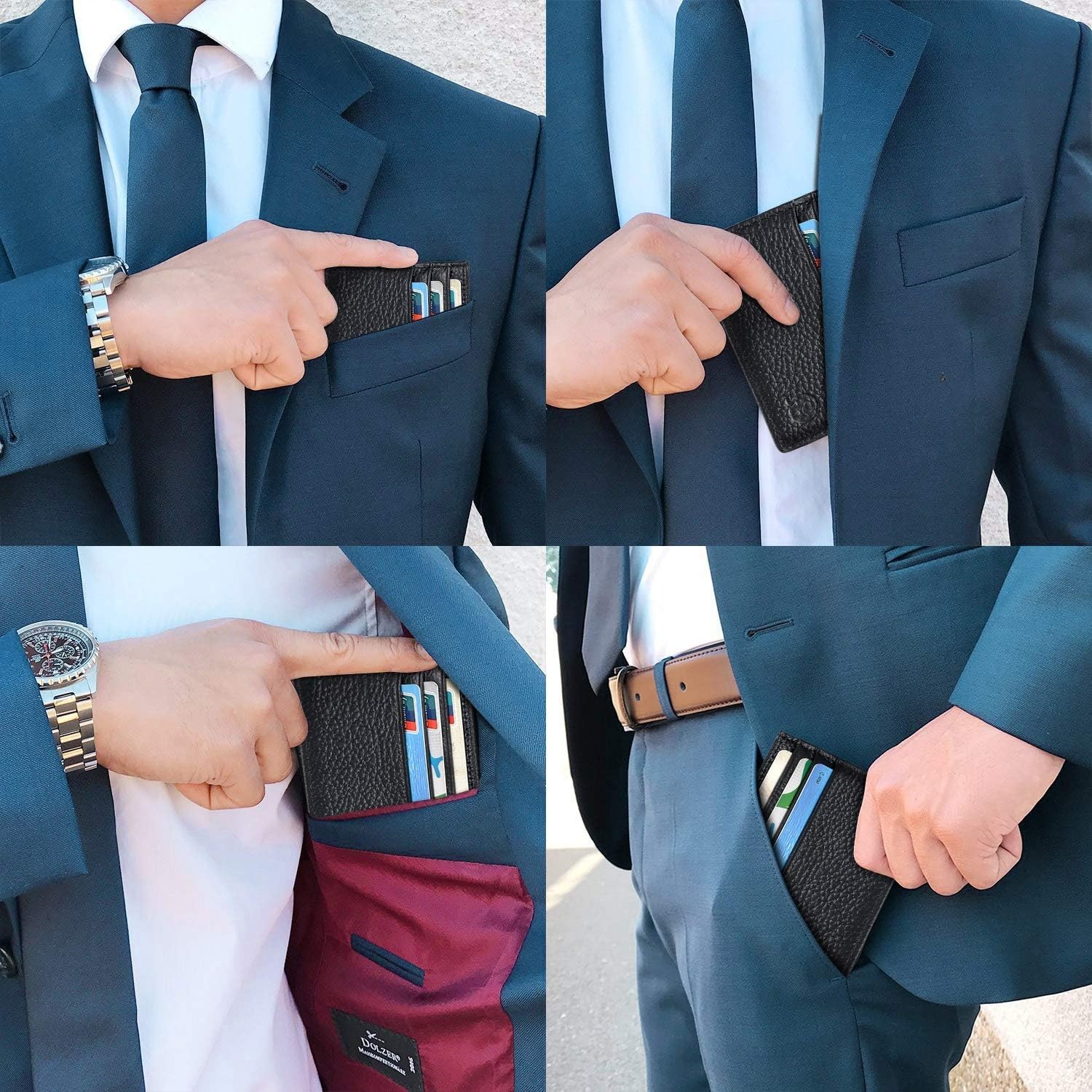
That extra material has a cost. It pushes your trousers out of shape, it makes sitting on a bus slightly uncomfortable, and it slows you down at the gantry when you are digging for the right card. A slim leather card holder solves the problem by making the carrying space smaller than your habits. You cannot overpack what will not fit.
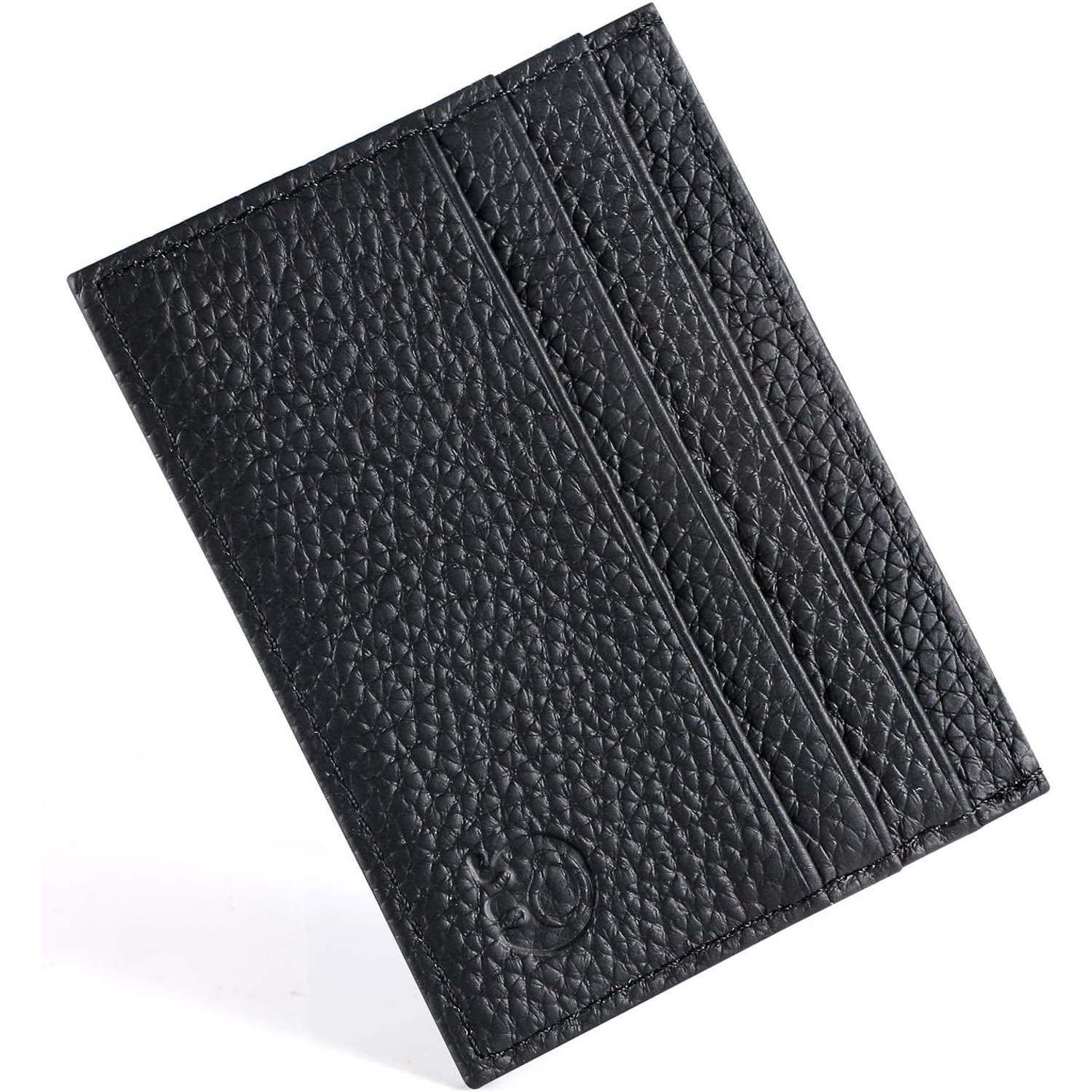
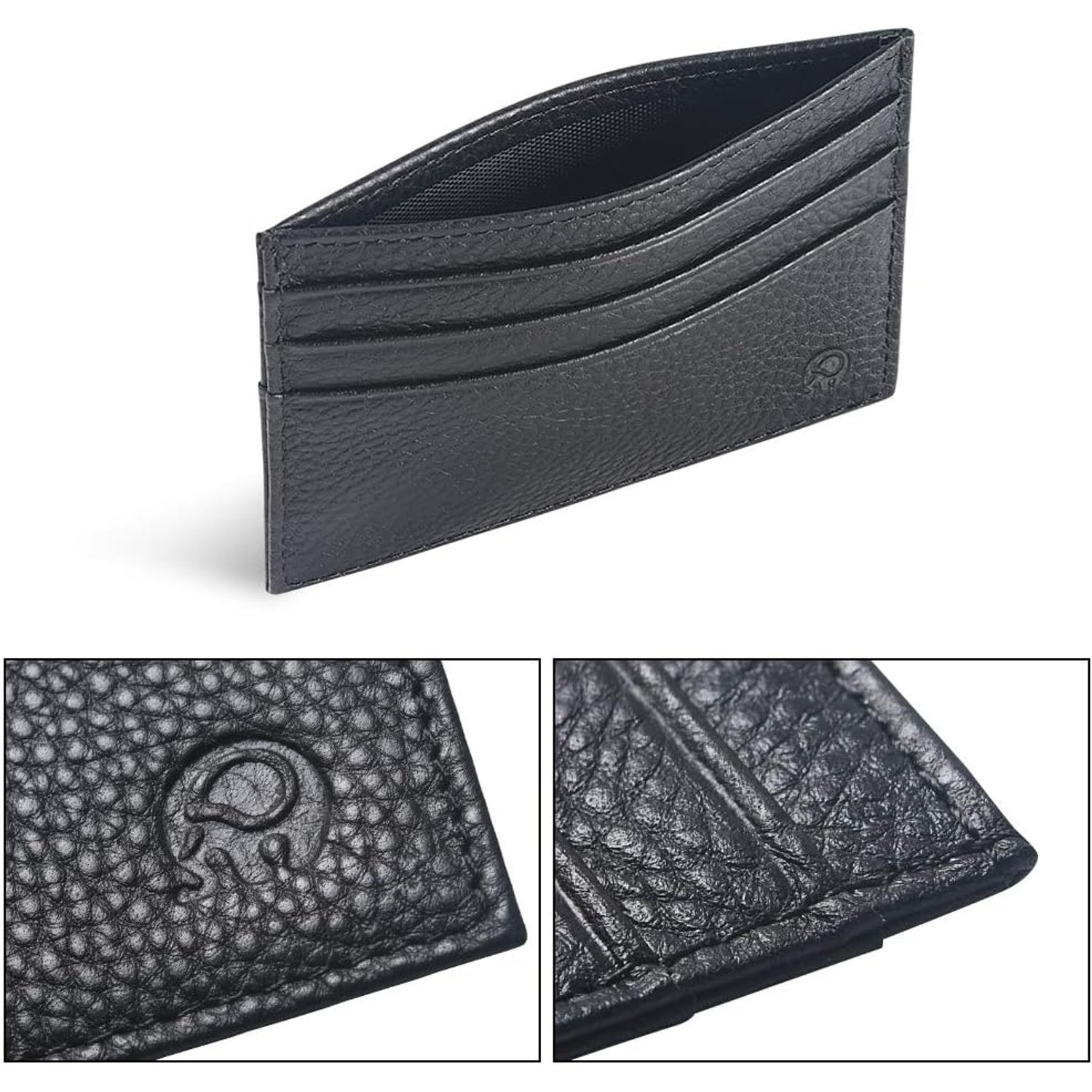
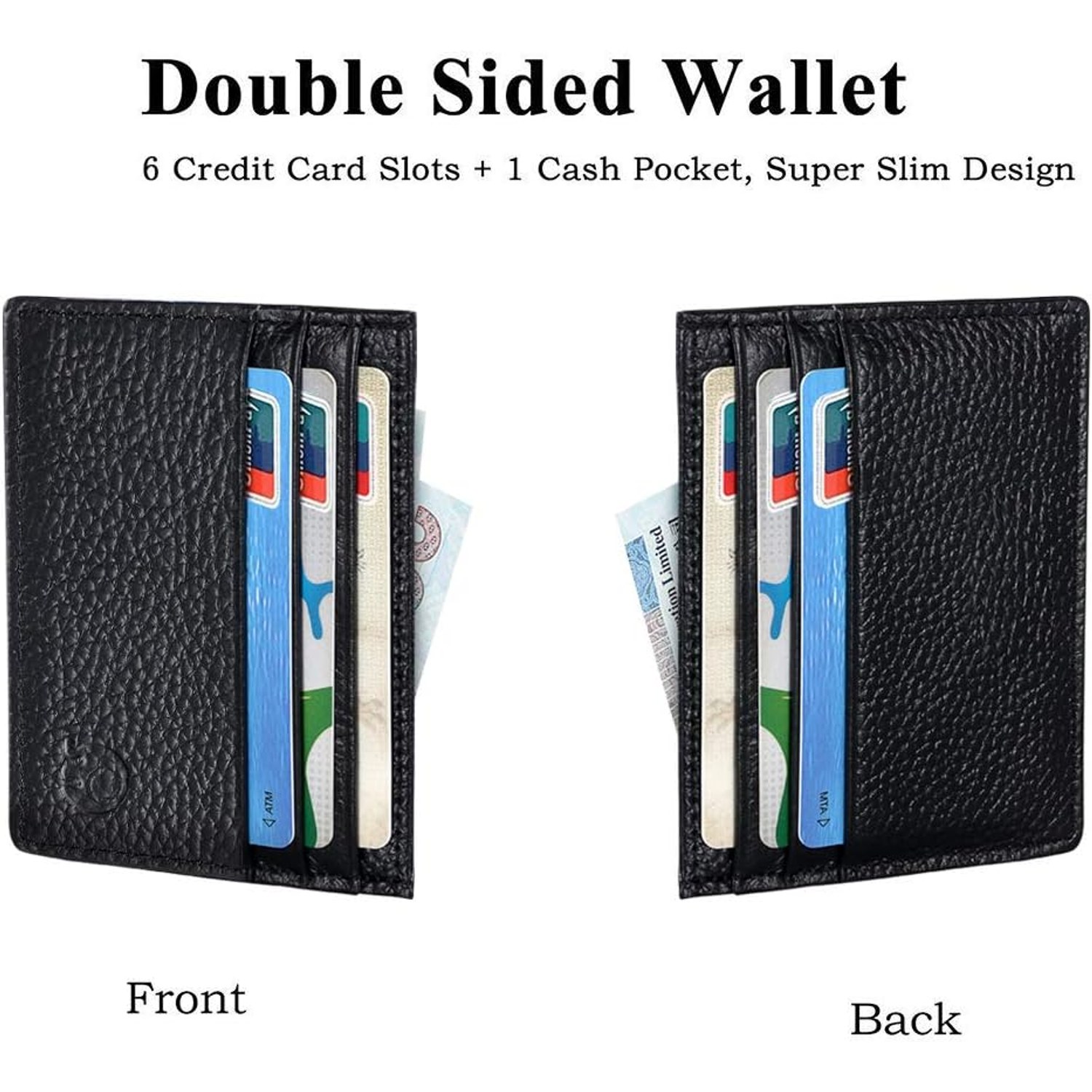
This one holds six cards, three slots on each side, with a flat centre pocket for notes and receipts. It is about 12 x 9 cm, about 0.2 cm thick and roughly 20 g. There is no zip, no stud and no flap. That is deliberate.
How a card holder actually works day to day
The two stacks of three slots face in opposite directions, which sounds like a small detail but changes how you use it. You end up assigning sides. Most people put the travel card and the office pass on one side, the bank cards on the other, then always tap with the same face. After a week your hand knows which way round to pull it out, and you stop looking.
The outer slot on each side is the easiest to reach, so that is where your most-used card goes. The middle slot is slightly harder to pinch, which makes it the right home for the card you only need once a month. The inner slot holds things you rarely touch, like an insurance card.
The centre pocket sits between the two stacks. It takes folded notes, a receipt or a small stack of business cards. It is flat, not a pouch, so it will not hold coins. That is a reasonable trade. Coins are what turn a thin wallet into a thick one, and in a card-first city most people have stopped carrying them anyway.
Each slot can take one or two thin cards if you need the room. Two per slot does work, but the card holder stops being flat, and the whole appeal is the flatness. Treat the two-card option as an occasional thing, not the normal setup.
On the RFID claim
The maker states that this card holder uses RFID blocking material. That is their description, and it is worth repeating accurately rather than dressing up. We are not making a security promise about what it does or does not stop.
If RFID blocking is the main reason you are buying, test it the way you would test anything. Hold the loaded card holder against a reader you normally tap and see what happens. Building access systems, transit gates and contactless payment terminals all behave differently, and the only answer that matters is how your cards behave at the readers you actually walk through.
A practical note that catches people out: if the material does block signals, your travel card will not tap from inside. Many people solve this by keeping the travel card in an outer slot and sliding it out, or by carrying it separately.
The leather, and what to expect from it
The body is genuine leather, as stated by the maker, with a leather lining. The maker lists the leather type as cowhide. It is thin by design, so do not expect the stiff, structured feel of a thick card case. It flexes with your hand and settles into the shape of your cards over the first couple of weeks.
New leather slots are snug. That is normal and it is better than the alternative, since a slot that is loose on day one will be sloppy by month three. Slide cards in at a slight angle rather than forcing them straight down, and give it a week or so before judging the fit.
Over time, a plain black finish picks up fine scratches and softens at the corners. Some people hate that, most come to like it. Black hides marks better than tan or light brown, which is part of why it stays a popular colour for an everyday carry wallet.
Who it suits, and who it does not
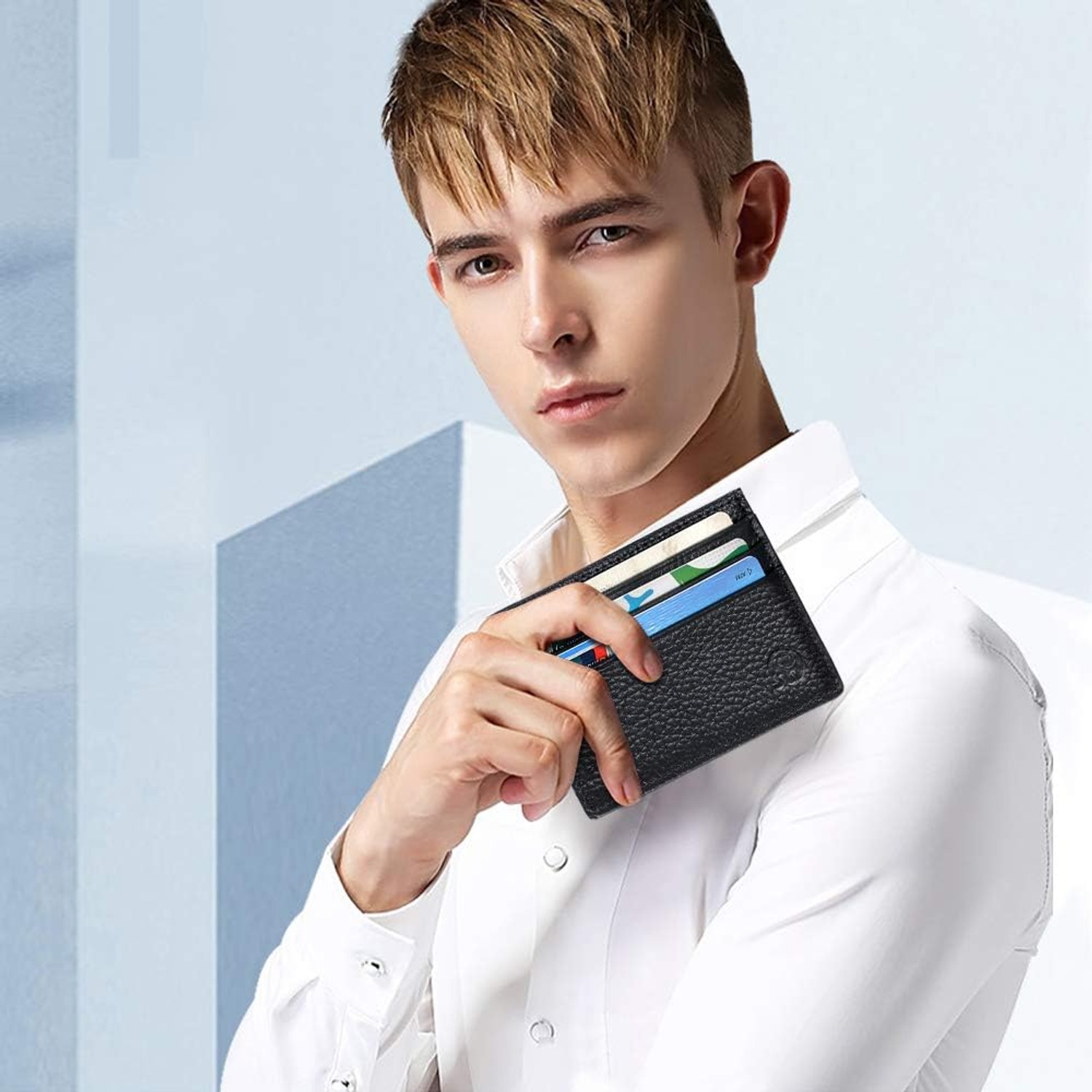
It suits you if you tap for nearly everything, carry one or two notes for hawker stalls and taxis, and want something you can slide into a shirt pocket. It suits office workers who need a pass, a bank card and a travel card and nothing else. It suits travellers who want a light second wallet for days out while the bulky one stays in the room.
It does not suit you if you still carry coins, if you collect loyalty cards on plastic, or if you like to keep documents folded in your wallet. A bifold or a zipped wallet is honestly the better tool in those cases, and there is no shame in needing more room.
It also does not suit anyone who wants a wallet with a closure. The open slot design is quick but it means nothing is locked in. If you tend to toss your wallet loose into a bag with the opening facing down, you will be happier with something that shuts.
Looking after leather in a humid climate
Warm, humid air is the main thing working against leather here. Sealed storage in humid air is where mould tends to start, so the aim is to let the leather breathe.
The habits that help are simple. Wipe it with a dry cloth when it looks dusty. Keep it out of the rain, and if it does get wet, blot it and let it dry naturally somewhere with airflow. Never speed-dry leather with a hairdryer or in direct sun, because fast drying pulls moisture out of the fibres and leaves them brittle.
If you rotate between wallets, store the spare in a cloth bag or an open drawer rather than a sealed plastic pouch. Air circulation is what keeps leather happy.
Avoid carrying it in the same pocket as keys. Keys are the single most common cause of deep scratches on a thin leather surface.
Choosing between card holders
If you are comparing a few options, there are four things worth checking before you look at anything else.
First, slot count against your real needs. Six is plenty for most people, but count your week before deciding.
Second, thickness. Anything over about half a centimetre empty is not really a slim card holder, whatever it is called. This one is about 0.2 cm.
Third, whether there is a cash pocket. Plenty of card cases skip it entirely, and then you are carrying notes loose in a pocket.
Fourth, the closure question. Open slots are fast, zips are secure, and neither is wrong. Pick the one that matches how carelessly you treat your wallet.
Weight is a distant fifth, because once you are under about 50 g the difference stops being noticeable. At roughly 20 g, this is well past that line.
The short version
This is a plain black genuine leather card holder, about 12 x 9 cm and about 0.2 cm thick, weighing roughly 20 g. Six card slots, three each side, plus a flat centre pocket for notes and receipts. No coin pocket, no zip, no flap. The maker states it uses RFID blocking material, and we leave that claim as theirs.
Buy it if you are tired of sitting on a brick and you genuinely use six cards or fewer. Skip it if you need coins, documents or a secure closure. Wipe it with a dry cloth, keep it out of the rain, and let it quietly do its job.