
The complete guide
How to Choose Linen Napkins: A Practical Buyer's Guide
The small problem nobody solves properly
Most dining tables run on compromise. There is a roll of paper somewhere nearby, and when guests come over, out comes a set of cloth napkins that has been folded in a drawer since the last time anyone visited. The paper feels throwaway because it is. The special set never gets broken in, so it always feels slightly stiff and formal, like a costume.
The fix is not complicated. Buy enough good cloth napkins that you can actually use them, wash them, and still have a full set ready for a table of guests. Twelve is the number that makes that work. Below twelve you start rationing. At twelve you stop thinking about it.
That is the whole case for a set this size. The rest comes down to what the cloth is, how big it is, and how it is finished.
Why linen, and why pure linen matters
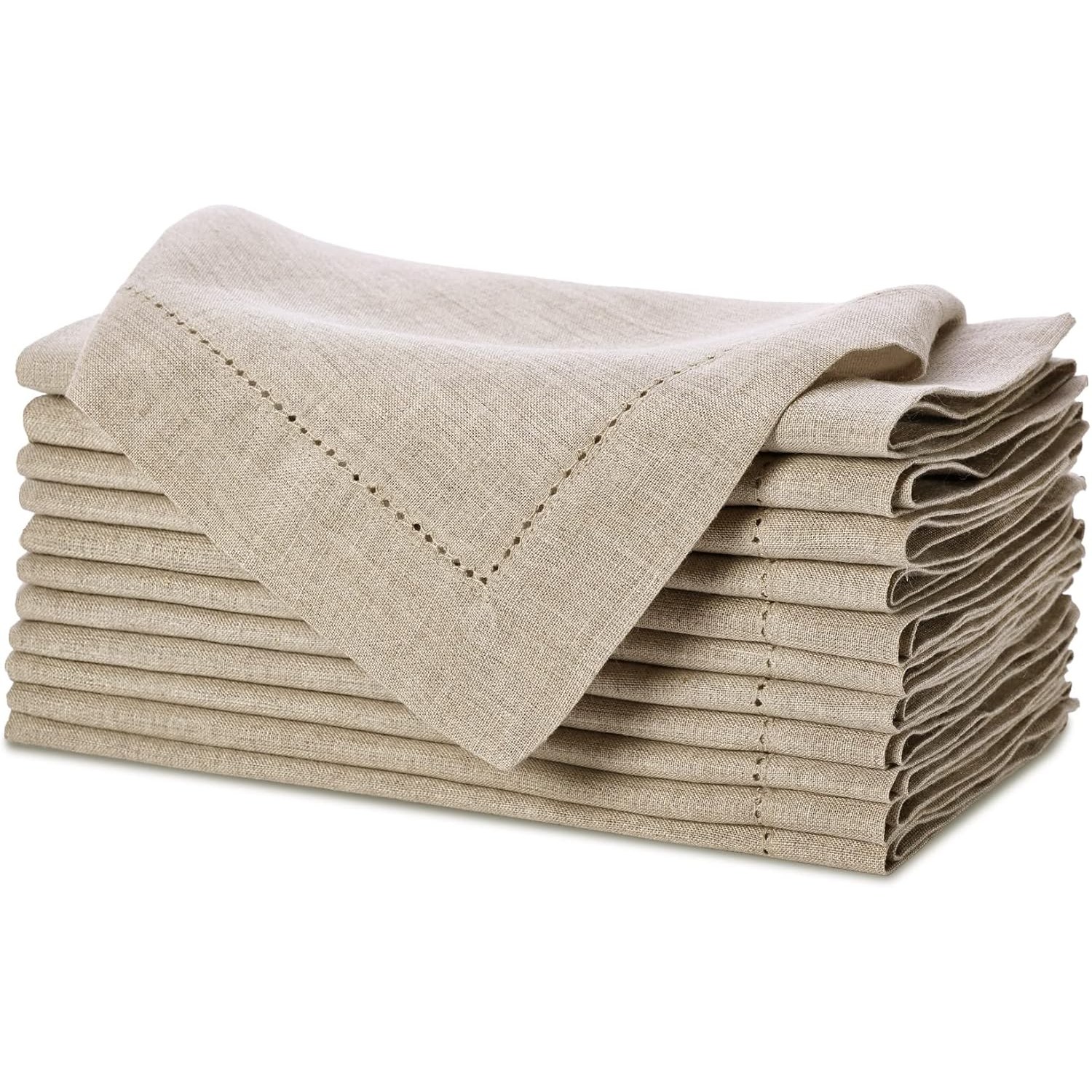
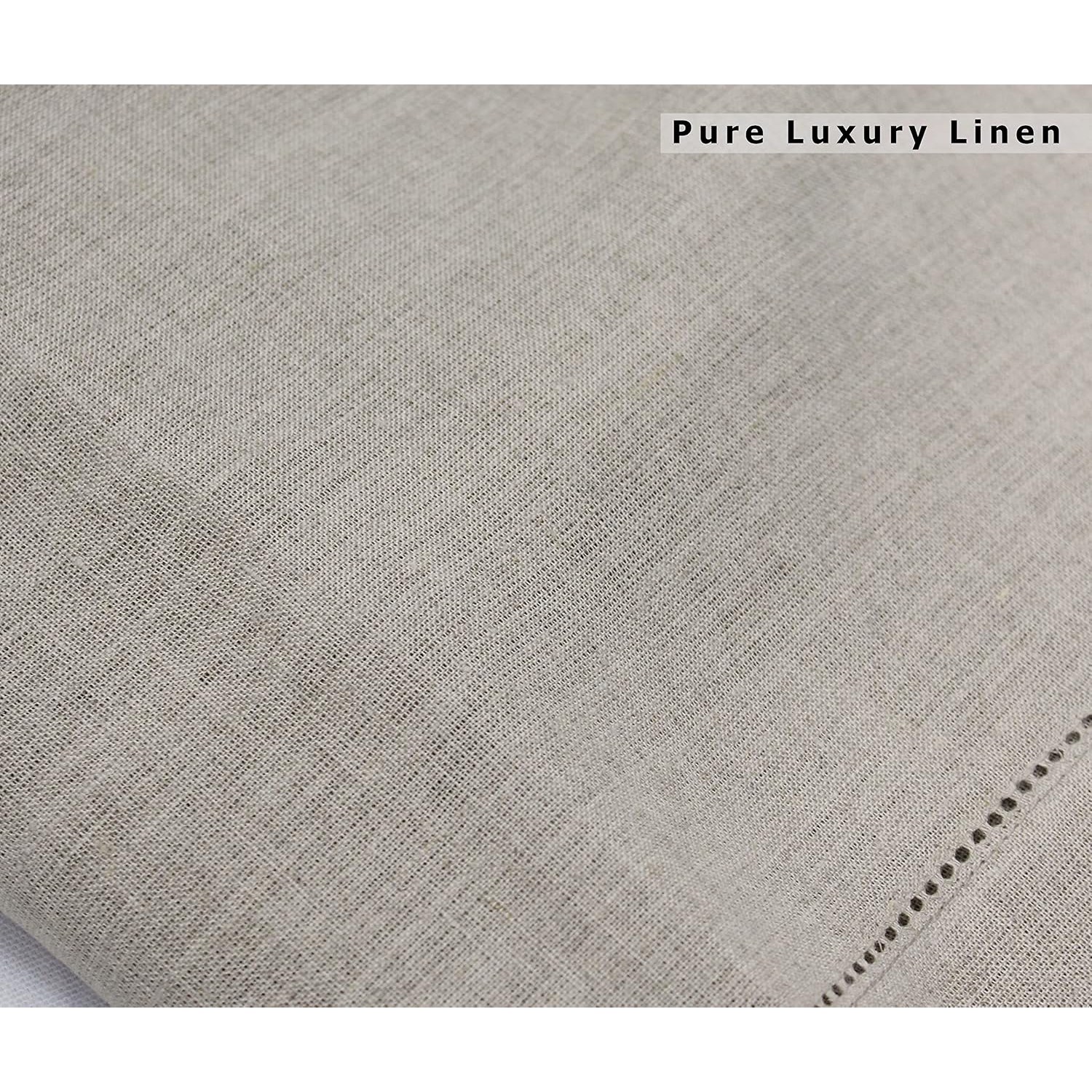
Linen comes from flax, and it looks different from cotton in ways you notice at a table. It has a natural slub, a slight unevenness in the yarn, that catches light instead of lying flat and lifeless. The maker describes this linen as light and airy.
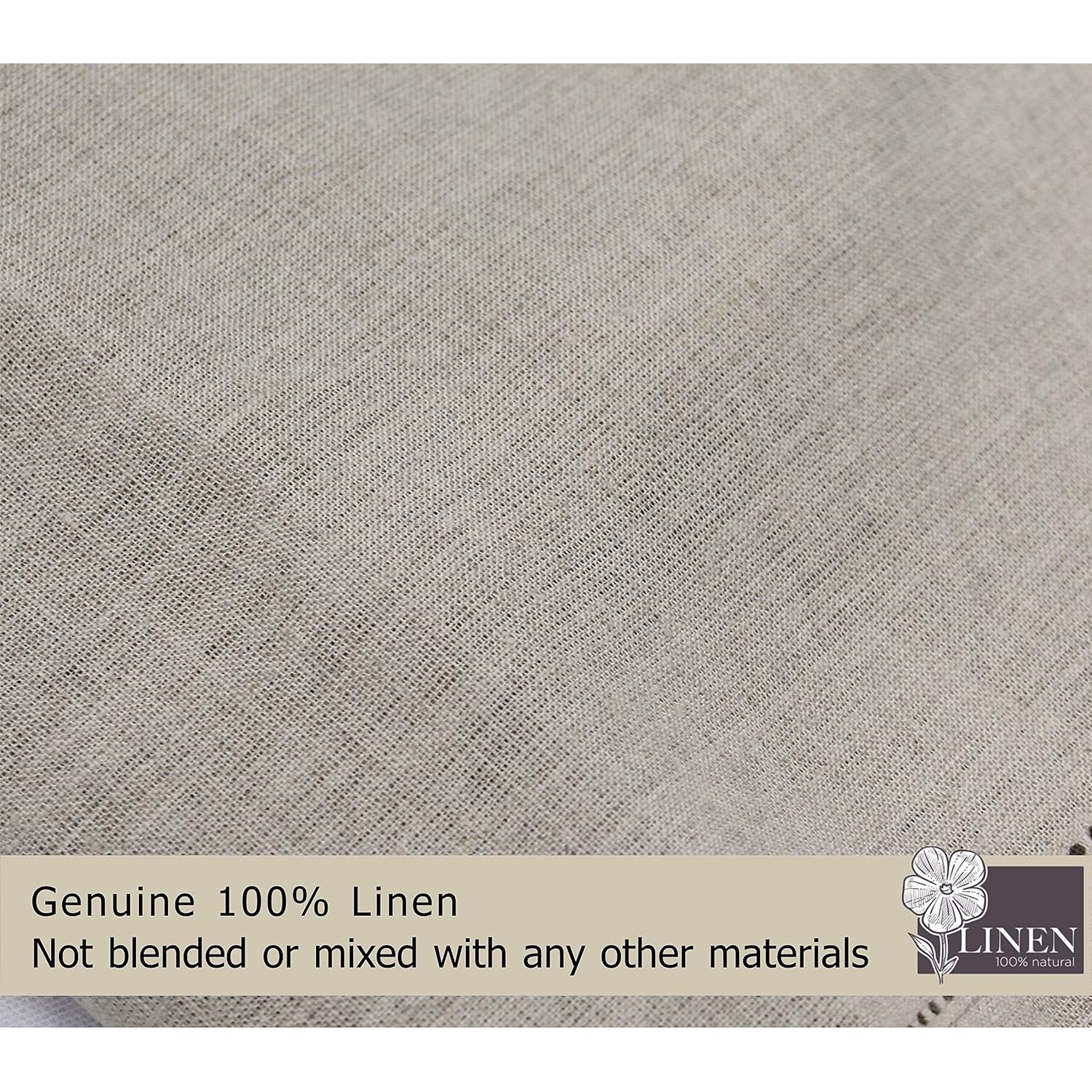
The catch is that a lot of napkins sold as linen are a cotton and linen blend. These napkins are stated by the maker as 100% linen, not blended with any other fibre, which is the thing to check on any set you consider.
If the fibre matters to you, that statement is the reason to choose this set over a blend.
Size is the spec people skip
A napkin that is too small is useless in a quiet way. It slides off a lap, it does not cover enough to be reassuring, and folded on a plate it looks mean.
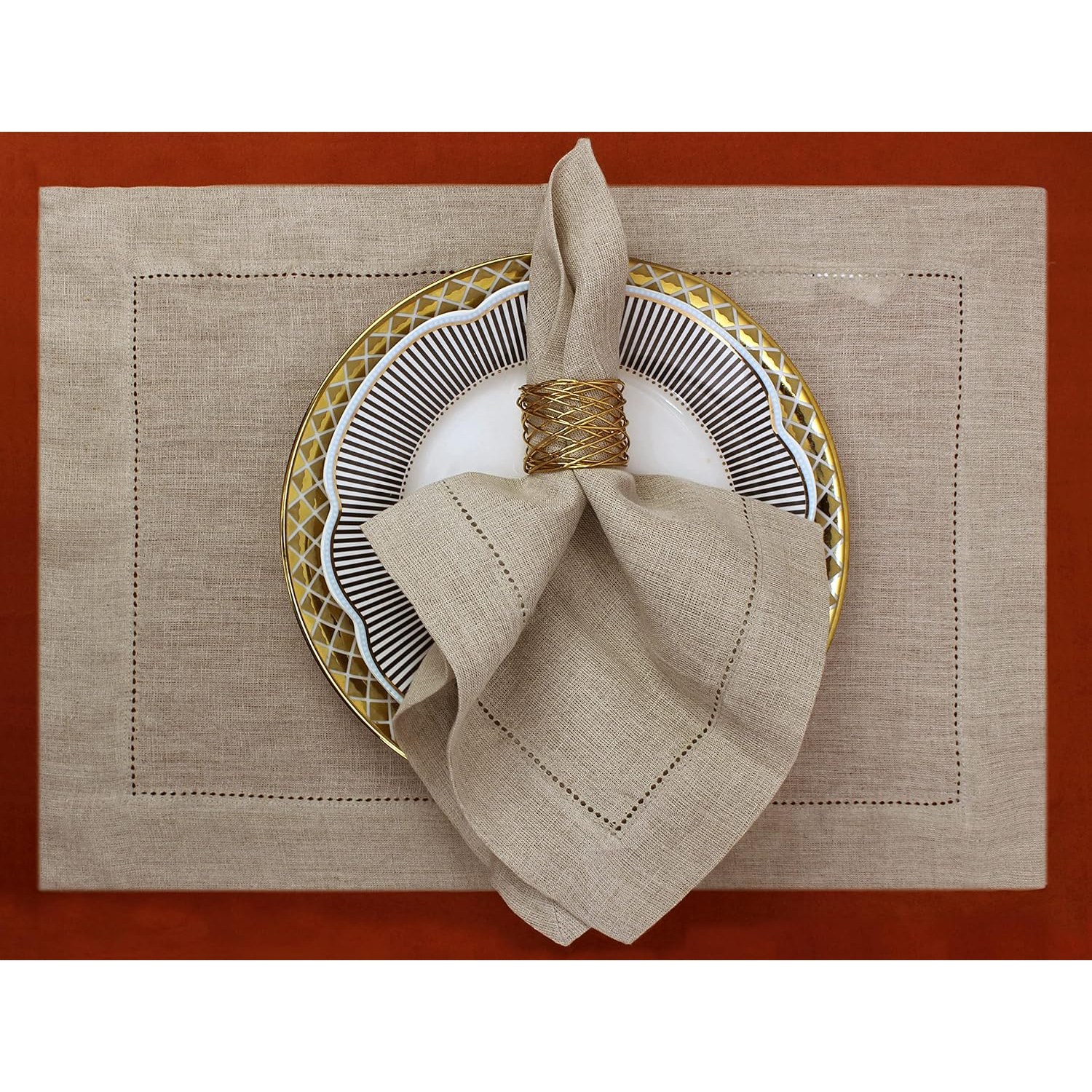
These measure 51 x 51 cm, which is 20 inches square. That is a proper dinner size. Opened flat it covers a lap. Folded in half it still looks generous beside a plate. Folded into quarters it makes a tidy square under a glass or a small dish.
For comparison, cocktail napkins usually sit around 25 to 30 cm and are meant for a drink in the hand, not a meal. Lunch napkins land somewhere in the middle. If you are buying one set to do everything, dinner size is the one to get. You can always use a large napkin for a small job.
What the finish tells you
Look at the edge. It is where cheap table linen cuts corners.
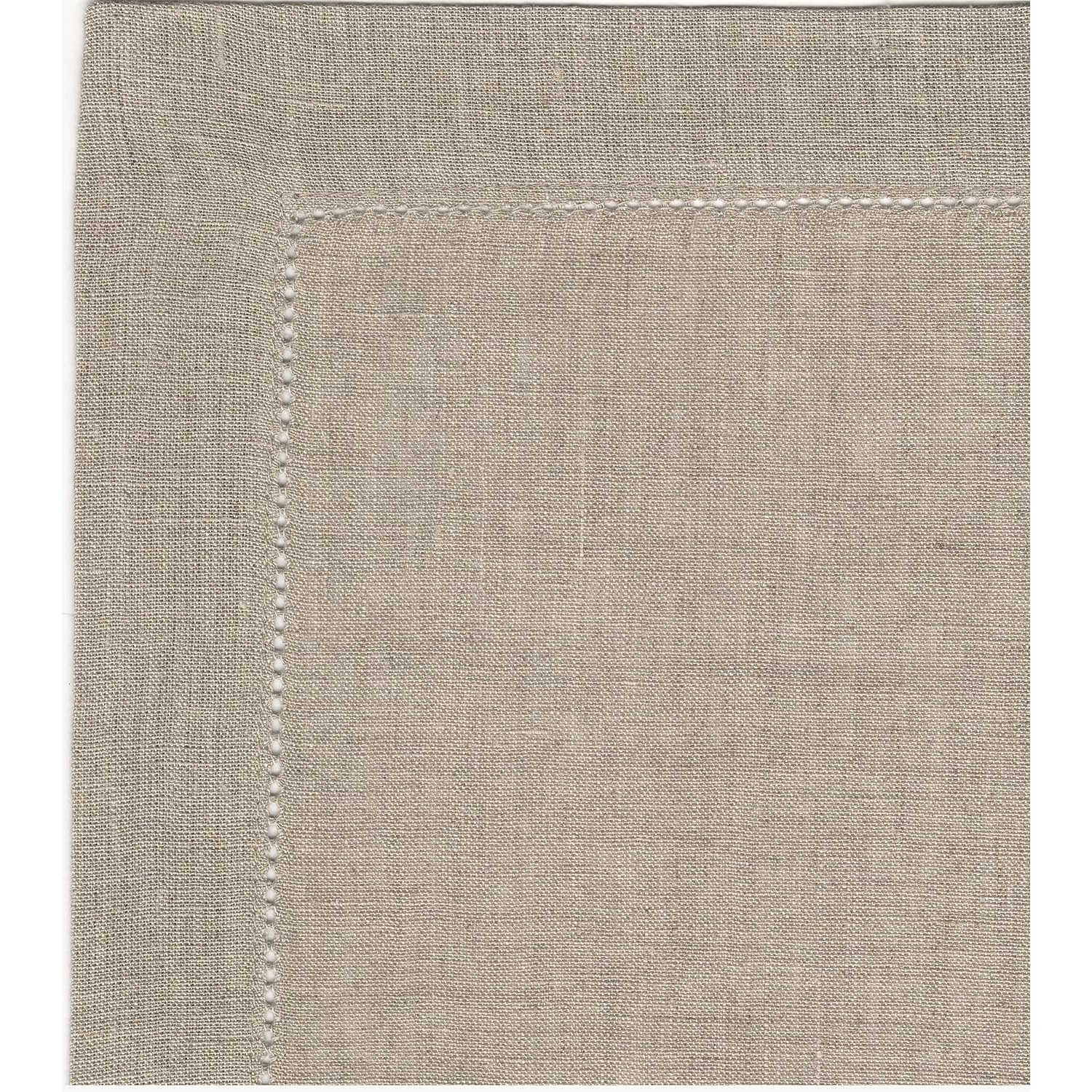
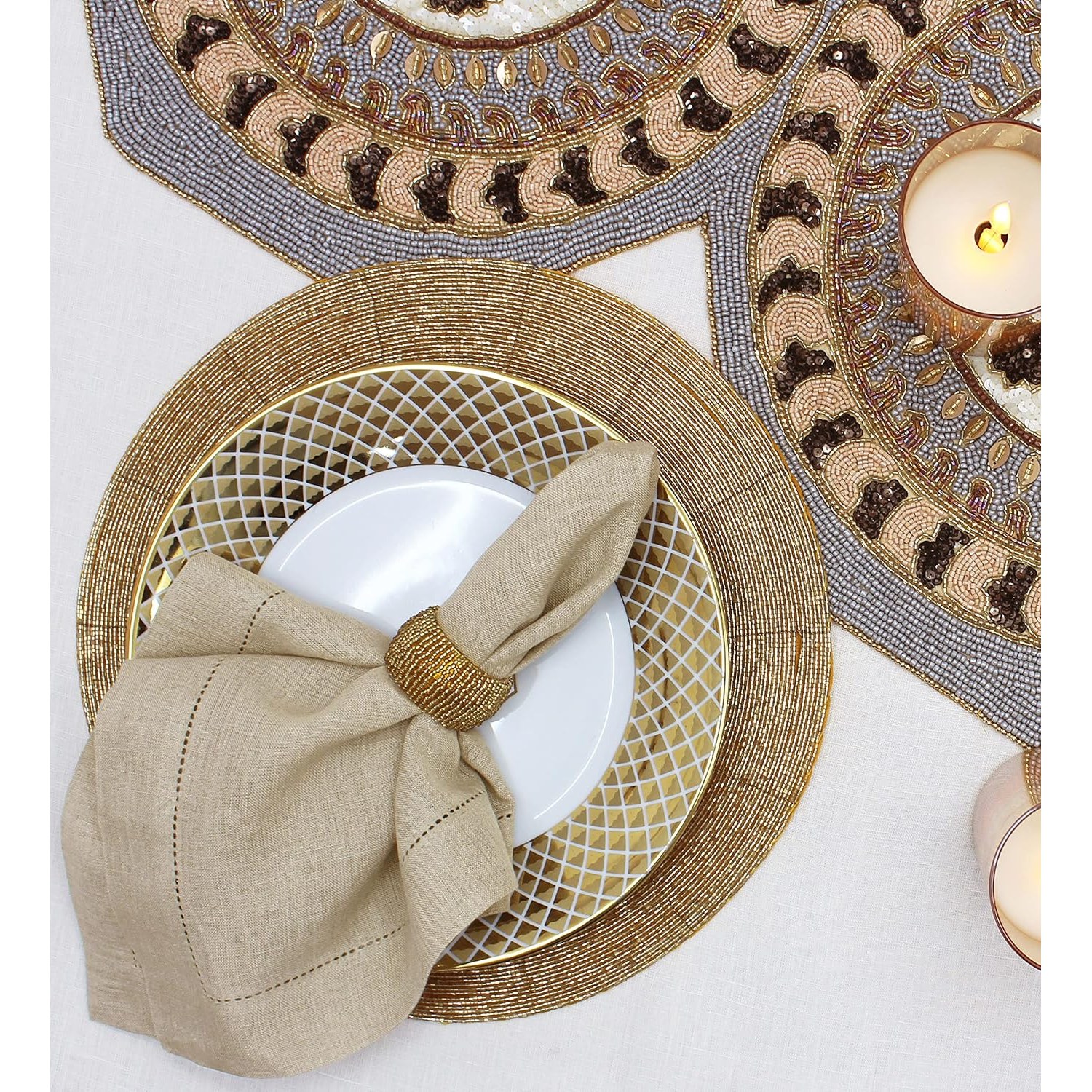
A hemstitch is a drawn-thread detail worked along the hem, creating a fine line of openwork just inside the border. It is a traditional finish, it takes more work than a plain machine hem, and it reads as considered without adding any pattern. On a plain natural napkin it is often the only decoration, which is why it carries the whole look.
Mitred corners are the other tell. The hem is folded and joined at a 45 degree angle at each corner rather than simply overlapped. This removes bulk so the corner lies flat and looks square.
The maker states a hem of 1.5 inches, about 3.8 cm, which gives the edge a broad, framed look.
Why natural beats a colour
It is tempting to buy napkins that match your current plates. The problem is that plates change.
Natural is what the maker calls this colour. In the photos it is a flax beige, between oatmeal and light taupe, and it sits comfortably next to almost anything: white porcelain, grey stoneware, clear glass, dark matt plates, bare timber. It takes greenery, a ribbon or a napkin ring without the colours fighting. A mid-toned beige is also more forgiving of a faint mark than bright white.
If you want colour on the table, add it with flowers, candles or a runner. Keep the napkins neutral and they keep working.
Who this set suits
A dozen napkins makes sense if any of these sound like you.
You cook at home most nights and want the table to feel finished without any effort. You have people over often enough that a full matching set gets used. You are trying to cut down on disposables and want the replacement to be pleasant rather than worthy. Or you are setting up a home and want one piece of table linen that will still look right after the rest of the room changes twice.
They also make a strong gift. A dozen pure linen napkins is useful, it is neutral enough that you do not need to know the recipient's taste in dinnerware, and it is the sort of thing people rarely buy for themselves at a decent quality.
Where they are less ideal is a household that genuinely does no laundry sorting and wants zero upkeep. Linen is easy, but it is not nothing.
Living with them
Washing is straightforward. The maker states that the napkins are machine washable and dryer safe. Wash with similar colours and a mild detergent, and leave out bleach, which is hard on natural fibres.
The only decision is pressing. Iron them while slightly damp on a medium to hot setting and they come out crisp, which suits a dressed table. Skip the iron entirely and they fold soft with a gentle crumple, which is how linen is most often styled now and looks perfectly intentional. Both are correct. Pick whichever matches how much time you want to spend.
For spills, speed beats product. Blot rather than rub, rinse with cold water, then treat with a little detergent before the napkin goes in the wash. Hot water sets protein and oil stains, so keep it cool at the rinse stage. Check the mark before drying, because heat will lock in anything that is still there.
Store them loosely folded or rolled in a dry drawer. Tight folding creates hard creases that take more effort to press out, and storing anything damp invites a musty smell.
A few ways to use them
Beyond the obvious, a dinner napkin this size has plenty of uses. Line a bread basket so the rolls stay warm. Drape one over a tray of glasses. Cover a bowl of dough while it rises. Use one under a side plate as a mini placemat. Wrap cutlery for a buffet so guests can pick up a set in one go.
None of this is essential. It just explains why people who buy twelve rarely feel they bought too many.
The short version
Twelve napkins, 51 x 51 cm each, cut from 100% linen in a plain natural shade, finished with a hemstitch edge and mitred corners, machine washable and dryer safe.
That is enough to use daily and still set a full table. The size is big enough to be a real dinner napkin. The finish is the kind you see in a good restaurant. The colour is a plain neutral that goes with most dinnerware.
If you have been meaning to stop buying paper napkins, this is the set that makes it stick.