
The complete guide
How to Choose a Cotton Linen Apron That You Will Actually Wear
The apron problem nobody talks about
Most households own an apron. Most of those aprons live in a drawer.
The reason is usually not the fabric or the price. It is the design. A thin strap looped around your neck starts to drag after twenty minutes. A stiff canvas front traps heat against your body in a warm kitchen. A short apron covers the top of your shirt and leaves your thighs to catch everything that drips off the counter. So you reach for it once, find it annoying, and go back to cooking in a t-shirt you do not mind ruining.
A pinafore style apron fixes most of that in one go. It hangs from both shoulders, it is cut long, and it does not need adjusting every five minutes. That is the whole idea behind this one.
What a Japanese style pinafore apron actually is
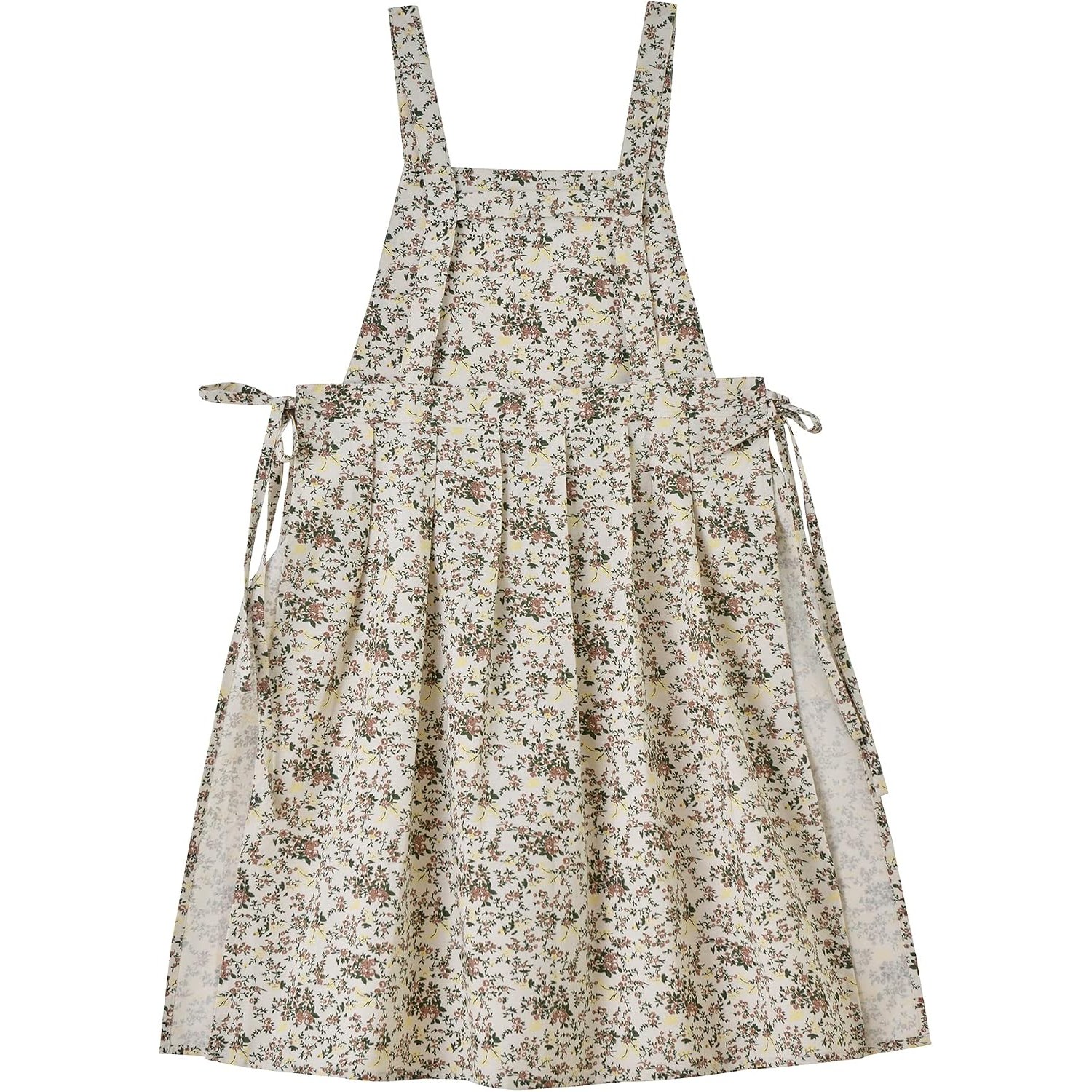
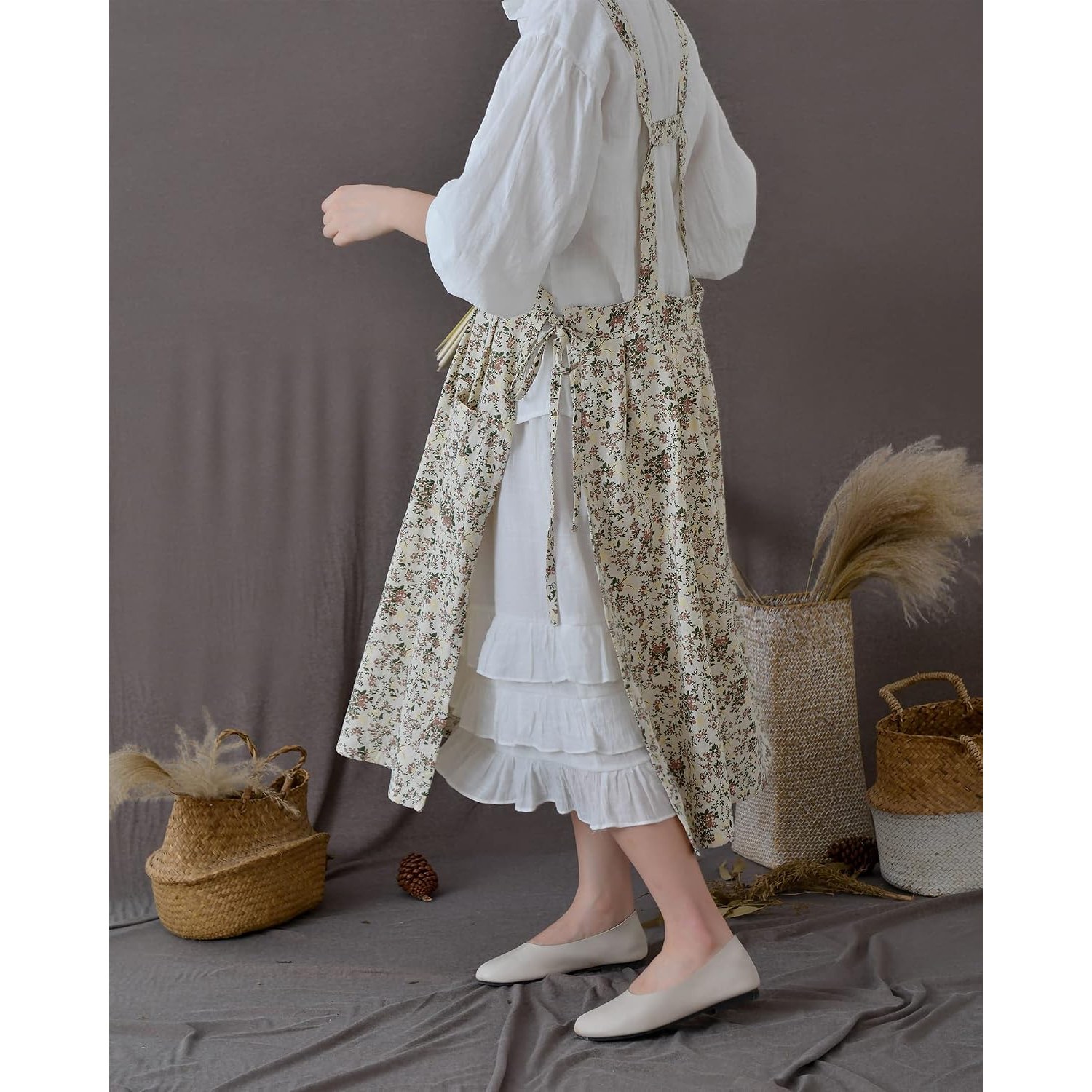
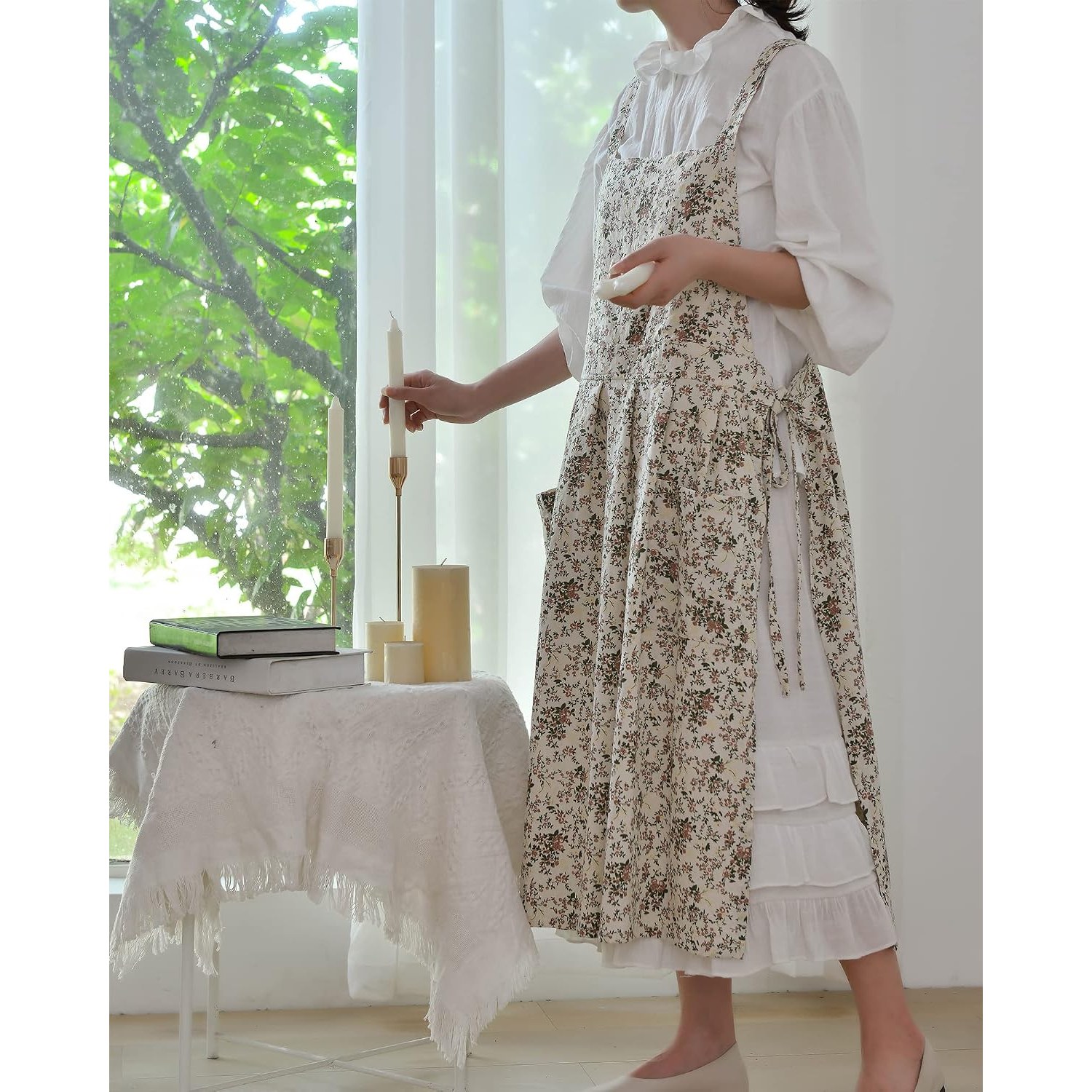
The term gets used loosely, so here is the plain version. A Japanese style apron is a sleeveless garment that pulls on over the head, with straps that cross at the back rather than tying at the neck. The front panel is usually long and fairly wide. The sides are open. Ties at the waist let you pull the shape in or leave it loose.
The maker gives the length of this one as about 96 cm, measured without the shoulder straps, and about 43 cm across the front. The fabric is given as cotton and linen, with no percentages, so the plain description is a cotton and linen weave. The maker classes it as lightweight. It is not waterproof, and you should not treat it as though it is.
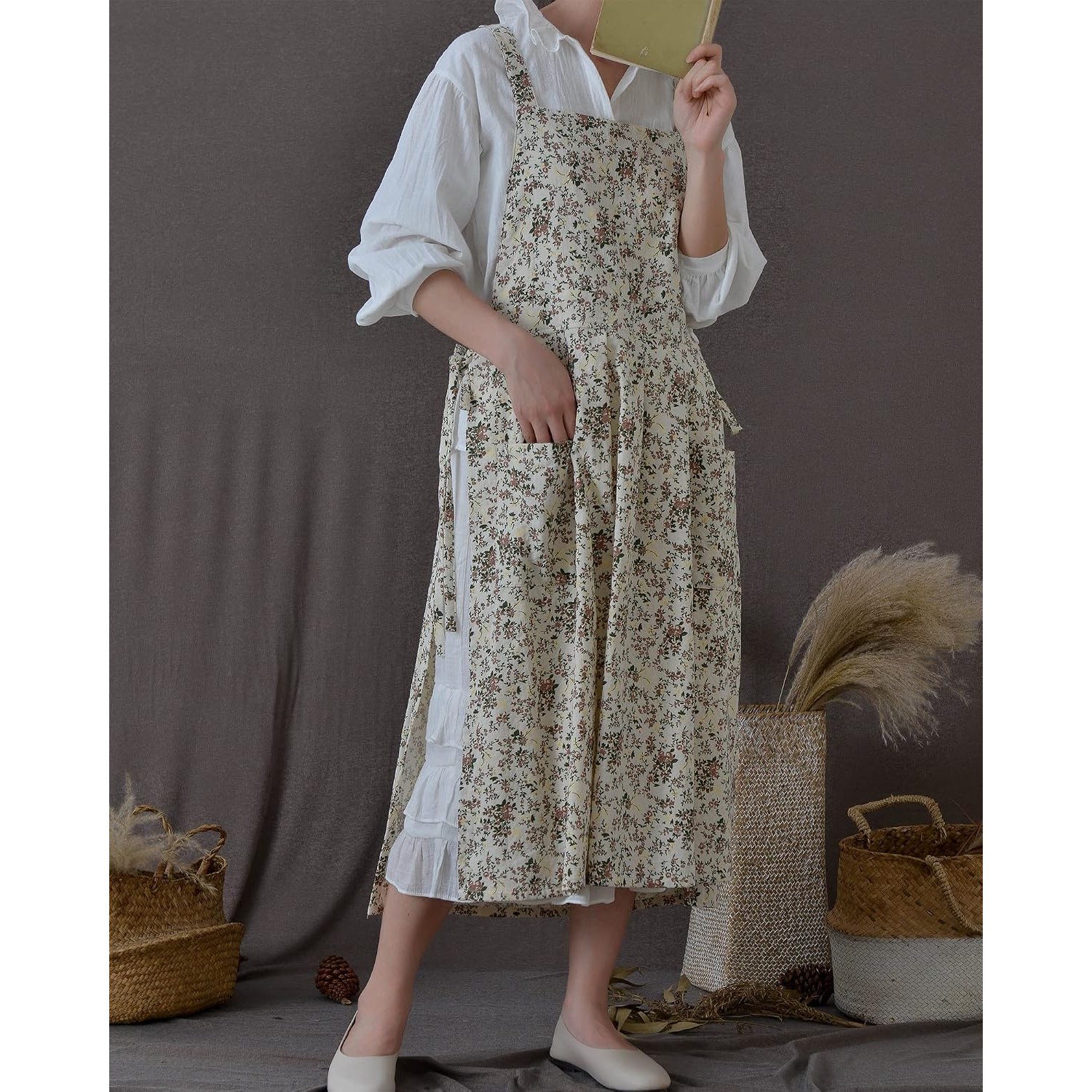
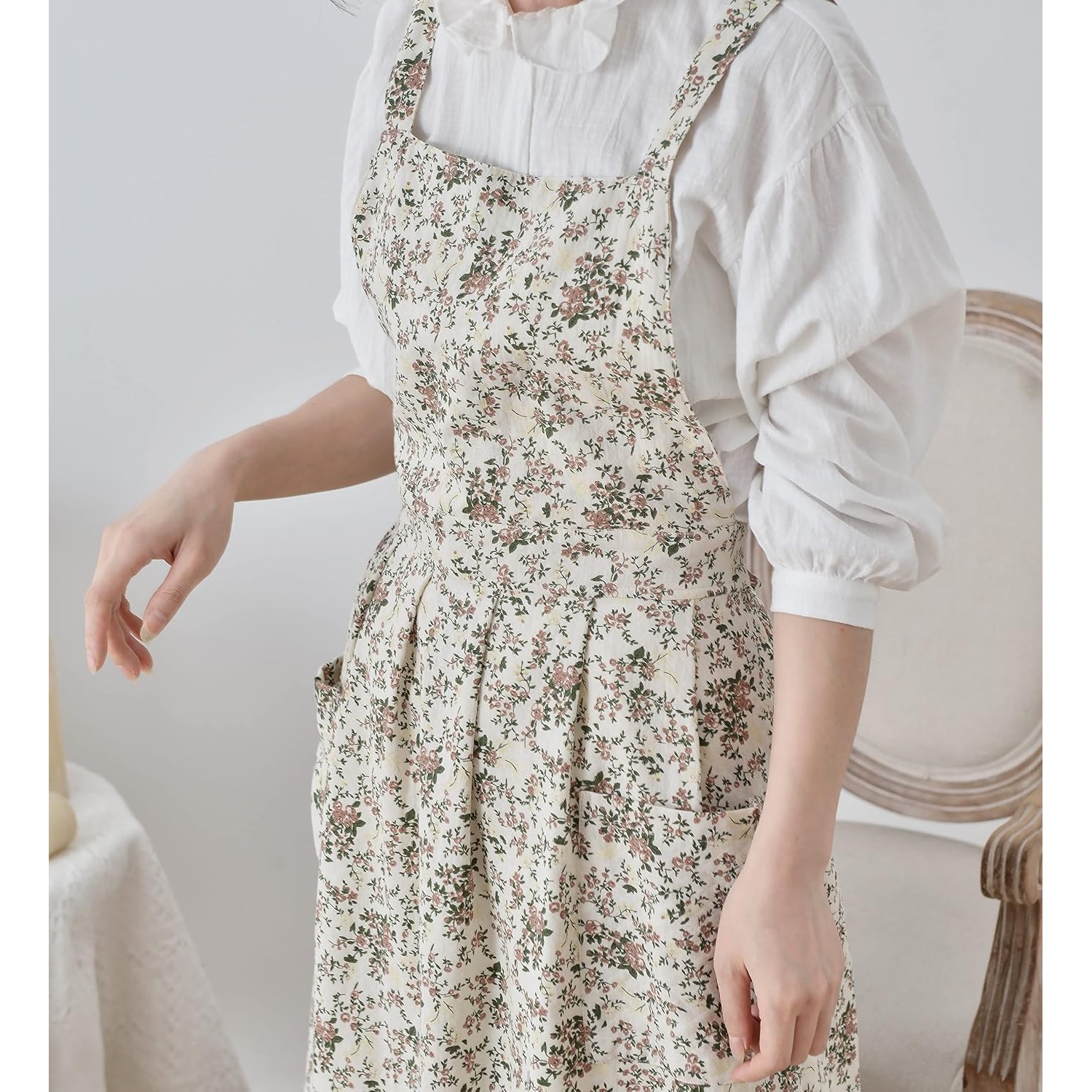
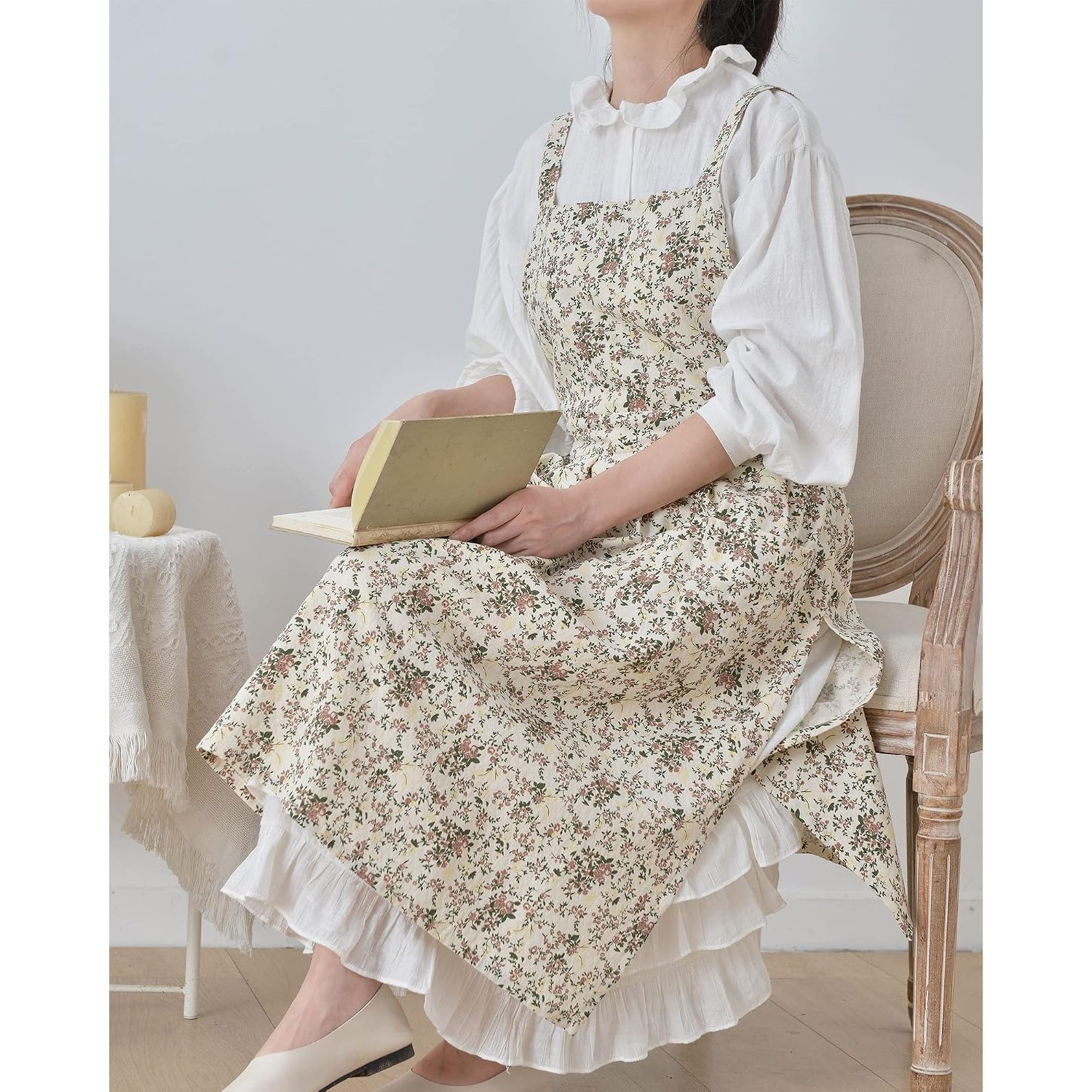
The maker calls the colour White Flower, a cream-white base with a small floral print in pink, green and yellow. There are two pockets on the front, the straps cross at the back, and the skirt is pleated below the bib.
Why cross back straps are worth it
If you have only ever worn a halter style apron, the difference is immediate.
A neck loop concentrates the whole weight of the apron, plus whatever is in the pockets, onto a narrow band across the back of your neck. Add a phone and a tea towel and that band starts to bite. People compensate by loosening the loop, which drops the bib and defeats the point.
Crossed straps split that load between two shoulders, the same way a well fitted rucksack does. Nothing presses on your throat. The apron also stays square when you lean forward over a sink or crouch to get something out of a low cupboard, instead of sliding off to one side. There is no buckle, no clip and nothing to adjust before you start.
The trade off is that the shoulder length is fixed. You cannot shorten the drop the way you can with a sliding neck strap. For most adults that is not an issue, but if you are notably short, it is worth measuring before you buy.
Reading the measurements properly
Numbers on a page mean nothing until you put them against your own body. The 96 cm is the length of the apron without its shoulder straps. Take a tape measure, stand up straight, and measure from your chest, where the bib would sit, down to where you want the hem to finish. If that number is close to 96 cm, this will sit roughly where you expect. In the maker's photos it reaches the calf.
For the width, measure across your front from one side seam of your shirt to the other. The 43 cm front covers a good stretch of the body on most people, but it is a pinafore, not a wraparound. The sides stay open. If you want full side coverage you need a smock style with sleeves, which is a different garment altogether.
Who this suits
Home cooks get the most out of it. The length suits work at a standard kitchen counter, the pockets hold a phone and a recipe card, and the maker classes the fabric as lightweight.
Bakers do well too. The long front keeps flour and dough off your clothes, and a timer drops straight into a pocket.
It also works as an adult art smock, a use the maker names. If you paint, work with clay, or do any kind of messy craft, a long front panel saves a lot of clothing. Accept that paint and ink will stain a pale fabric permanently, and treat any marks as part of its history.
Anyone doing a proper clean of the flat can use it too. Cloths and sprays go in the pockets, your clothes stay dry, and it washes easily afterwards.
What it is not suited to is heavy industrial work, deep frying or anything involving real heat or sharp tools at speed. This is clothing, not protective equipment.
Fabric, in plain terms
The maker gives the fabric as cotton and linen. That is a weave of two plant fibres, with a bit of texture to it. It is not pure linen and we do not describe it as such.
Because the maker gives no percentages, we cannot tell you whether it leans more cotton or more linen. What we can tell you is that the maker classes it as lightweight and states that it can be machine washed or hand washed.
Expect creasing. That is normal for anything with linen in it and most people like the relaxed look. If you want it crisp, a warm iron sorts it out in a minute.
Washing it without ruining it
Keep this simple. The maker states machine wash or hand wash, and the rest is general advice for a printed cotton and linen fabric.
Wash cool, on a gentle cycle, with similar colours. Hand washing is fine too if you prefer. Use a mild detergent. Skip the bleach, which will attack the print, and skip fabric softener, which coats the fibres and makes them less absorbent over time.
Hang it to dry rather than tumbling it. Heat is the main cause of shrinkage in cotton blends, and air drying also keeps the straps from twisting. Dry it in the shade. Direct sun is what fades a printed fabric fastest.
If you want it smooth, iron it while slightly damp on the cotton setting. Turn it inside out and press the printed areas from the reverse so the pattern does not pick up shine.
One practical note for anyone living somewhere humid. Make sure it is bone dry before you fold it away, otherwise it can pick up a musty smell in a closed drawer. A hook near the kitchen is better storage than a drawer anyway, because an apron you can see is an apron you will use.
Buying one as a gift
Aprons are an easy gift as long as you pick one that works. Think about whether the person actually cooks, bakes or makes things, and whether the print suits their kitchen. A long pinafore in a soft floral reads as a home piece rather than a professional one, so it suits someone who enjoys cooking at home rather than someone working a line.
A good apron gift for mum, or for a friend who hosts, is one that solves a real annoyance. Cross back straps and two front pockets do that. A novelty slogan does not.
The short version
This is a long pinafore apron in a cotton and linen weave, printed with a small floral on a white base. It measures about 96 cm long, without the shoulder straps, and 43 cm across the front. The straps cross at the back so nothing pulls on your neck, and two front pockets hold the small things you want within reach while your hands are busy.
It is not waterproof, the maker gives no fibre percentages, and it comes in one adult size with side ties for adjustment. Wash it cool, hang it to dry, and keep it on a hook where you will reach for it.