
The complete guide
How To Choose A Small White Ceramic Vase That Actually Works In Your Home
The shelf that never looks finished
Most people have one. A shelf, a sideboard, a console near the door. It holds a few books, maybe a photo frame and a bowl for keys, and it always looks slightly unfinished. You add something, it looks cluttered. You take something away, it looks bare.
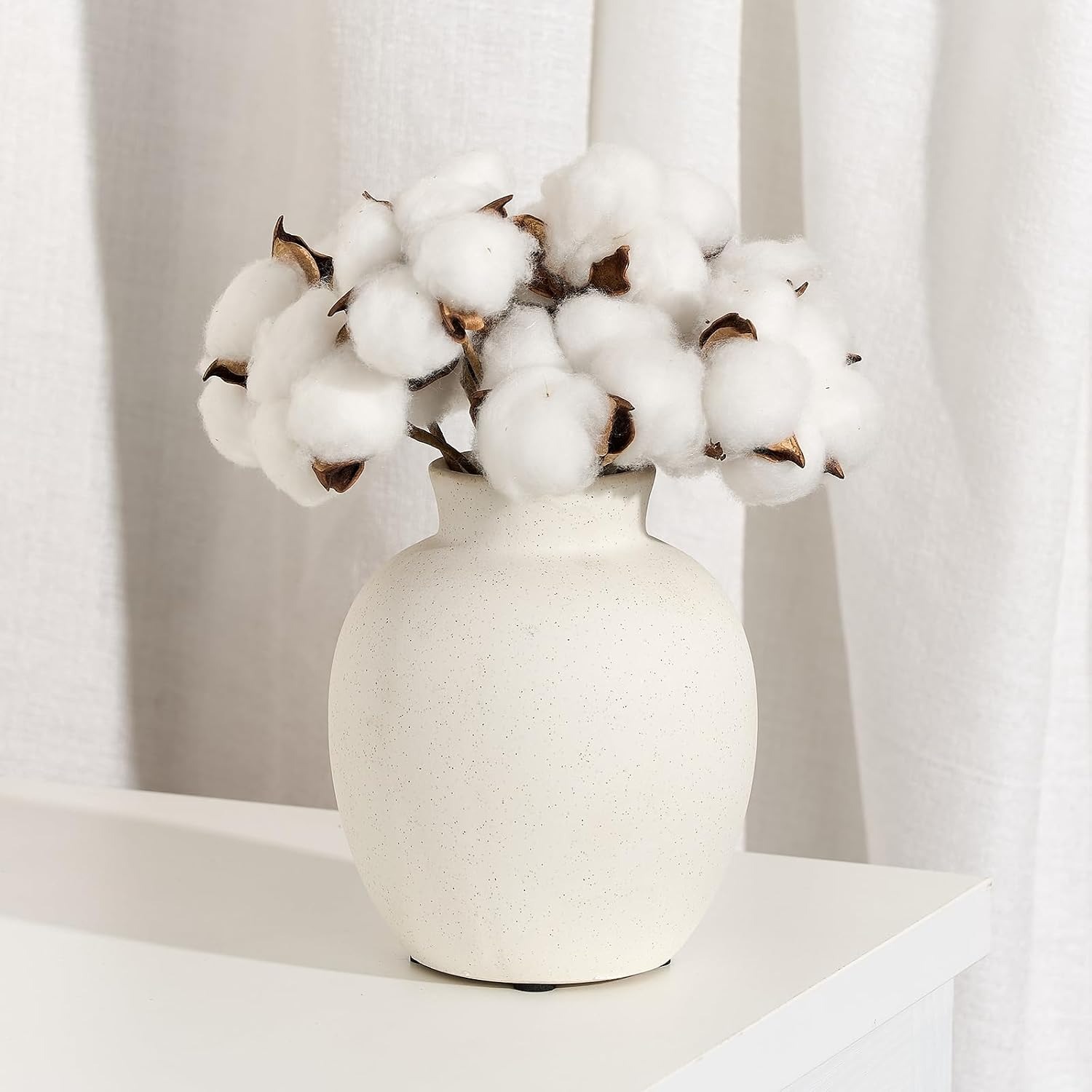
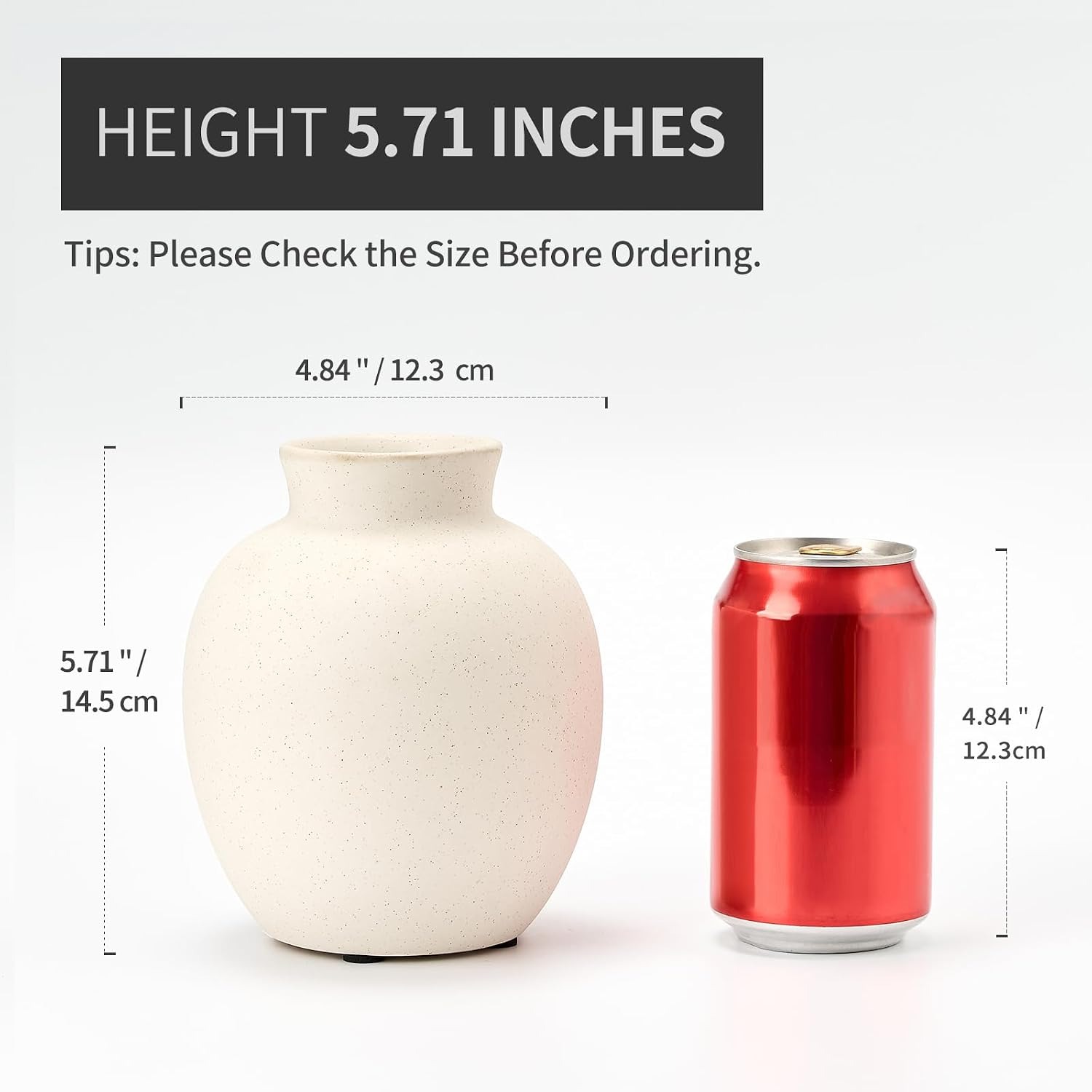
The usual missing piece is a mid-height object with a bit of texture. Flat things like frames and books do not break the horizontal line. A rounded vase does. At around 15.3 cm tall and 12.7 cm across, this one sits in the gap between tiny trinket and furniture-sized statement, which is exactly where most shelves need help.
It is a small purchase that does a disproportionate amount of work, and that is the honest case for it.
What you are actually getting
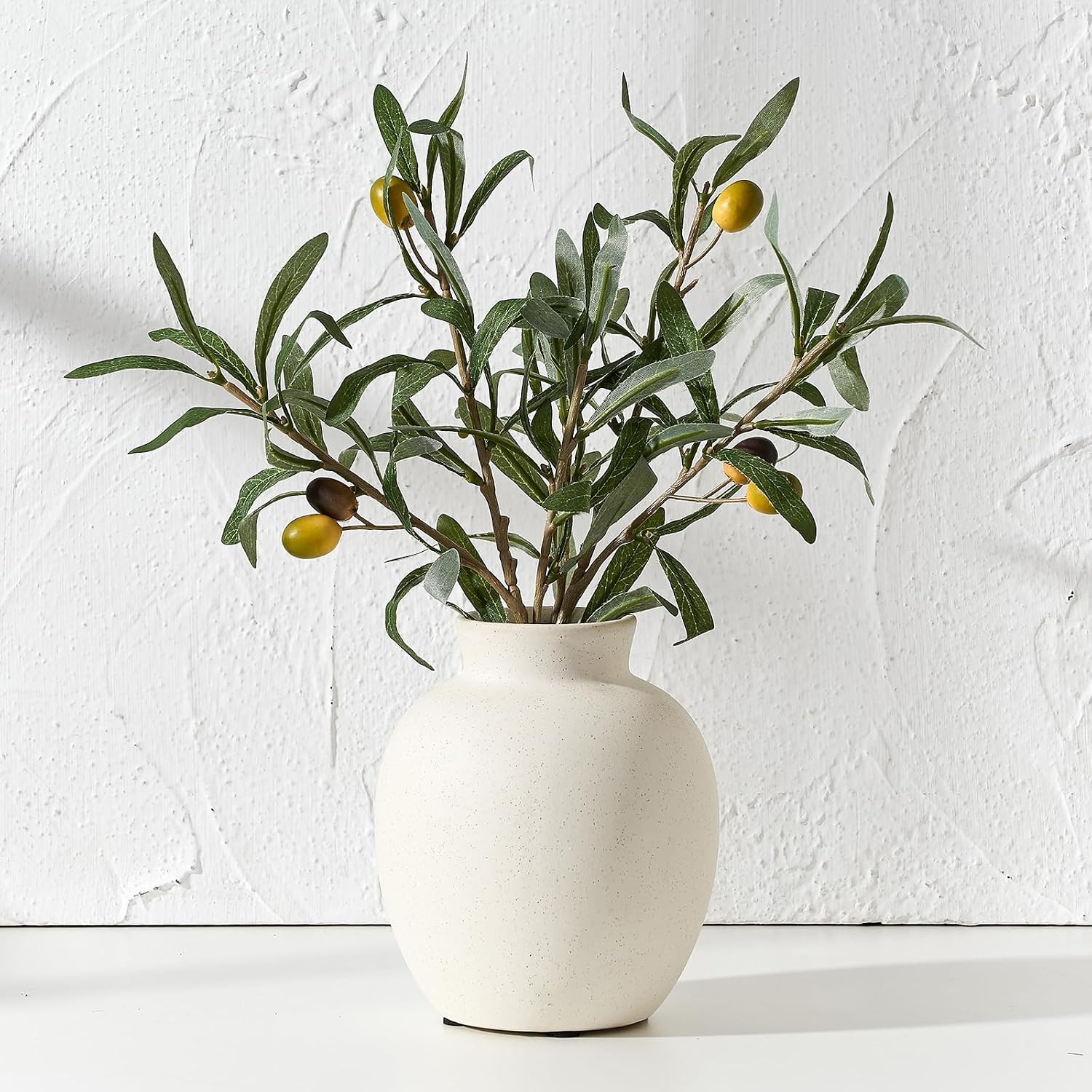
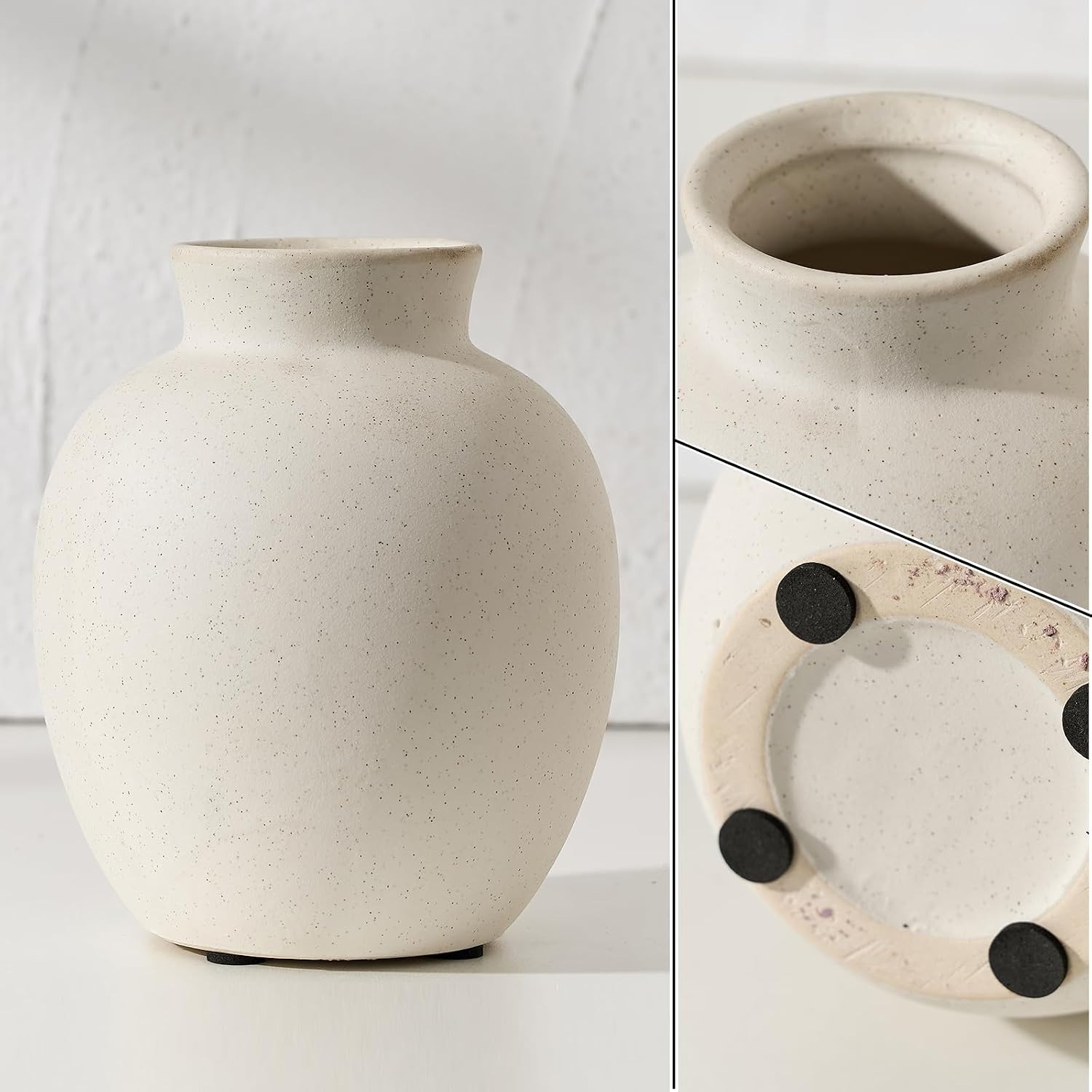
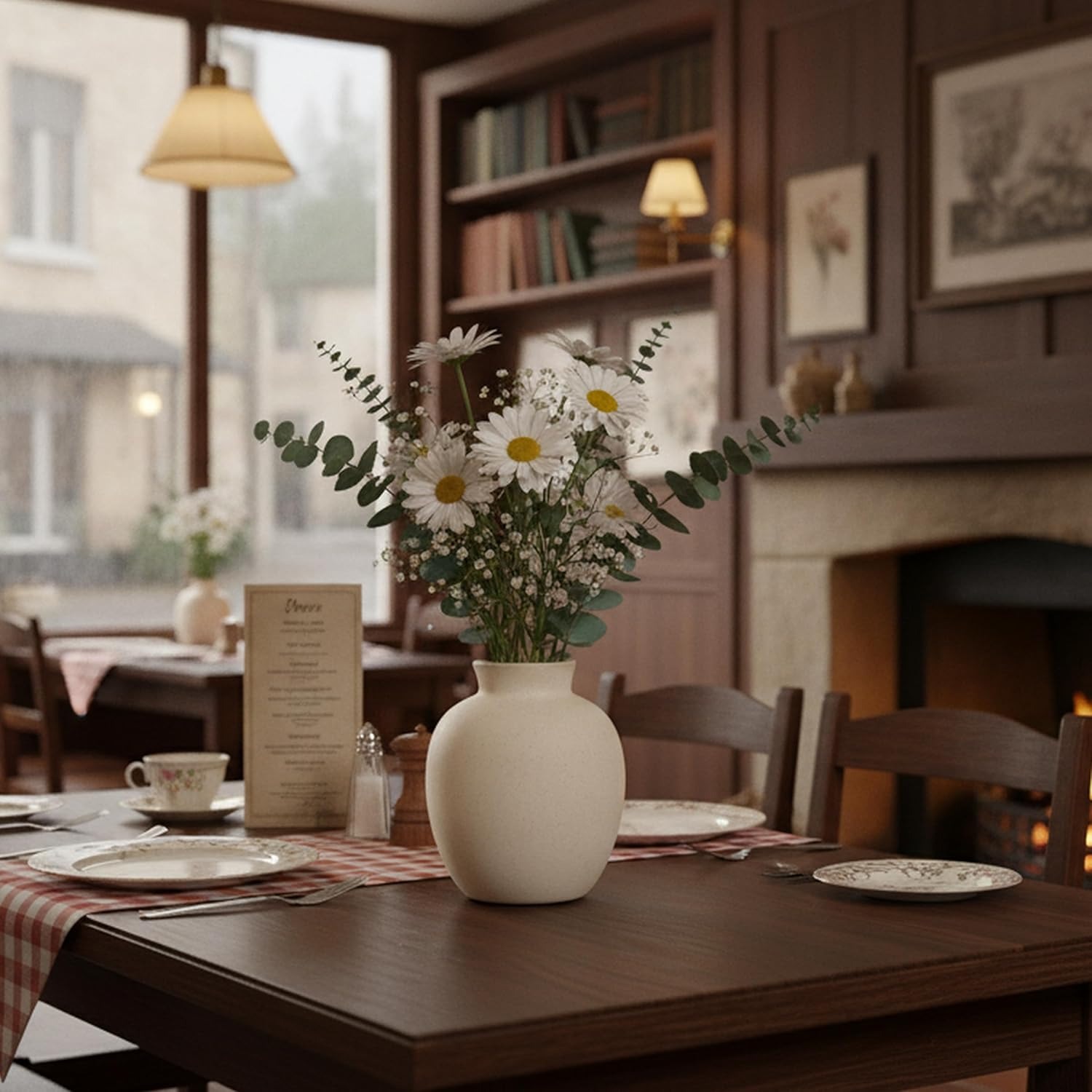
One vase. Round body, plain white, in ceramic that the maker describes as terracotta ceramic. The surface has what they call a particle design, which in plain terms means a fine speckled texture rather than a smooth glaze. The finish type is listed as unfinished. It weighs about 0.65 kg.
That texture is the main thing to understand before you buy. A glossy vase reflects light in a sharp line down one side. A textured matte one does not. It diffuses light, so the white looks soft and slightly warm in a room with lamps, and crisper near a window. If you have ever wondered why two white objects on the same shelf look like different colours, this is why.
Unfinished also tells you something about use. It is not a sealed, waterproof-forever interior, so the sensible approach is dried stems, faux stems, or fresh flowers in a small glass or plastic insert tucked inside. Plenty of people use small vases this way without thinking about it. A cut-down jar or a cheap test tube insert does the job and nobody can see it.
Why small beats tall in a flat
Big vases photograph well and live badly. They need a clear floor corner or a wide empty surface, and in a condominium or apartment those are the two things you do not have spare.
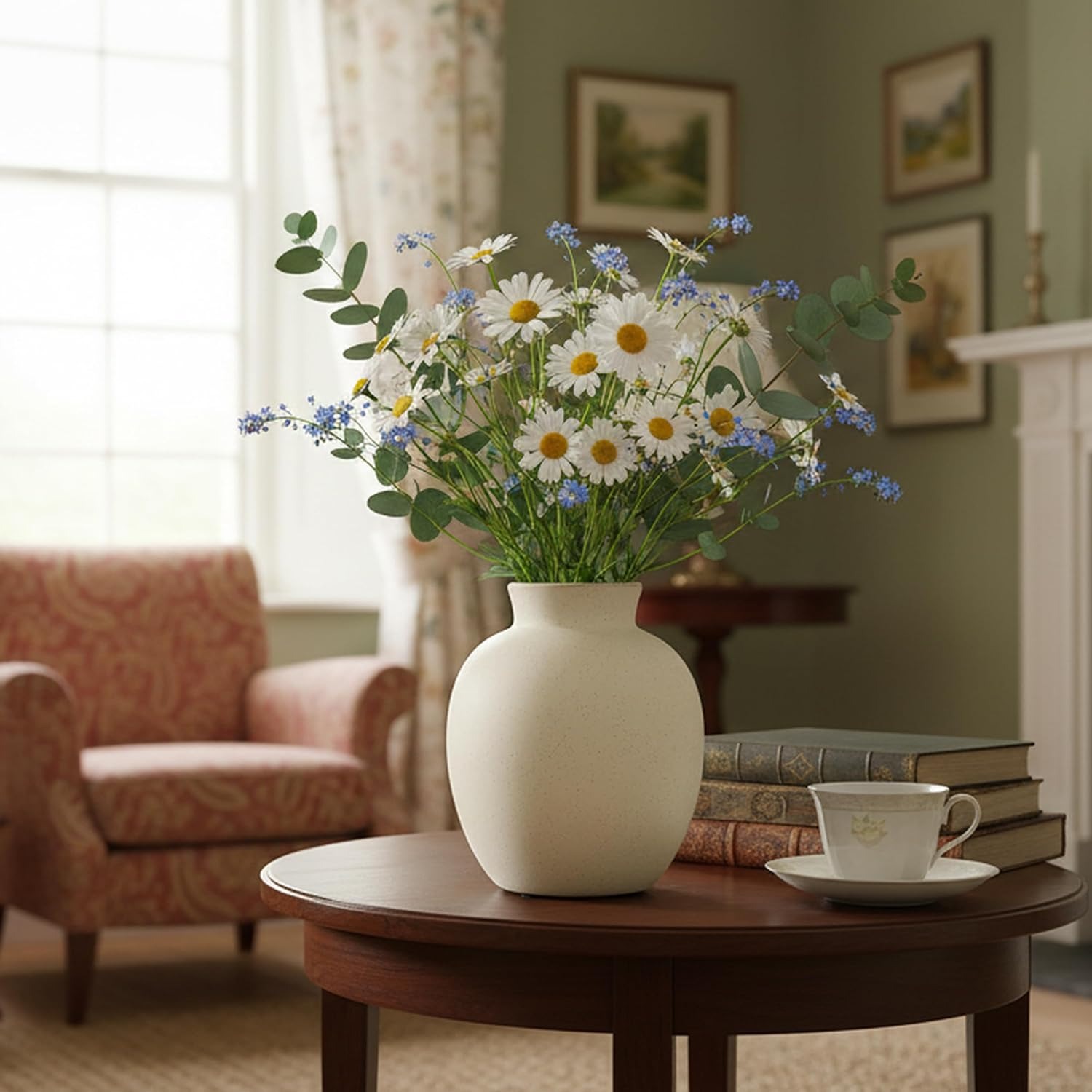
A vase at this scale has options. It fits on open kitchen shelving between jars. It sits on a bedside table without crowding a lamp and a glass of water. It works as a dining table centrepiece that people can still see each other over, which is the quiet reason low centrepieces have always been the right call. When you get bored of it in one place, you move it, and it costs you nothing to try.
Scale is also forgiving. A large piece in the wrong style dominates a room. A small one with the wrong vibe just blends in. So the risk of getting it wrong is low, and the chance of it earning a permanent spot is decent.
Choosing between white, colour and natural clay
White is the default for a reason, but it is worth knowing why rather than defaulting blindly.
A plain white piece acts as negative space. In a room with a lot going on (patterned cushions, full bookshelves, art on the walls) it gives your eye somewhere quiet to land. In a room that is already mostly neutral it still reads, because the texture carries the interest instead of the colour.
Natural terracotta orange is warmer and more specific. It looks great with greenery and timber, and less great next to cool greys. Coloured glaze is the most decorative and the hardest to move around later, because it has to agree with whatever is nearby.
If you want one vessel that survives three changes of cushion covers, textured white is the safe answer. A neutral vase like this is often the piece nobody notices at first and nobody ever wants to replace.
How to style it so it does not look like an afterthought
A few rules that hold up well.
Vary heights. Three objects of the same height in a row look like a shop display. Put this vase next to something taller and something lower and the group reads as intentional.
Give it space on one side. A vase crammed between two other objects loses its shape. Even 5 cm of clear surface changes how it looks.
Keep arrangements short. With a 15.3 cm vase, stems that rise about two to three times the vase height usually look right. Much taller and it tips visually, even if it does not tip physically.
Use odd numbers of stems. Three, five or seven dried grasses look more natural than four or six. It is an old florist habit and it works.
And do not be afraid to leave it empty. An empty vase with good texture is a sculptural object. Some good shelf styling with a rustic vase involves no flowers at all.
Fresh, dried or faux
Fresh flowers in a small vase are lovely and short-lived. If you go that route, use an insert, change the water every two days, and trim the stems at an angle each time. Small arrangements wilt faster than large ones because there is less water in reserve.
Dried stems are the low-effort choice and suit this vase especially well. Wheat, bunny tails, preserved eucalyptus and small bleached branches all sit nicely against matte white. They cost more up front and then cost nothing for a year or two. Keep them out of direct strong sun or the colour fades unevenly.
Faux stems have come a long way. The giveaway is usually a plastic shine at the stem base, so look for matte finishes and hide the lower stem inside the vase neck. A few quality faux branches beat a big bunch of cheap ones every time.
Looking after it
This part is short because there is not much to it.
Dust the outside with a soft dry cloth. For the textured surface, a clean soft brush gets into the grain faster than a cloth does. If something sticky lands on it, use a barely damp cloth and dry it straight after, and skip the scouring pad and the strong cleaners.
Rinse the inside with lukewarm water only if you need to, then let it dry completely before you store it or refill it. No dishwasher, no microwave, no oven.
Pick it up by the body or the base rather than the rim, and pop a felt pad underneath if your shelf or sideboard marks easily. That is the whole routine.
Who it suits, and who it does not
It suits people furnishing a flat who want character without commitment, people who rearrange their shelves on a whim, and people buying a gift for someone whose taste they do not know precisely. It works as a housewarming gift because it does not impose a colour.
It does not suit someone who wants a single dramatic floor vase, or someone who needs a watertight vessel for big fresh arrangements with no insert. It is also not a set, so if you specifically want a matched trio you will need to order more than one.
The short version
One white ceramic vase, listed as terracotta ceramic, with a textured, speckled surface. Roughly 12.7 x 12.7 x 15.3 cm and about 0.65 kg. Round, matte, unfinished, sold singly.
It is small enough to move around, neutral enough to keep for years, and textured enough to look like something rather than nothing. Fill it with dried stems, group it with two other objects at different heights, keep it away from the dishwasher, and it will quietly fix that shelf that never looked finished.