
The complete guide
How to Choose a Short Ceramic Vase That Actually Suits Your Flowers
The problem with most vases
Here is something that happens in almost every home. You buy a nice bunch of flowers, bring them in, cut the stems, and then realise the only vase you own is a tall glass cylinder. The flowers drop straight to the bottom. The heads sit well below the rim. You end up with a vase that looks half empty and a bouquet you cannot really see.
The fix is not a bigger bouquet. It is a shorter vase.
A short ceramic vase for flowers works with the length of stem you actually have after trimming, which is usually 15 to 25 cm. Put those stems in something roughly 13 cm tall with a wide opening and the heads sit just above the rim where you can see them. The arrangement looks full without needing twice as many flowers.
What a bubble shape does differently
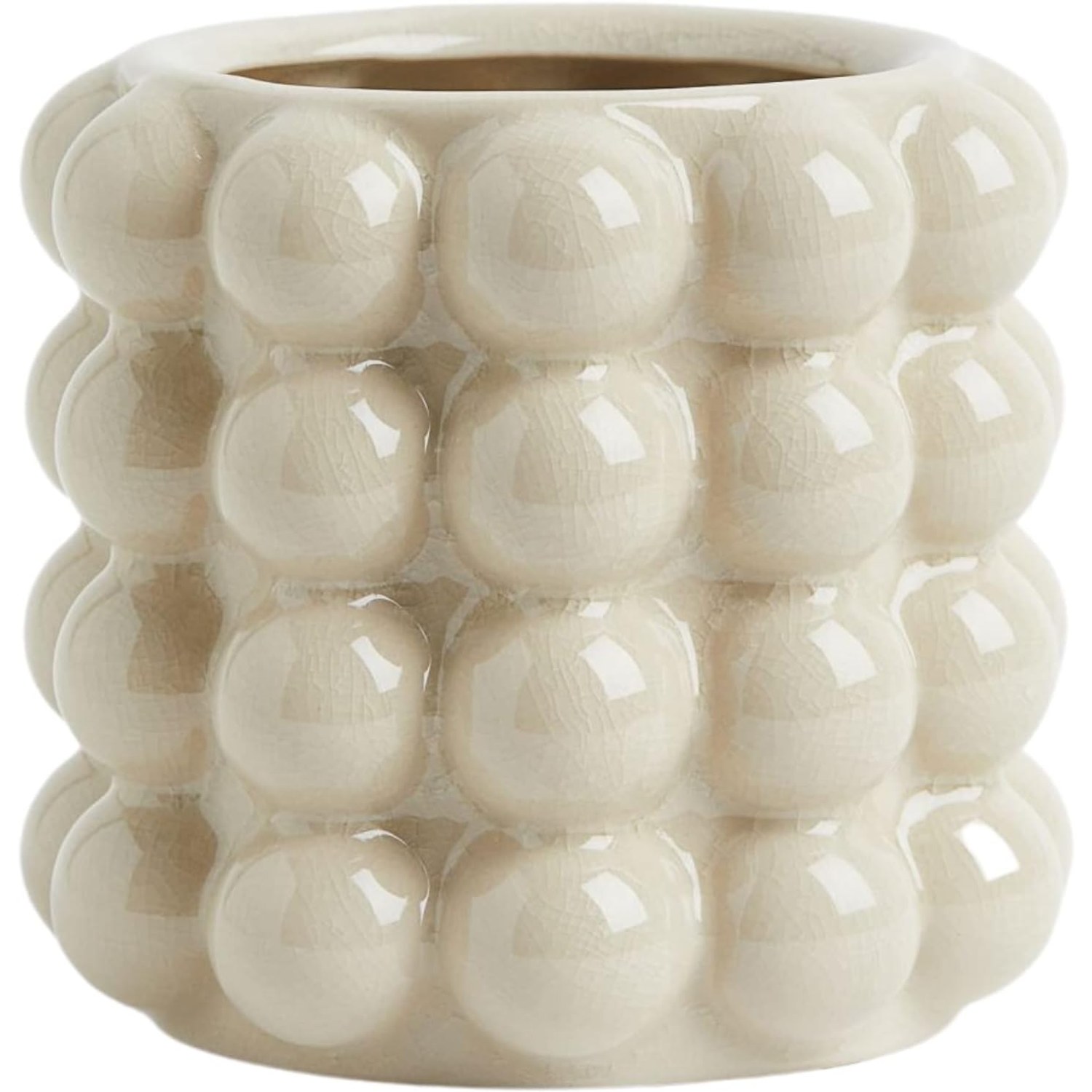
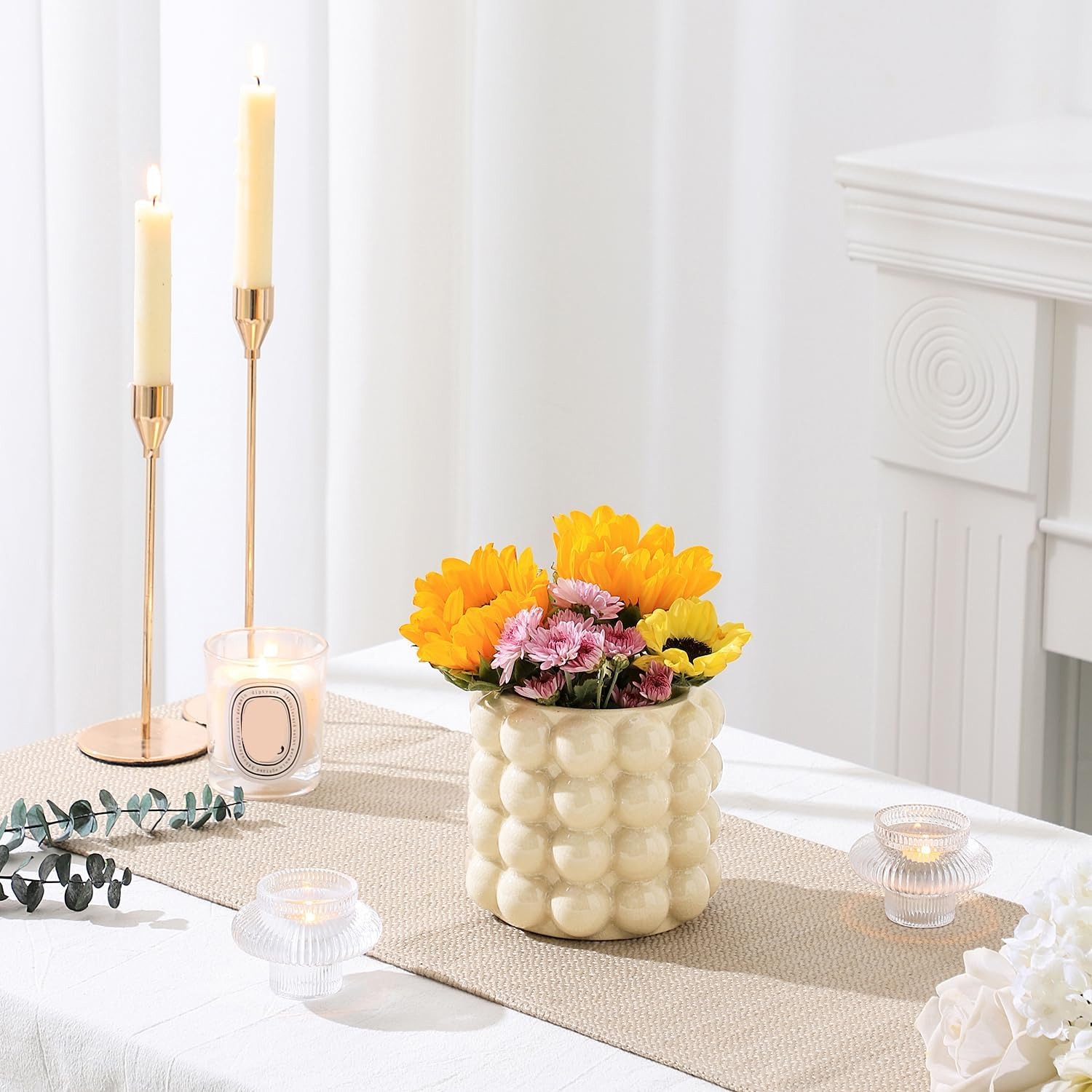
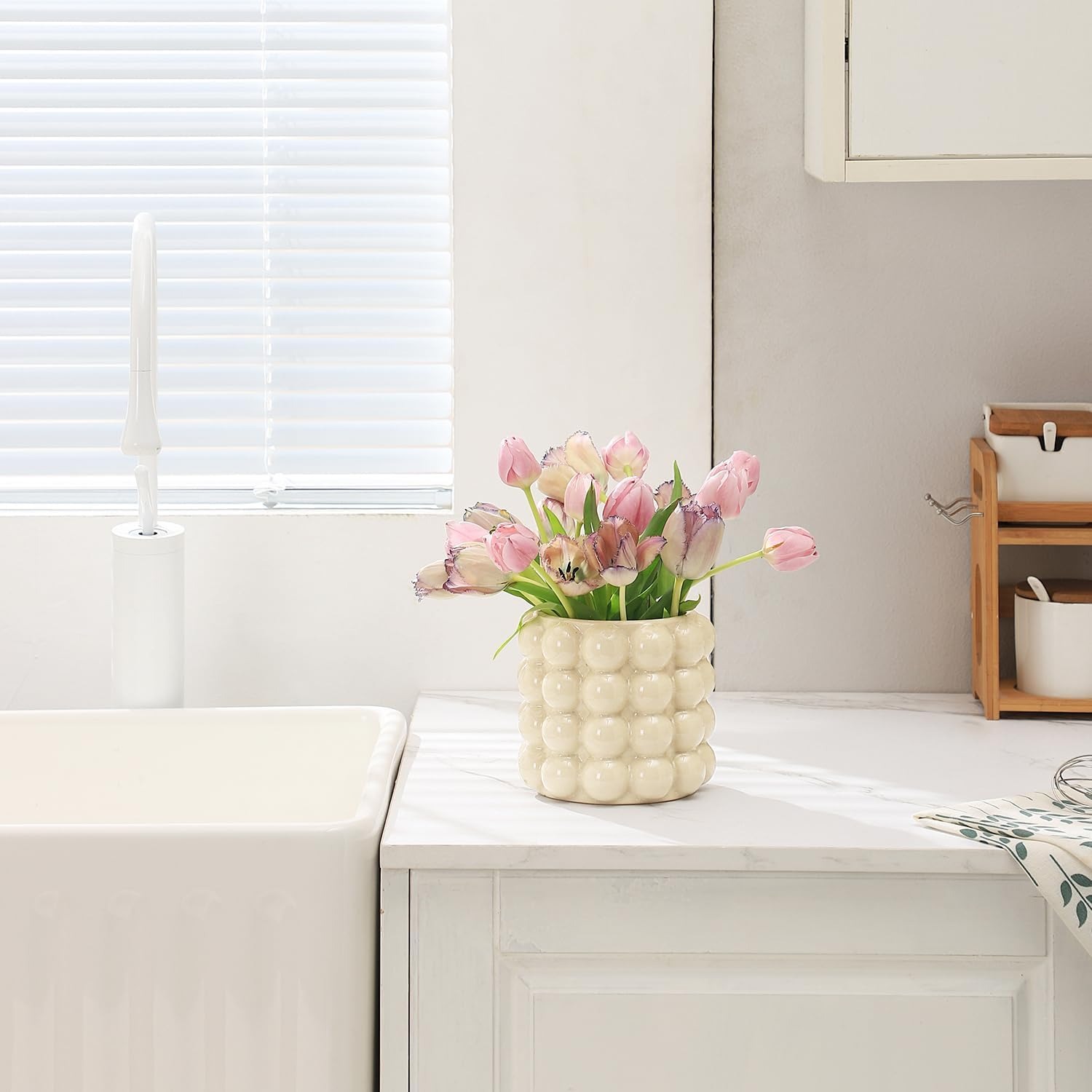
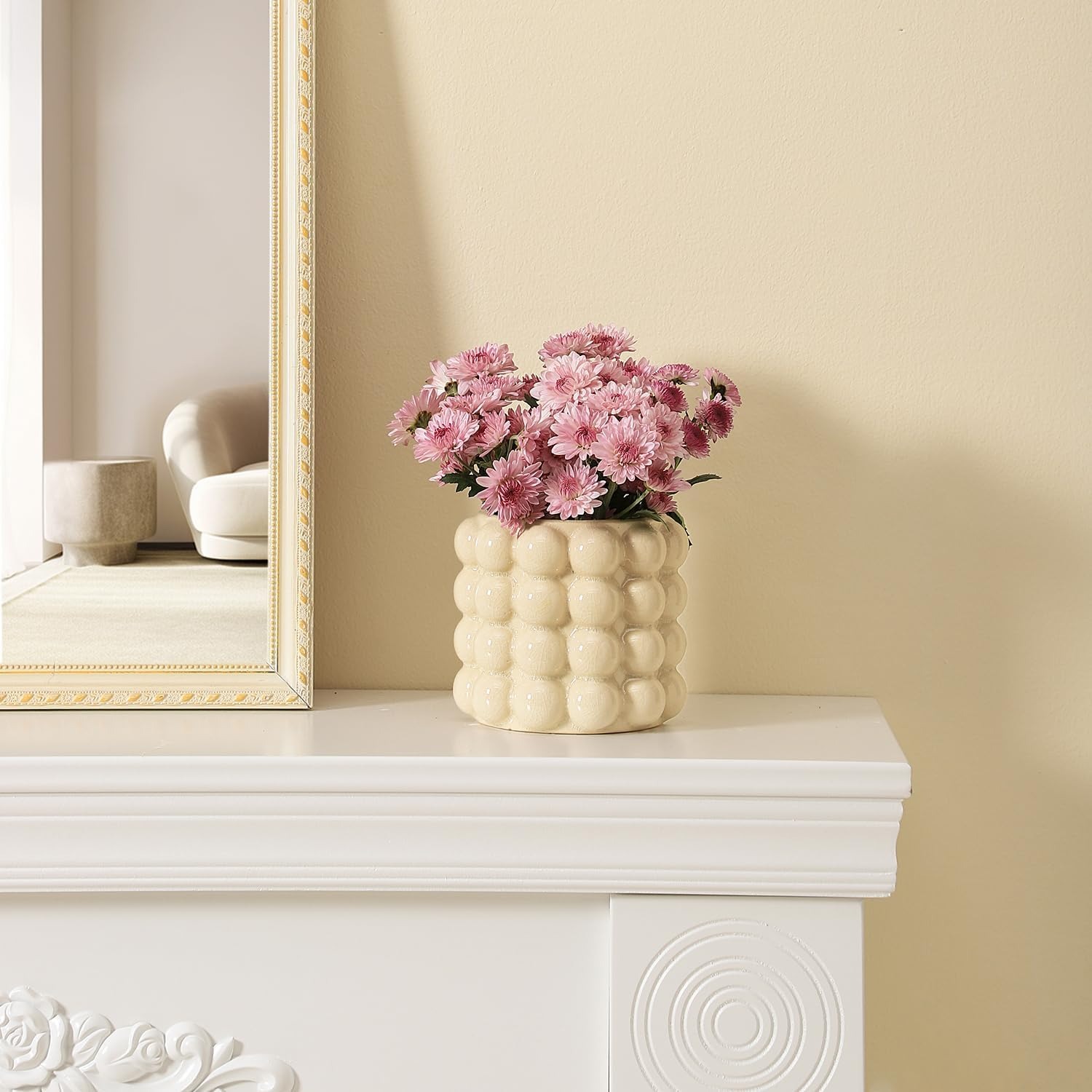
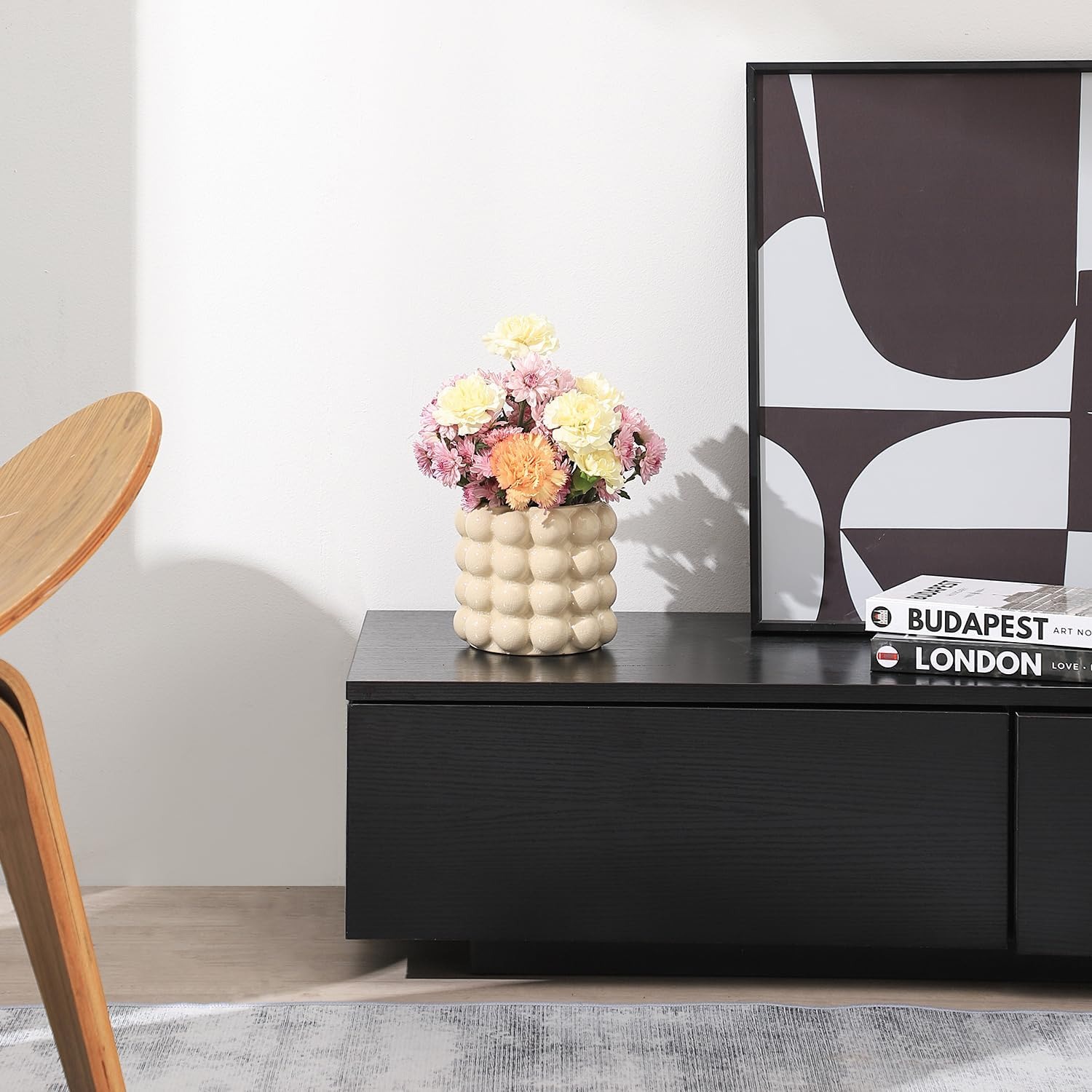
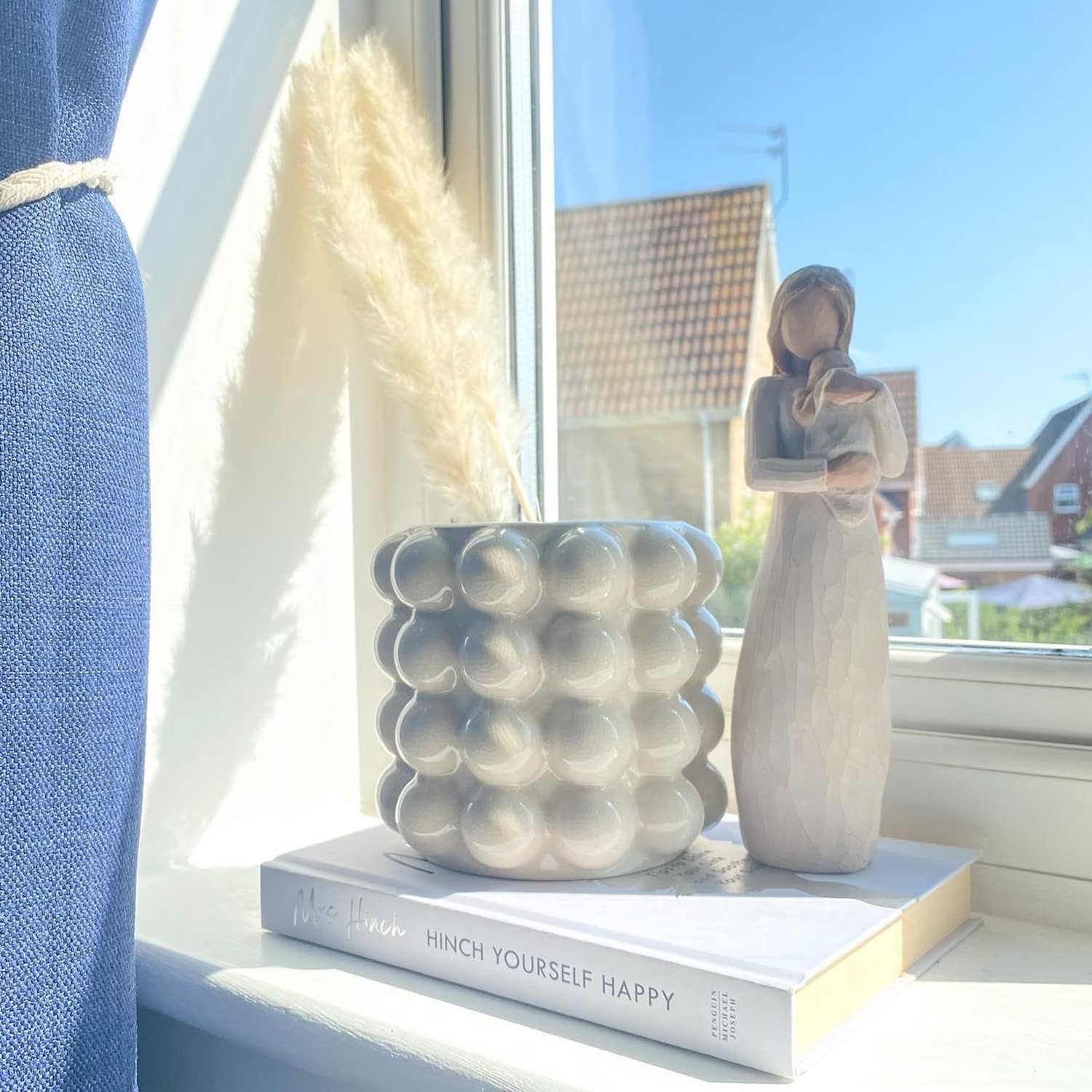
This bubble vase is a short, wide pot with rows of raised round bubbles all the way round and a wide round mouth. The bubbles are the decoration. The wide mouth is what changes how the flowers behave.
In a tall, narrow vase, stems stand upright and stay where you put them, which means you have to arrange them properly or they look stiff. In a short vase with a wide mouth, the stems lean outwards against the rim and the heads spread into a loose dome. You drop the bunch in, give it a gentle shake, and it settles.
That is why people who say they are no good at flowers often find a short, wide vase easier. The shape does the arranging.
This particular one measures about 14 x 14 x 13 cm, so it is nearly as wide as it is tall. Those are generous proportions for a small vase. There is enough room inside for a decent handful of stems.
Ceramic versus glass
Glass vases are cheap and they let you see the stems, which some people like. They also show every bit of cloudy water, every fallen leaf and every bit of limescale. In a warm, humid climate where flower water goes off faster, that becomes visible quickly.
Ceramic hides all of that. The maker describes this vase as thicker than a glass one, so it feels more substantial when you pick it up. The trade-off with ceramic has always been seepage. Some pottery can let moisture through over hours, leaving a ring on a timber table.
This vase has a waterproof lining inside, as stated by the maker, which is specifically there to deal with that problem. It means you can use it for fresh flowers rather than treating it as a decorative object only.
If you still prefer a bit of insurance, a small felt pad or coaster under any ceramic piece on good timber is sensible practice. It is not about the vase failing. It is about condensation on a humid day, which can form on the outside of anything holding cool water.
Who this suits
People in flats and condos. Surface space is finite. A 14 cm footprint takes up about as much room as a coffee mug and saucer, so it can live permanently on a console or shelf without being in the way.
People who buy flowers occasionally. If you are not a weekly florist visitor, a vase that looks good empty matters. This one does, because the crackle finish and the raised bubbles give it enough presence to read as an object on its own.
People who prefer dried or faux stems. With air conditioning running most of the year, fresh flowers can dry out faster than you would like. Dried bunches and good artificial stems last indefinitely and suit a wide mouthed vase of this height very well.
Gift buyers. A neutral vase is one of the few homewares you can give without knowing someone's colour scheme. Beige does not demand anything of a room.
How to choose the right size
Think about where it will sit before you think about how it looks.
For a bedside table, short is better. Anything above about 20 cm starts to crowd a lamp and a glass of water. A 13 cm vase clears everything.
For a dining table, low is the rule. You want to see the person across from you. Short vases are the standard choice for centrepieces because they sit below sightline. One in the middle works, or three spaced along a long table.
For a bookshelf, measure your shelf height first. A 13 cm piece fits most standard shelving with room to spare, and the width gives it enough visual weight to balance a stack of books beside it.
For a console or sideboard, this works as part of a group rather than alone. Pair it with a taller piece, a small lamp or a framed photo, and the different heights make the arrangement look intentional.
Making it look good
A few things help, none of them complicated.
Trim stems at an angle before they go in. More surface area means better water uptake, and the angle stops the cut end sitting flat against the base.
Strip leaves below the waterline. Submerged foliage rots and turns the water murky, which shortens the life of the whole bunch.
Do not overfill with water. Two thirds up is plenty. Full to the brim means spills every time you move it.
Odd numbers of stems tend to look more natural than even ones. Five, seven or nine stems in a small vase usually reads better than six or eight. This is not a rule, just a habit worth trying.
And consider a single type of flower rather than a mixed bunch. A handful of one bloom in a textured neutral vase often looks more deliberate than a supermarket mix.
Keeping it in good condition
Ceramic care is mostly about what you do not do.
Wash by hand with warm water and a little mild detergent. Skip the dishwasher, since the maker does not say it is dishwasher safe. Rinse the inside properly after fresh flowers, because residue from flower food and decaying stems is what causes staining in any vase.
Avoid scouring pads and bleach. A soft cloth handles the outside, and a soft bottle brush helps with the inside if you need it.
Lift the vase rather than sliding it. Dragging ceramic across stone or timber is how bases get scratched, and it also wears the anti-slip surface underneath.
Store it upright if it goes in a cupboard between uses. Laid on its side it can roll, and round things roll further than you expect.
The short version
This is a 14 x 14 x 13 cm beige ceramic vase with a waterproof lining, a wide round mouth, an anti-slip base and a crackle finish. One vase per pack, weighing about 0.95 kg.
It suits short stemmed fresh flowers, dried arrangements and artificial stems equally. It is low enough for a dining table, small enough for a bedside table, and neutral enough to sit in almost any room without clashing.
If you have been putting trimmed bunches into a vase that is far too tall for them, this is the shape that fixes it.