
The complete guide
How to Choose a Merino Wool Scarf for Men in a Warm Climate
The cold that nobody plans for
Living somewhere warm and humid does not mean you never get cold. It means the cold shows up in the wrong places.
It is the meeting room with a vent directly over your chair. The cinema. The hospital waiting area. The shuttle bus with the air conditioning turned up as high as it goes. And then, once or twice a year, the trip to a country where the air actually bites and your usual jacket is suddenly doing all the work on its own.
None of those situations call for a heavy knitted scarf. They call for something thin, soft and long enough to wrap properly, which you can loosen in ten seconds when you step back outside into the heat. That is a very specific job, and a lightweight merino wool scarf for men does it well.
Why merino, and not just any wool
Wool is not one thing. The difference between a scratchy jumper and a scarf you can wear against bare skin comes down to fibre thickness.
Merino comes from a breed of sheep that grows an unusually fine fleece. Finer fibres bend more easily when they touch skin, so instead of the stiff individual ends poking you, which is what causes that itch, the fabric folds and settles. That is the whole reason merino ended up in base layers, socks and scarves while coarser wool stayed in outerwear.
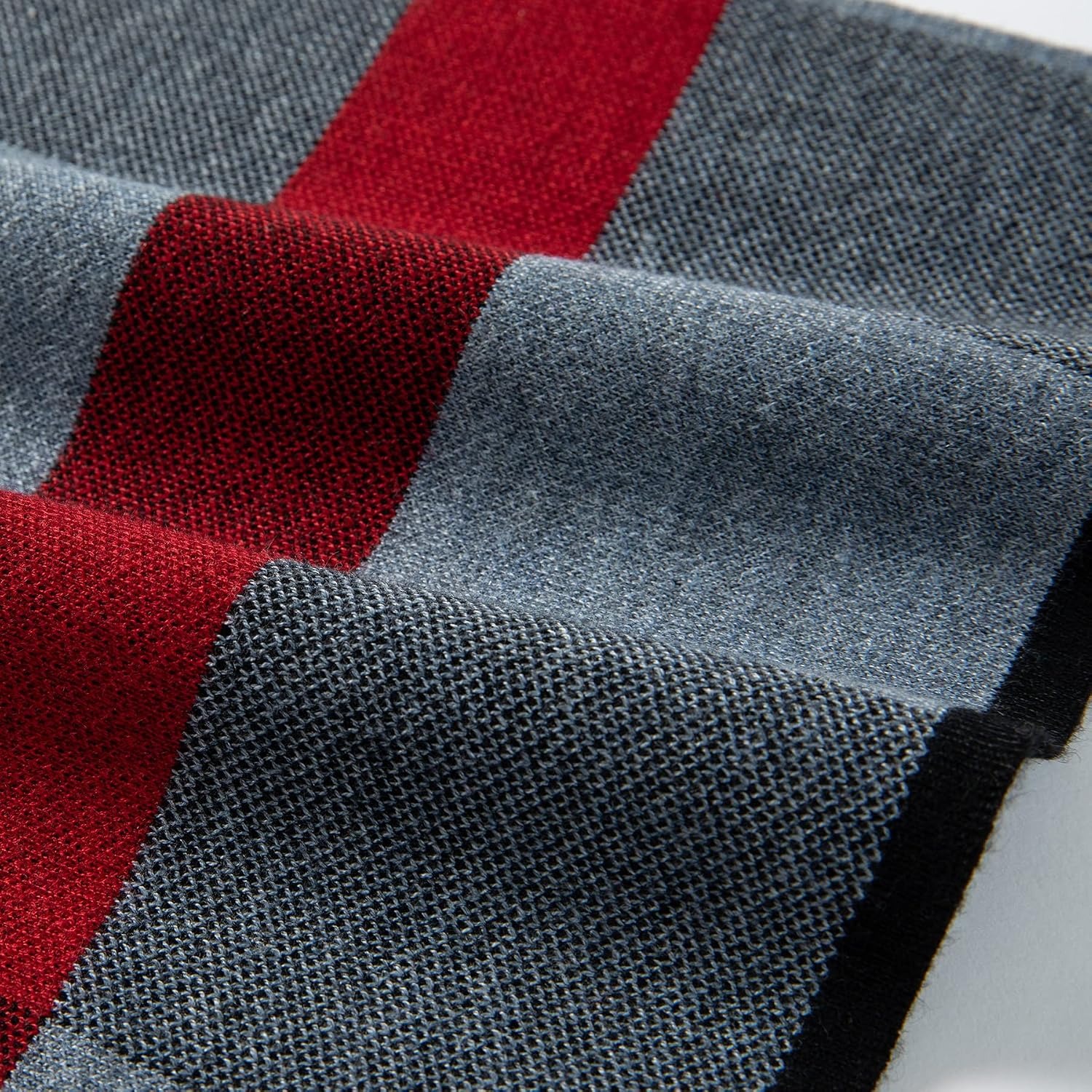
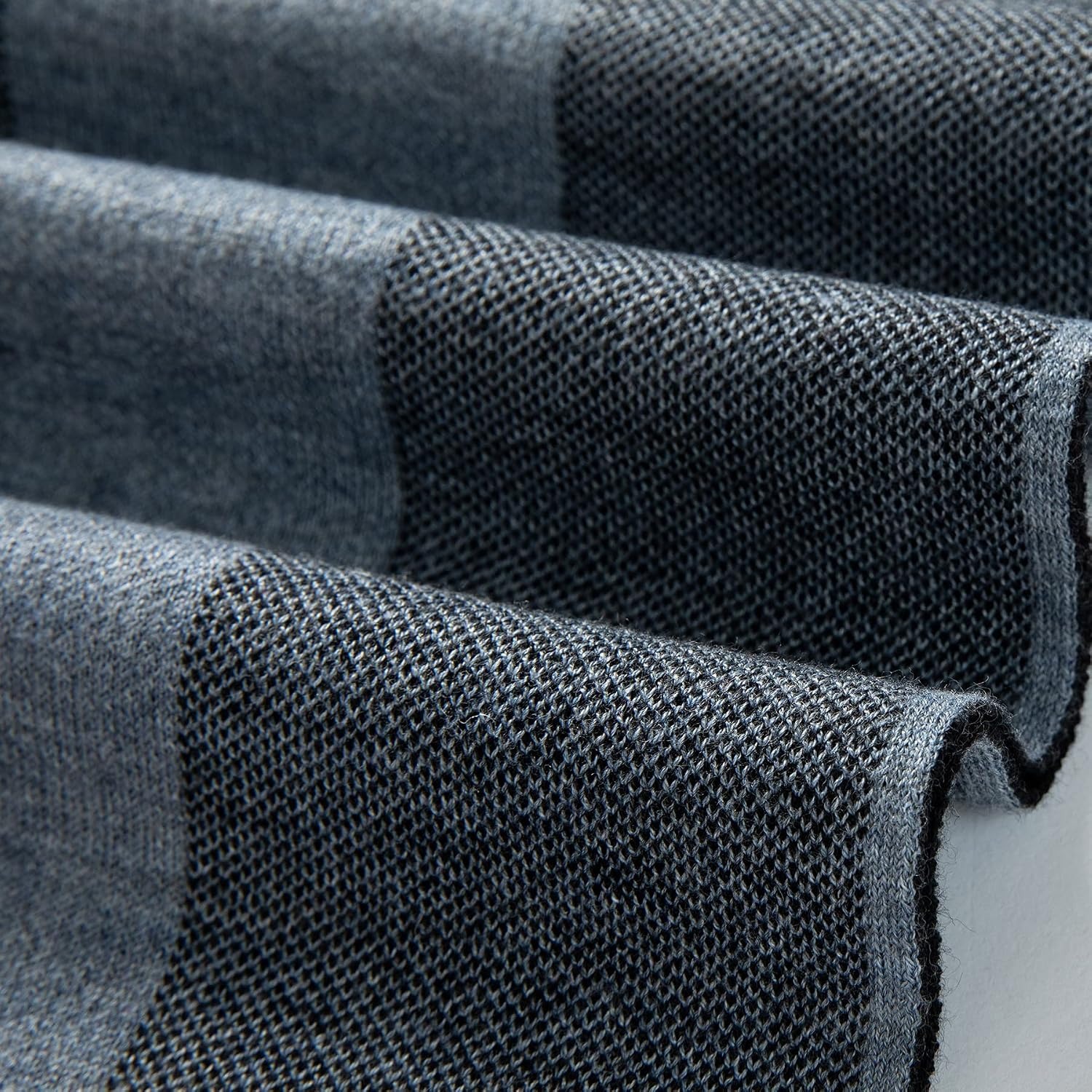
This scarf is made from wool, with the maker naming Australian merino. The maker gives no percentage, so we will not quote one. What the maker does state is that the fabric is lightweight and low stretch.
Both of those matter more than people expect. Lightweight means it sits flat under a jacket collar instead of bunching into a lump at your throat. Low stretch helps the knot you tie in the morning hold its shape through the day.
A lightweight scarf is also easy to live with in a humid place. You take it off when you step out into the heat, and put it back on in the cold lobby.
The size, and why 178 cm is the useful number
This scarf is 178 cm long by 30.5 cm wide. In old money that is 70 by 12 inches.
Length decides what you can do with it. A short scarf, anything under about 150 cm, can really only be draped or given one loose loop. At 178 cm you have options. You can fold it in half, pass it round your neck and pull the ends through the fold, which is the classic simple loop and takes two seconds. You can wrap it twice for a closer, warmer fit on a cold flight. Or you can leave it hanging straight down the front of a coat for a looser look.
The 30.5 cm width is what makes it work in a warm climate. Fold it lengthways and it still covers your neck completely, but with half the bulk. Open it out and it drapes flat and wide across a chest. One scarf, two very different shapes, depending on whether you need warmth or just want it to look good.
It is one size, which is normal for scarves. There is no sizing to get wrong, which also makes it an easier gift than a jumper or a pair of gloves.
Grey tartan is the quiet choice
Tartan can go two ways. A bold red or green check announces itself, and you end up wearing it with roughly three outfits.
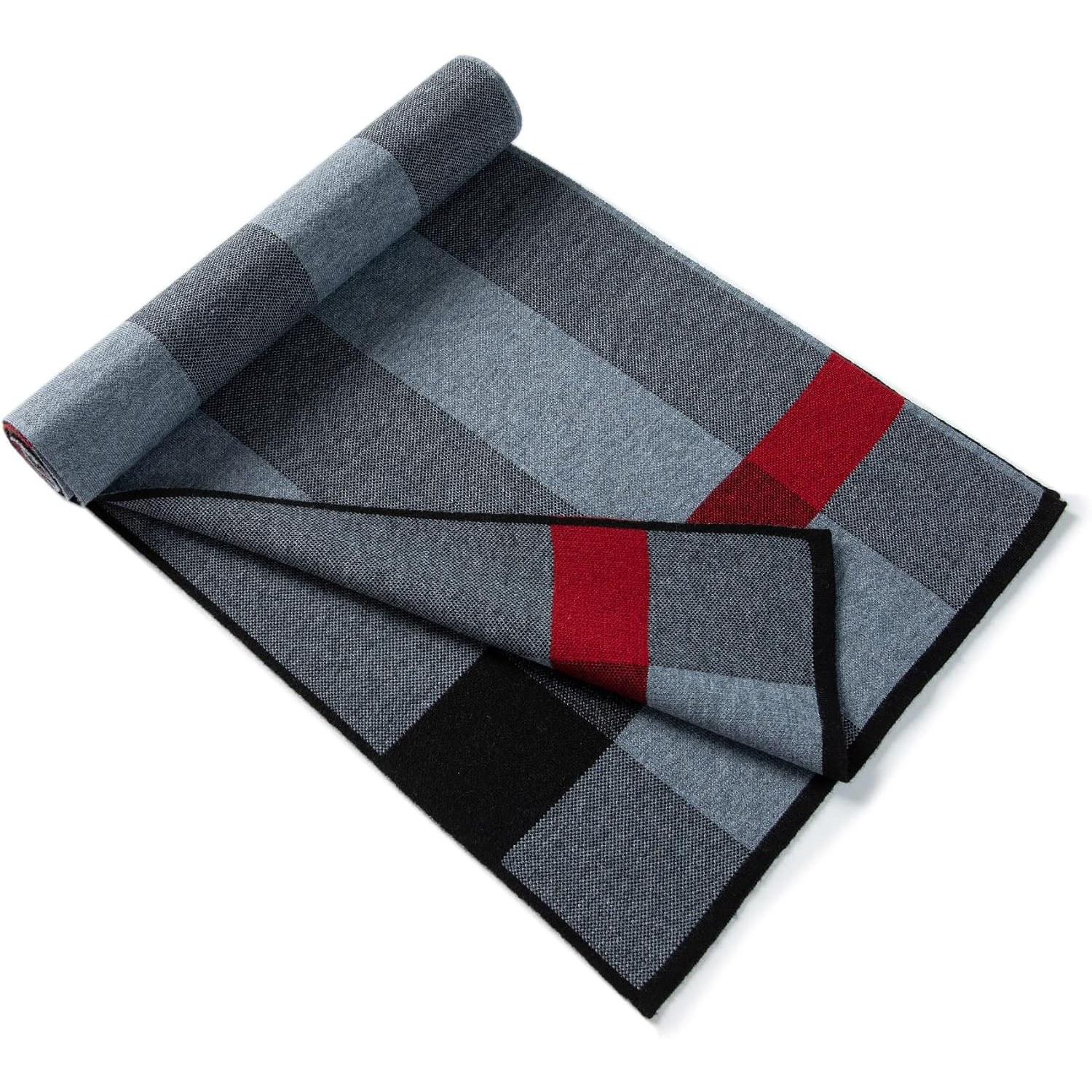
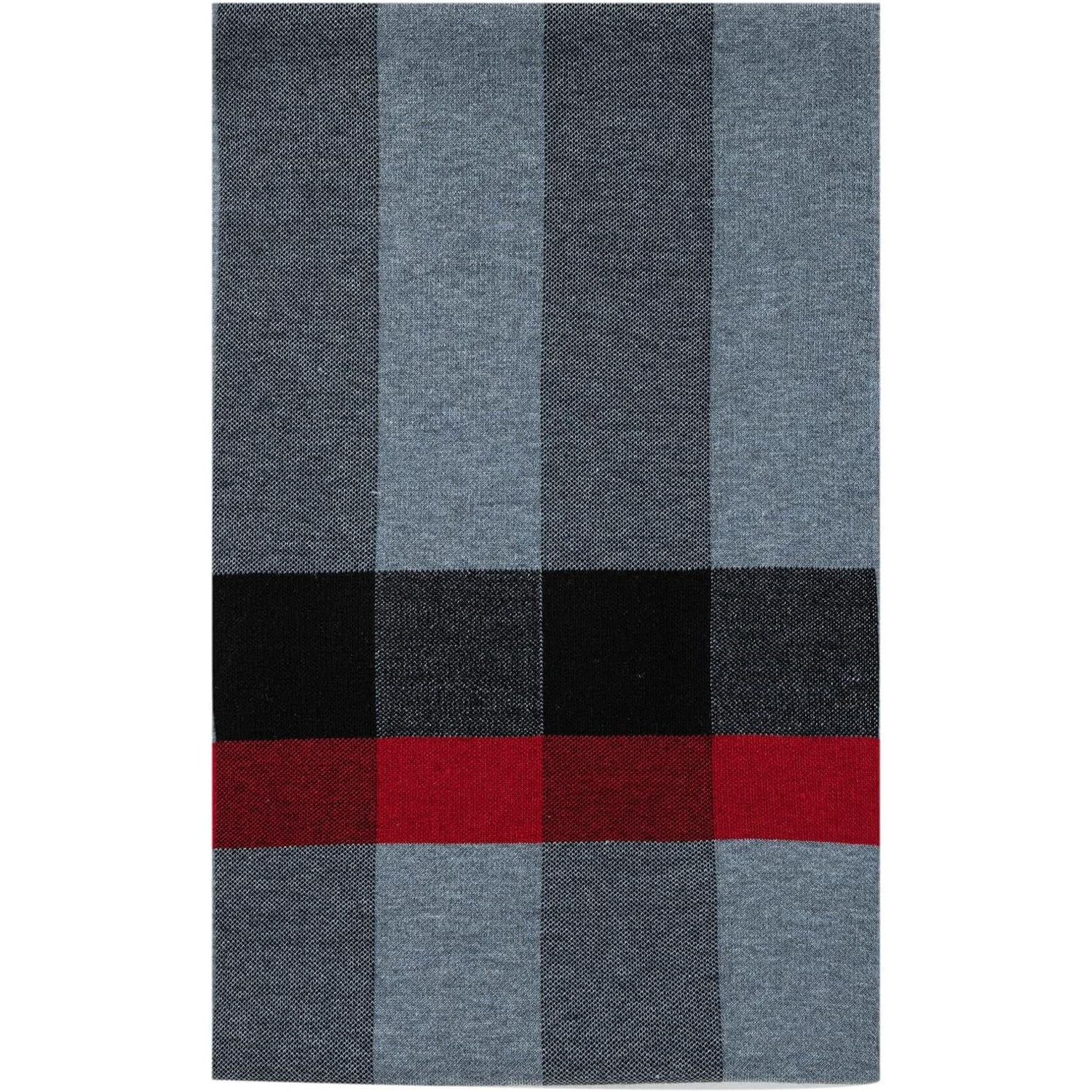
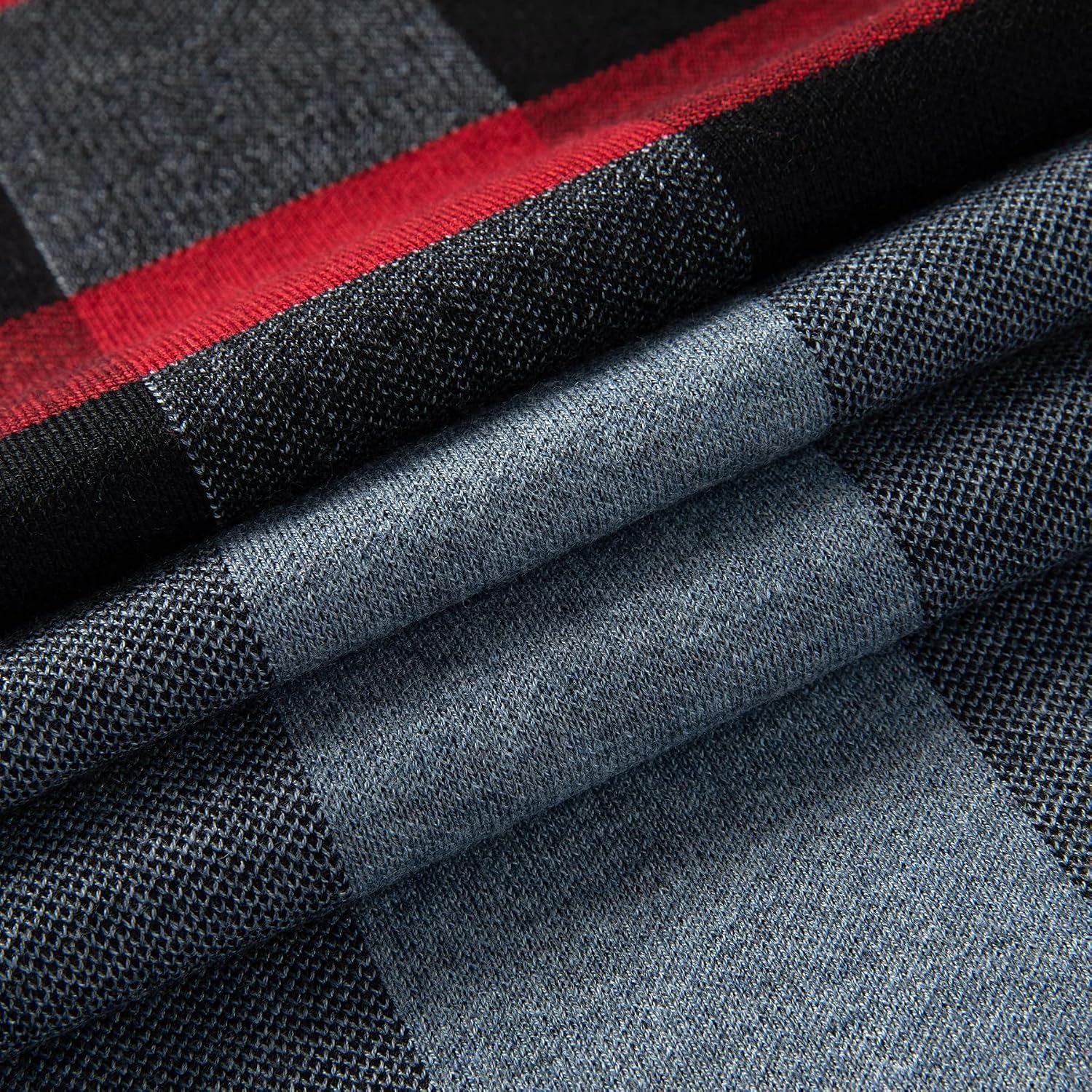
A light and dark grey tartan does the opposite. The greys do most of the work. The photos show black blocks, a black edge and a single red stripe as the accent, so it does not look plain, but it stays easy to match.
That is the practical argument for grey. It sits over navy, charcoal, black, brown, denim and almost every neutral in a normal wardrobe. For someone with one good scarf, this is the version they actually wear, because they are not having to think about whether it works with what they already put on.
For gifting, the same logic applies with extra force. You do not know what colours someone reaches for. Grey sidesteps the question entirely and still looks like a deliberate choice rather than a safe one.
Who this suits
The office worker in a cold building. If your desk sits under a vent, a lightweight scarf loose around the neck fixes the problem far more elegantly than a cardigan you then have to carry around.
The traveller. Long-haul cabins run cool for the whole flight, and airline blankets are thin. A long merino scarf works as a neck wrap, a light chest cover, or a bundled headrest. It earns its space in a carry-on.
Anyone heading somewhere properly cold. Worn under a coat, a merino scarf closes the gap at the collar. The lightweight build means it layers rather than competes with your outerwear.
The gift-buyer. A boxed scarf covers birthdays, farewells and work presents without any sizing risk.
Choosing well: what to actually check
When you compare scarves, four things decide whether you will wear it or forget it.
Fibre fineness. Look for merino rather than generic wool if it will touch your neck. The difference in comfort is immediate.
Length. Under 150 cm limits you to draping. Around 180 cm is the sweet spot for looping and wrapping.
Weight class. Heavy knits are made for deep cold. In a warm climate with occasional cold rooms, lightweight is the right call, because you can carry it all day without noticing.
Pattern. Be honest about how adventurous the wearer is. If the answer is not very, a tonal tartan gives you pattern without commitment.
Looking after it
The care instruction here is strict and simple: dry clean only.
Do not put it in a washing machine, and do not hand wash it either. Wool fibres have microscopic scales that lock together when they are agitated in water, which is how a scarf comes out shorter, thicker and stiffer than it went in. That change is permanent.
The good news is that a scarf does not need frequent cleaning. Hang it over the back of a chair after a long day in air conditioning and let the air get through it overnight. Most scarves only need professional cleaning once or twice a season, or when something is actually spilled on them.
For storage, fold rather than hang. A hanger puts the whole weight of the scarf on one narrow point and will stretch the fabric over months. Folded flat in a drawer or on a shelf, away from direct sunlight, it will hold its shape better. Make sure it is fully dry before it goes away, because damp wool in a closed drawer is an invitation to trouble.
If small pills appear where a bag strap or coat collar rubs, a fabric comb lifts them off gently. That is normal wear on any wool piece, not a fault.
The short version
This is a merino wool scarf for men, 178 cm long by 30.5 cm wide, in a light and dark grey tartan check. The fabric is lightweight with low stretch, which is the right combination for cold offices, long flights and trips to colder places.
The maker names Australian merino wool. Care is dry clean only, and it arrives in a gift box.
If you want one scarf that handles the chilled meeting room, the overnight flight and the holiday abroad, and you would rather not think about whether it matches, grey tartan merino is the sensible answer.